

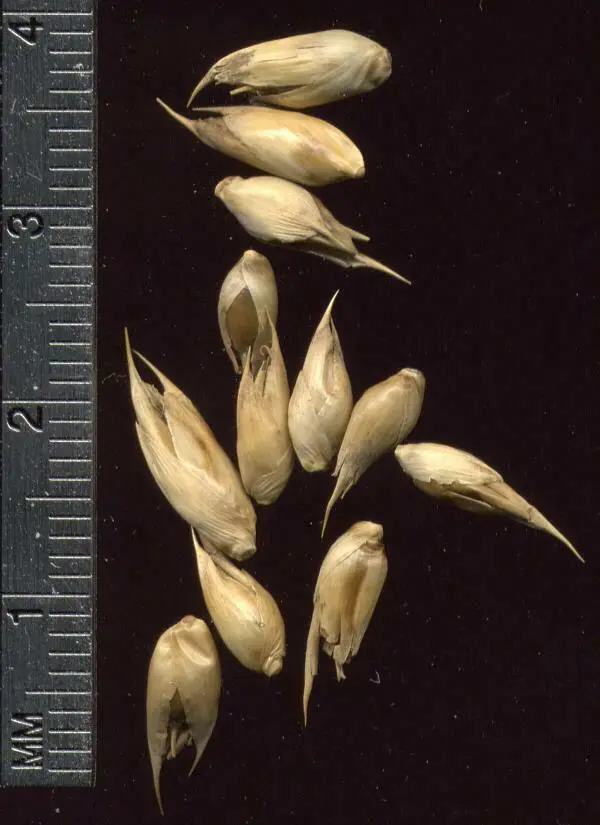
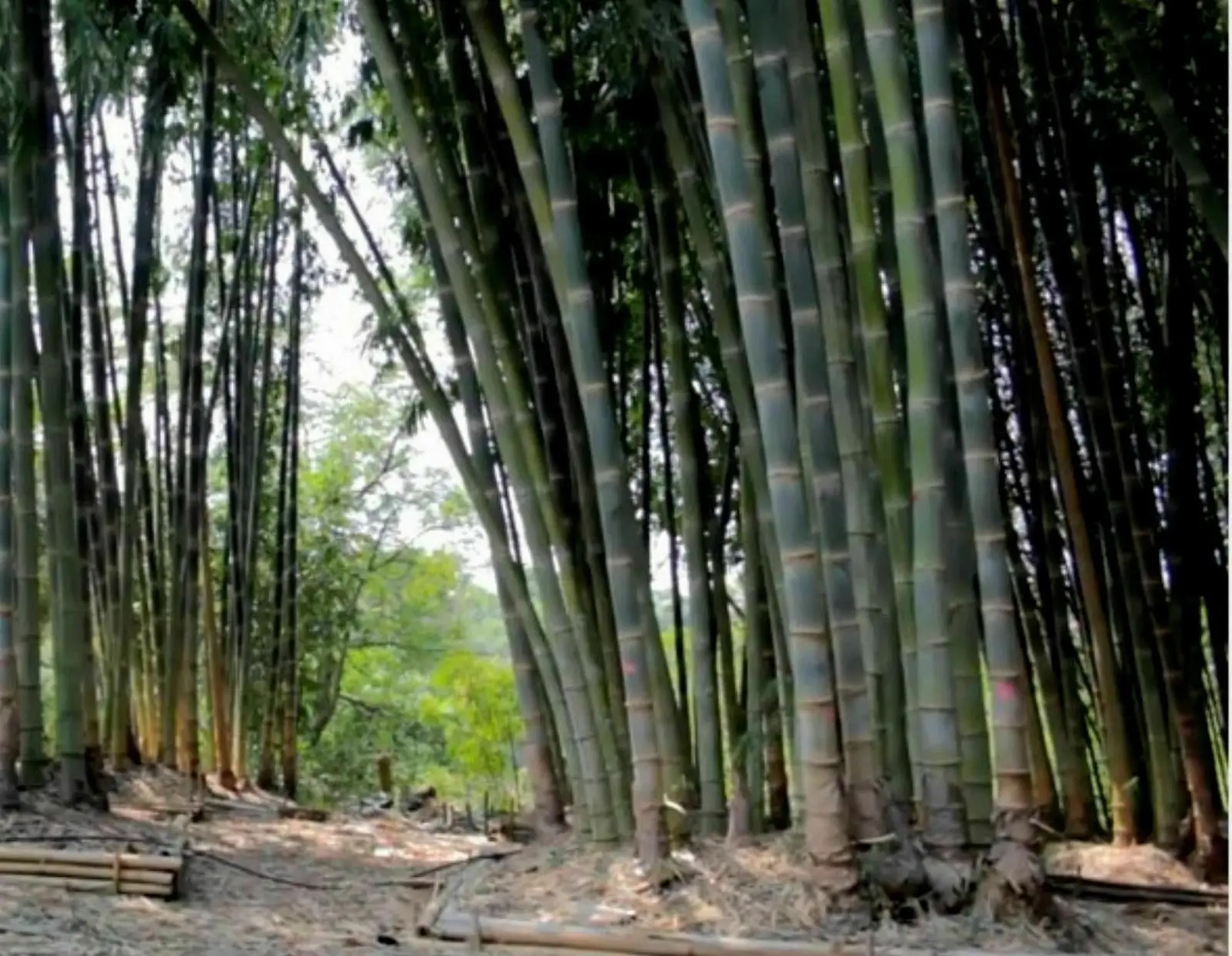
Grow the legendary Iron Bamboo—the only bamboo with naturally solid, thick-walled culms that rival timber in strength. This behemoth reaches 60 feet with culms you can actually nail, screw, and split without shattering. Zero invasiveness (clumping, not running). Thrives on drought and poor soil. From seed to structural-grade material in 3-4 years. A living legacy of uncompromising power.
€7.77
This is the bamboo that made engineers rethink what grass can do.
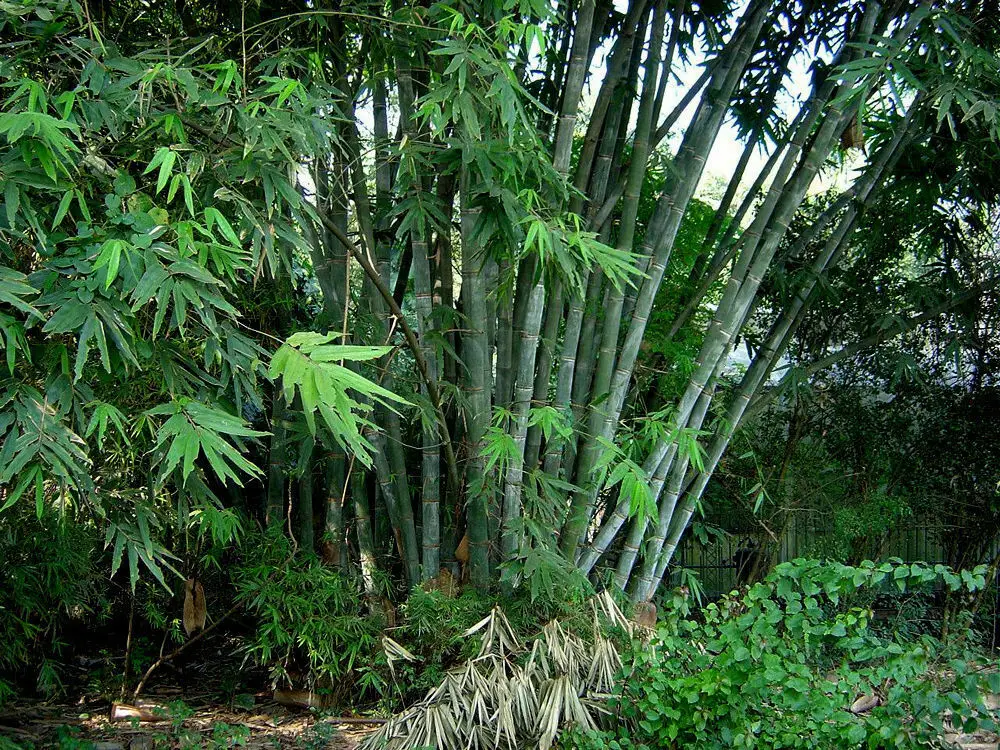
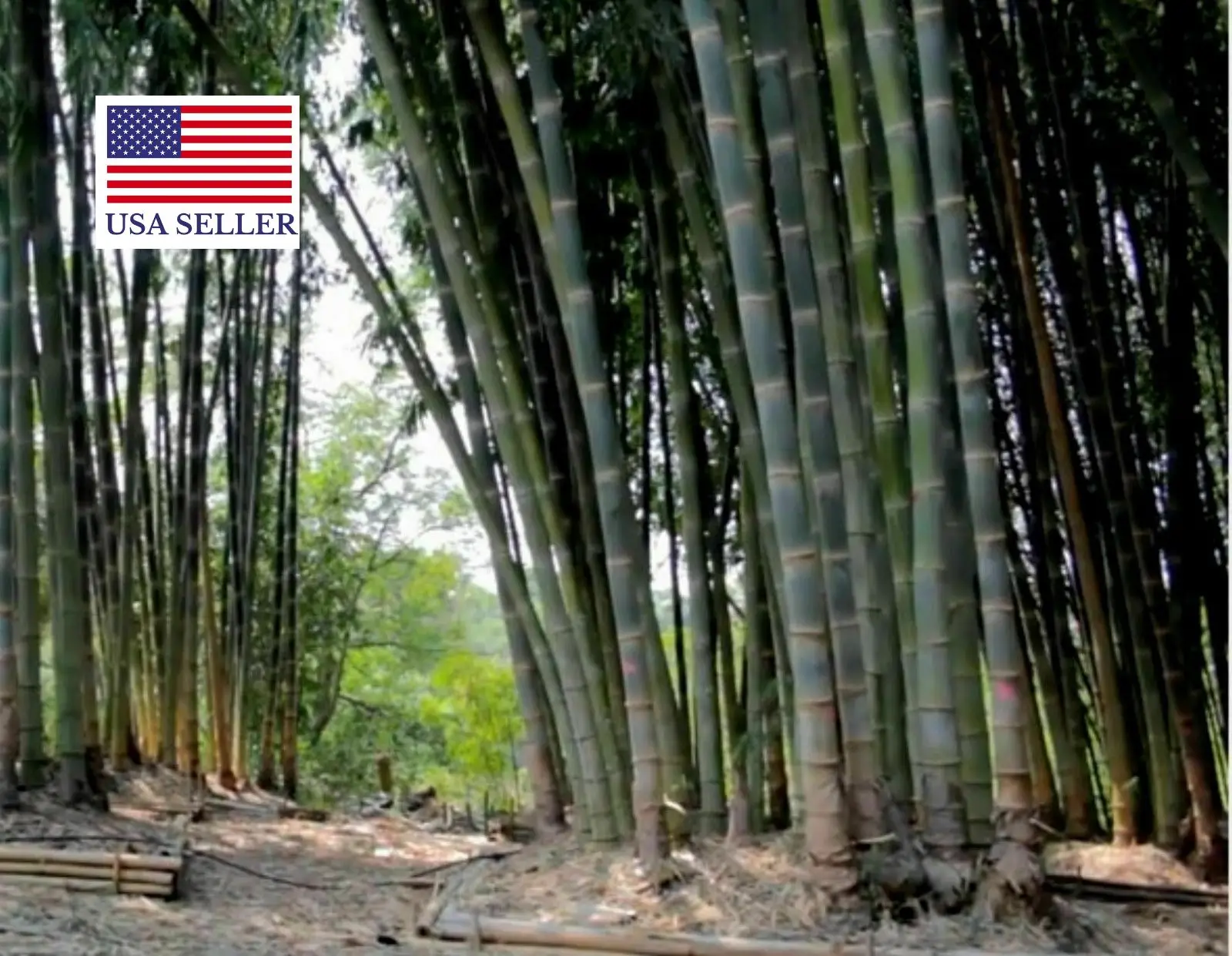
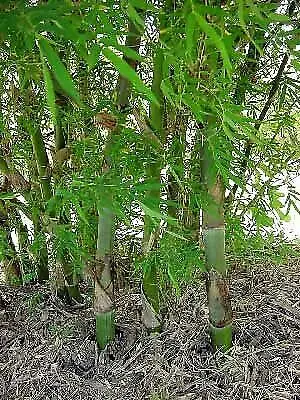
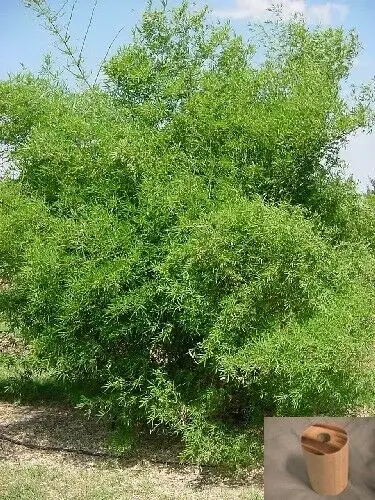
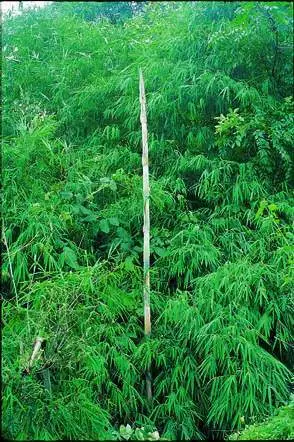
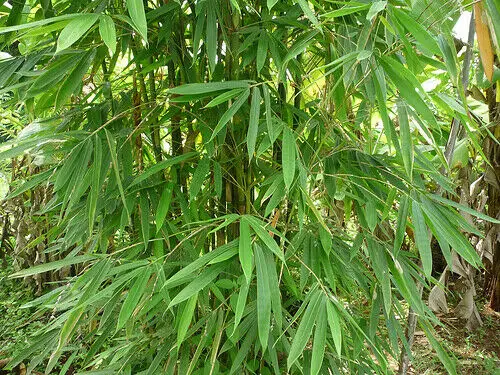
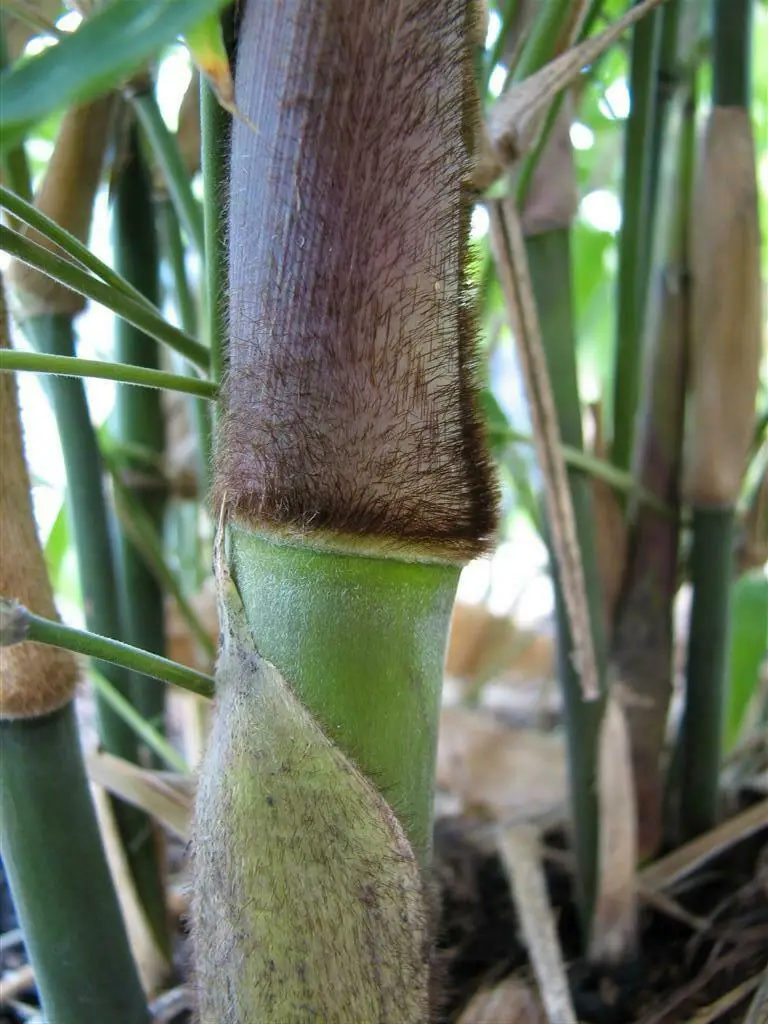
Native to India, Dendrocalamus strictus is unique in that it is thick-walled, often solid, and probably the strongest bamboo in the world. For centuries, Indian builders have known what the modern construction world is only now discovering: this thickness or solidity results in great structural strength, hence the name Iron Bamboo. It is a tall, dull long green-colored bamboo species that grows in thickets consisting of many heavily branched, closely growing culms, reaching a height of 6–18 m, with culms that are green and covered with white blooms, becoming dull green when mature and turning brown on drying.
What separates Dendrocalamus strictus from every other bamboo is a simple fact: culms are hollow when growing under humid conditions, but nearly solid under dry conditions. This responsiveness to environment is its superpower. In the dry weather of Maharashtra, Telangana and Karnataka region, it grows so strong and thick, that splitters, blades, shears and even power saw blades surrender pretty fast on them. The name “Iron Bamboo” is not metaphor—it is earned.
**THE CONSTRUCTION REVOLUTION YOU CAN GROW**
While most bamboos are hollow and fragile, experts agree that Iron Bamboo is the world’s premier bamboo for furniture manufacturing, since unlike thin-walled, hollow bamboo, it does not split when fastened with screws and nails. Its nail-ability and the fact that it rarely develops external surface cracks as it dries makes it a preferred structural material for buildings and fences, as well as for furniture. This is the only wood of bamboo which, once cured, can be preached without cracking.
Dendrocalamus strictus is valued for its versatile culms in construction applications, where their strength and straightness make them suitable for poles, scaffolding, roofing, and thatching materials. Often referred to as “poor man’s timber,” the species supports light construction and structural wood products, including paneling and furniture frames. Beyond structure, it is extensively used as raw material in paper mills and also for a variety of purposes such as light construction, furniture, musical instruments, bamboo board, mats, sticks, agricultural implements, rafts, baskets, woven wares and household utensils. Bonus: young shoots of Dendrocalamus strictus are edible and are used in various culinary dishes, particularly in Asian cuisines. They can be consumed fresh, pickled, or as part of stir-fries. And it is utilized in agroforestry practices, reforestation projects, and in contour planting to combat soil erosion.
**HOW TO GROW YOUR OWN STRUCTURAL GIANT**
Dendrocalamus strictus is relatively easy to cultivate, requiring moderate soil and climatic conditions for optimal growth. It prefers full sun to partial shade and thrives in well-drained soils with ample organic matter. Here’s what makes it so resilient: the plant is widely adaptable to temperatures, tolerating occasional frosts with temperatures as low as -5c and summer heat as high as 45c. It occurs naturally in tracts receiving as low as 750 mm of rainfall a year, but can also tolerate as much as 4,000mm. It’s native to the Indian subcontinent and Southeast Asia, where it thrives in dry, often infertile, soils. The bamboo has a notable tolerance for drought conditions and can grow in a range of climates.
It does not grow on water-logged or heavy soils such as pure clay or a mixture of clay and lime. Well-drained localities with sandy loam are the best for bamboo growth.</c
Only logged in customers who have purchased this product may leave a review.

Reviews
There are no reviews yet.