Description
Parkinsonia aculeata is a species of perennial flowering tree in the pea family, Fabaceae. Common names include palo verde, Mexican palo verde, Parkinsonia, Jerusalem thorn, jelly bean tree, palo de rayo, and retama.
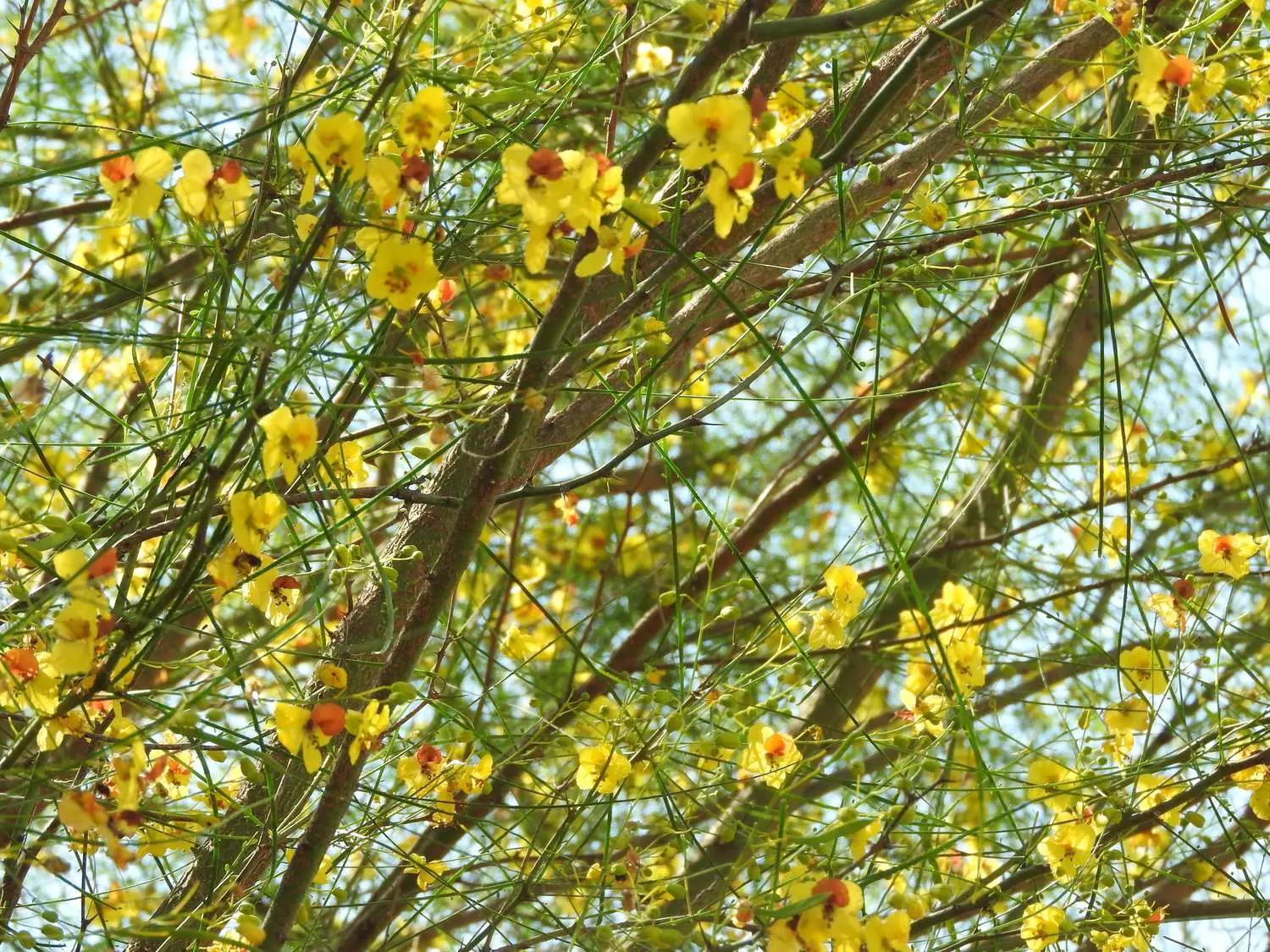
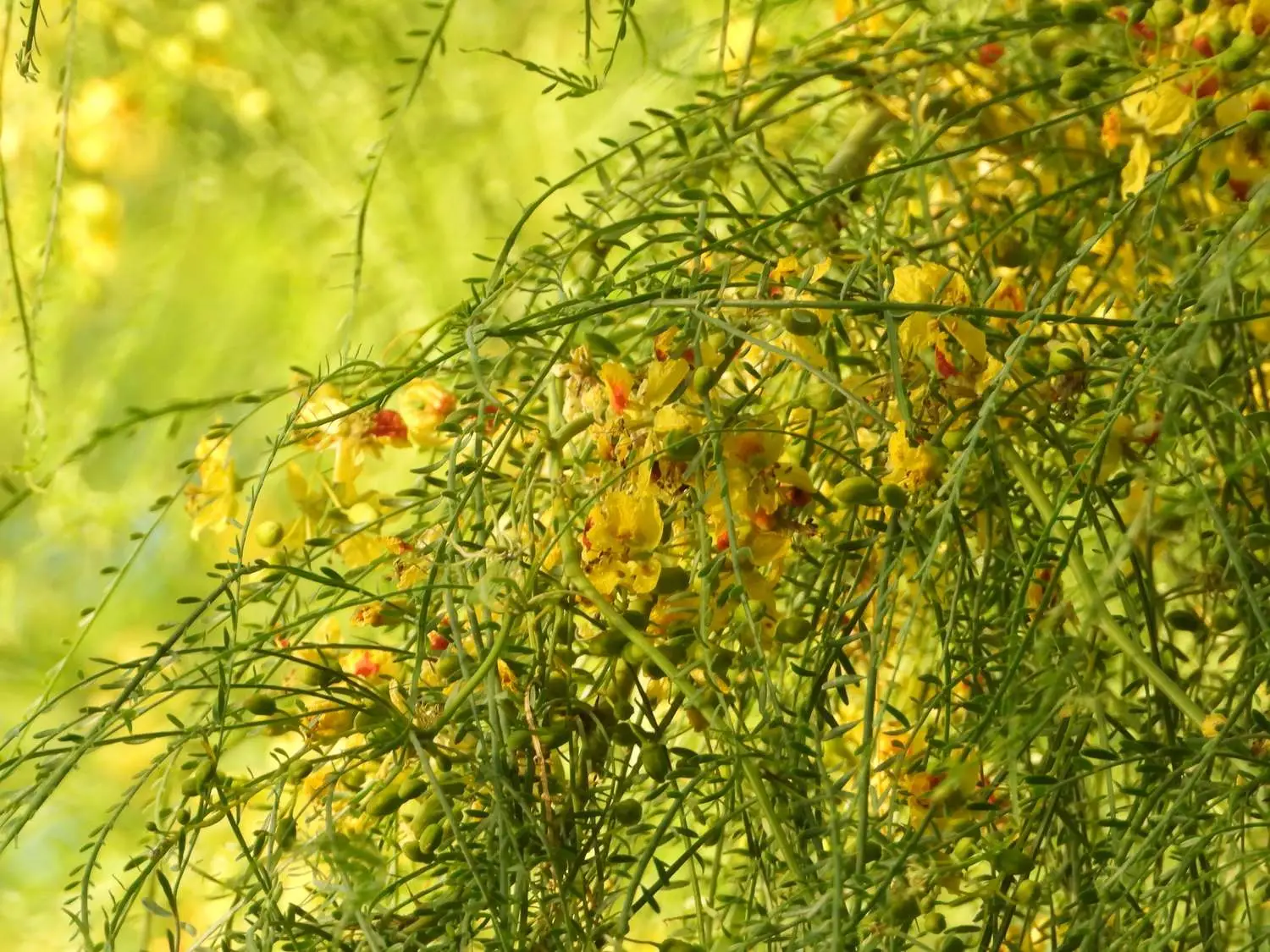
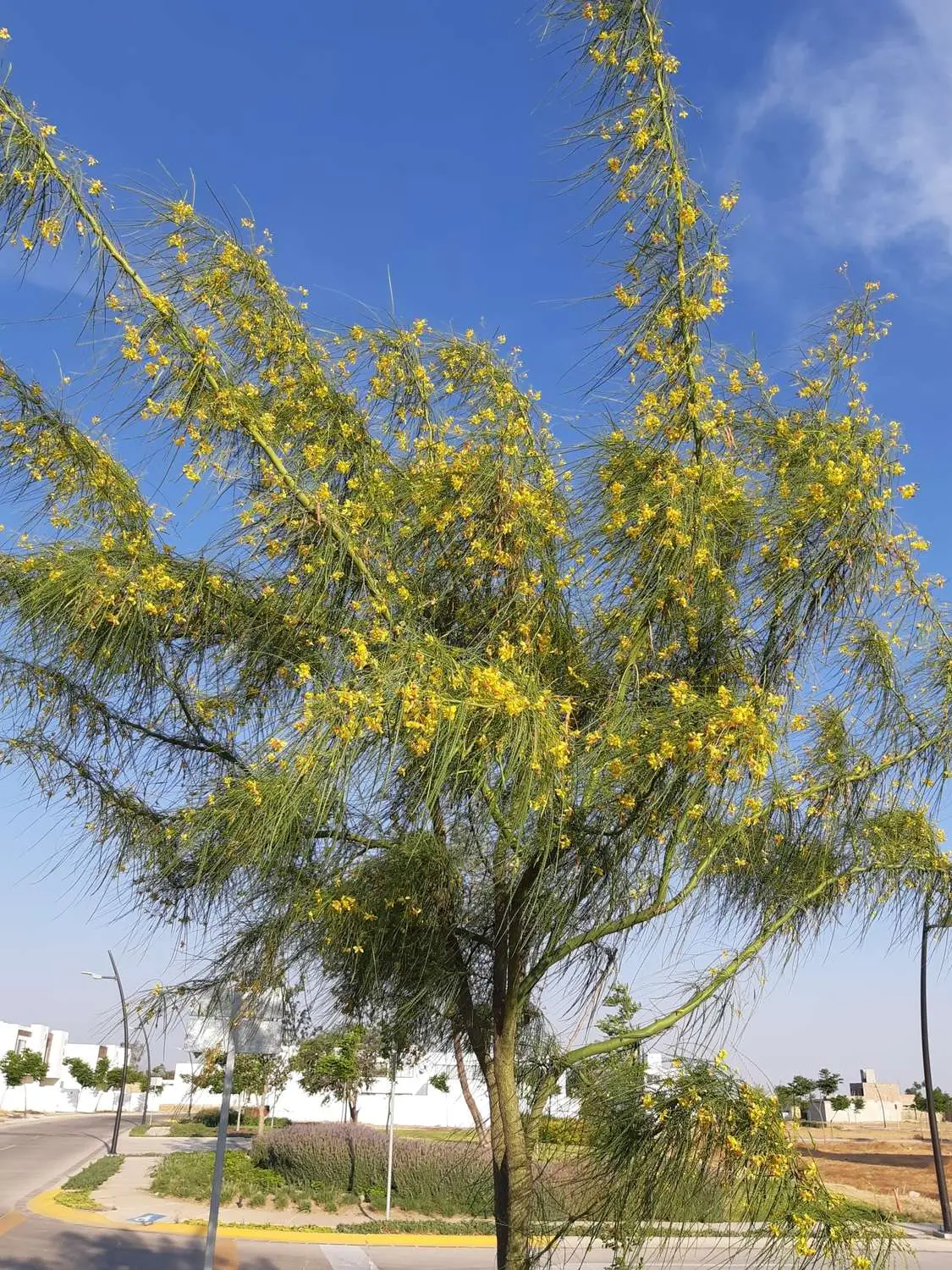
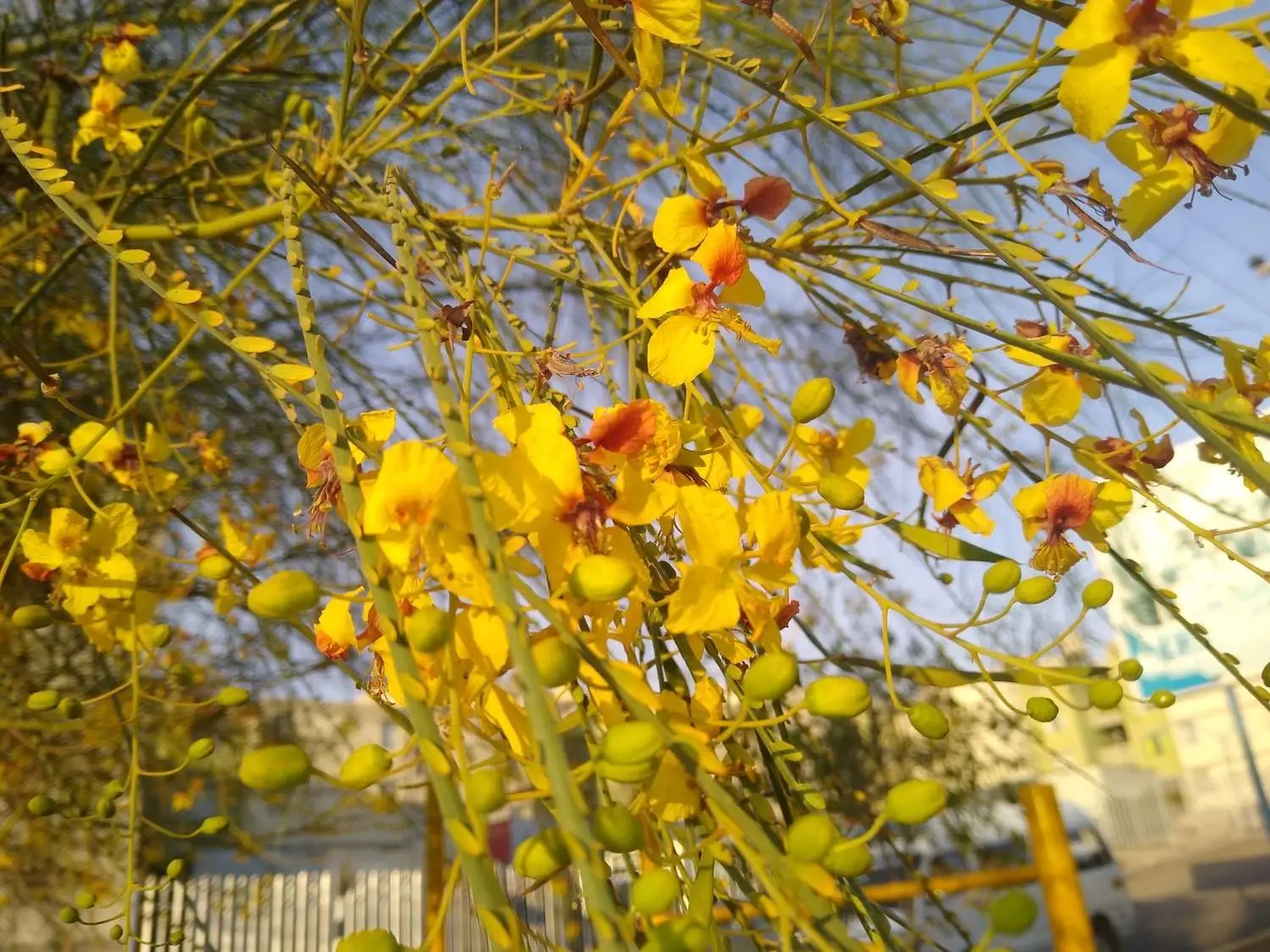
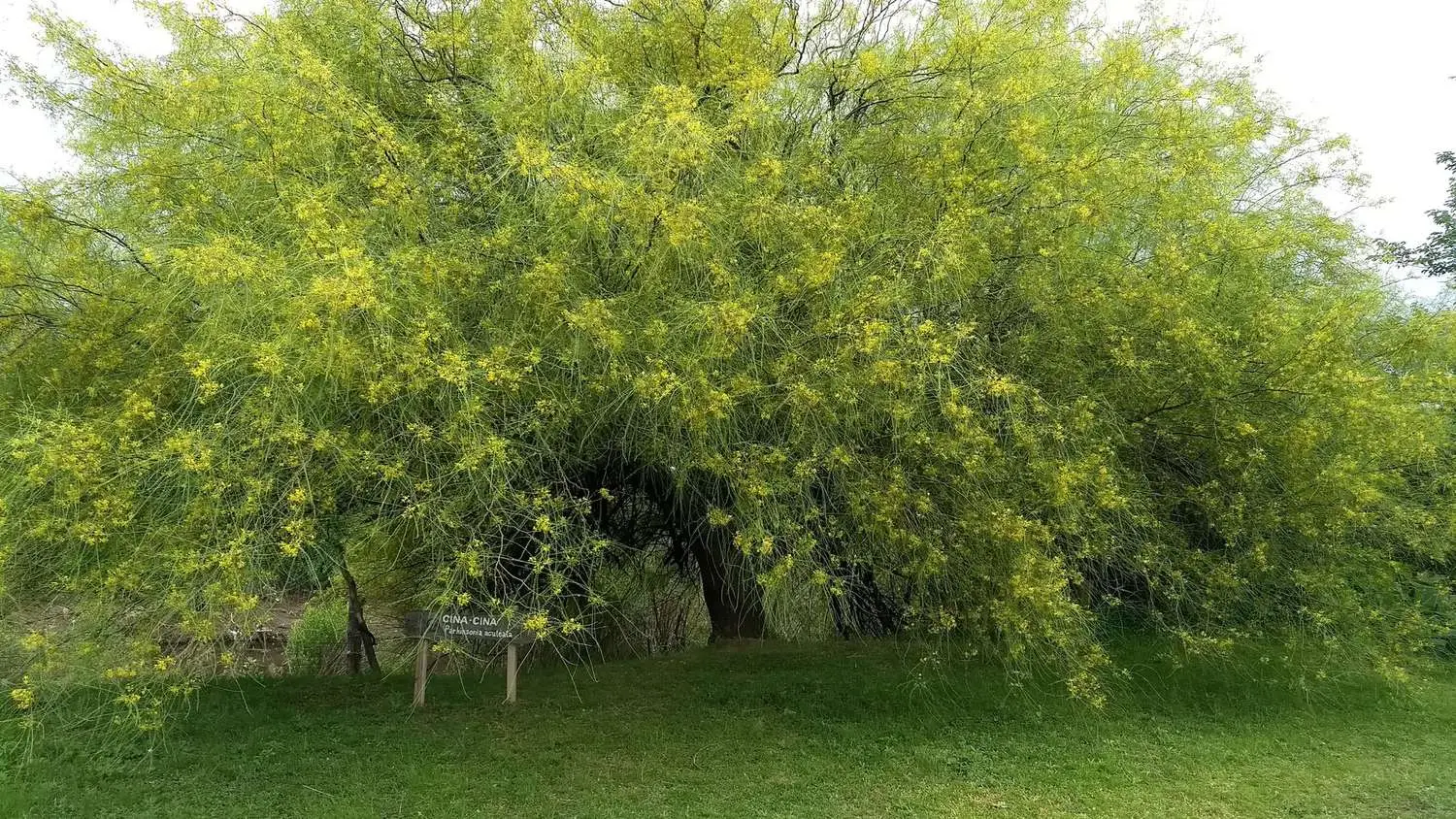
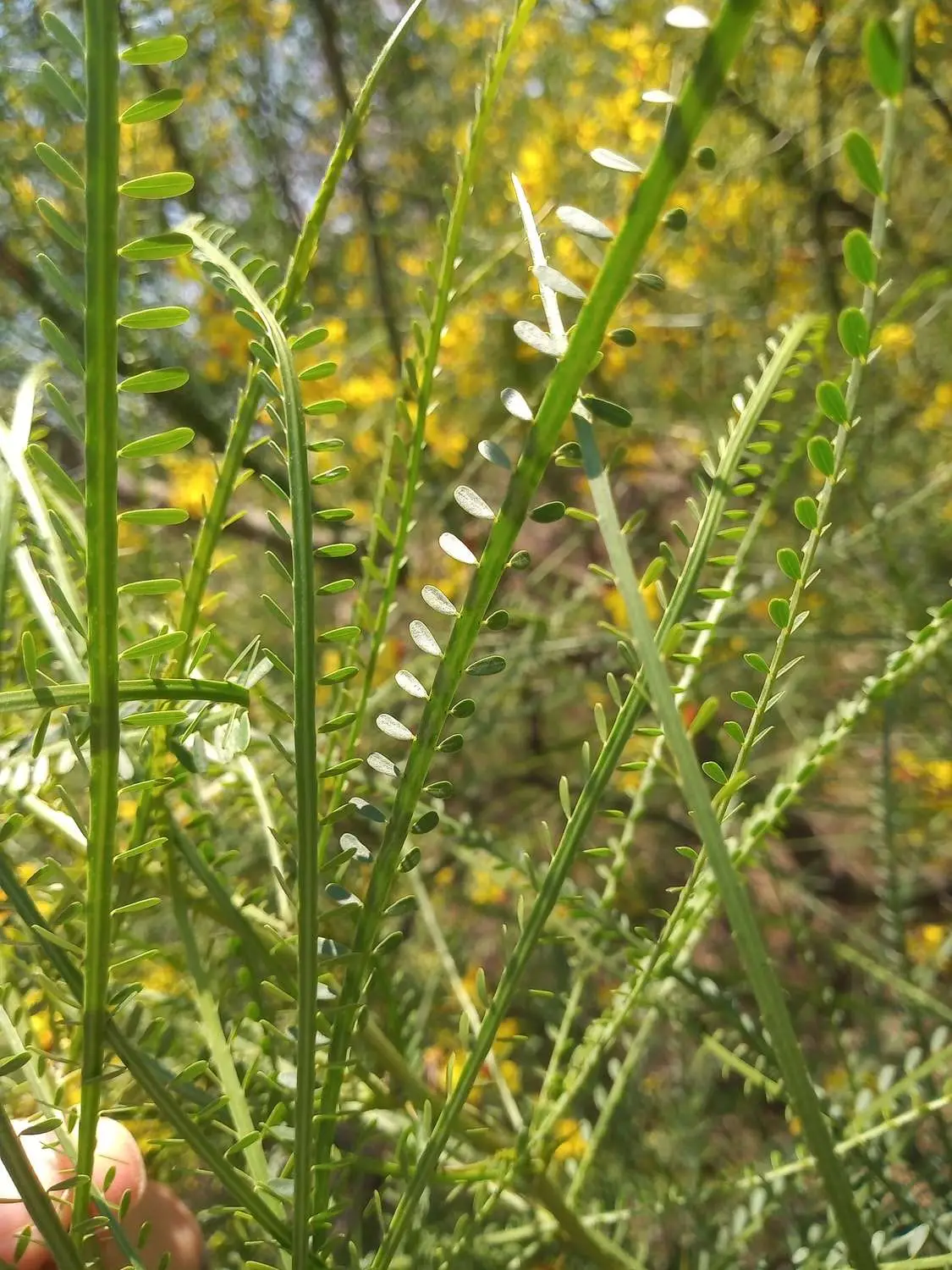
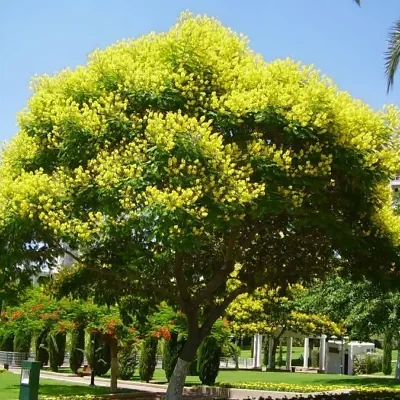
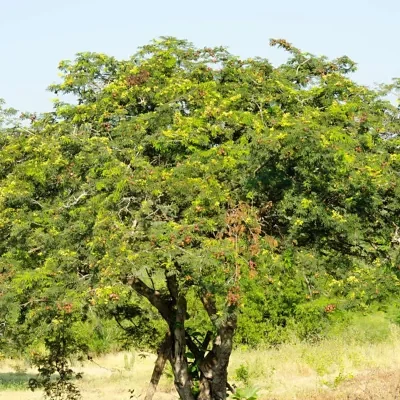
Parkinsonia aculeata may be a spiny shrub or a small tree. It grows 2 to 8 m (6.6 to 26.2 ft) high, with a maximum height of 10 metres (33 ft). Palo verde may have single or multiple stems and many branches with pendulous leaves. The leaves and stems are hairless. The leaves are alternate and pennate (15 to 20 cm long). The flattened petiole is edged by two rows of 25–30 tiny oval leaflets; the leaflets are soon deciduous in dry weather (and during the winter in some areas) leaving the green petioles and branches to photosynthesize.
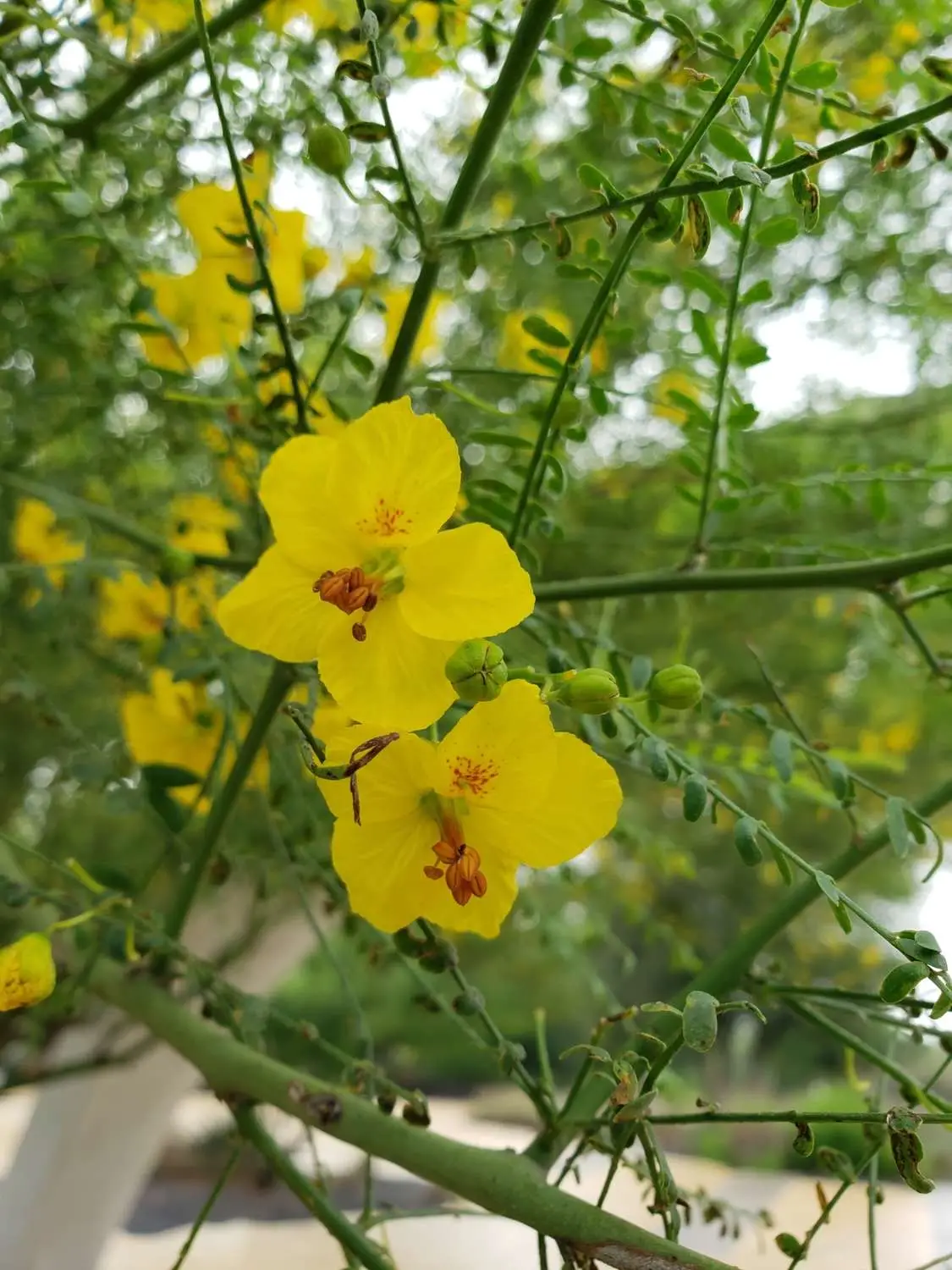
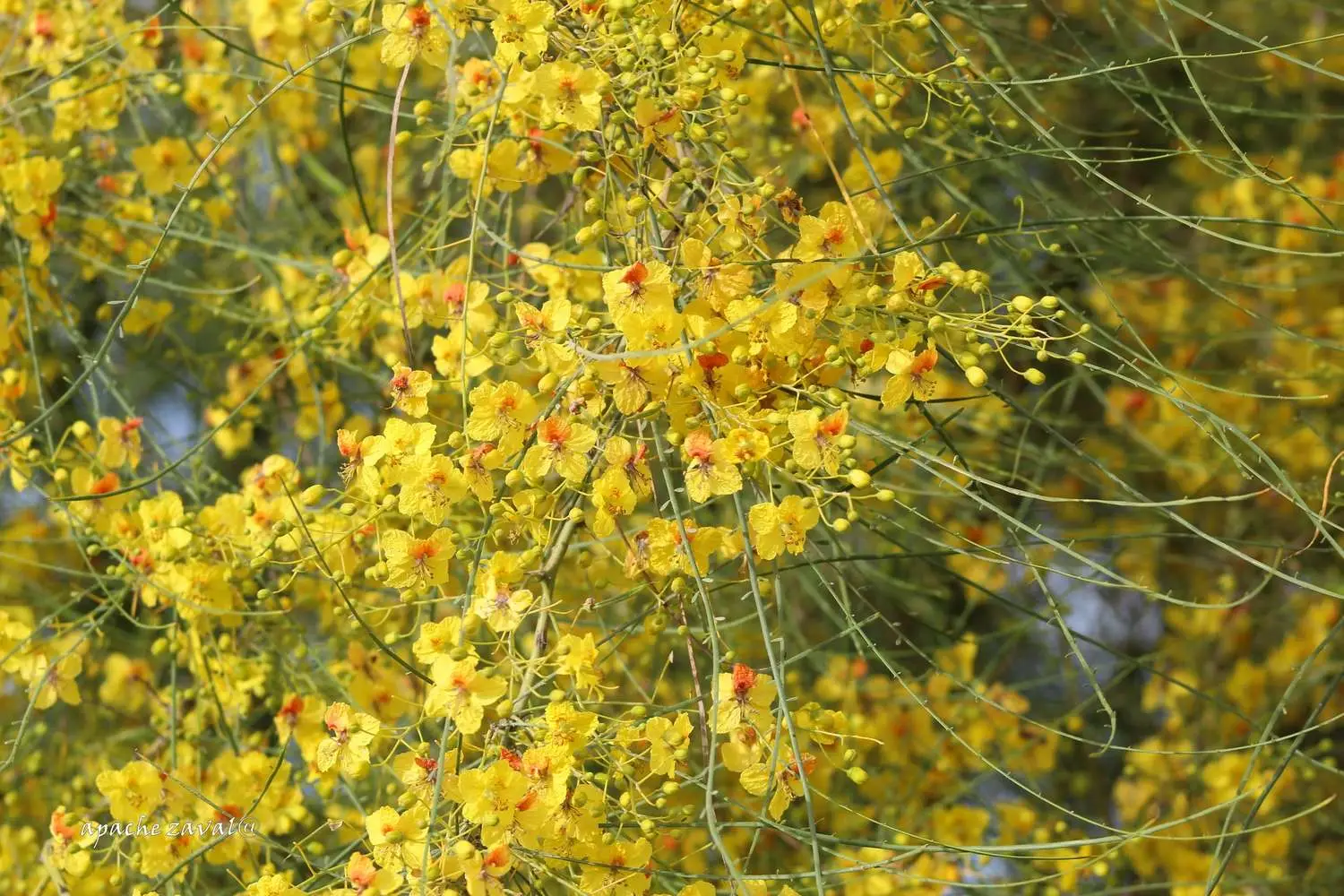
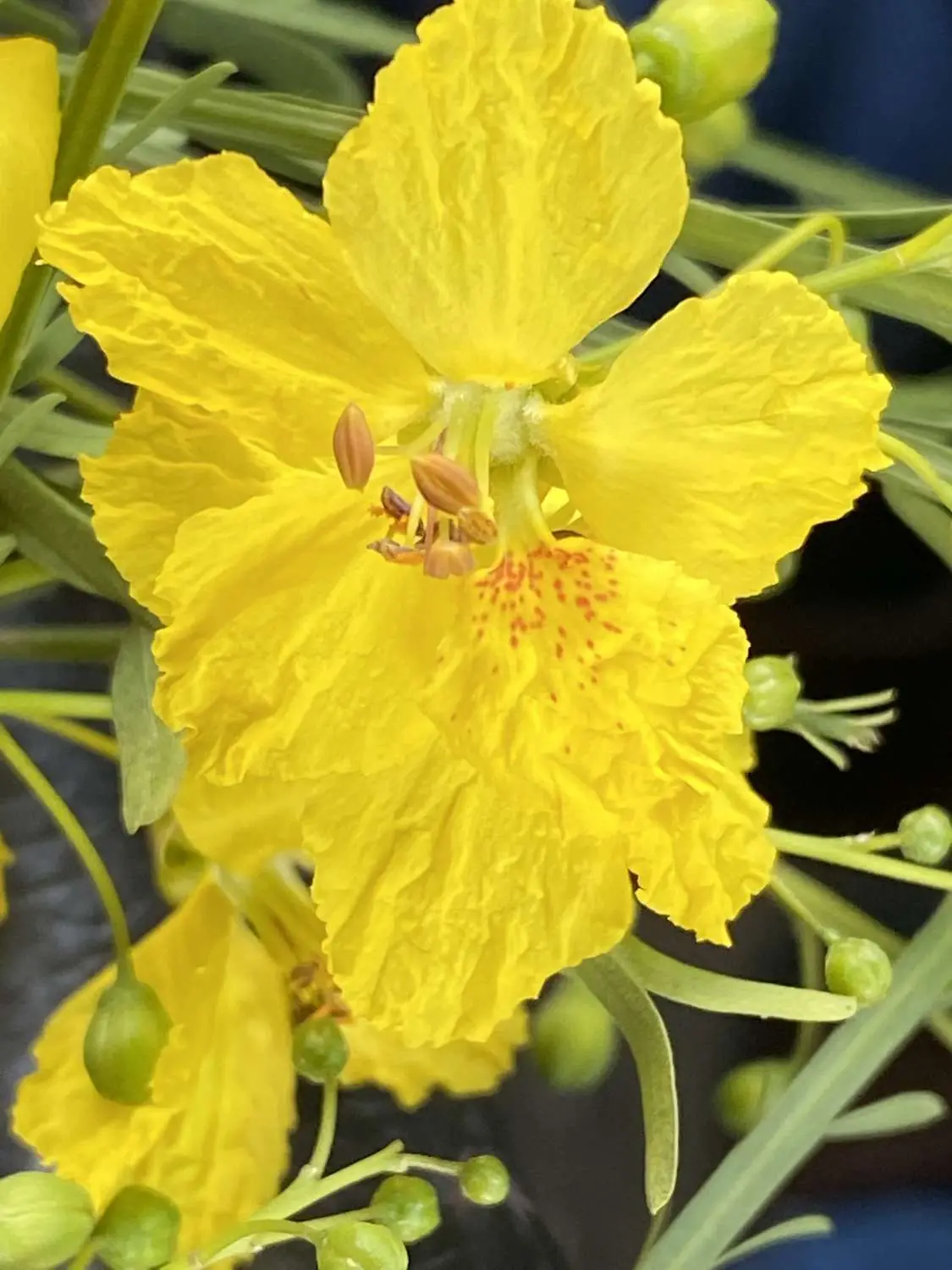
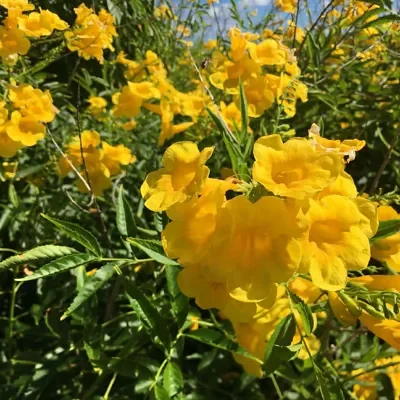
The branches grow double or triple sharp spines 7–12 mm (0.28–0.47 in) long at the axils of the leaves. The flowers are yellow- orange and fragrant, 20 mm (0.79 in) in diameter, growing from a long slender stalk in groups of eight to ten. They have five sepals and five petals, four of them clearer and rhomboid ovate, the fifth elongated, with a warmer yellow and purple spots at the base. The flowering period is in the middle months of spring (March–April or September–October). The flowers are pollinated by bees. The fruit is a seedpod, leathery in appearance, light brown when mature.
P. aculeata is native to the southwestern United States and northern Mexico south to Galapagos Islands and northern Argentina. It has been introduced in Africa, Australia, India, Pakistan and Spain.
Parkinsonia aculeata has a high tolerance to drought, simply attaining shorter stature. In moist and humus-rich environments it becomes a taller, spreading shade tree. This plant prefers a full sun exposure, but can grow on a wide range of dry soils (sand dunes, clay, alkaline and chalky soils, etc.), at an altitude of 0–1,500 metres (0–4,921 ft) above sea level.
In Mexico, the leaves are steeped and made into medicine for fever and epilepsy.
The foliage is seldomly browsed by livestock due to the spines.
Germination Guide
🌍 Southern USA, Mexico, and northern South America (Arizona to Argentina, Galapagos Islands)
Easy
Parkinsonia aculeata (Jellybean Tree, Mexican Palo Verde) is a fast-growing legume tree native to arid regions of the southern USA through northern South America. The species has hard-seeded dormancy and benefits from scarification to enhance germination rates. With proper pretreatment, seeds germinate rapidly at warm temperatures (75°F+), typically within 8-16 days, making it an excellent choice for arid and semi-arid landscape restoration.
Germination
Germination time
Expect germination in
8 – 16 days
Temperature
Min 16°C
Ideal 24°C
Max 36°C
Substrate moisture
💧 Medium
Sowing depth
Lightly covered
Seed Pre-treatment
-
💧
Soaking — 24 hours
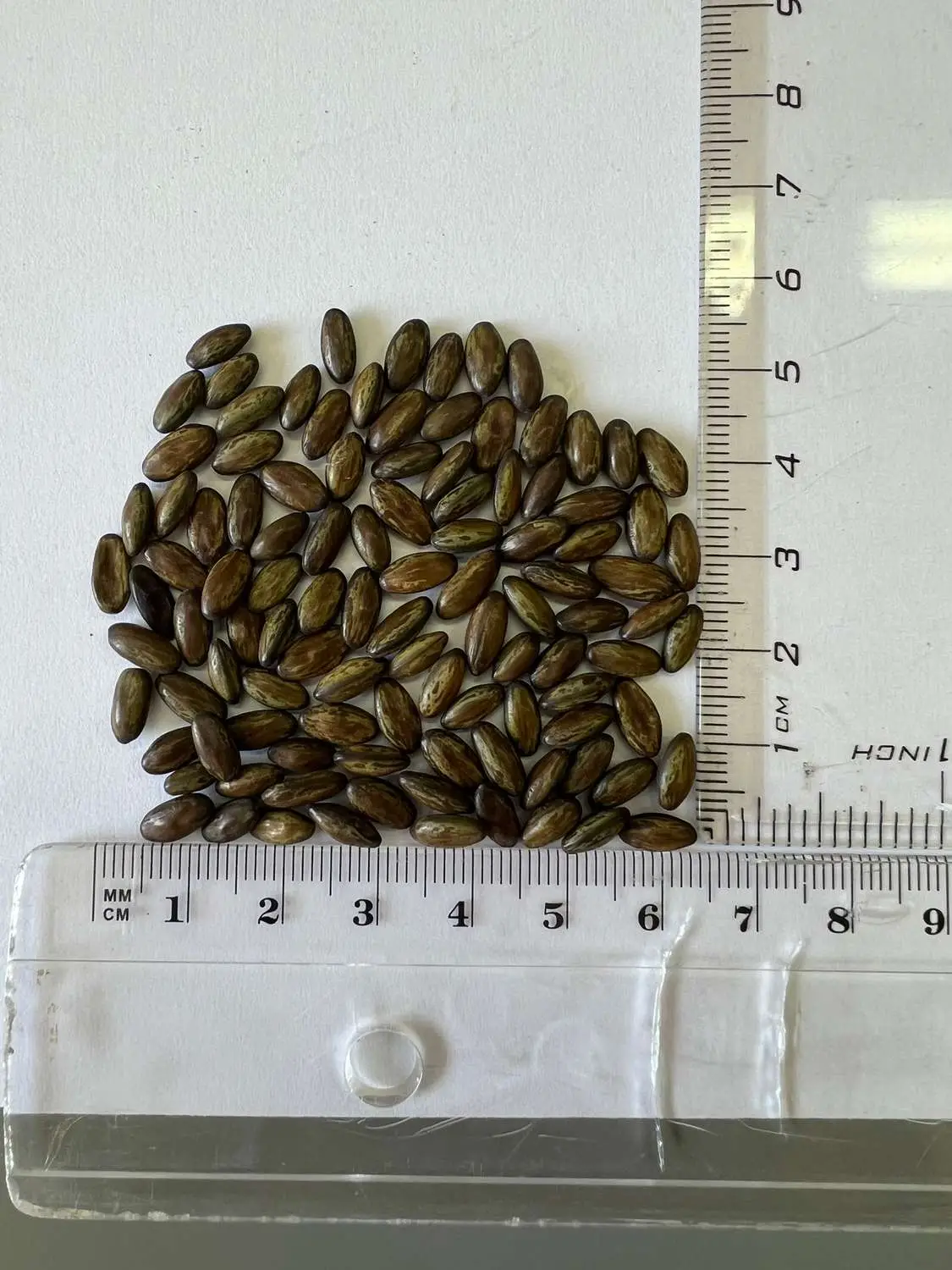
Soak seeds in warm water for 12-24 hours after hot water treatment. About 25% of seeds are light brown and will germinate readily without treatment; remaining seeds have hard coats and require soaking.
-
🔨
Mechanical scarification
Pour boiling water over seeds, let stand in water for 24 hours; repeat process on seeds that did not imbibe. Alternative method: file or sand through the outer seedcoat, let stand in water for 24 hours. For faster germination, hot water treatment at 80°C achieves 80-90% germination within 1-2 weeks.
-
📋
Additional notes
Pretreatment is not essential but significantly speeds germination. If boiling water treatment fails, sulfuric acid treatment for 30-45 minutes followed by cool water rinse is effective.
Substrate & Container
Recommended substrate
Well-drained sandy to loamy soil; tolerates poor, gravelly, and alkaline soils
Recommended container
Individual containers or nursery seedbed
Growing Tips
Sow seeds 1/8 inch deep and tamp soil lightly; mulch the seedbed. Requires warm temperatures (75°F minimum, ideally 24-32°C) after sowing for optimal germination. Sow in sunny position; full sun is essential for germination and growth. Seeds require good drainage and medium moisture. If initial boiling water treatment fails, repeat the process or use mechanical scarification with file/sandpaper. For large-scale germination, hot water treatment at 80°C achieves 80-90% germination within 1-2 weeks.
Only logged in customers who have purchased this product may leave a review.

Reviews
There are no reviews yet.