Description
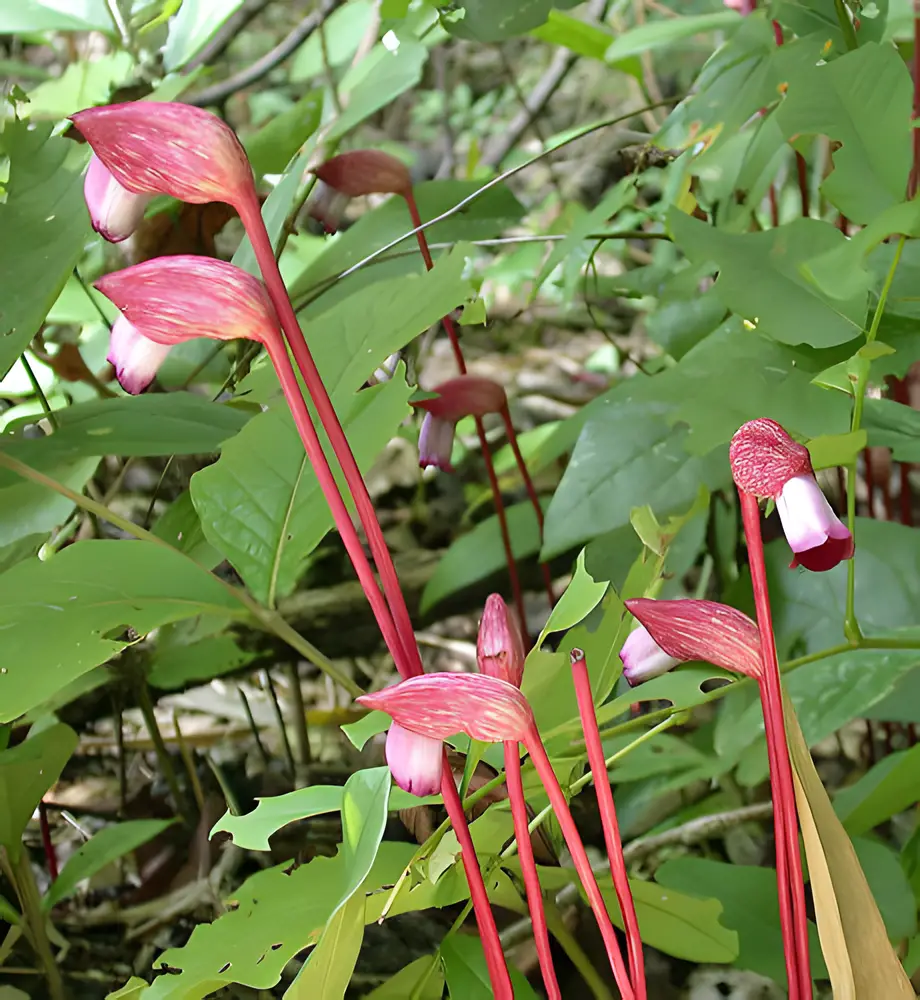
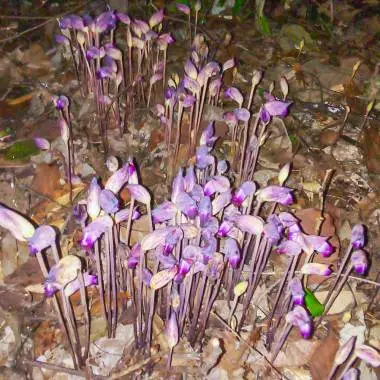
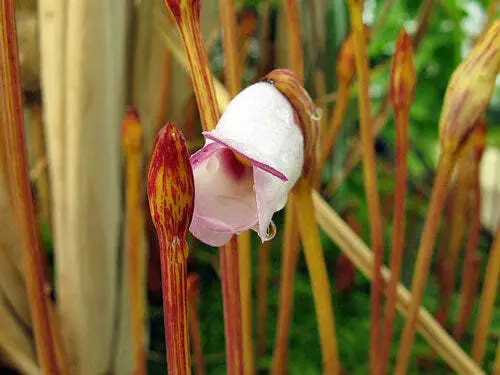
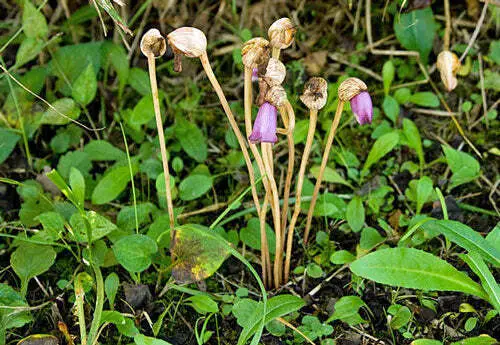
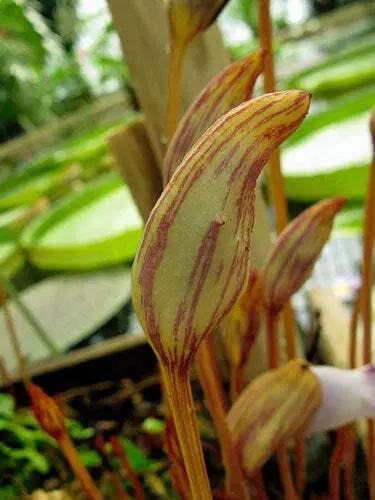
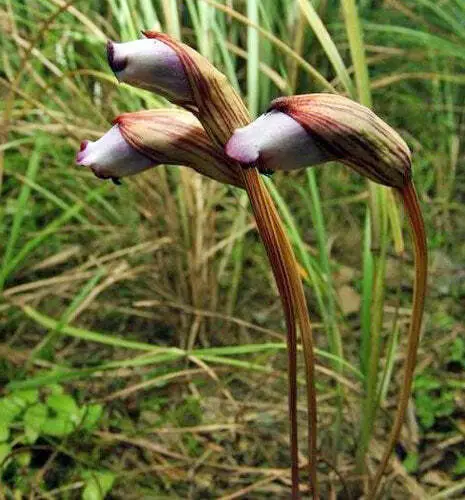
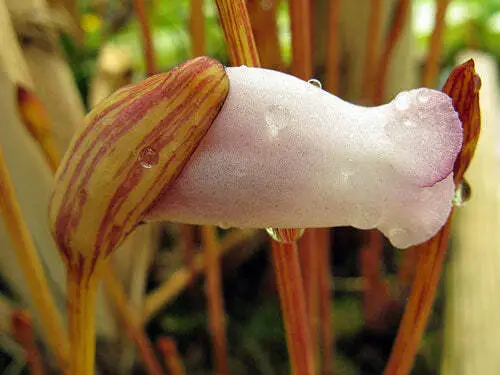
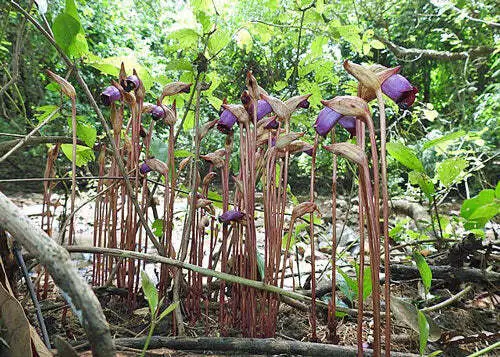
Aeginetia indica is a holoparasitic herb in the Orobanchaceae family. Its native range is in Tropical and Subtropical Asia. It can grow in a grassy spot in the lowlands or low mountain areas where water settles. You can grow this species as long as you have one of these plant families for it to parasitize, Cannaceae, Commelinaceae, Cyperaceae, Juncaceae, Poaceae, and Zingiberaceae. A plant used for medicinal and ritual purposes. Purple juice is extracted from the flowers and added to the Thai sticky rice dessert ‘kanom dok din.’ A unique flower with a weird shape. It grows to around 2-3 feet tall in groups that spread out 3-4 feet. The flowers can be red-purple or white in a curving shape rarely seen. They are tubular 2-4 cm long and split. The split opens up to let the flowers come out. The stems look decayed before the flowers pop out. It prefers to grow in light shade with high water needs.
Germination Guide
🌍 Tropical and subtropical Asia from India to China, Japan, Southeast Asia, and Papua New Guinea
Very Difficult
Aeginetia indica (Indian broomrape) is a holoparasitic herb native to moist forests of tropical and subtropical Asia. As an obligate root parasite, it requires host plants and exhibits complex germination requirements involving dormancy-breaking signals and low-temperature conditioning.
Germination
Substrate moisture
💧💧 High
Seed Pre-treatment
-
🔨
Chemical scarification
Sodium hypochlorite treatment breaks dormancy in fresh seeds; seeds stored 1-5 years at 5°C may not require chemical treatment
-
❄️
Cold stratification at 5°C
-
📋
Additional notes
Germination requires low conditioning temperatures and specific dormancy-breaking signals including light and temperature after conditioning; requires host plant roots present for parasitic germination
Substrate & Container
Recommended substrate
Host plant root system required; dust-like seeds sown in containers with established roots
Recommended container
Container with established host plant root system from Cannaceae, Commelinaceae, Cyperaceae, Juncaceae, Poaceae, or Zingiberaceae
Growing Tips
Seeds are extremely small (dust-like, ~0.03 cm). Germination requires presence of host plant roots; parasitic relationship is obligatory. Seeds can be stored at cold temperatures (5°C) for years without losing viability. Requires specific dormancy-breaking conditions with light and temperature signals after cold conditioning.
Only logged in customers who have purchased this product may leave a review.

Reviews
There are no reviews yet.