
Botanical nomenclature: Juglans regia / Juglans duclouxiana / Juglans fallax
Common name: Hardy Carpathian, Persian Walnut, English Walnut, Carpathian Walnut, Madeira Walnu, Common Walnut
Origin: Himalayas to the eastern Mediterranean
Kingdom: Plantae
Clade: Tracheophytes
Clade: Angiosperms
Clade: Eudicots
Clade: Rosids
Order: Fagales
Family: Juglandaceae
Genus: Juglans
Section: Juglans sect. Juglans
Species: J. regia
€3.89
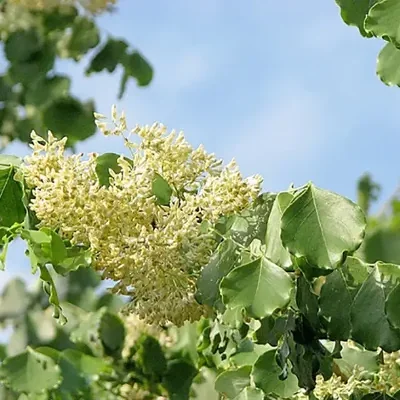
Juglans regia, the Persian walnut, English walnut, Carpathian walnut, Madeira walnut, or especially in Great Britain, common walnut, is an Old World walnut tree species native to the region stretching from the Balkans eastward to the Himalayas and southwest China. It is widely cultivated across Europe.
It is the origin of cultivated varieties which produce the edible walnut, consumed around the world. China is the major commercial producer of walnuts.
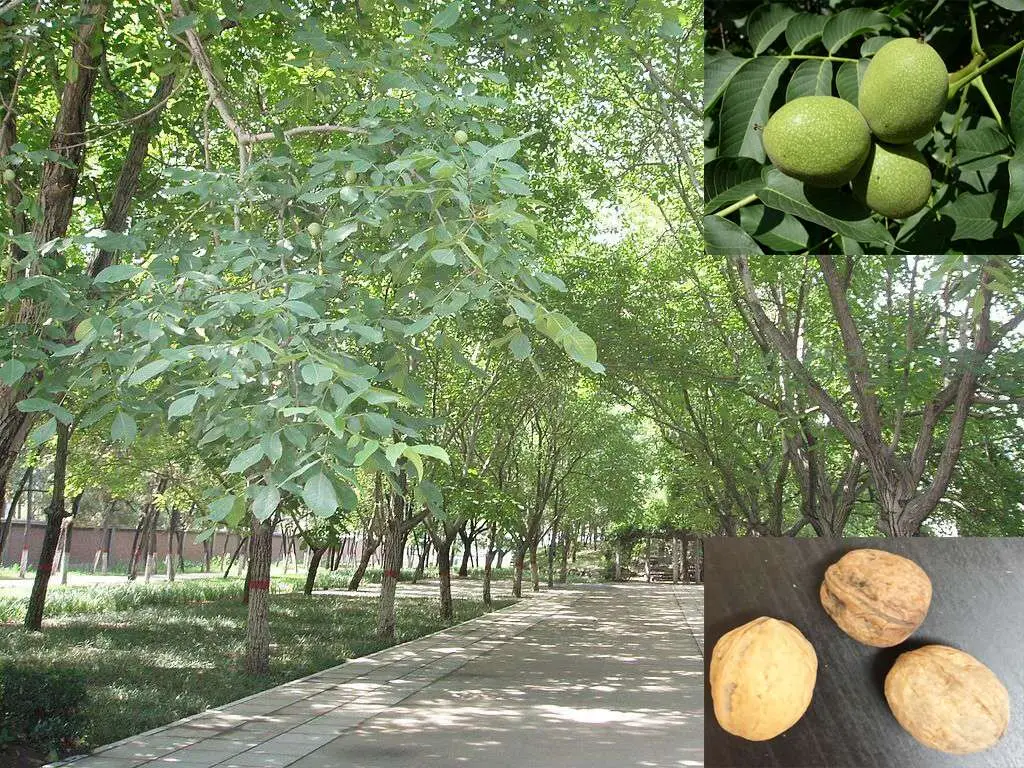
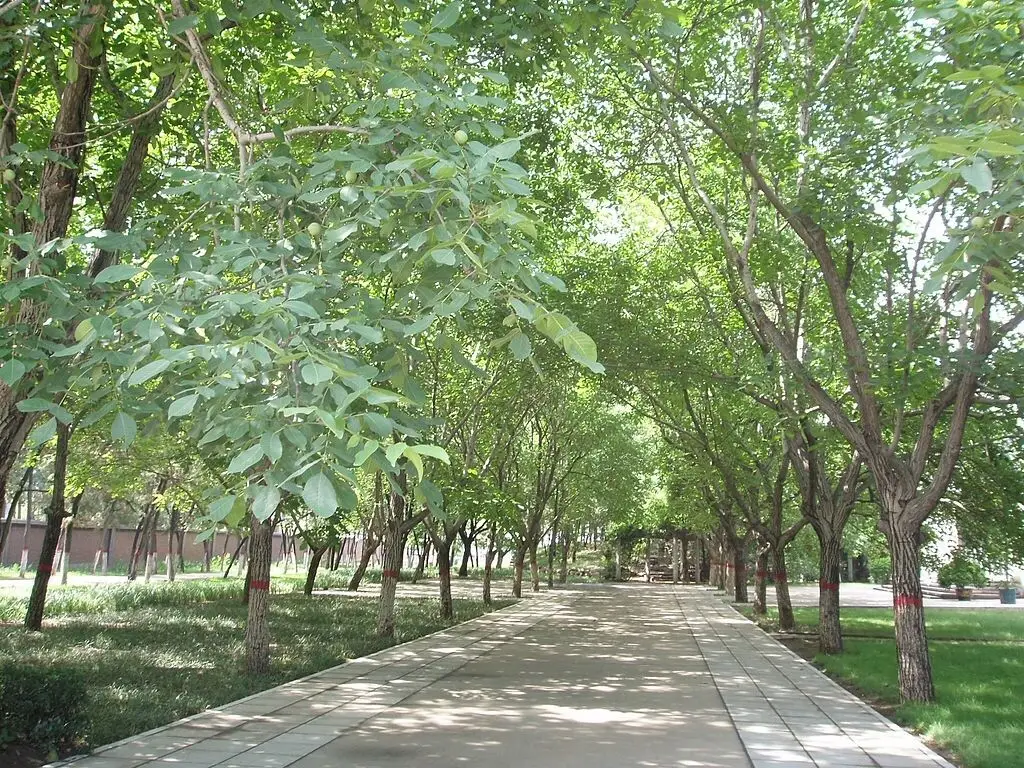
Juglans regia is a large deciduous tree, attaining heights of 25–35 metres (80–120 feet), and a trunk up to 2 m (6 ft) in diameter, commonly with a short trunk and broad crown.
Walnut heartwood is a heavy, hard, open-grained hardwood. Freshly cut live wood may be Dijon-mustard colour, darkening to brown over a few days. The dried lumber is a rich chocolate-brown to black, with cream to tan sapwood, and may feature unusual figures, such as “curly”, “bee’s wing”, “bird’s eye”, and “rat tail”, among others. It is prized by fine woodworkers for its durability, lustre and chatoyance, and is used for high-end flooring, guitars, furniture, veneers, knobs and handles as well as gunstocks.
The bark is smooth, olive-brown when young and silvery-grey on older branches, and features scattered broad fissures with a rougher texture. Like all walnuts, the pith of the twigs contains air spaces; this chambered pith is brownish in color.
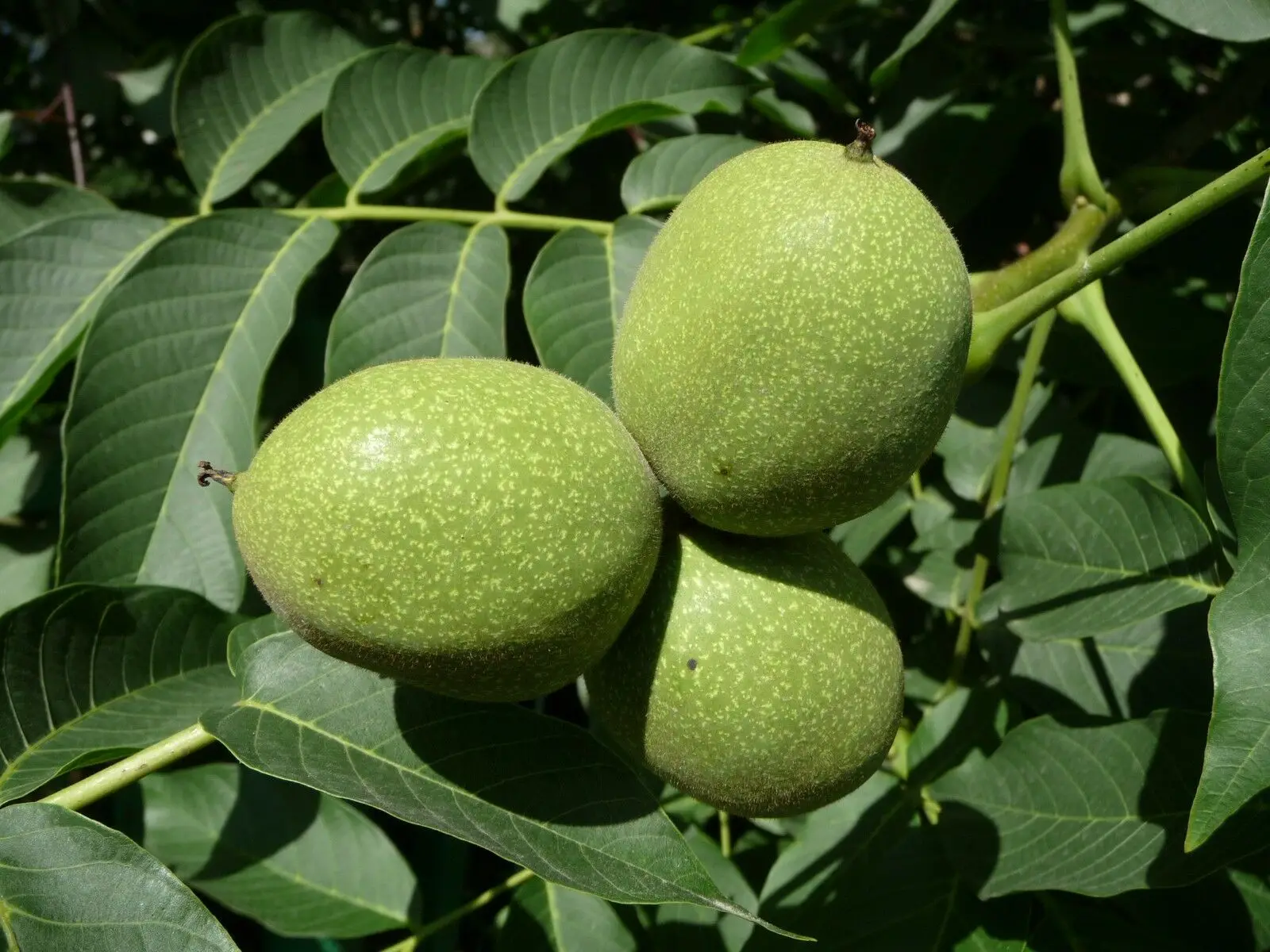
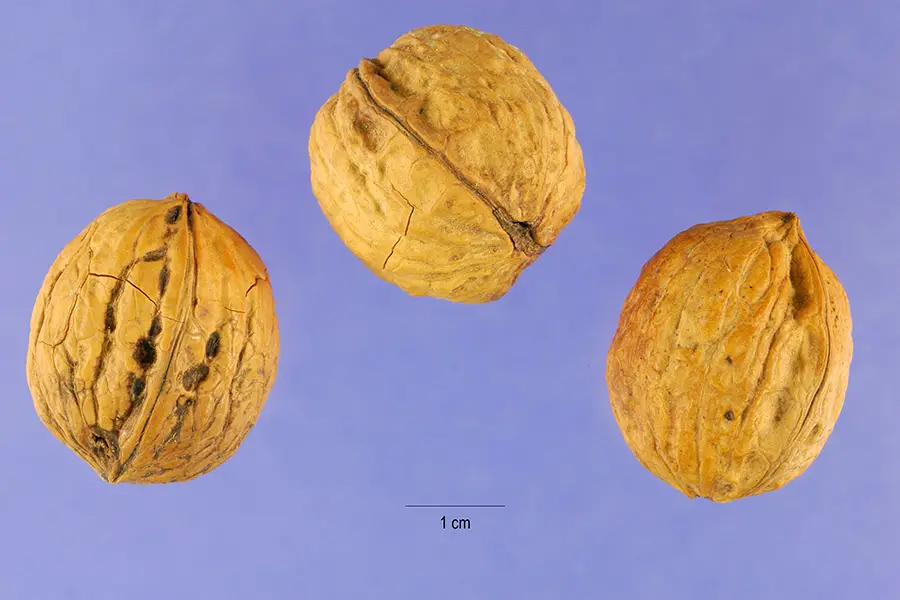
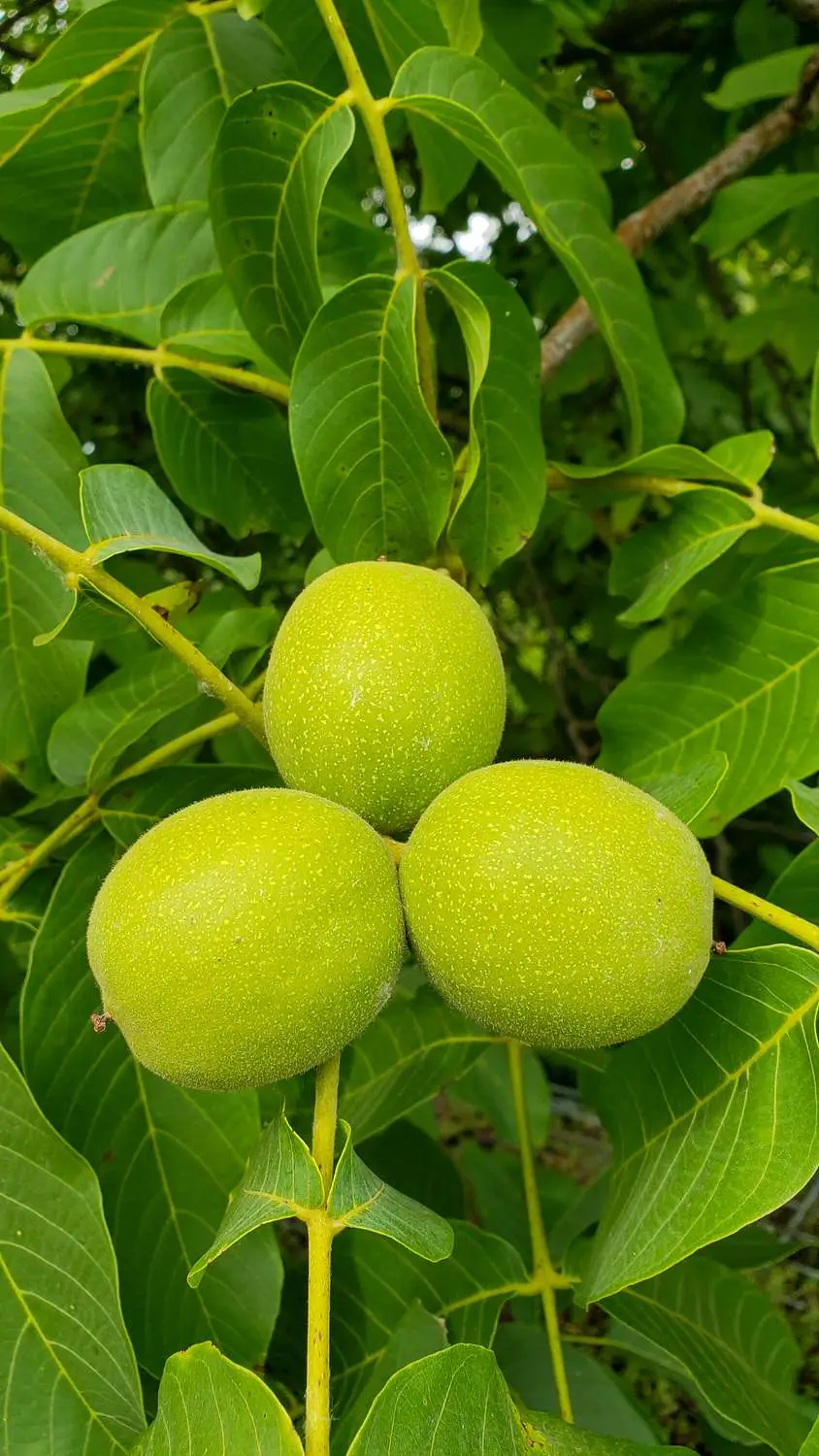
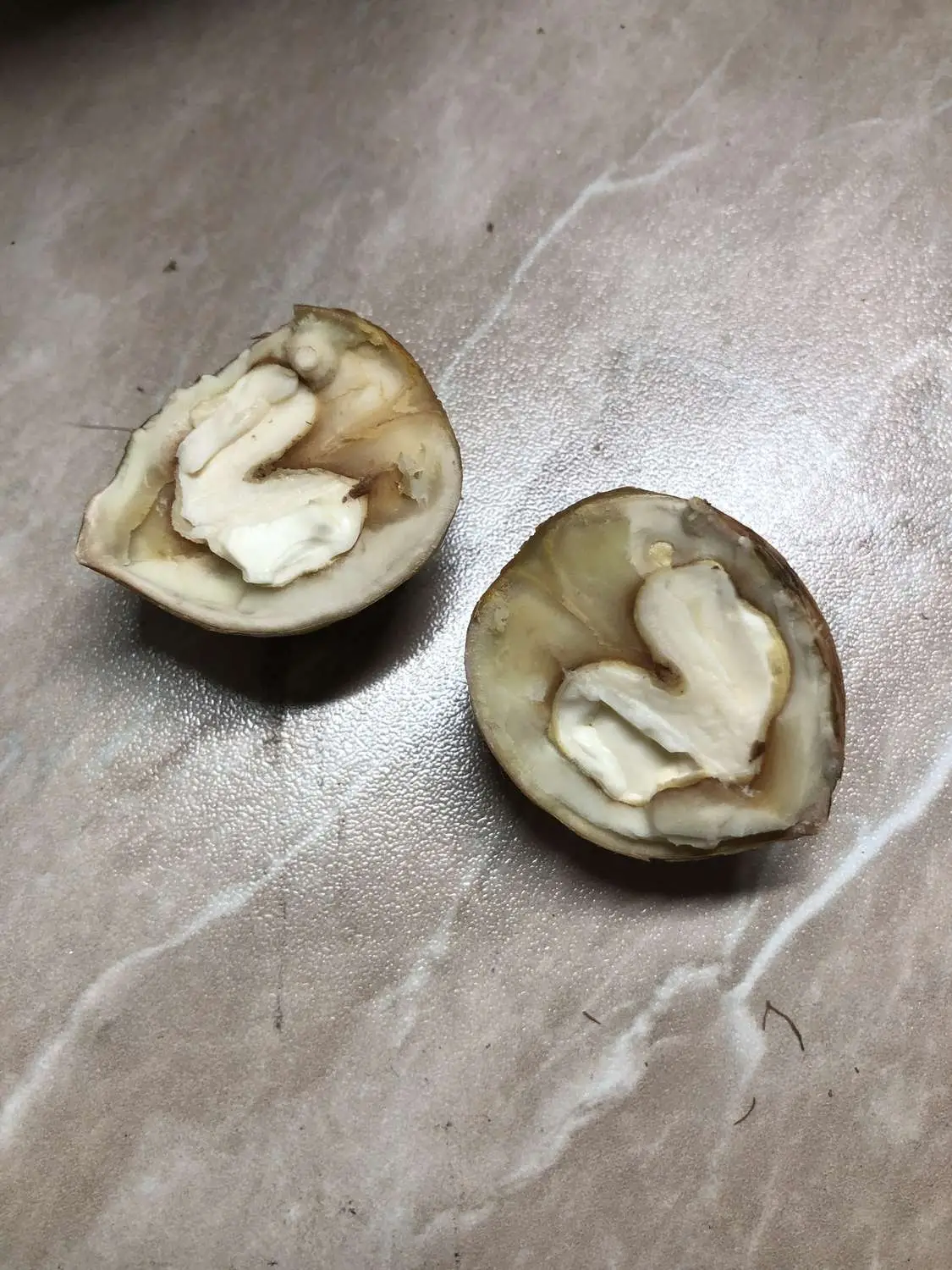
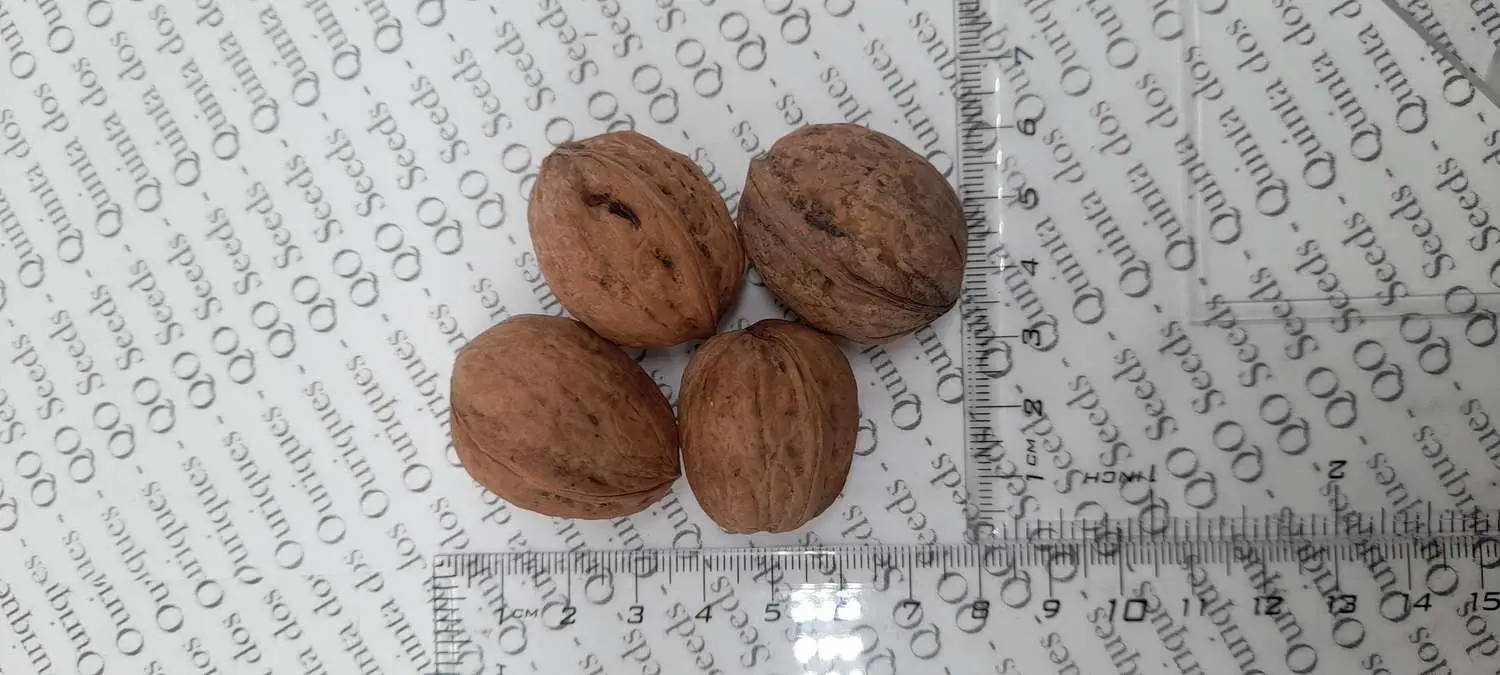
Ripening in the autumn into a fruit with a green, semifleshy husk and a brown, corrugated nut. The whole fruit, including the husk, falls in autumn; the seed is large, with a relatively thin shell, and edible, with a rich flavour.
“Walnut” does not distinguish the tree from other species of Juglans. Other names include common walnut in Britain; Persian walnut in South Africa and Australia; and English walnut in North America and Great Britain, New Zealand, and Australia, the latter name possibly because English sailors were prominent in Juglans regia nut distribution at one time. Alternatively, Walter Fox Allen stated in his 1912 treatise What You Need to Know About Planting, Cultivating and Harvesting this Most Delicious of Nuts: “In America, it has commonly been known as English walnut to distinguish it from our native species.”
The largest forests are in Kyrgyzstan, where trees occur in extensive forests at 1,000–2,000 metres (3,300–6,600 ft) altitude, notably at Arslanbob in Jalal-Abad Province.
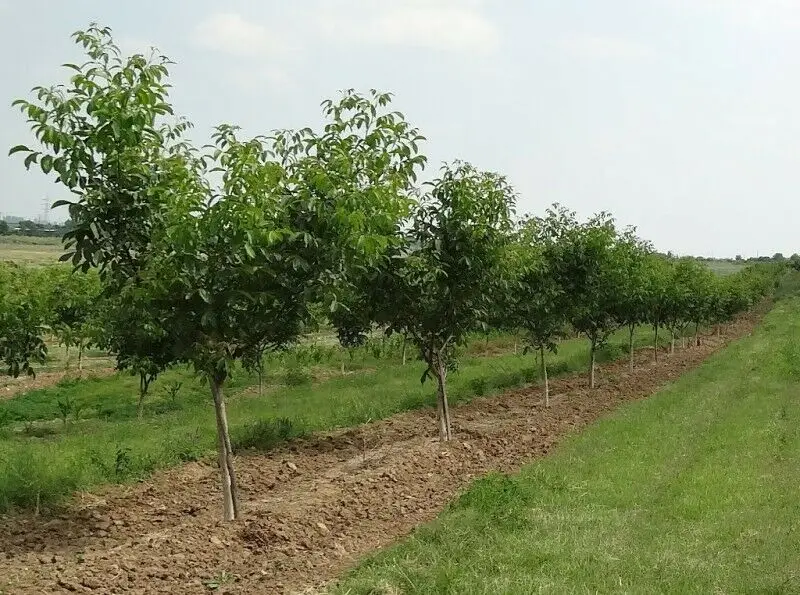
In the fourth century BC, Alexander the Great introduced this “Persian nut” in Macedonian, Ancient Greek ancestral forms with lateral fruiting from Iran and Central Asia. They hybridized with terminal-bearing forms to give lateral-bearing trees with larger fruit. These lateral-bearers were spread in southern Europe and northern Africa by Romans. Recent prospections in walnut populations of the Mediterrean Basin allowed to select interesting trees of this type. In the Middle Ages, the lateral-bearing character was introduced again in southern Turkey by merchants travelling along the Silk Road. J. regia germplasm in China is thought to have been introduced from Central Asia about 2,000 years ago, and in some areas has become naturalized. Cultivated J. regia was introduced into western and northern Europe very early, in Roman times or earlier, and to the Americas in the 17th century, by English colonists. Important nut-growing regions include California in the United States; France, Serbia, Greece, Bulgaria, Romania and Hungary in Europe; China in Asia; Baja California and Coahuila in Mexico; and Chile in Latin America. Lately, cultivation has spread to other regions, such as New Zealand and the southeast of Australia. It is cultivated extensively from 30° to 50° of latitude in the Northern Hemisphere and from 30° to 40° in the Southern Hemisphere. Its high-quality fruits are eaten both fresh or pressed for their richly flavored oil; numerous cultivars have been selected for larger nuts with thinner shells.
Only logged in customers who have purchased this product may leave a review.
Reviews
There are no reviews yet.