
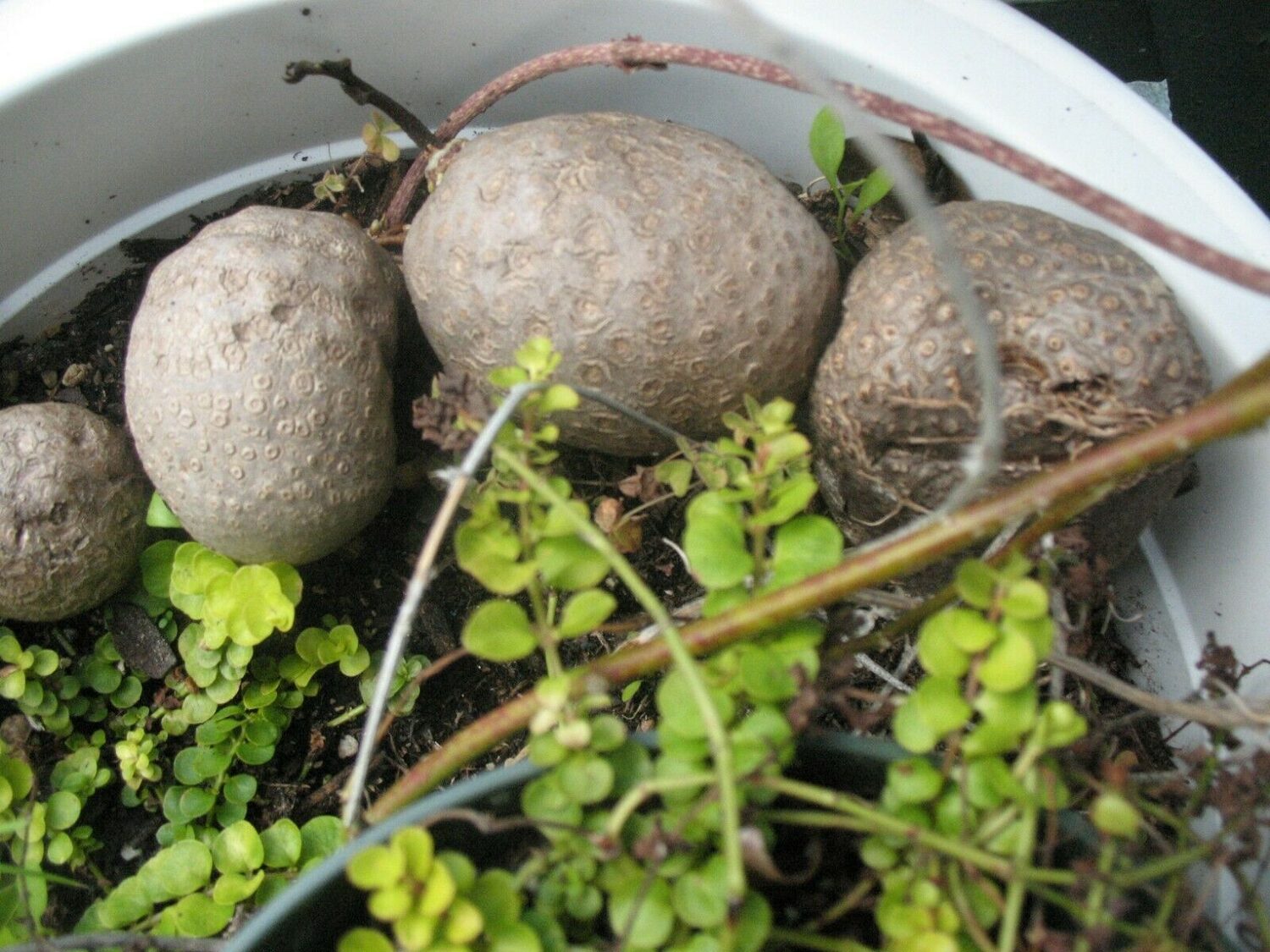
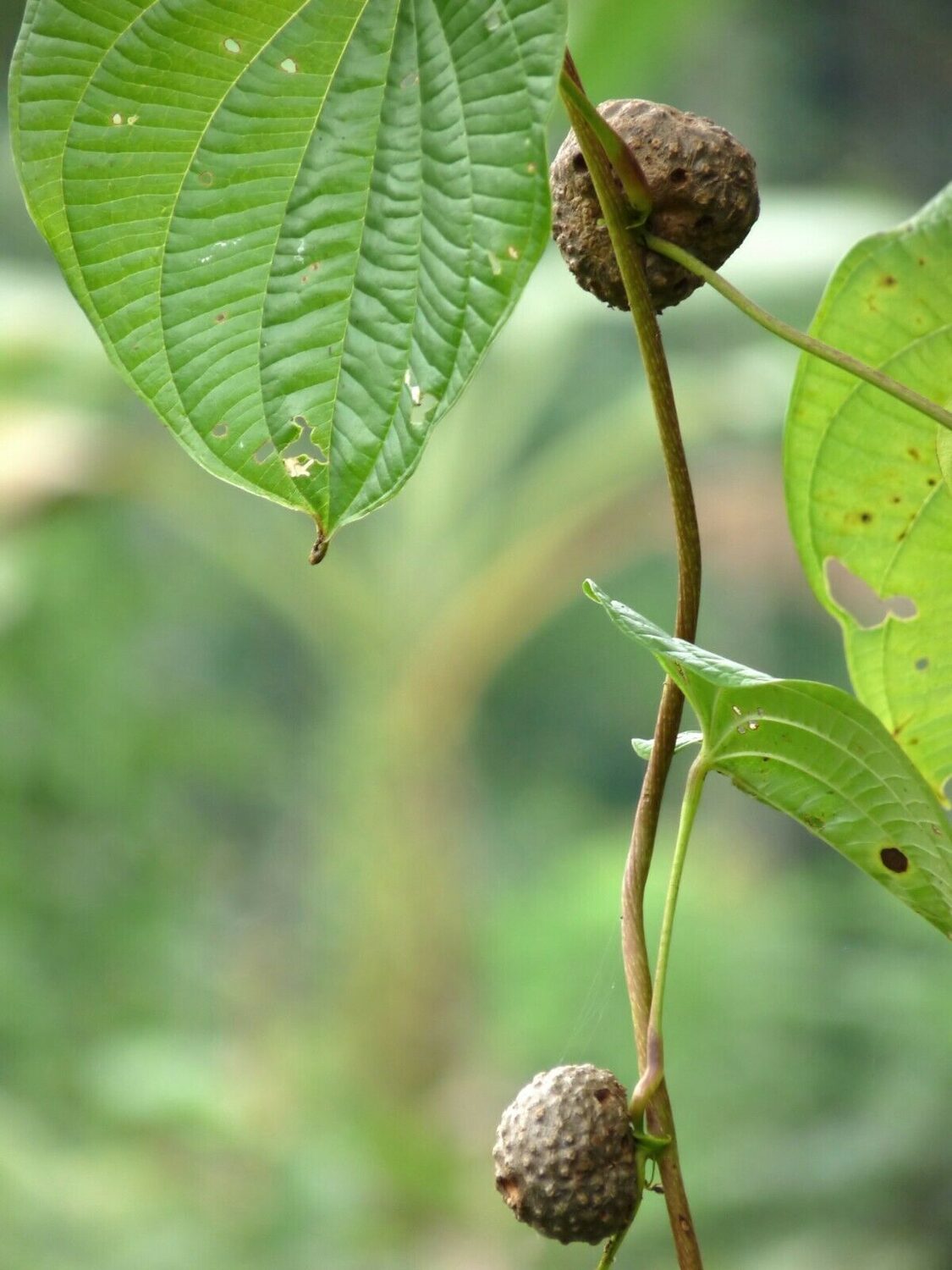
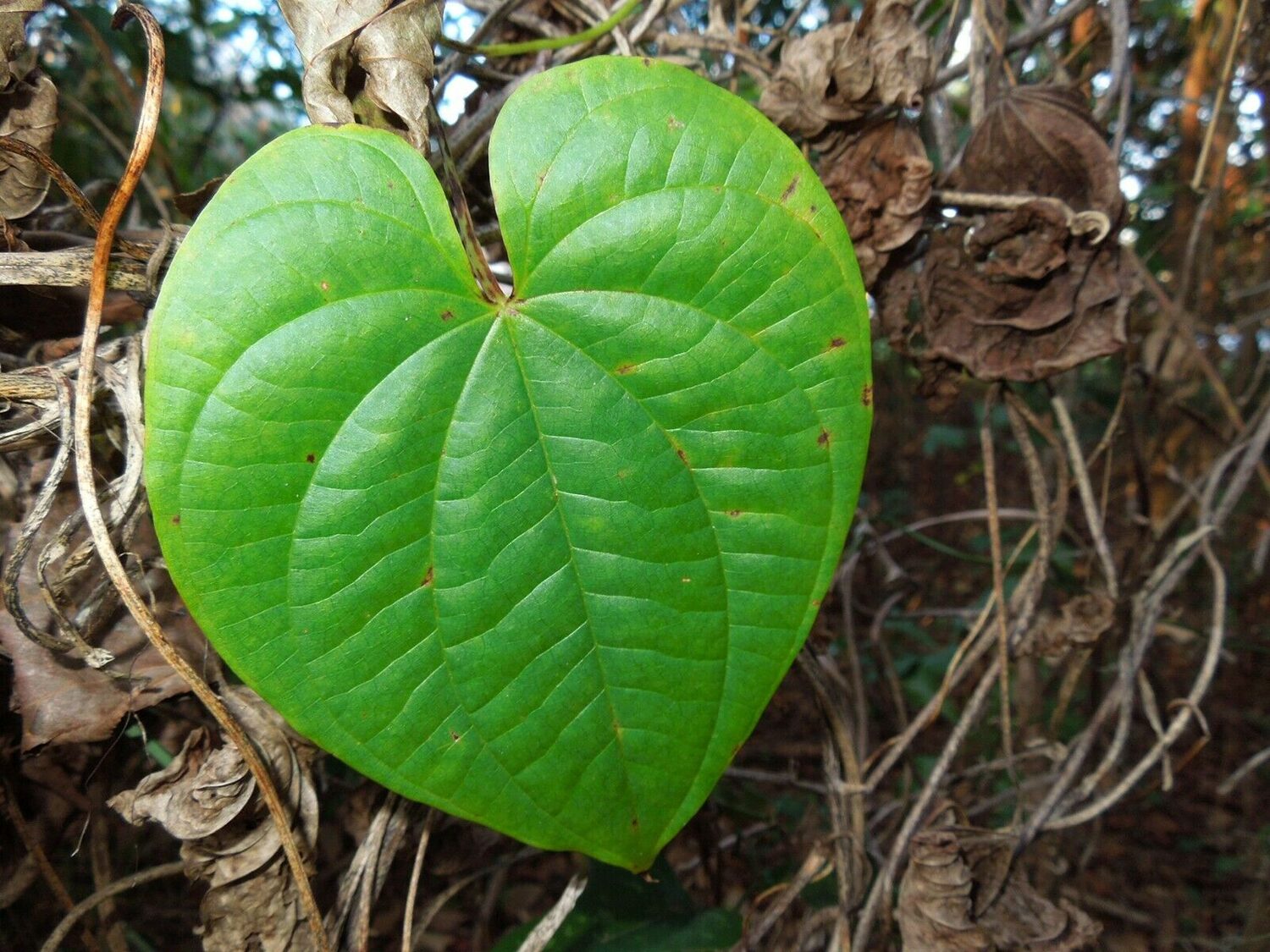
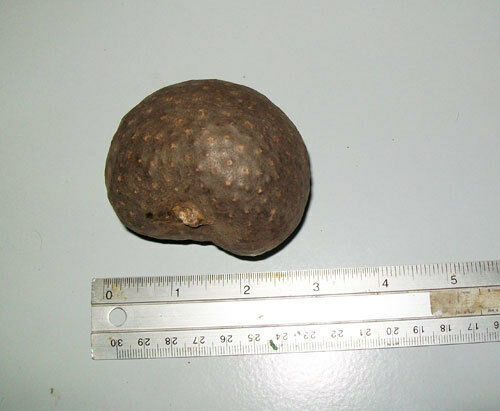
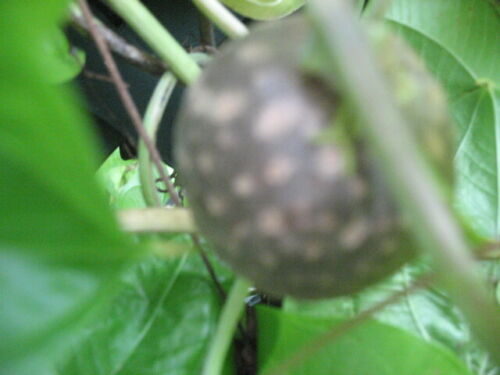
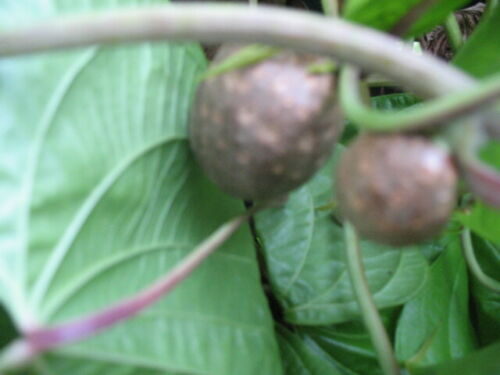
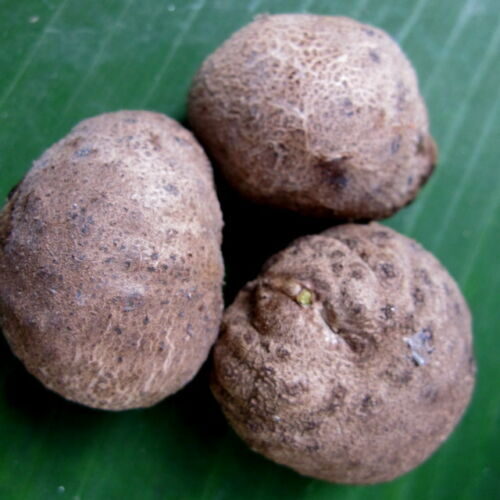
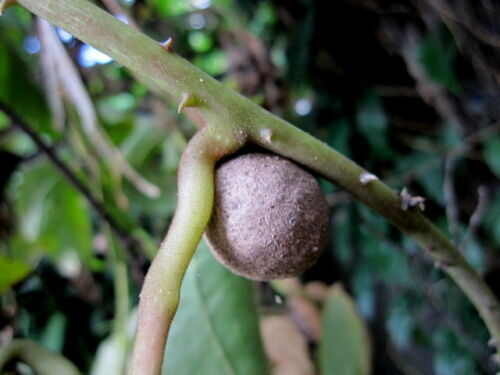
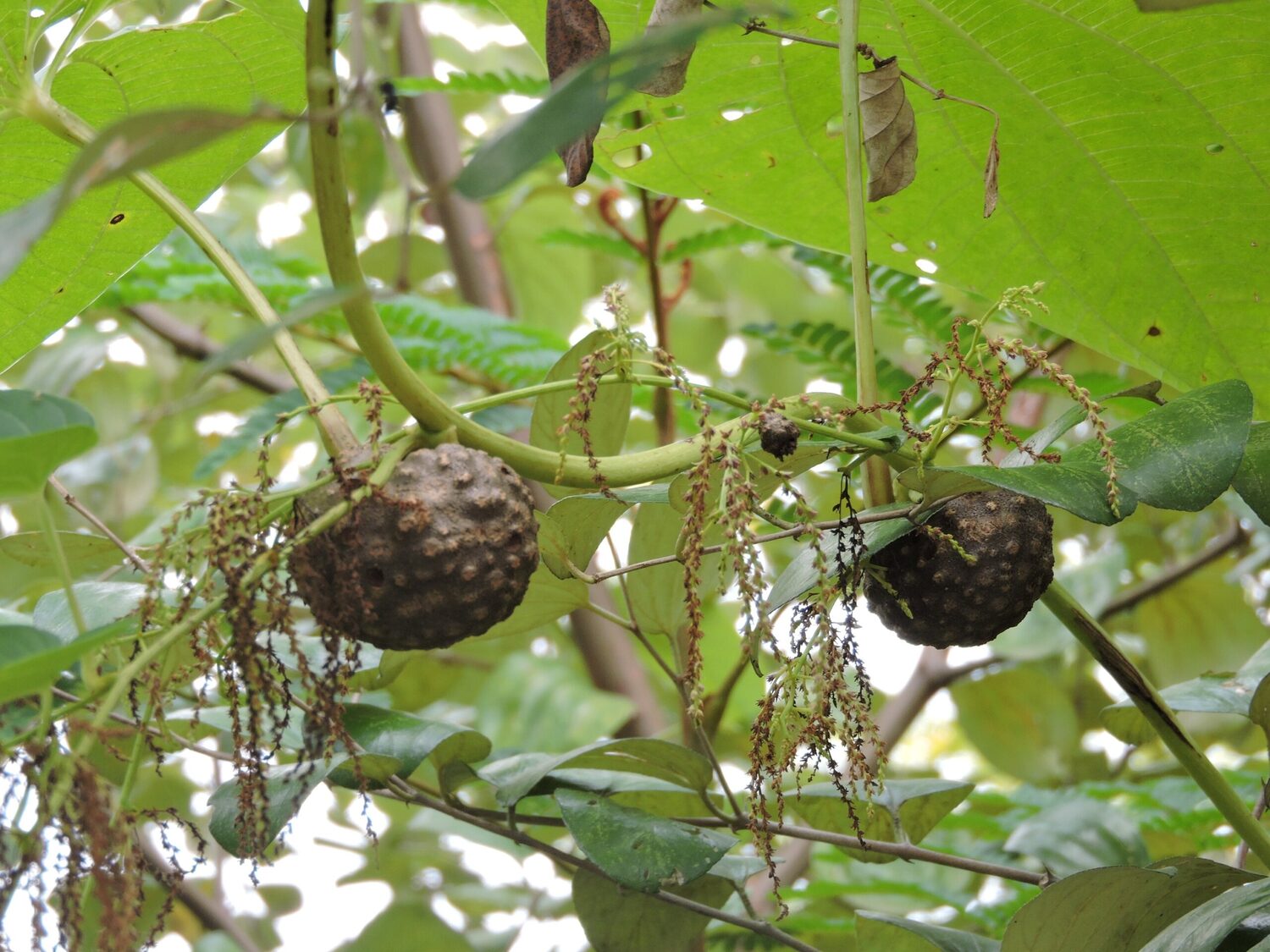
Grow the legendary air potato vine that ancient Ayurvedic texts praised for centuries. Unlike underground yams, this vigorous climber produces delicious potato-like aerial tubers (bulbils) right along the vines—harvest them like hanging treasure. Cultivated varieties are mild and versatile; cook them as potatoes, boiled, baked, or fried. With its lush heart-shaped foliage and remarkable vigor, this is the ultimate permaculture plant. Ridiculously easy to g
€2.28
This is the yam that floats—literally producing its harvest in the air rather than underground, making it one of nature’s most theatrical food plants.
Dioscorea bulbifera hails from tropical Africa and Southeast Asia, where it has been cultivated as a staple for millennia. Unlike its underground-dwelling cousins, the air potato earned its name by defying gravity: potato-like bulbils (aerial tubers) form directly on the twining vines at leaf axils, creating an otherworldly sight as they cluster along emerald-green heart-shaped foliage. What makes it uniquely desirable is that it was domesticated independently in both Africa and Asia thousands of years ago, giving rise to diverse cultivars—some bred specifically for lower toxicity and superior flavor. The plant’s vigorous growth—capable of extending 15 cm per day during peak season—makes it a living green wall on any trellis or tree, transforming bare structures into lush vertical gardens.
The culinary magic lies in its edible bulbils. In West Africa, Southeast Asia, and throughout the tropics, cultivated varieties have been celebrated as a premium food crop for centuries. When properly prepared (as cultivars bred for eating should be), the aerial tubers are starchy, agreeable in flavor, and entirely versatile: boil, bake, fry, or steam them like potatoes. The bulbils can weigh from a few grams to over 1 kilogram depending on variety, and a modest planting yields abundantly. They’re packed with proteins, fats, and micronutrients—nutrients so valued that contemporary research confirms their potential as functional foods. Beyond the kitchen, cultivated air potato represents a treasure trove of phytocompounds. The bulbils and tubers contain diosgenin, a steroidal saponin used in laboratories to synthesize cortisone and pharmaceutical hormone compounds, which is why traditional medicine practitioners in China and India have revered this plant for over 1,500 years.
Growing air potato from seed is refreshingly straightforward, especially compared to other tropical vines. It thrives in full sun or partial shade, tolerates both moist and drought conditions, and adapts to sandy, loamy, or clay soils with equal grace. You need only a sturdy support—a tree, trellis, or pergola—and basic weeding for the first season. The plant is deciduous in cooler regions, shedding its vines seasonally and leaving bulbils to fall and cure on the ground, making harvest effortless. Hardy to USDA zone 9 and beyond, it rewards minimal care with vigorous growth and prolific production. For permaculture designers, homestead builders, and tropical gardeners, this is the three-in-one plant: edible abundance, pharmaceutical intrigue, and living sculpture all rolled into one thriving vine.
Start your air potato from bulbils or tuber cuttings and watch it climb. Within two seasons, you’ll understand why this ancient plant has captivated cultures across two continents—and you’ll be harvesting your own aerial treasure.
Only logged in customers who have purchased this product may leave a review.
Reviews
There are no reviews yet.