Description
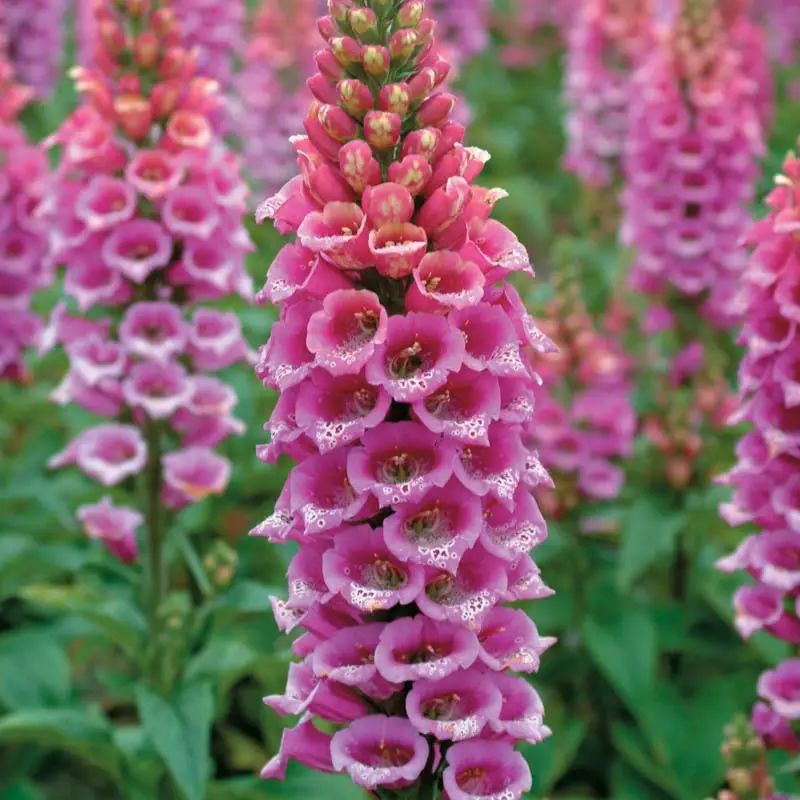
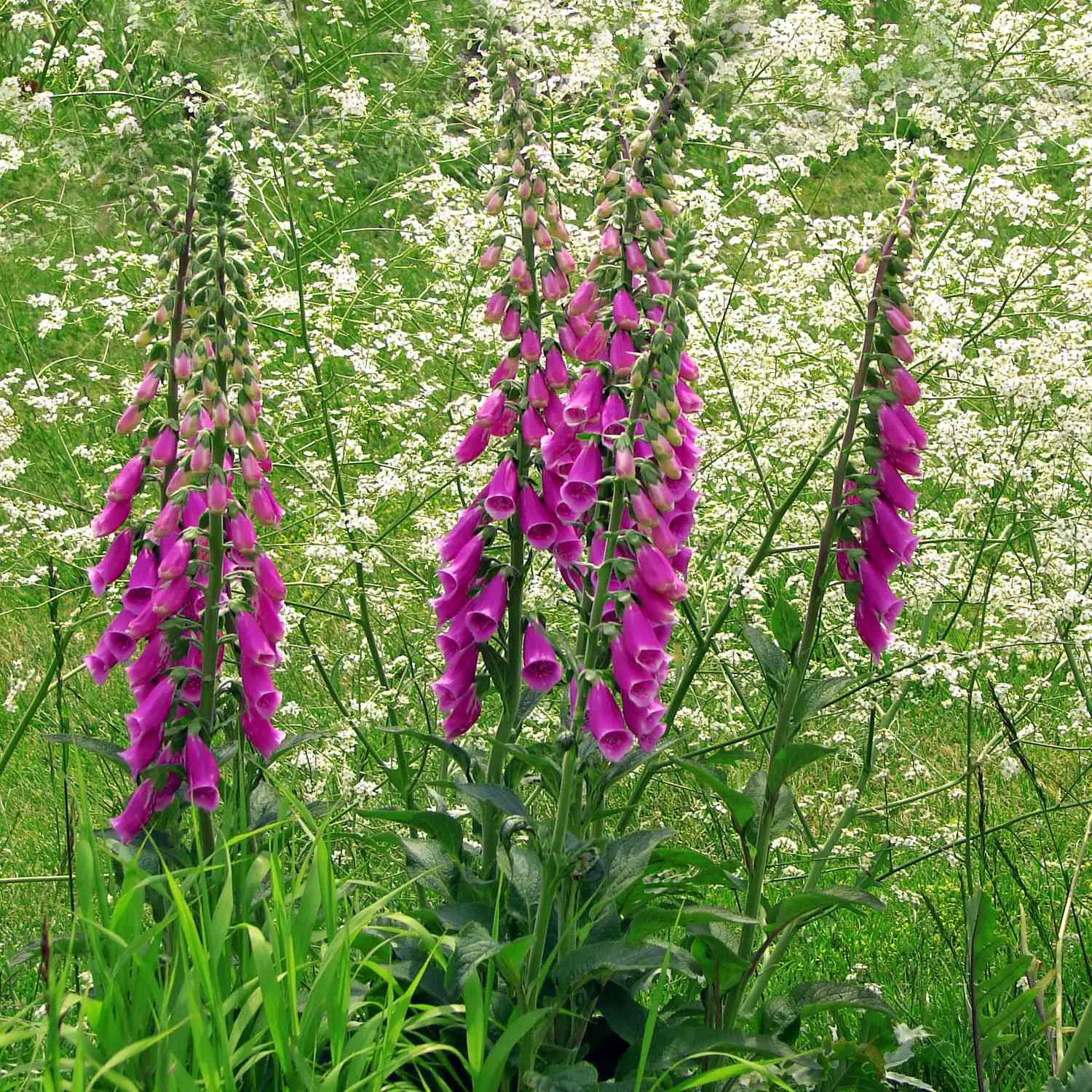
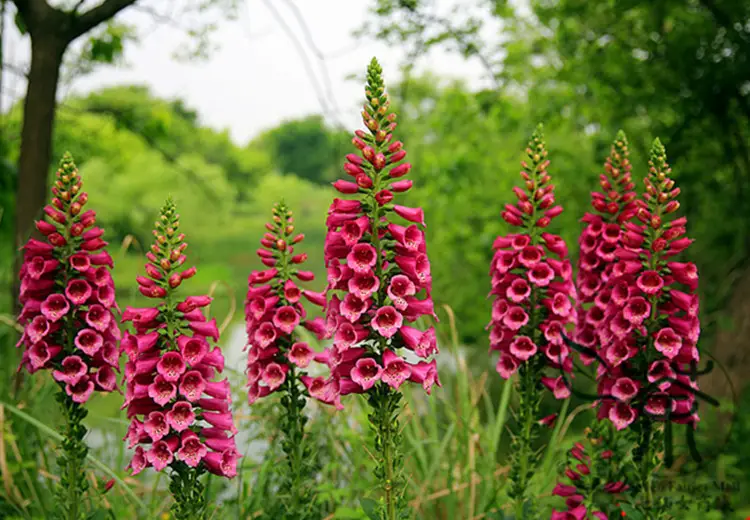
Digitalis purpurea, the foxglove or common foxglove, is a toxic species of flowering plant in the plantain family Plantaginaceae, native to and widespread throughout most of temperate Europe. It has also naturalized in parts of North America, as well as some other temperate regions. The plant is a popular garden subject, with many cultivars available. It is the original source of the heart medicine digoxin (also called digitalis or digitalin). This biennial plant grows as a rosette of leaves in the first year after sowing, before flowering and then dying in the second year (it is monocarpic). It generally produces enough seeds so that new plants will continue to grow in a garden setting.
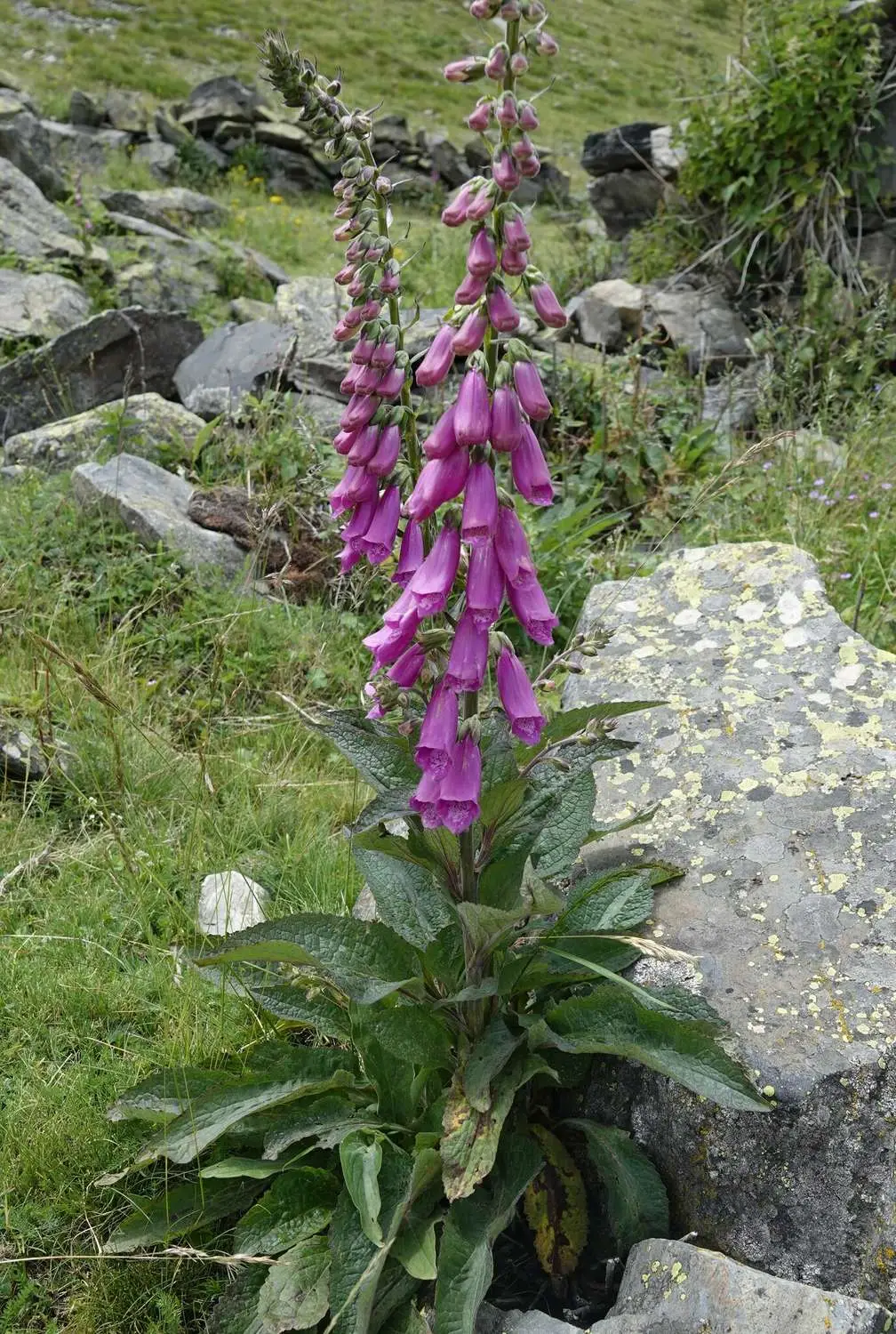
Digitalis purpurea is an herbaceous biennial or short-lived perennial plant. The leaves are spirally arranged, simple, 10–35 cm (3.9–13.8 in) long and 5–12 cm (2–5 in) broad, and are covered with gray-white pubescent and glandular hairs, imparting a woolly texture. The foliage forms a tight rosette at ground level in the first year.
Digitalis purpurea grows in acidic soils, in partial sunlight to deep shade, in a range of habitats, including open woods, woodland clearings, moorland and heath margins, sea-cliffs, rocky mountain slopes and hedge banks. It is commonly found and readily colonises sites where the ground has been disturbed, such as recently cleared woodland, or where the vegetation has been burnt. It also colonises areas of land that have been disturbed by clear-felling and by construction projects, being among the first wildflowers to reappear, often in large quantities. Foxgloves are eurytopic plants, as their seeds germinate when exposed to light; for this reason, they are generally absent from shaded areas, such as within woodlands.
Germination Guide
🌍 Temperate Europe, Western Europe, North Africa (Morocco)
Easy
Digitalis purpurea, commonly known as foxglove or common foxglove, is a biennial herbaceous plant native to temperate Europe and Western Europe with bell-shaped tubular flowers in shades of purple, pink, and white. Seeds require light for germination and prefer cool temperatures (10-18°C); cold stratification for 2-4 weeks improves germination rates. This species is easy to grow but all parts are highly toxic and should be handled with care.
Germination
Germination time
Expect germination in
10 – 21 days
Temperature
Min 15°C
Ideal 18°C
Max 18°C
Substrate moisture
💧💧 High
Substrate & Container
Recommended substrate
Seed compost or peat-based growing mix, pH 5.8-6.2, well-draining
Recommended container
Seed trays, module trays, or individual cell packs for indoor sowing
Growing Tips
Do not cover seeds - they require light to germinate. Press seeds lightly into moist seed compost. Keep media moisture high during germination. Maintain cool storage temperatures (10-15°C) for best results. Water overhead with fine mist to help reduce germination inhibitors. Once germination begins, remove humidity dome and provide bright light 12-14 hours daily. Thin seedlings to one per cell when large enough. Avoid waterlogging. Plant is poisonous - handle with gloves and keep away from children and pets.
Only logged in customers who have purchased this product may leave a review.

Reviews
There are no reviews yet.