
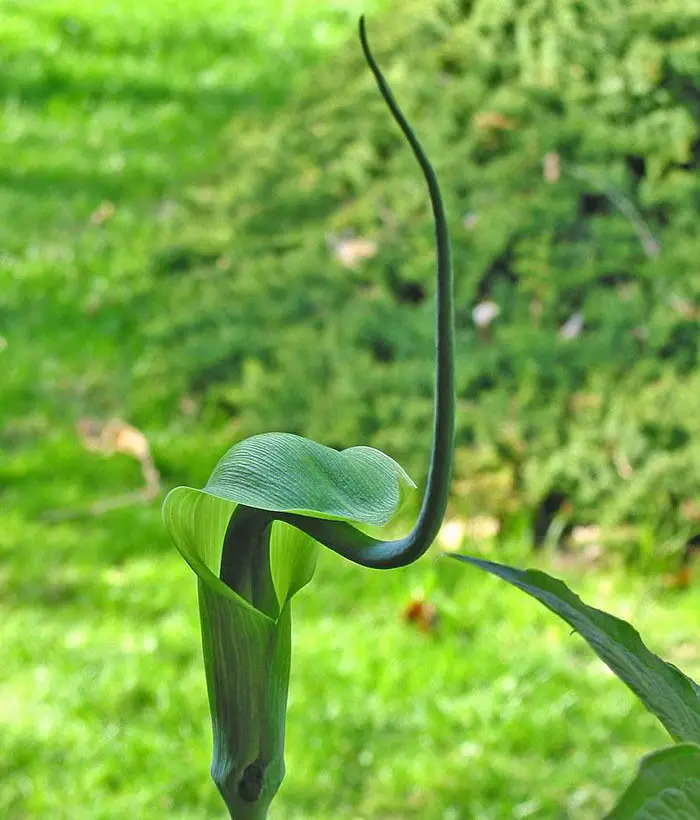
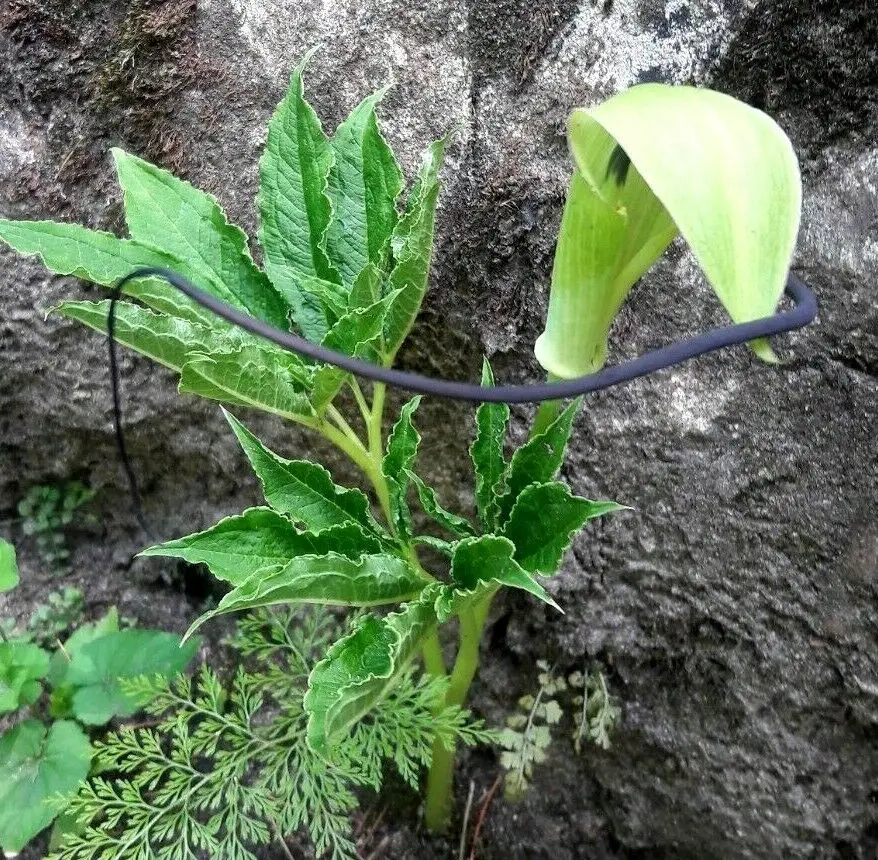
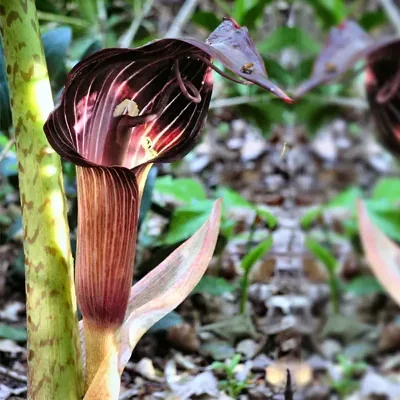
A towering Himalayan treasure with mottled stems and a dramatic purple whip-like flower, prized for centuries by traditional healers as an antidote to snake venom and blood purifier. Hardy, shade-loving, and readily grown from seed—bring ancient wisdom and architectural drama to your woodland garden.
€2.07
Imagine a plant so strikingly beautiful it stops you cold—and so deeply rooted in human history that its tubers have healed for centuries across the Himalayas and beyond. That’s Arisaema tortuosum.
ORIGIN & LEGEND
Native to the mist-shrouded forests of the Himalayas, western China, southern India, and Myanmar, this extraordinary plant grows where few dare venture—in rhododendron forests, alpine meadows, and cool mountain scrub above 3,000 meters. For generations, Himalayan peoples have treasured its tubers as sacred medicine: an antidote to poisonous snake bite, a blood purifier, a healer of rheumatism and stomach ailments. When you grow this plant from seed, you’re cultivating not just botany—you’re growing living history.
THE HEALING TREASURE: TRADITIONAL MEDICINE & ETHNOBOTANY
This is where Arisaema tortuosum transcends ornament and becomes something profound. Tribal healers across the Himalayan region have used tuber extracts for millennia as an antidote to snake venom and as a powerful blood purifier. The dried and powdered tuber has been divided into three doses and taken orally to cure liver complaints and stomachache—three days, three doses, three centuries of trust. In Nepal, the prepared tubers are boiled and eaten, traditionally mixed with lime juice to neutralize the plant’s natural crystals and unlock its nutritional potential. Even the unripe green fruits—pea-sized treasures—are foraged, preserved in salt, and cooked as food in northeast India. This is a plant that embodies the profound intersection of medicine, food, and culture. Growing it connects you to an ancient botanical legacy.
THE SPECTACLE: WHAT MAKES IT IRRESISTIBLE
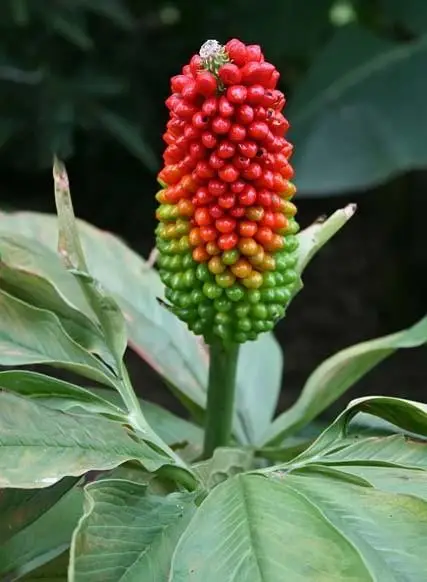
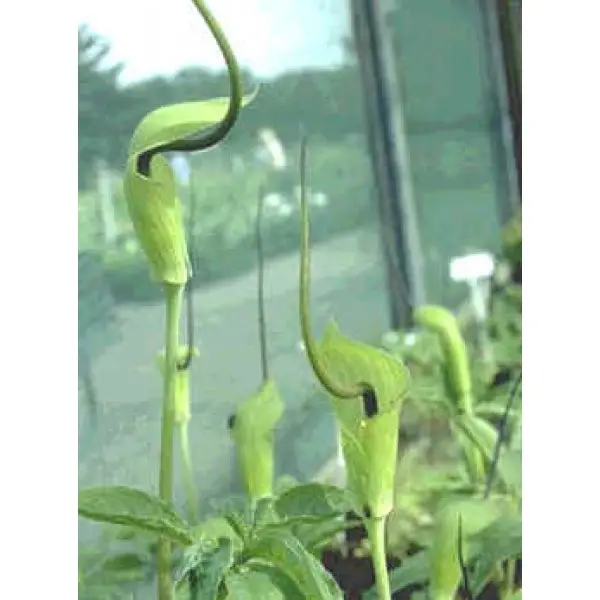
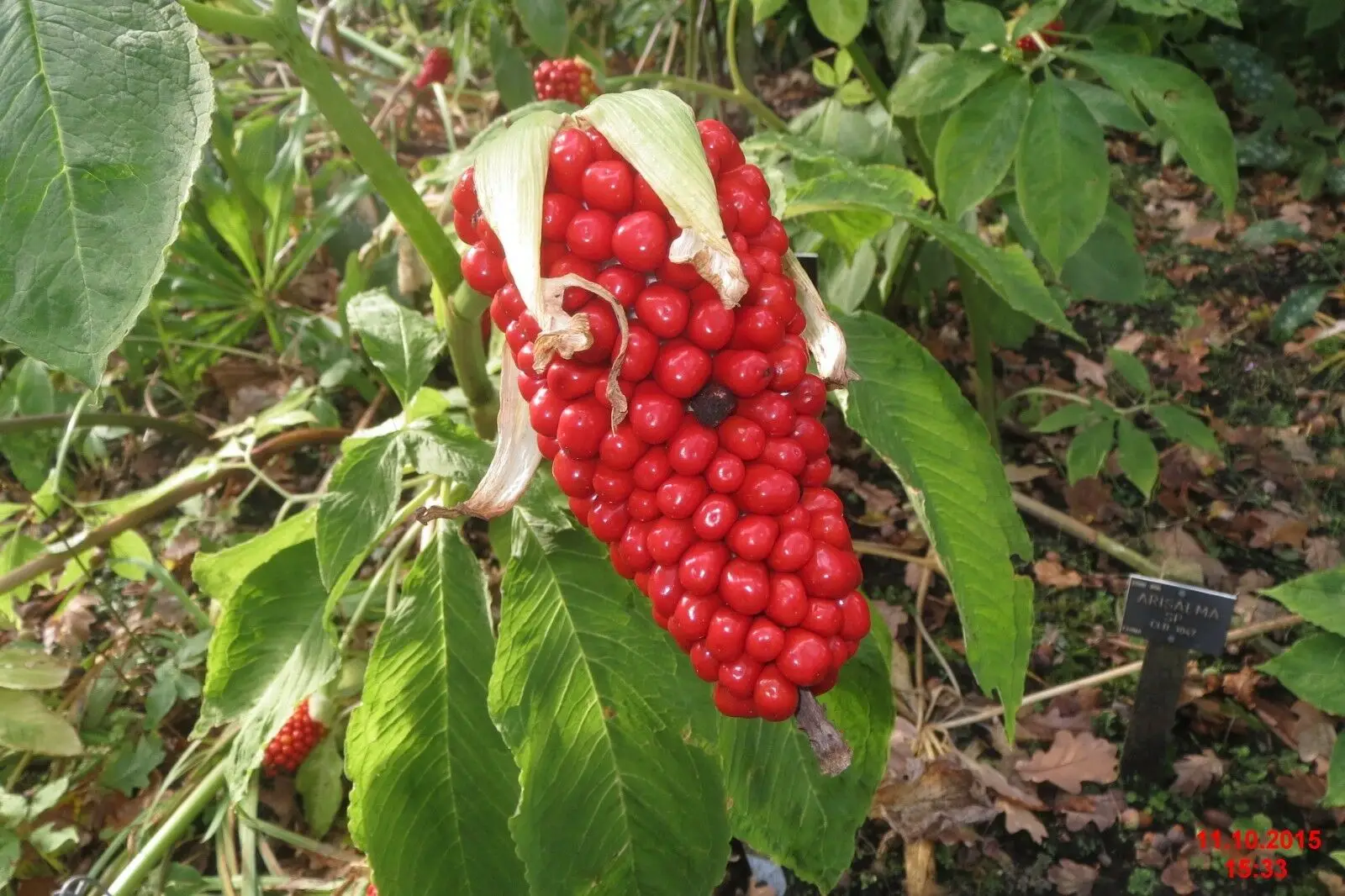
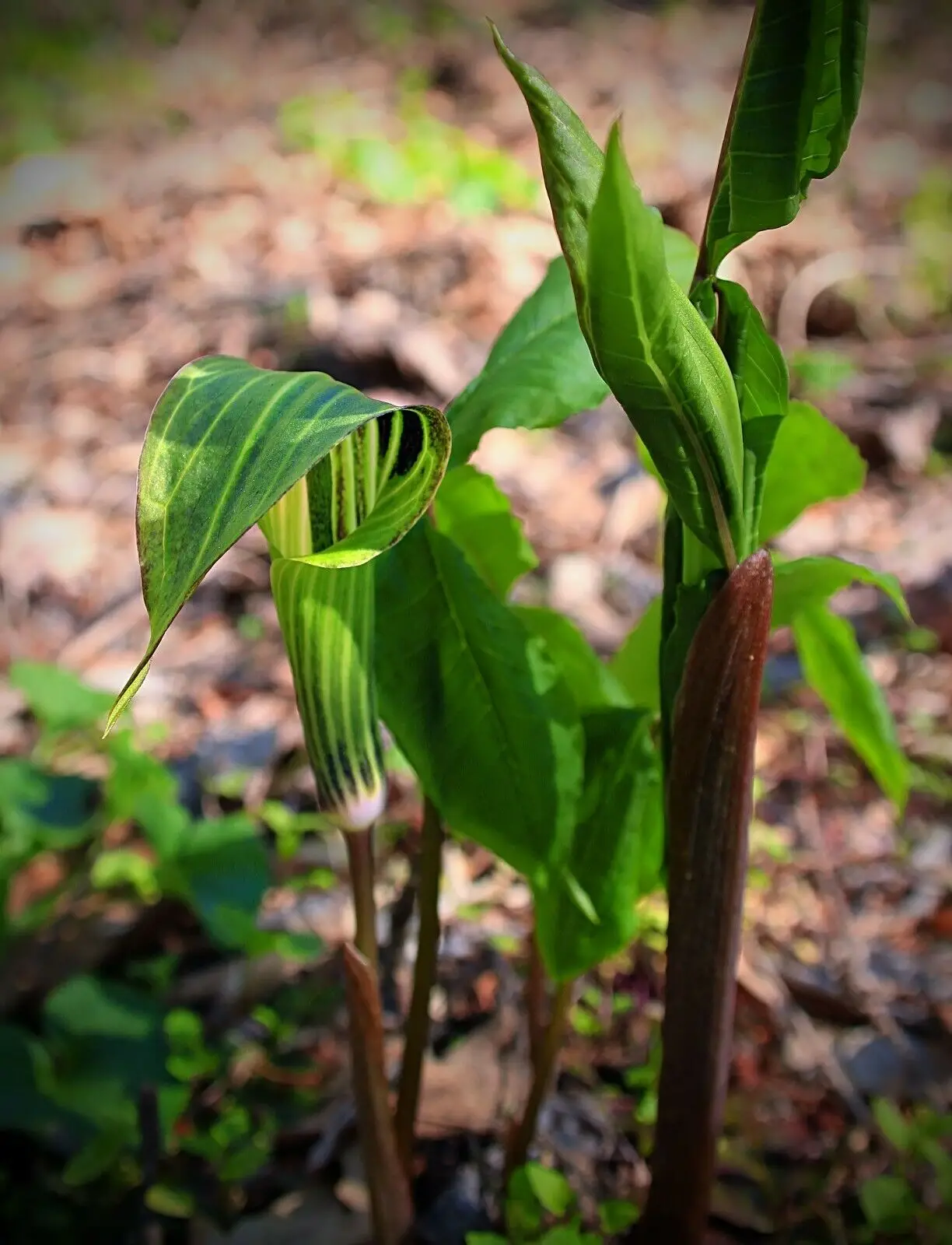
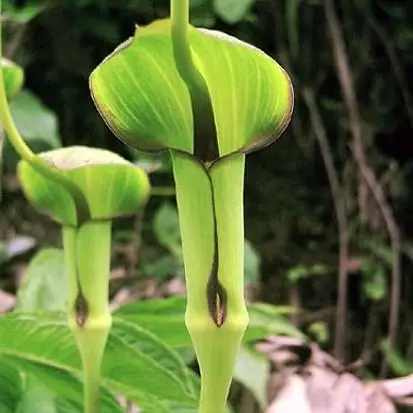
But let’s be honest—you’ll grow this for the drama. Arisaema tortuosum is the tallest of its entire genus, rising 4–6 feet on spectacularly mottled stems that look hand-painted by nature itself. From the pale green spathe emerges a purple or green whip-like spadix—a slender, elegant “tongue” that can stretch up to 30 centimeters skyward, like the plant is reaching for something only it can see. In late spring and early summer, emerald blooms appear, and by autumn the true magic unfolds: enormous, heavy heads of brilliant scarlet berries that persist and dazzle through the season. This is not a shy plant. It’s a conversation piece, an architectural statement, a living sculpture in your shade garden.
CULTIVATION: SURPRISINGLY FORGIVING
Here’s the beautiful news: growing Arisaema tortuosum from seed is genuinely rewarding. It’s hardy to USDA Zone 5 and can tolerate temperatures down to –5°C, making it one of the most resilient members of its genus. The species naturally prefers moist, humus-rich, well-drained soil in partial to full shade—conditions that mimic its Himalayan forest home. Plant or sow in cool, dappled shade. The tubers establish readily and require minimal fussing once established. During the growing season (spring through early summer), keep soil consistently moist but not waterlogged. When foliage dies back in autumn, reduce watering and mulch heavily to protect the dormant tuber through winter. No special care required—just shade, moisture, and patience. The tubers will spend 2–3 years building strength before they reach full stature, but the wait is worth every moment.
YOUR INVITATION
Grow this seed and you’re not simply creating a garden feature—you’re stewarding a plant with roots in Himalayan medicine, folklore, and the living traditions of mountain peoples. You’re cultivating something tall, bold, and unapologetically unusual. In a world of ordinary gardens, Arisaema tortuosum is the plant that makes people stop and ask: “What *is* that?” The answer is magic. Ancient, healing, unforgettable magic.
Only logged in customers who have purchased this product may leave a review.
Reviews
There are no reviews yet.