
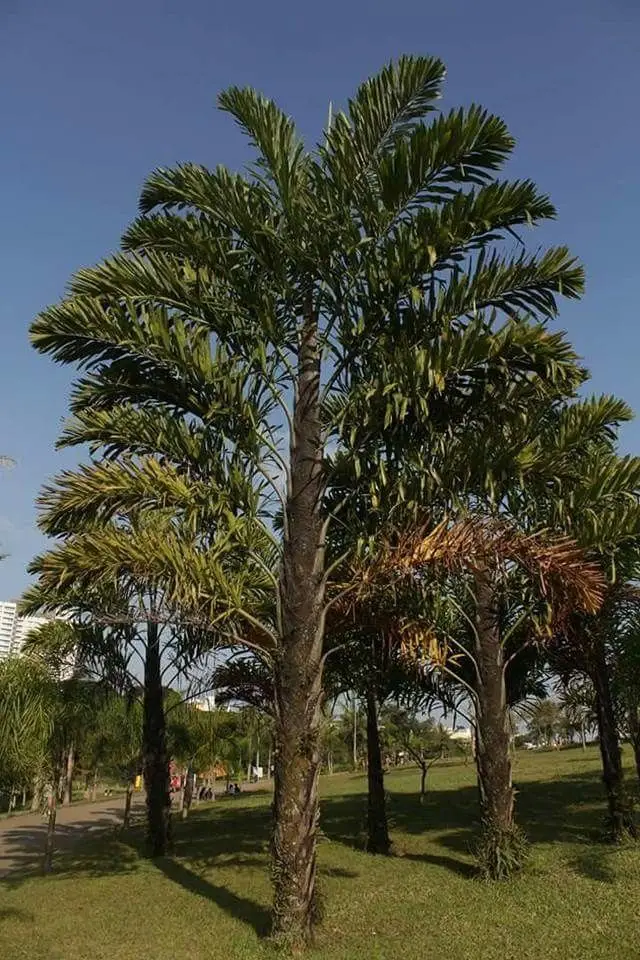

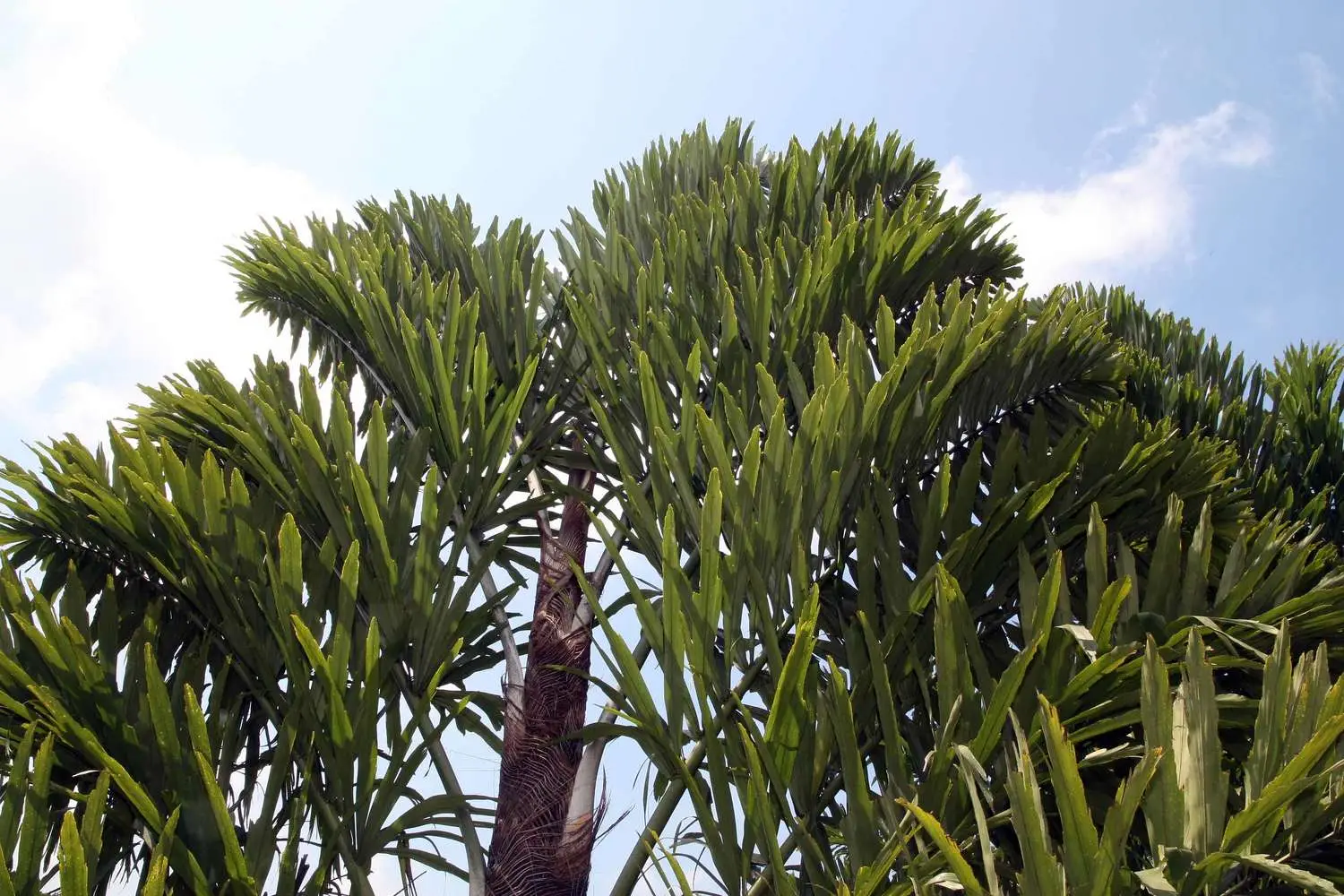
Imagine a palm that grows its magnificent feathery fronds in just two perfect rows—like an exotic living sculpture suspended in space. Wallichia disticha, the legendary Distichous Fishtail Palm from the Eastern Himalayas, is one of the most intriguing and sought-after palms on Earth. Fast-growing and remarkably easy to cultivate, it transforms any garden or interior into a tropical sanctuary. Grow it from seed and watch this living marvel unfold.
€2.78
Grow one of the rarest and most architecturally stunning palms in existence: a living artwork that defies the rules of botanical design.
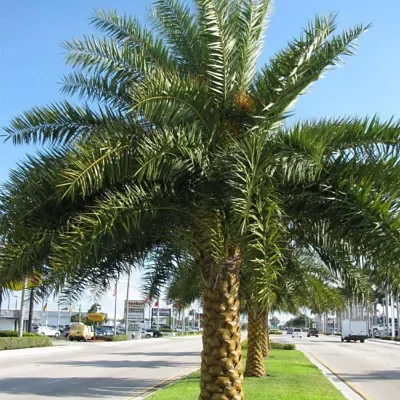
Wallichia disticha is extraordinarily unusual—it’s the only species in its entire genus that arranges its leaves in a perfectly distichous pattern, meaning both fronds emerge in two exact opposite rows along a single plane. Looking down from above, all the leaves form one perfectly straight line. This geometric perfection creates a flat, fan-like crown that looks like nothing else in the plant kingdom. The feathery, fishtail-like leaflets are dark green above and silvery-white beneath, a color contrast that dances with every breeze. When mature, this Himalayan jewel reaches 6-8 meters with an elegant, solitary trunk crowned in a striking criss-cross pattern of old leaf bases.
Native to the montane rainforests of Northeast India, Burma (Myanmar), Nepal, and the Eastern Himalayas, Wallichia disticha grows in the misty foothills where tropical heat meets cool mountain air. The name itself—disticha, from the Greek meaning “two lines”—is a botanical celebration of its singular glory. Collectors worldwide treasure this species for its instant recognizability and rare, desirable appearance. Botanical gardens and premium landscape designers prize it as the ultimate showstopper specimen plant, a living conversation piece that announces sophistication and botanical knowledge.
This is an ornamental masterpiece. While many palms fade into the background, Wallichia disticha commands attention in any setting—whether planted as a focal point in tropical gardens, positioned on a sunlit patio, or displayed as a container specimen. Its architectural leaves create dramatic shadows and play with light in ways ordinary palms cannot. It grows extremely fast once established, rewarding patient growers with rapid visual impact. The true gift: this palm is remarkably easy to cultivate. Unlike temperamental exotics, Wallichia disticha thrives in a wide range of conditions. It adapts to sandy, clay, and loam soils, tolerates both slightly acidic and alkaline pH, and is far more cold-tolerant than most tropical palms—hardy to USDA Zone 9b-11 with some frost resistance. It prefers full sun and warm, humid conditions but grows vigorously in subtropical climates and even adapts to container culture indoors or on sheltered patios.
Growing from seed is a rewarding meditation. Soak seeds in warm water for 24 hours, plant them in well-draining, sandy-humus mix, and keep them warm (80-90°F) and consistently moist. Germination begins within weeks, though some seeds take months—this patience is part of the magic. Once sprouted, seedlings are enchanting, growing steadily into juveniles that will eventually become the striking architectural masterpiece you’ve dreamed of. Young specimens thrive in bright, humid environments and transition beautifully into larger pots or garden soil as they mature. The soil should be rich and well-draining; avoid waterlogged conditions. Feed with balanced, micronutrient-rich fertilizer to prevent the yellowing that signals iron or magnesium deficiency. This palm lives 10-20 years from seedling to flower—a monocarpic cycle that makes every year of growth a treasure. Plant it now, nurture it, and in a decade you’ll have cultivated something genuinely rare: a living sculpture that collectors dream of, a botanical statement piece that grows more magnificent each year. This isn’t just a palm. It’s an heirloom you’re creating from a single seed.
Only logged in customers who have purchased this product may leave a review.
Reviews
There are no reviews yet.