
Grow your own pink peppercorns straight from the Andes. This stunning evergreen produces clusters of rosy berries with a mild, sweet-spicy flavor prized in haute cuisine and bartending. Feathery foliage, creamy spring blooms, and centuries of Incan heritage in one fast-growing tree. Thrives in full sun, well-draining soil, and tolerates drought once established. Start from seed and watch it flourish.
€1.92
Imagine harvesting your own pink peppercorns under a canopy of feathery, emerald leaves that dance in the breeze — a living connection to the mountain valleys of Peru, where the Inca cultivated this sacred tree for over 1,300 years.
Schinus molle, native to the arid Andes from Peru through Bolivia to central Argentina, is far more than an ornamental marvel. It is a working tree with a profound history. The name itself carries weight: molle derives from mulli, the Quechua word for tree — a word spoken by indigenous hands for millennia. What makes this species unique is its absolute refusal to be pigeonholed. It is evergreen persistence, medicinal tradition, culinary treasure, and landscape poetry all at once.
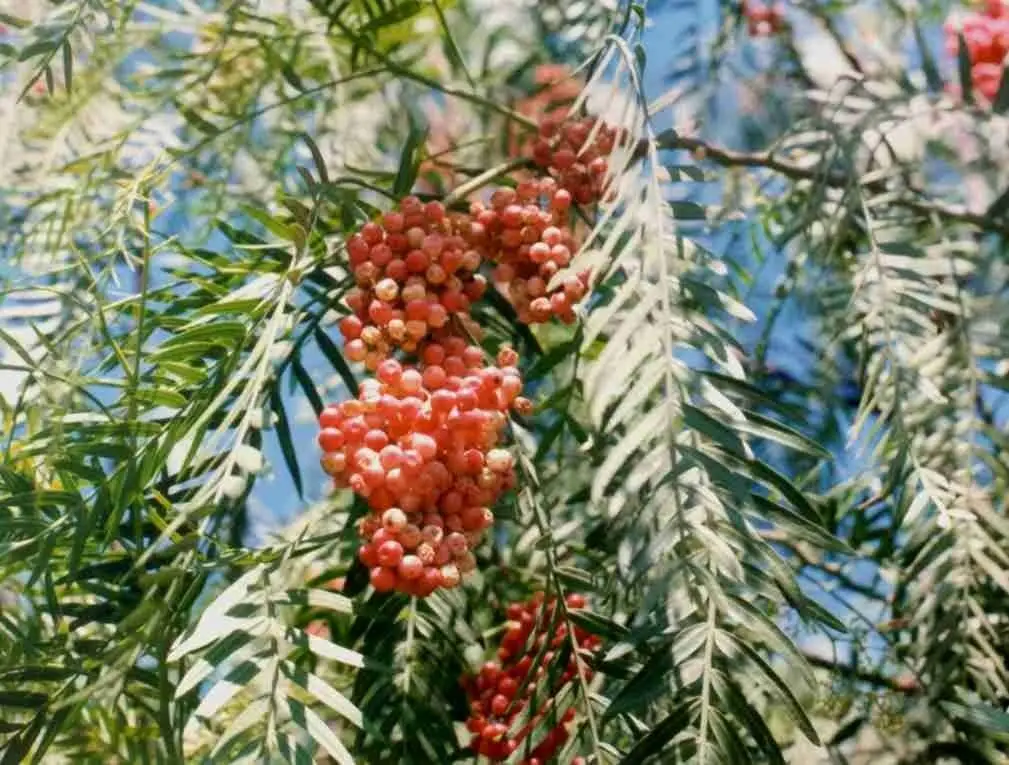
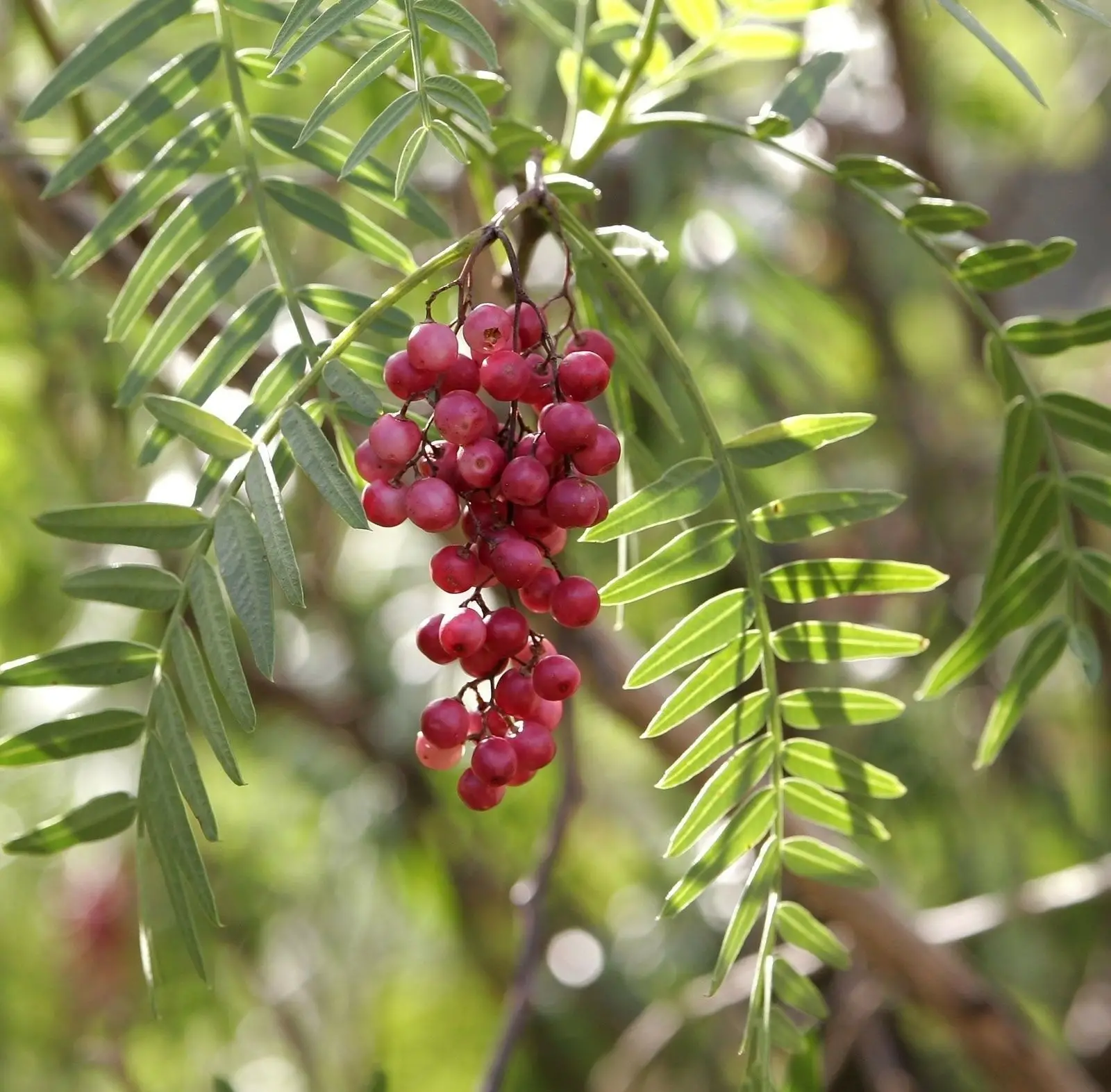
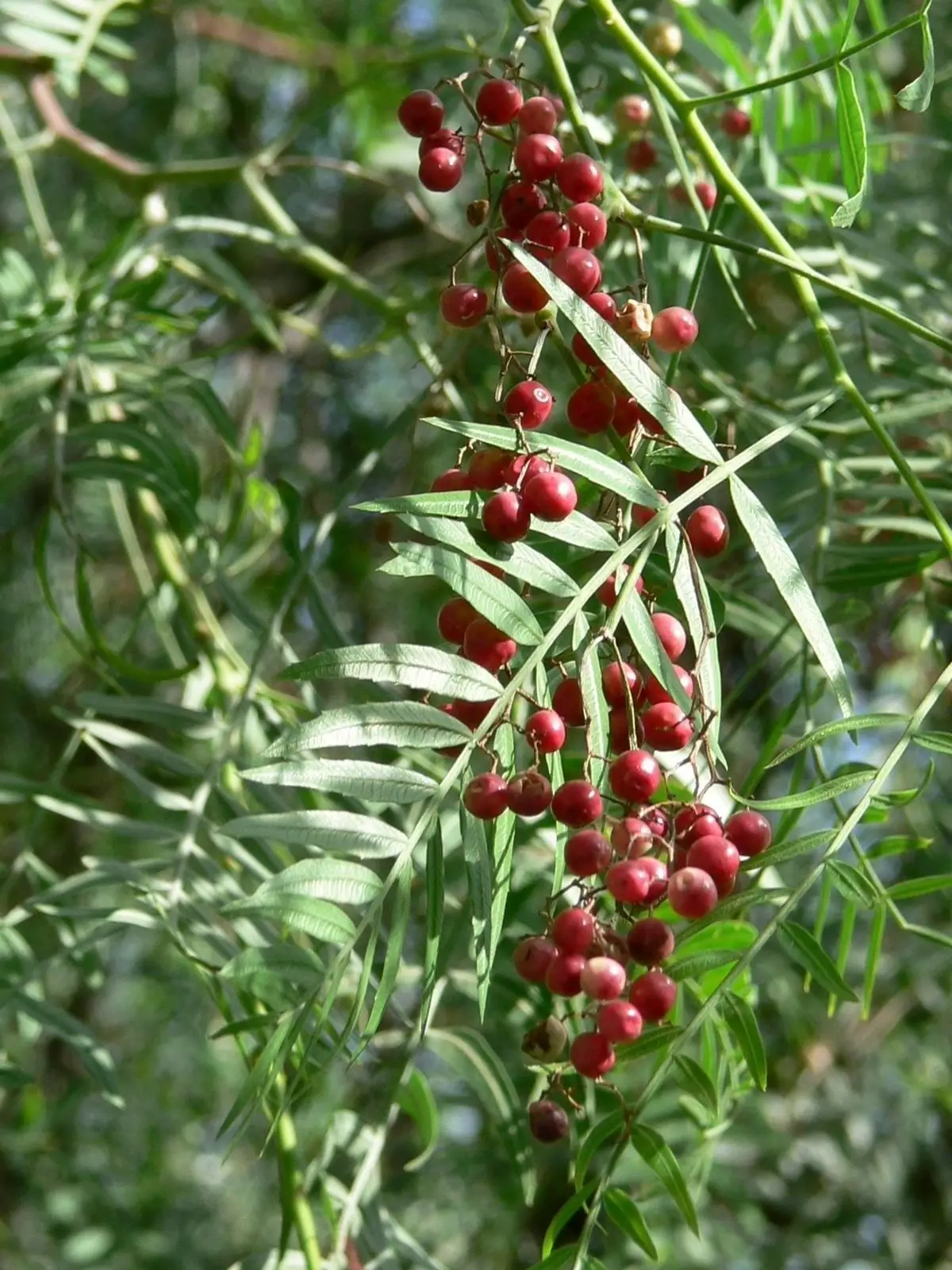
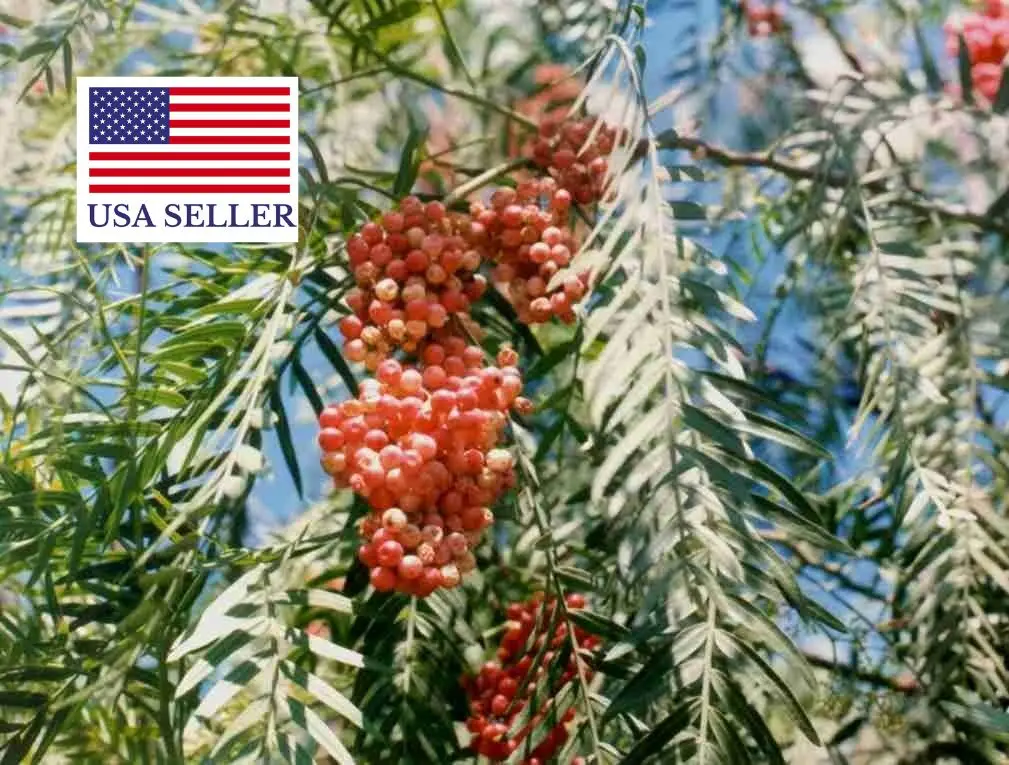
Here is where the magic happens: those pendant clusters of small, shiny pink berries. These are not true peppercorns — they belong to the cashew family, not Piper nigrum — but their mild, sweet-spicy flavor has made them the darling of modern cuisine and craft cocktails. Since the 1980s, when French chefs adopted pink peppercorns as a symbol of nouvelle cuisine innovation, they have graced the finest tables. You can harvest them fresh, dry them for spice blends, infuse them into vinegars and oils, ferment them into the traditional Andean drink chicha de molle, or distill them into essential oils for perfumery. Every berry is a small act of culinary rebellion. The Incas understood this; they used the sweet outer flesh of the fruit to craft a nourishing drink, careful to avoid the bitter inner seed. That same knowledge passes to you now — grow it, harvest it, taste history.
The medicinal heritage runs equally deep. Traditional healers across South America have employed the leaves, bark, resin, and berries to treat wounds, infections, digestive complaints, rheumatism, and respiratory ailments. Modern research has confirmed what the Inca knew: the tree is rich in essential oils with antiseptic, anti-inflammatory, and antioxidant properties. Brew the aromatic leaves as a soothing tea. Crush a leaf and inhale its sharp, peppery perfume — it acts as a natural insect repellent in the garden. The resin itself was sacred: the Inca used it as an embalming agent in burial ceremonies. This is not mere decoration; this is a plant with purpose.
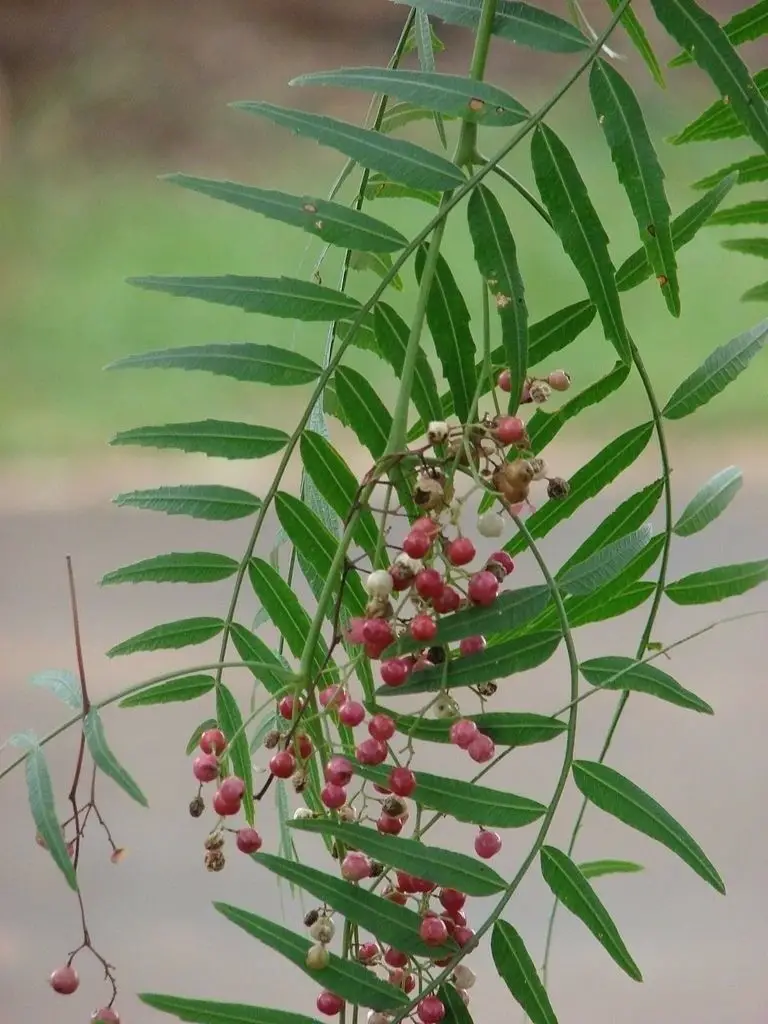
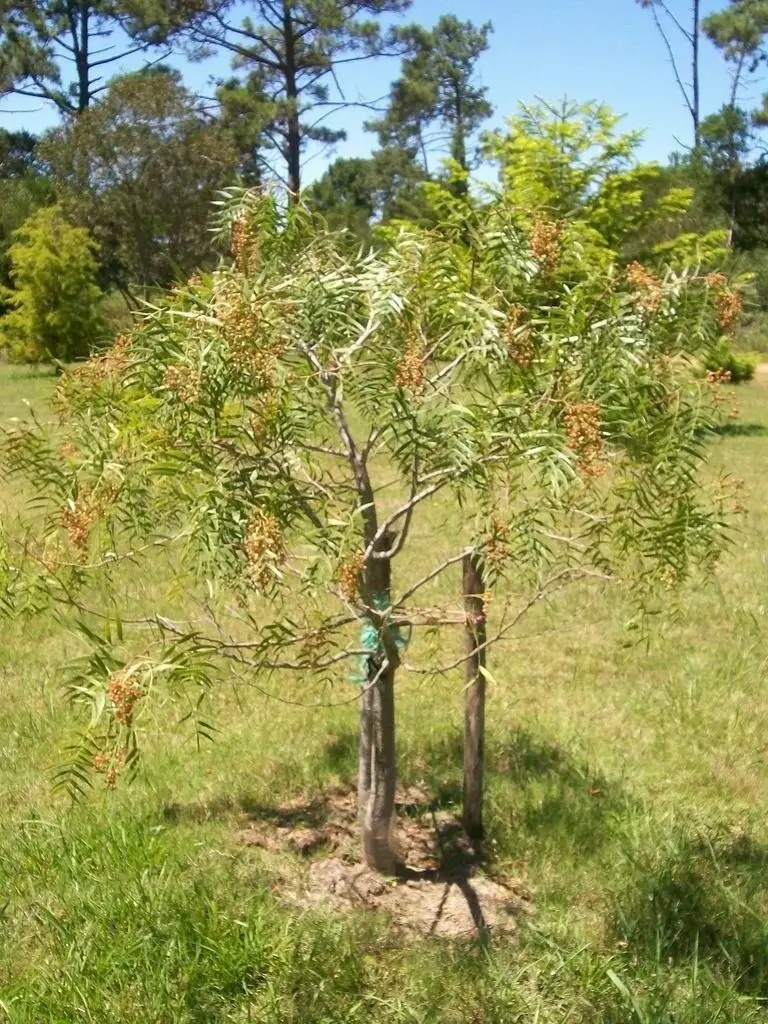
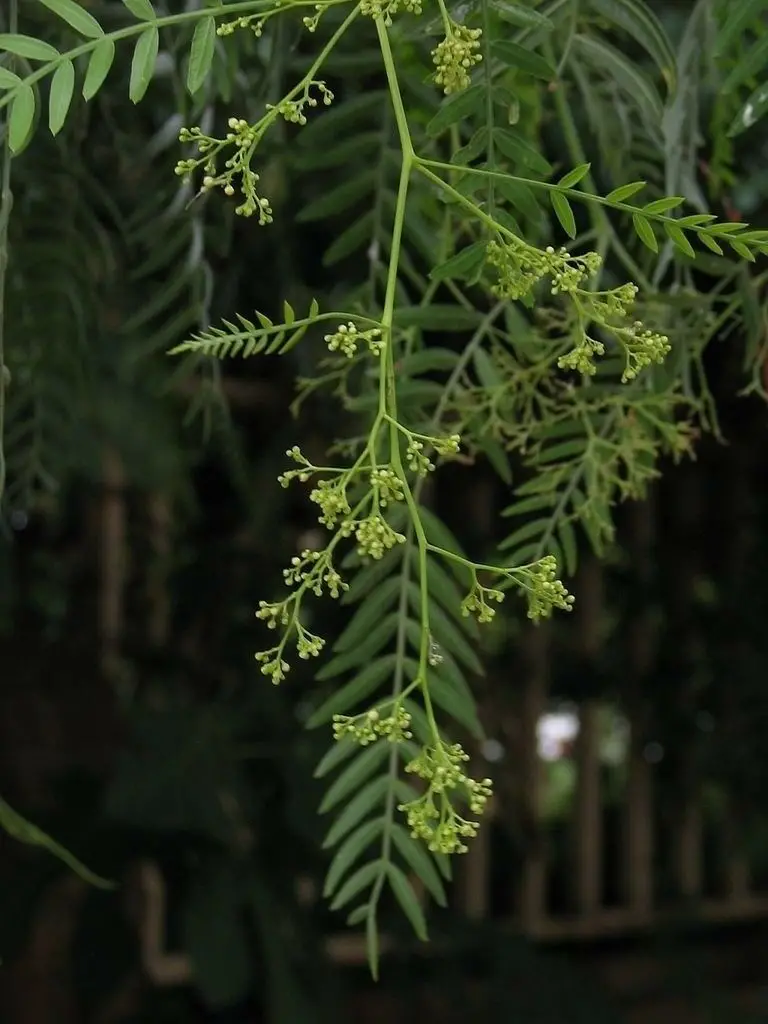
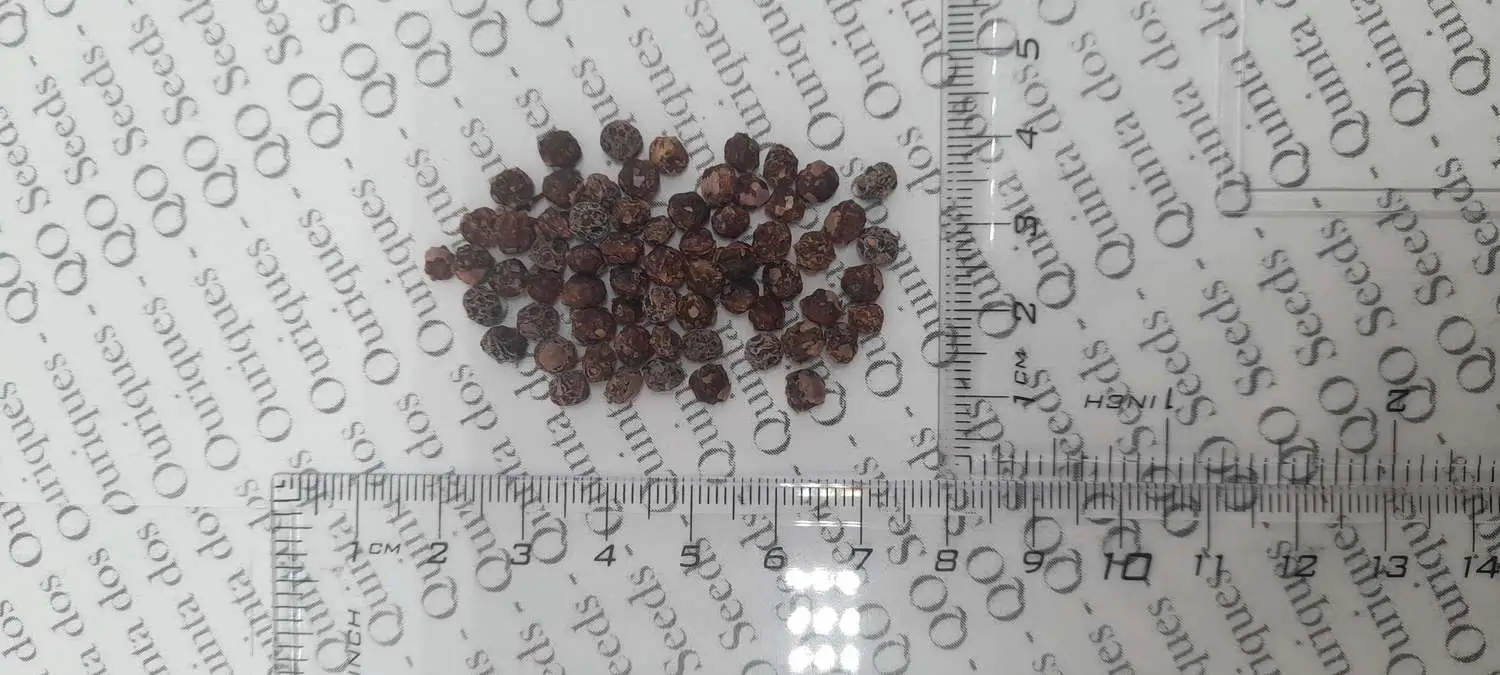
Cultivation is refreshingly straightforward. Schinus molle is a fast-growing evergreen that reaches 8–15 meters, developing a broad, graceful canopy with drooping, willow-like branches — the silhouette alone will transform your landscape. It thrives in full sun and tolerates a wide range of soils, from sandy to clay, as long as drainage is good. Once established, it is drought-tolerant, making it ideal for water-wise gardens and semi-arid climates. Hardiness varies by variety, but most will survive in USDA zones 8–11, tolerating temperatures down to 10–15°F once acclimated. Young trees appreciate regular water until their roots deepen; mature specimens need little beyond dry spells. The trees flower from April through June with inconspicuous small white flowers in drooping panicles — humble and profuse. Female trees produce abundant fruit year-round in warmer climates, with the most vibrant color appearing in fall and winter. The bark, initially smooth and grey, matures into a gnarled, picturesque trunk that adds texture and character to any garden. Seeds germinate readily, often within 2–4 weeks under warm, moist conditions — this is a tree that wants to grow.
When you sow Schinus molle from seed, you are not simply planting a tree. You are restoring a thread that connects your garden to the high valleys of Peru, to the ingenuity of the Inca, to the innovation of modern chefs who recognized that beauty and flavor can coexist. You are growing a shade provider, a spice source, a healer, and a living archive of botanical knowledge. Watch its feathery fronds catch the light. Harvest its pink berries in their prime season. Brew its leaves into ceremony. This is the tree that lived in palaces and
Only logged in customers who have purchased this product may leave a review.

Reviews
There are no reviews yet.