Description
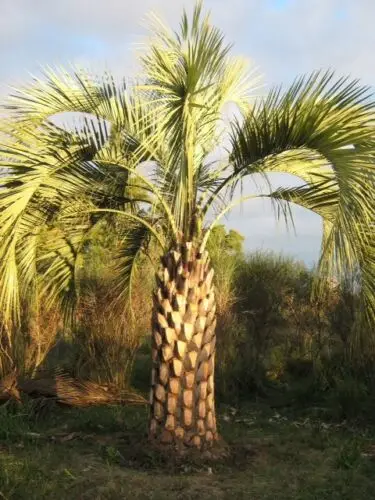
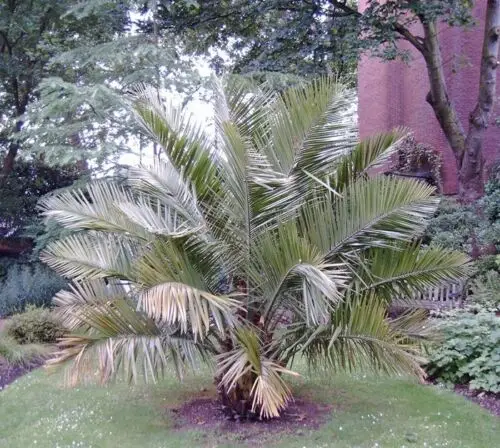
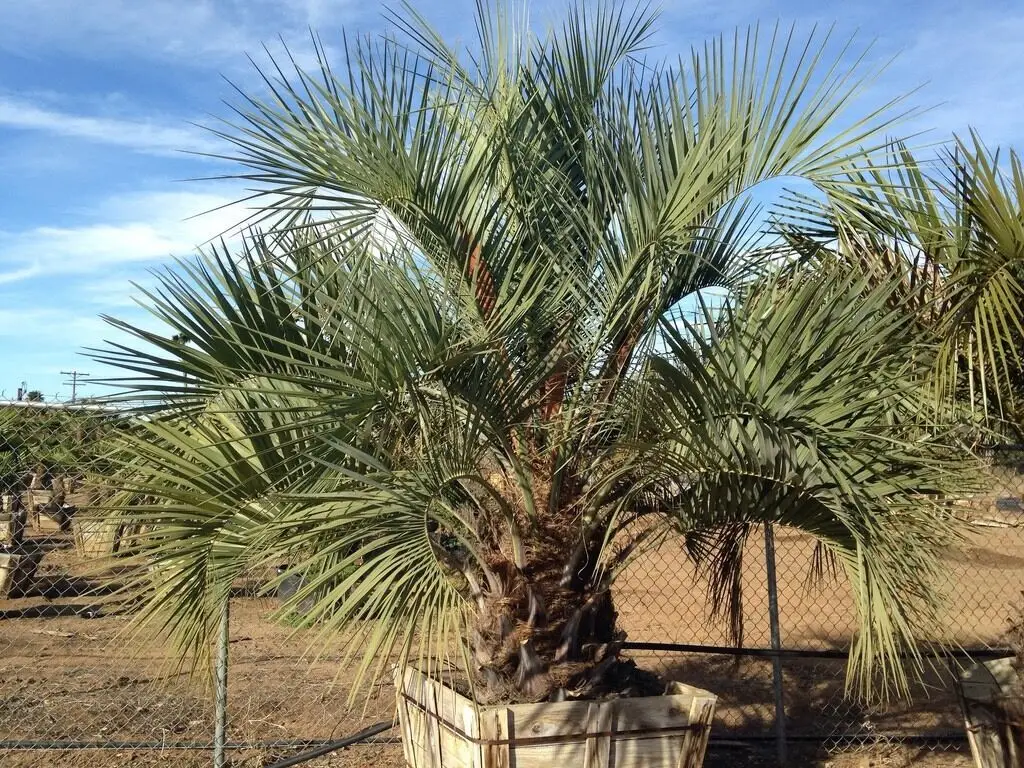
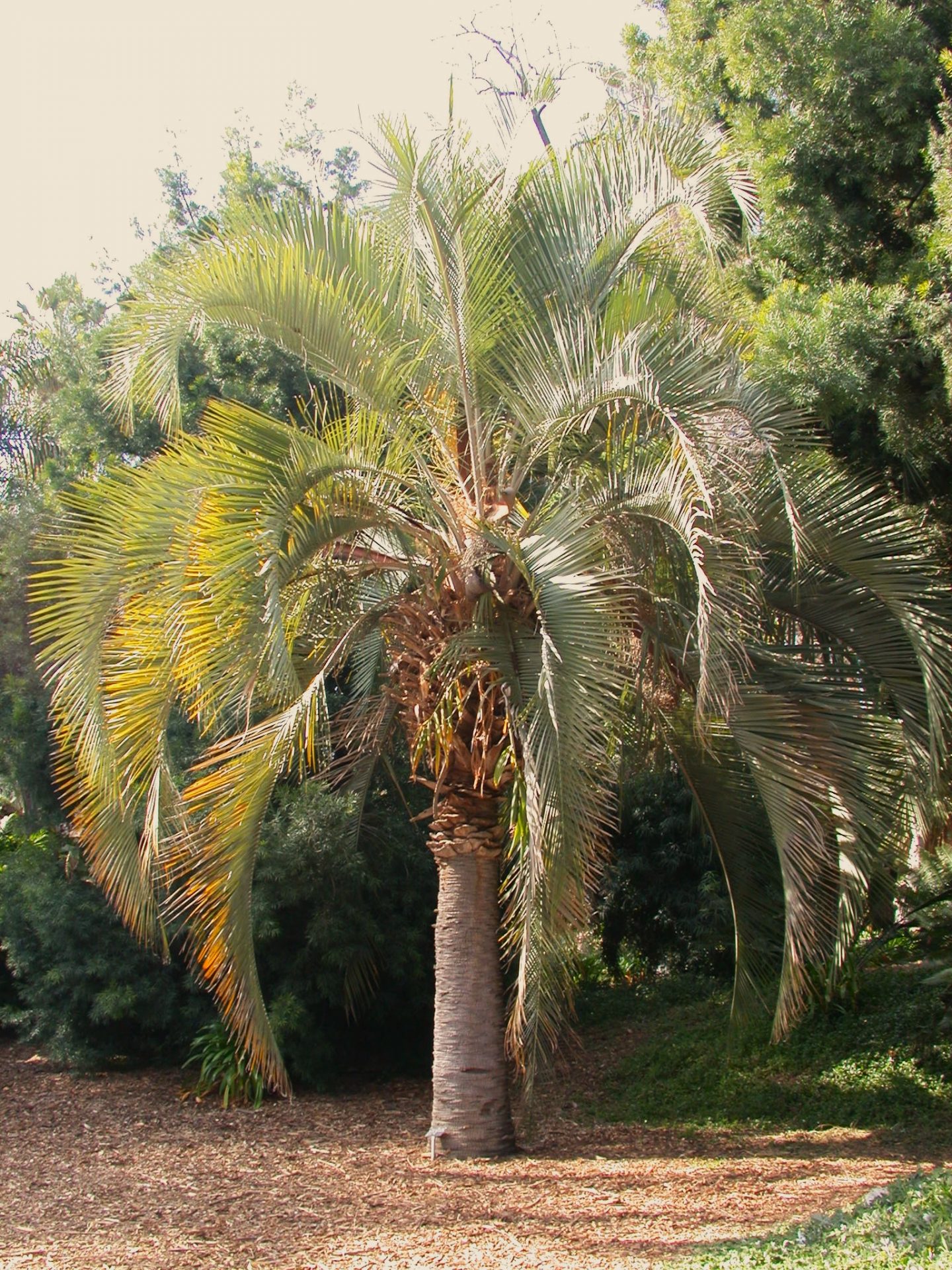
Butia odorata is a graceful, cold-hardy feather palm native to southern Brazil and Uruguay, widely cultivated for its attractive blue-green foliage and flavorful edible fruits. This slow-growing palm typically reaches 4 to 8 meters in height, developing a stout, solitary trunk crowned by long, gracefully arching pinnate leaves with silvery blue to gray-green leaflets that create a striking tropical appearance.
During late spring to early summer, the palm produces large, branched inflorescences bearing creamy-yellow to reddish flowers, followed by abundant clusters of round to oval fruits that ripen to bright yellow or orange. The fruits are highly aromatic and have a sweet-tart flavor reminiscent of apricot, pineapple, and citrus, making them popular for fresh consumption as well as for jellies, jams, wines, and desserts, hence the common name “Jelly Palm.”
Butia odorata thrives in full sun and well-drained soil, adapting to sandy, loamy, and moderately fertile soils. Once established, it is highly drought tolerant and among the most cold-hardy feather palms, tolerating temperatures down to approximately -10°C to -12°C for short periods. Its ornamental beauty, edible fruit, and resilience make it an excellent choice for subtropical, temperate, and coastal landscapes.
Germination Guide
🌍 Southern Brazil and Uruguay
Difficult
Pindo palm (Butia odorata) is an endangered palm native to southern Brazil and Uruguay. Seeds exhibit dormancy that can delay germination by more than two years, making propagation challenging
Germination
Germination time
Expect germination in
30 – 120 days
Temperature
Min 20°C
Ideal 30°C
Max 40°C
🌡️ Temperature alternation recommended
— Temperature alternation 30/20°C (typical rainy season) stimulates germination best; 40/30°C maintains dormancy; 45/35°C causes seed death
Substrate moisture
💧💧 High
Sowing depth
Lightly covered
Seed Pre-treatment
-
💧
Soaking — 24 hours
Soak in warm water for 24 hours before sowing
-
🔨
Mechanical scarification
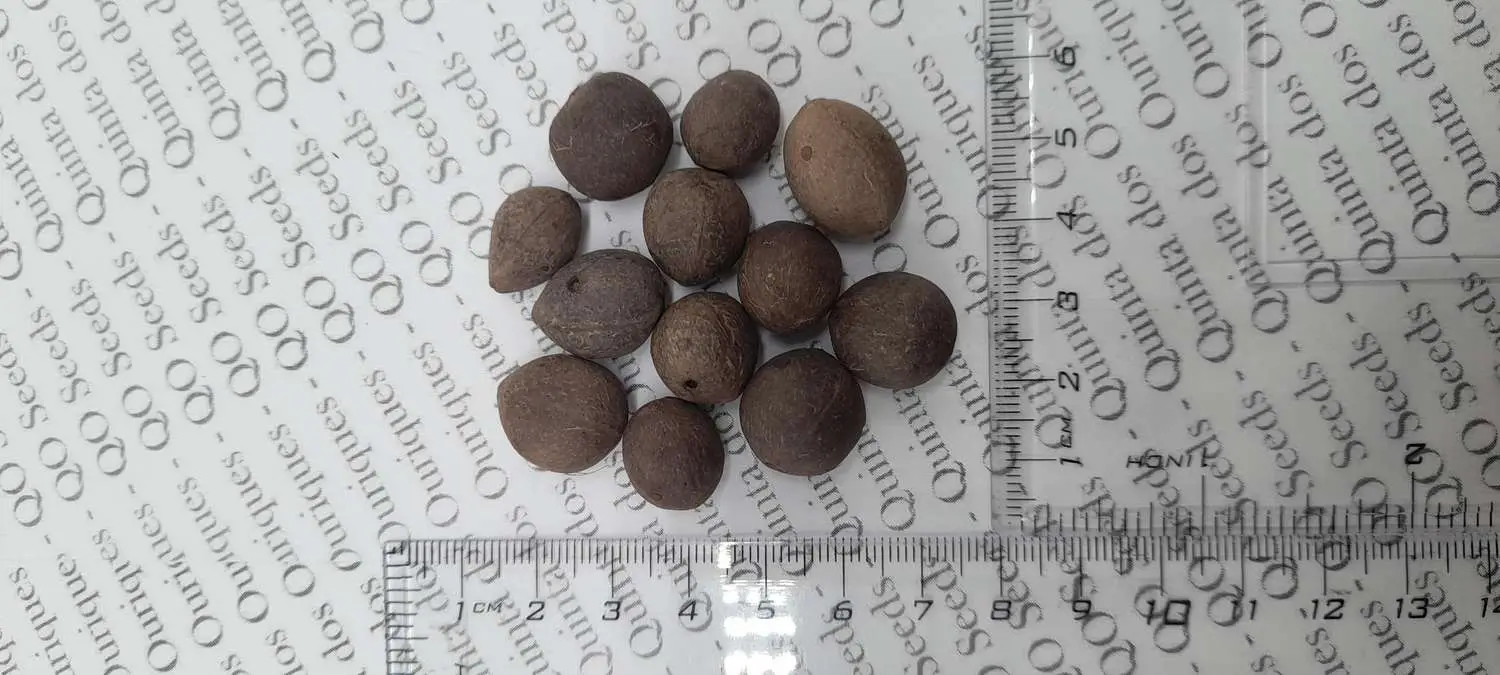
Crack stony endocarp with bench vise or nut cracker to expose 1-3 seeds within
-
❄️
Warm stratification — 21 days at 40°C
-
📋
Additional notes
Drying periods of 24-48 hours improve germination speed. Gibberellic acid (GA3) at 100 mg/L for 48 hours optimizes germination
Substrate & Container
Recommended substrate
Moist sand; moist perlite; well-draining compost
Recommended container
Container with sealed lid or high humidity chamber
Growing Tips
Fresh seed germinates better than stored seed. Seeds develop long tap-root before forming shoot. Pre-heating at 40°C for 21 days in moist sand followed by constant 30°C provides best emergence. Continuous temperatures of 30-40°C alone do not favor germination. Container must maintain high humidity. Seedlings require bright indirect light and temperatures 55-70°F after emergence
Only logged in customers who have purchased this product may leave a review.



Reviews
There are no reviews yet.