Description
Allium fistulosum, the Welsh onion, also commonly called bunching onion, long green onion, Japanese bunching onion, and spring onion, is a species of perennial plant, often considered to be a kind of scallion.
The species is very similar in taste and odor to the related common onion, Allium cepa, and hybrids between the two (tree onions) exist. A. fistulosum, however, does not develop bulbs, and possesses hollow leaves (fistulosum means “hollow”) and scapes. Larger varieties of A. fistulosum, such as the Japanese negi, resemble the leek, whilst smaller varieties resemble chives. A. fistulosum can multiply by forming perennial evergreen clumps. It is also grown in a bunch as an ornamental plant.
Harvest: 75 – 85 days
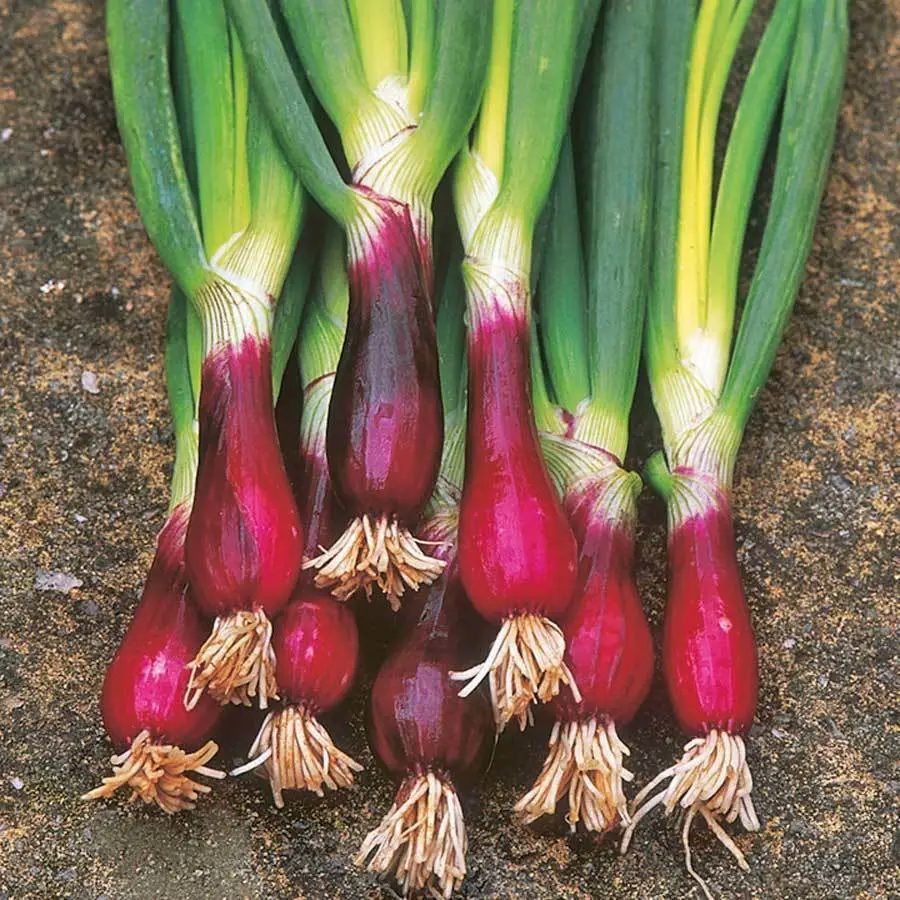
The red color is stimulated by colder temperatures. Chives very popular in Asia, with extremely mild to slightly spicy flavor. Very tasty and with great potential for food markets. Like ordinary spring onions, their leaves are green, but their stems are red. An extremely special and distinctive addition to the presentation of the most exotic cuisine.
Allium fistulosum red beard is a perennial plant that will produce sturdier stems the longer it stays on the ground to harvest. Our classic green chives, with an added twist to the eye tasting, add color to our salads and sauté on hot plates. A real refinement at the table. Very resistant and easily cultivated in fertile, limestone and full sun soils.
Germination Guide
🌍 China (central and northwestern regions)
Easy
Allium fistulosum 'Red Ninja' is a perennial bunching onion cultivar native to China, characterized by distinctive red-colored hollow stems and green foliage. Seeds germinate readily at room temperature without requiring pre-treatment or stratification, making it an ideal choice for home gardeners. The variety exhibits strong cold hardiness and can produce new growth from established clumps year after year.
Germination
Germination time
Expect germination in
7 – 10 days
Temperature
Min 3°C
Ideal 18°C
Max 25°C
Substrate moisture
💧 Medium
Sowing depth
Lightly covered
Substrate & Container
Recommended substrate
Fertile, well-drained soil; seed starting mix with compost
Recommended container
Seed trays, punnets, or direct sowing in rows
Growing Tips
Sow seeds at room temperature (18-23°C) for optimal germination in 7-10 days. Keep soil consistently moist but not waterlogged to prevent damping off fungus. Provide abundant air circulation when growing indoors. Avoid heat mats as they reduce germination rates. Seeds are light-indifferent and can be lightly covered with soil or seed starting mix (approximately 0.5cm). For best results, use fertile, compost-amended soil. Thin seedlings when 2-3cm tall. Transplant seedlings that are pencil-thick (approximately 3-4mm diameter) for fastest establishment. Red Ninja varieties are especially cold-hardy and can overwinter in many climates.
Only logged in customers who have purchased this product may leave a review.


Reviews
There are no reviews yet.