
Grow the legendary medicinal herb that powered pharmaceutical research and shaped human ritual for millennia. Datura stramonium contains alkaloids (atropine, scopolamine) still critical to modern medicine. This dramatic night-blooming beauty demands respect—handle with care and knowledge. A seed for the serious botanist who understands history and potency. CAUTION: All parts toxic; keep from children and pets.
€1.92
This is not an ornamental trinket—it is one of history’s most powerful plant medicines, and one of its most dangerous. Thorn apple is a popular traditional medicine with a long history of use, harvested from the wild both as a medicine and as a source of materials, and cultivated commercially as a medicinal plant, mainly to supply active compounds for the pharmaceutical industry.
Native of Mexico, D. stramonium is now pantropical. The genus Datura comes from the Hindu name for these plants “Dhatura.” For over 3,000 years, this plant featured in sacred rituals, shamanic ceremonies, and folk medicine across multiple continents. It is used by certain Native American ethnic groups for medicinal purposes or during initiation rituals. It was well known as an essential ingredient of magical ointments, potions, and witches’ brews, most notably Datura stramonium.
The botanical chemistry is what makes Datura invaluable to modern medicine. The alkaloids scopolamine and atropine present in Datura have long been considered traditional medicines in both the New and Old Worlds. Datura stramonium is cultivated under greenhouse conditions as a source of tropane alkaloids. It has been used as a medicinal plant for its antispasmodic and sedative effects on the central nervous system, recommended for asthma and neuralgia. Until the late 1980s, Datura cigarettes were on sale, containing powdered leaves with bronchodilator properties, to treat asthma. In Ayurvedic practice and Indian traditional medicine, Datura stramonium L. has been an exemplary source of folklore medicinal herb known for its mental stimulation and curative properties, with noteworthy pharmacological potential utilized by Ayurvedic practitioners in the traditional system of Indian medicine.
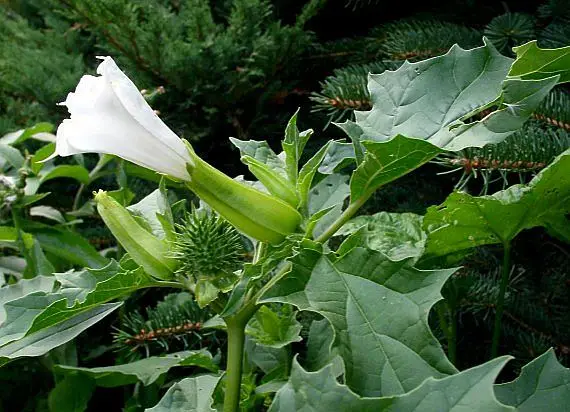
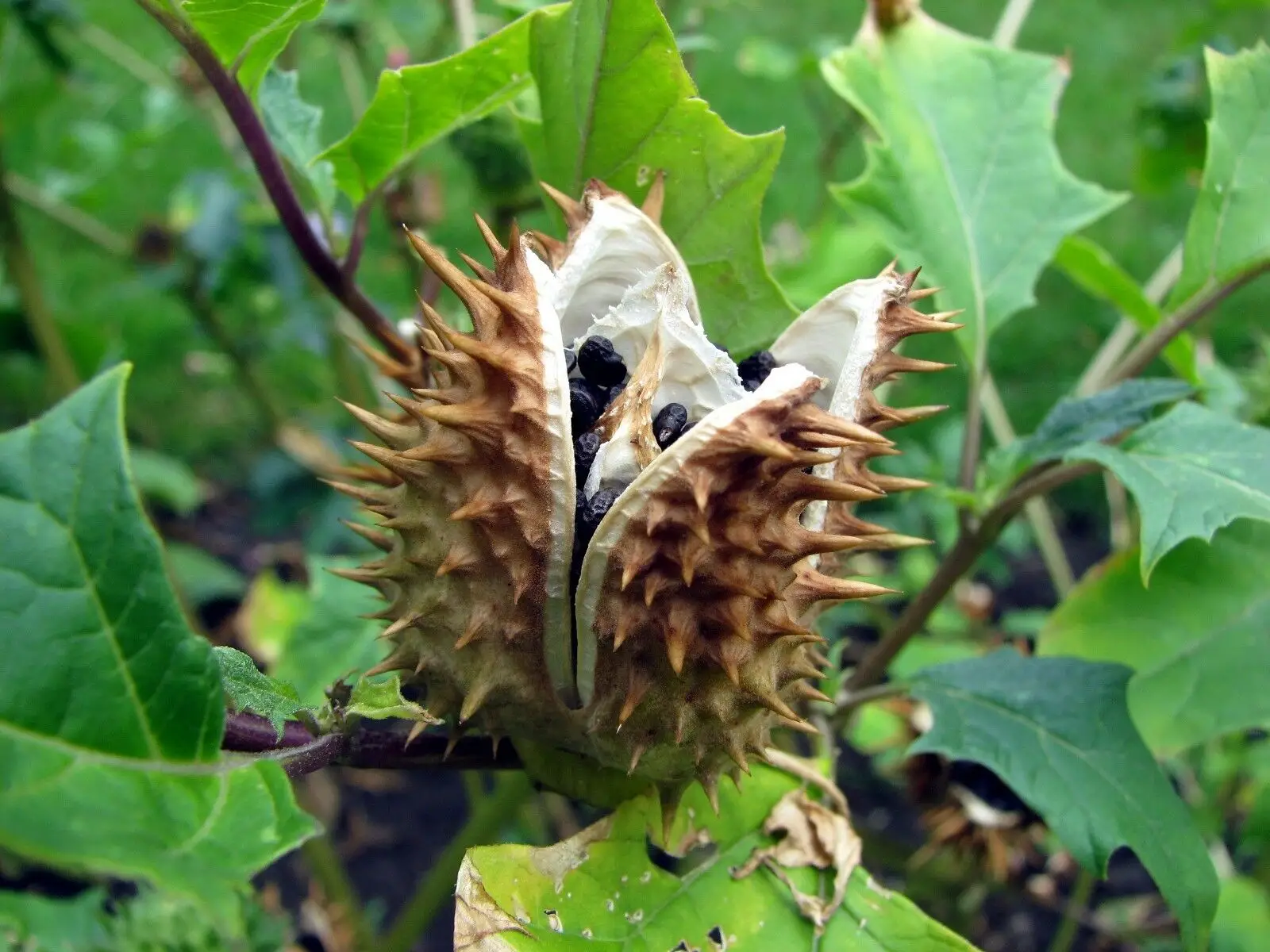
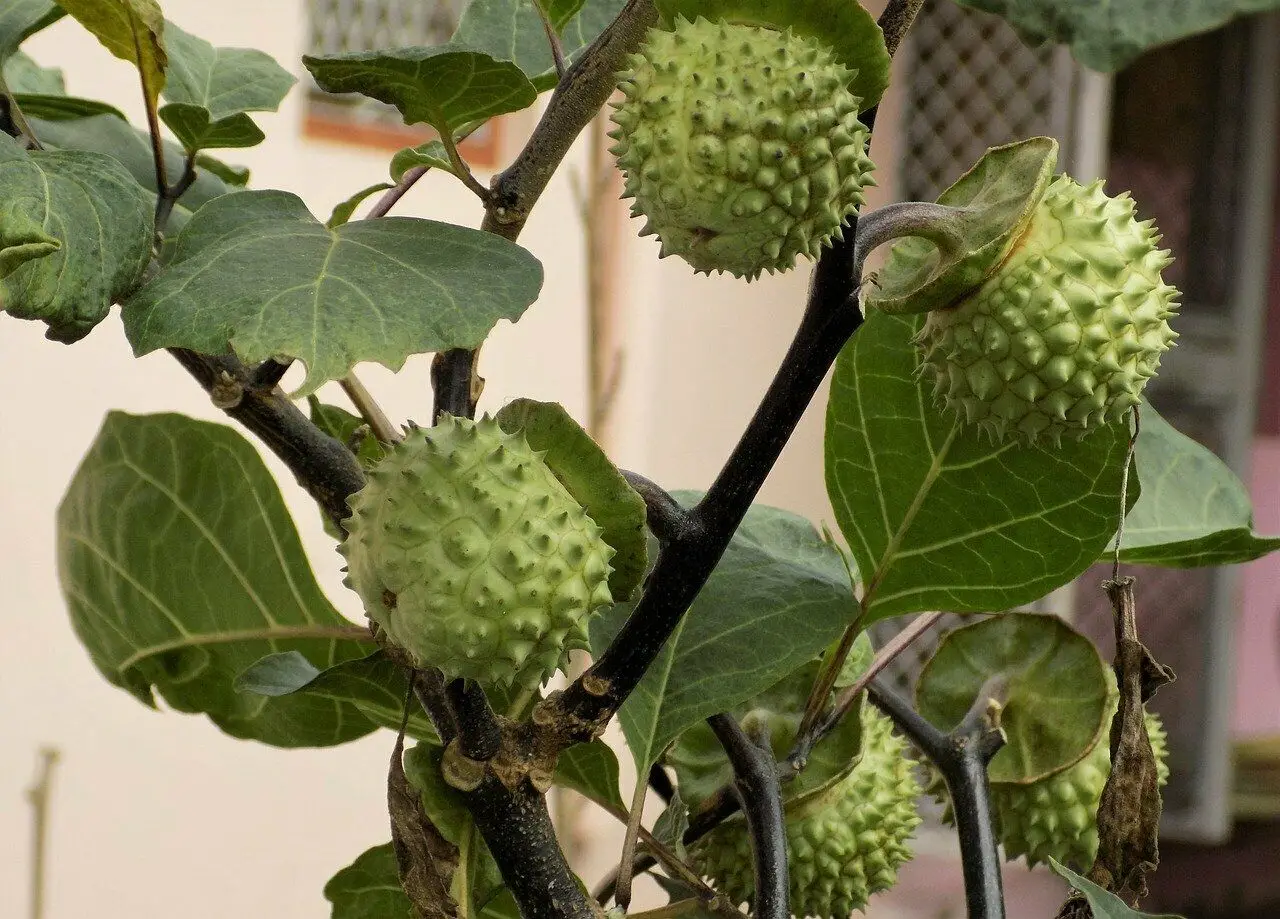
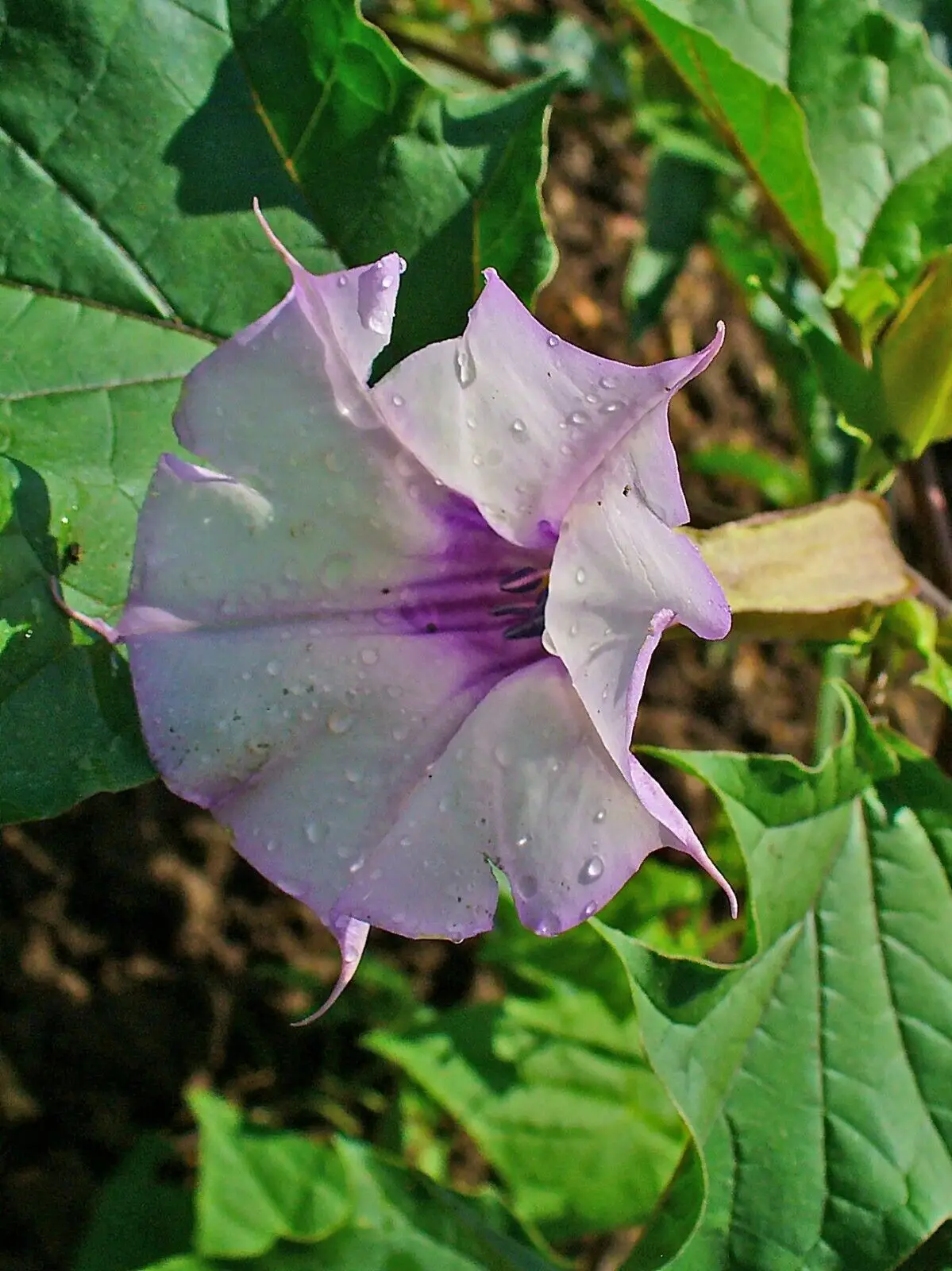
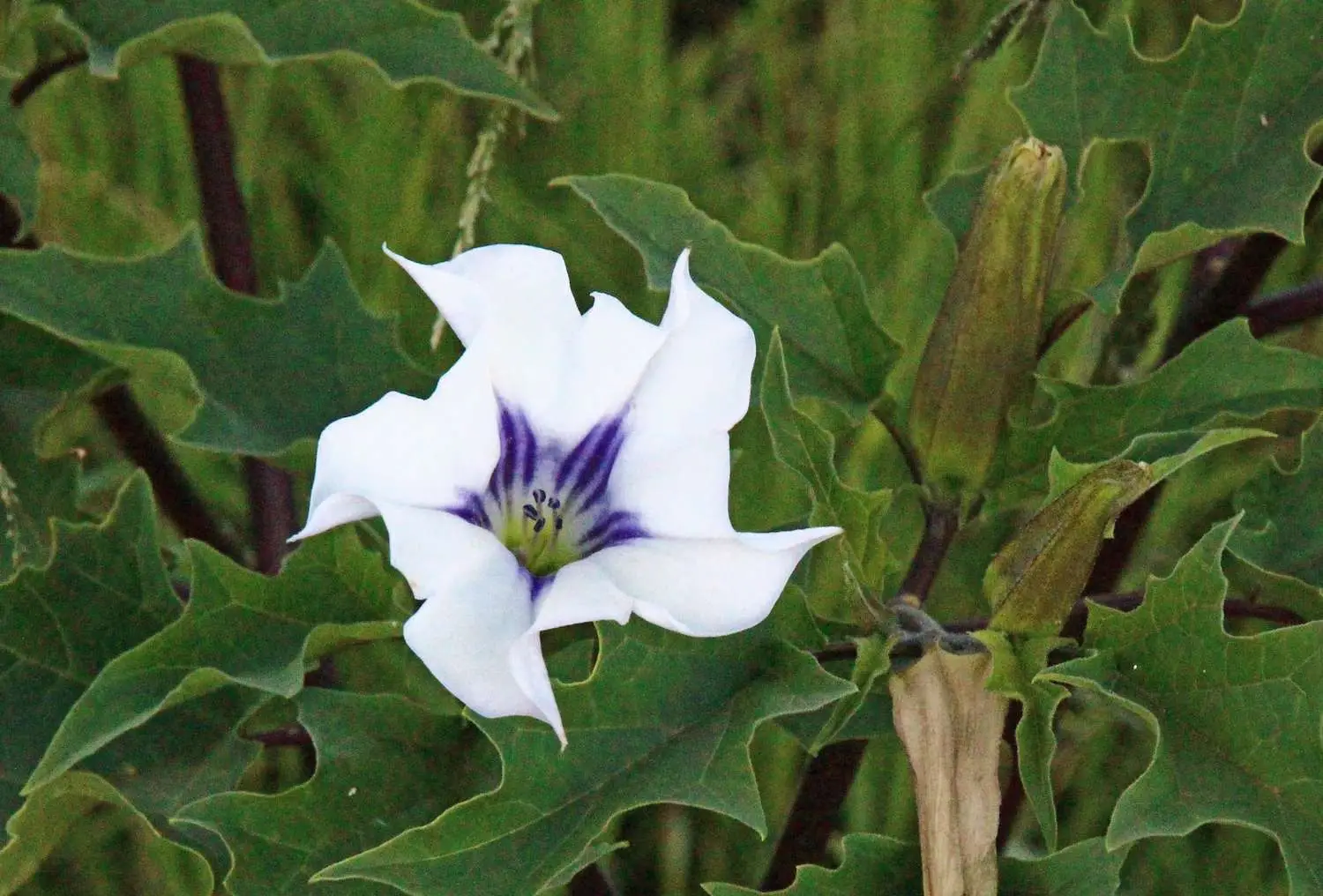
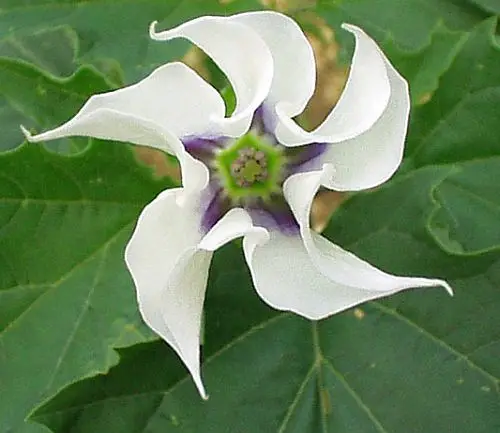
Visually, Datura stramonium commands the garden with an austere, architectural beauty. The flowers are big (up to 10 cm long) and has a tubular corolla, with flaring end (the whole structure look like a trumpet), with whitish petals. Flowers will open for only the evening and wilt by the next day. The fruit is green and ripens to a light yellow-brown capsule, round to egg-shaped, measuring 1 to 1.75 inches long with prickles, and it is held erect on the stalk. These spiny seed pods are instantly recognizable—the “thorns” in its common name.
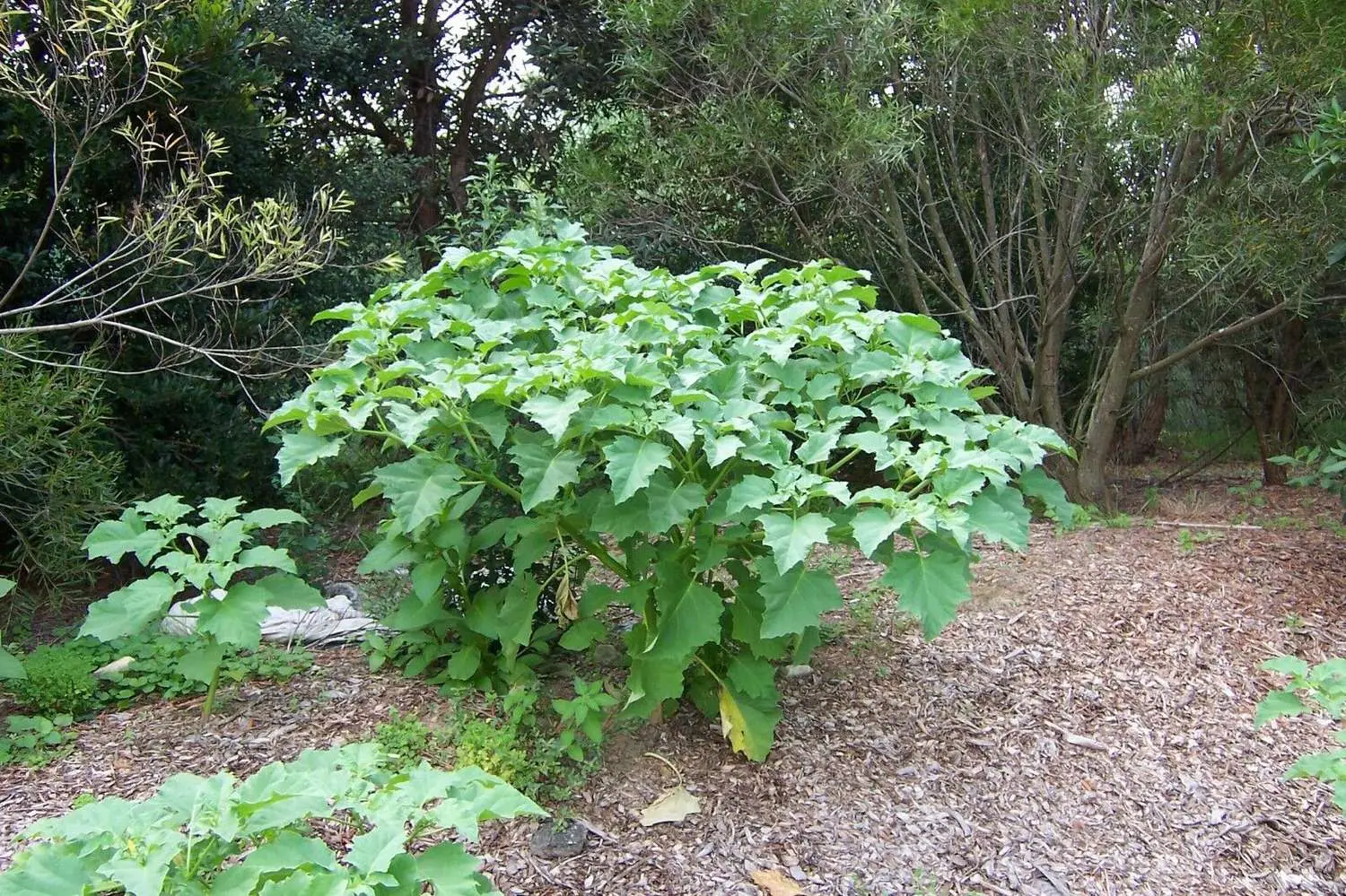
Datura stramonium is remarkably easy to grow, a quality that has allowed it to naturalize worldwide. Frost and cold pose the only “growing” weakness of this otherwise easy-to-grow plant. The Datura can tolerate poor soil conditions and survive a little drought. It is suitable for light (sandy) and medium (loamy) soils and prefers well-drained soil, with neutral and basic (mildly alkaline) pH, and it cannot grow in the shade. Datura grows quickly from seed, often in dense groups when self-sown. Sow the seeds in well-draining soil in early spring. Keep the soil moist until germination, which usually takes 2-4 weeks. Datura stramonium is an annual growing to 1.5 m (5ft) by 1 m (3ft 3in) at a medium rate.
**A Word on Safety**: All parts of the Datura are toxic. Take care to keep children away, licking fingers after contact is dangerous. Eating it leads to a hallucinatory delirium. The thorn apple is therefore very poisonous, it is the most toxic plant of all the Solanaceae. This is not hyperbole—every component of this plant (leaves, seeds, roots, flowers) contains tropane alkaloids in unpredictable concentrations. Handle with gloves.
Only logged in customers who have purchased this product may leave a review.
Reviews
There are no reviews yet.