Description
Capparis zeylanica is a climbing shrub common in the forests of the Indian subcontinent, Indo-China, China and Malesia.
A plant of low elevations in the tropics, where it is found at elevations up to 700 metres in areas with a distinct seasonal climate. Capparis zeylanica is available through August to September.
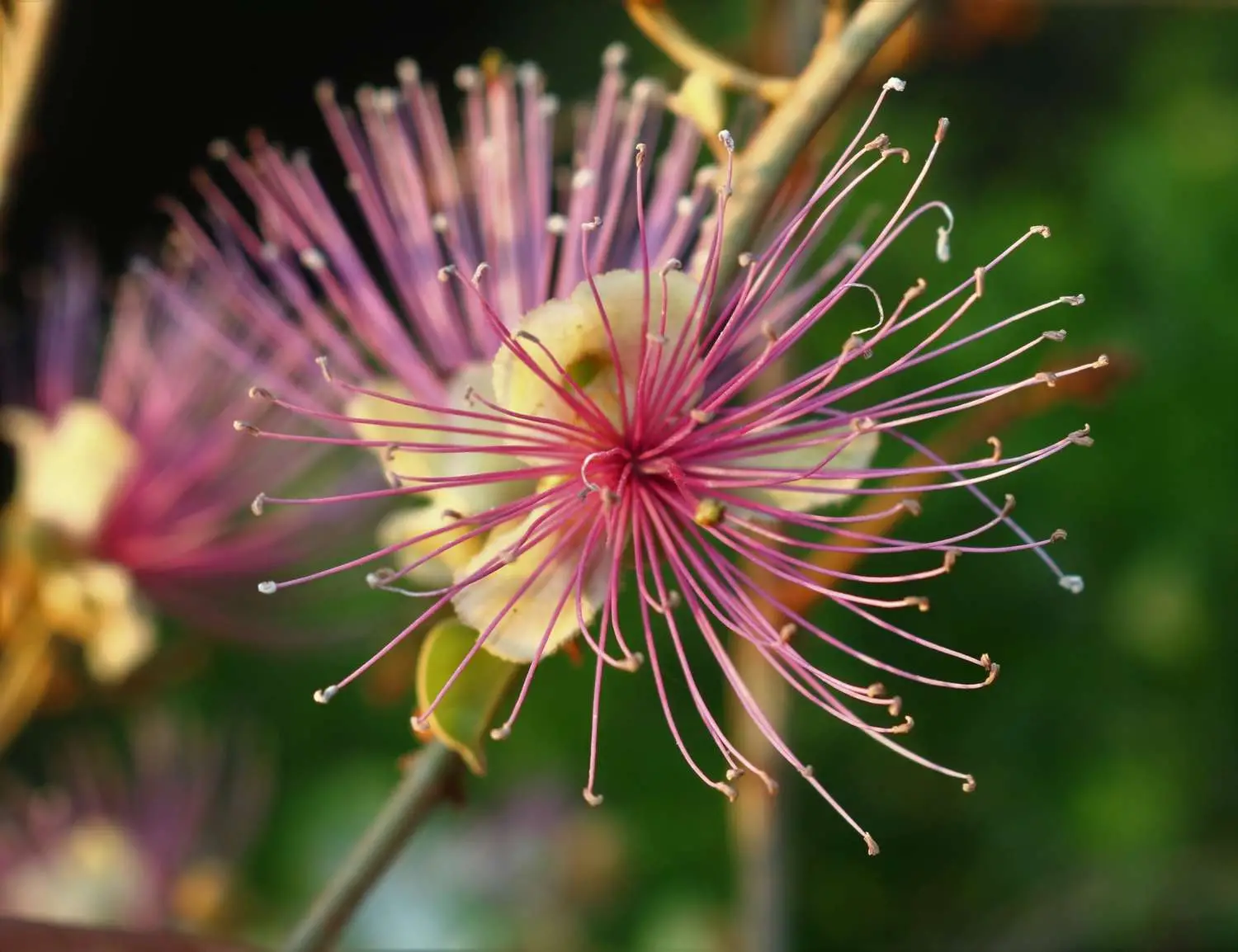
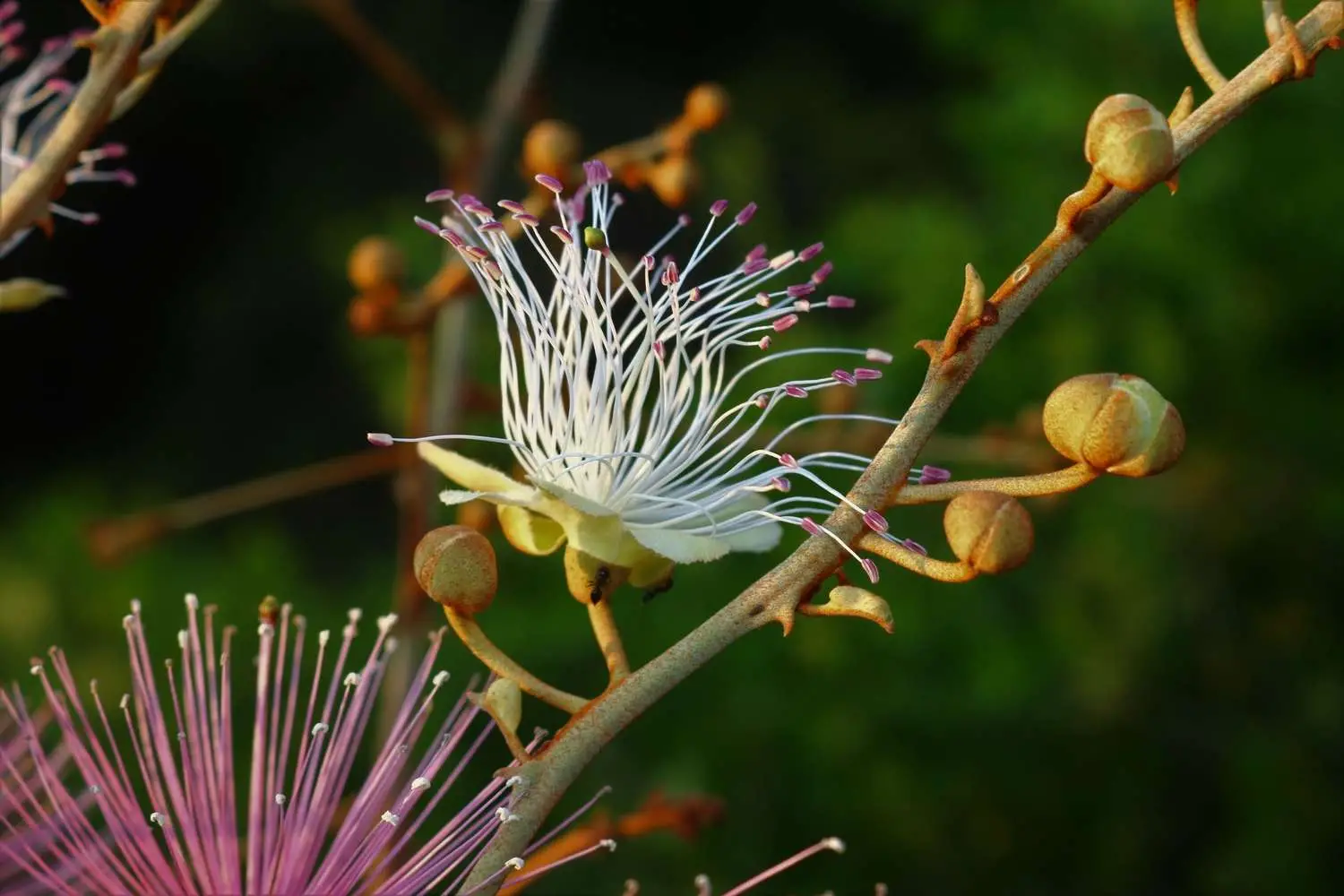
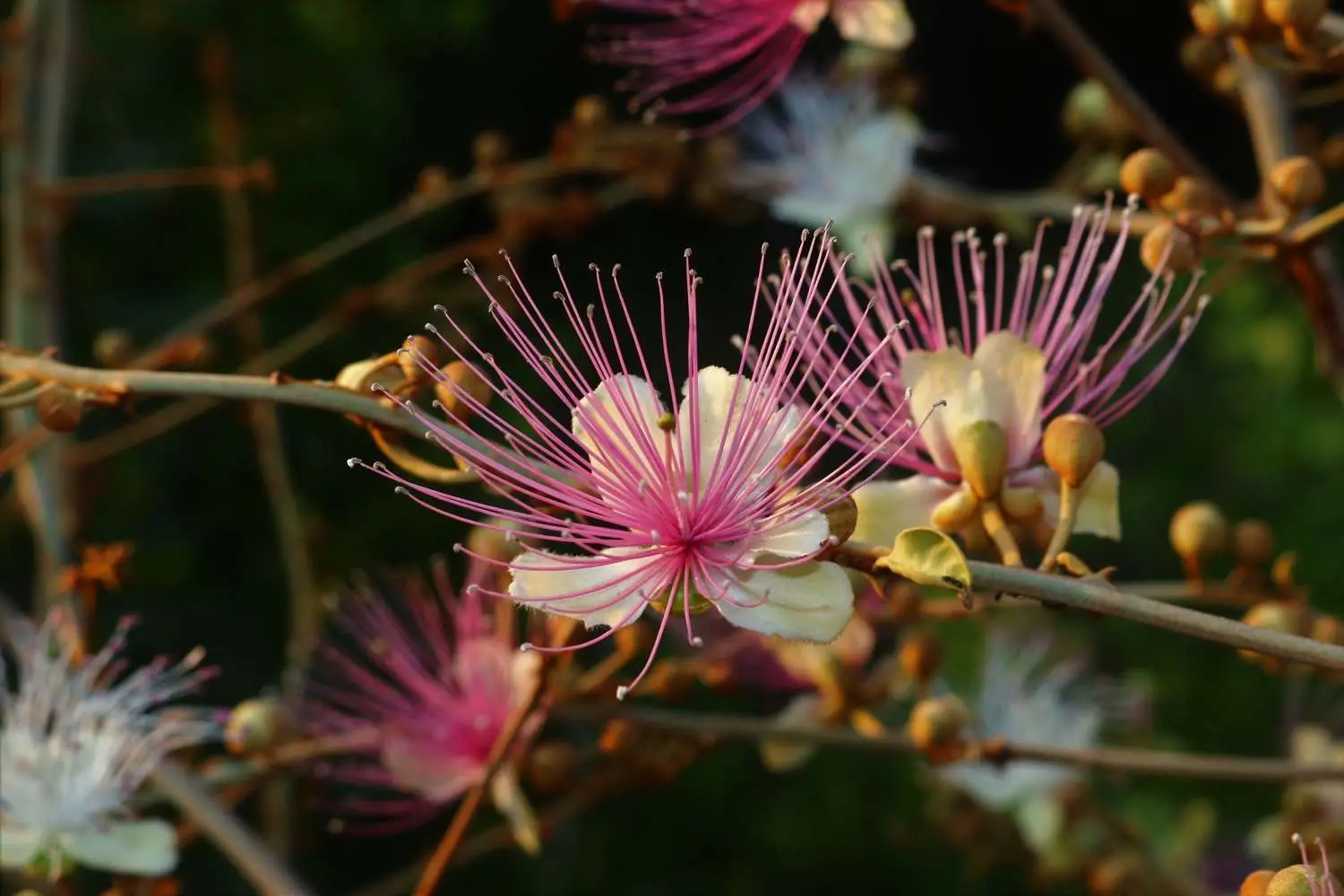
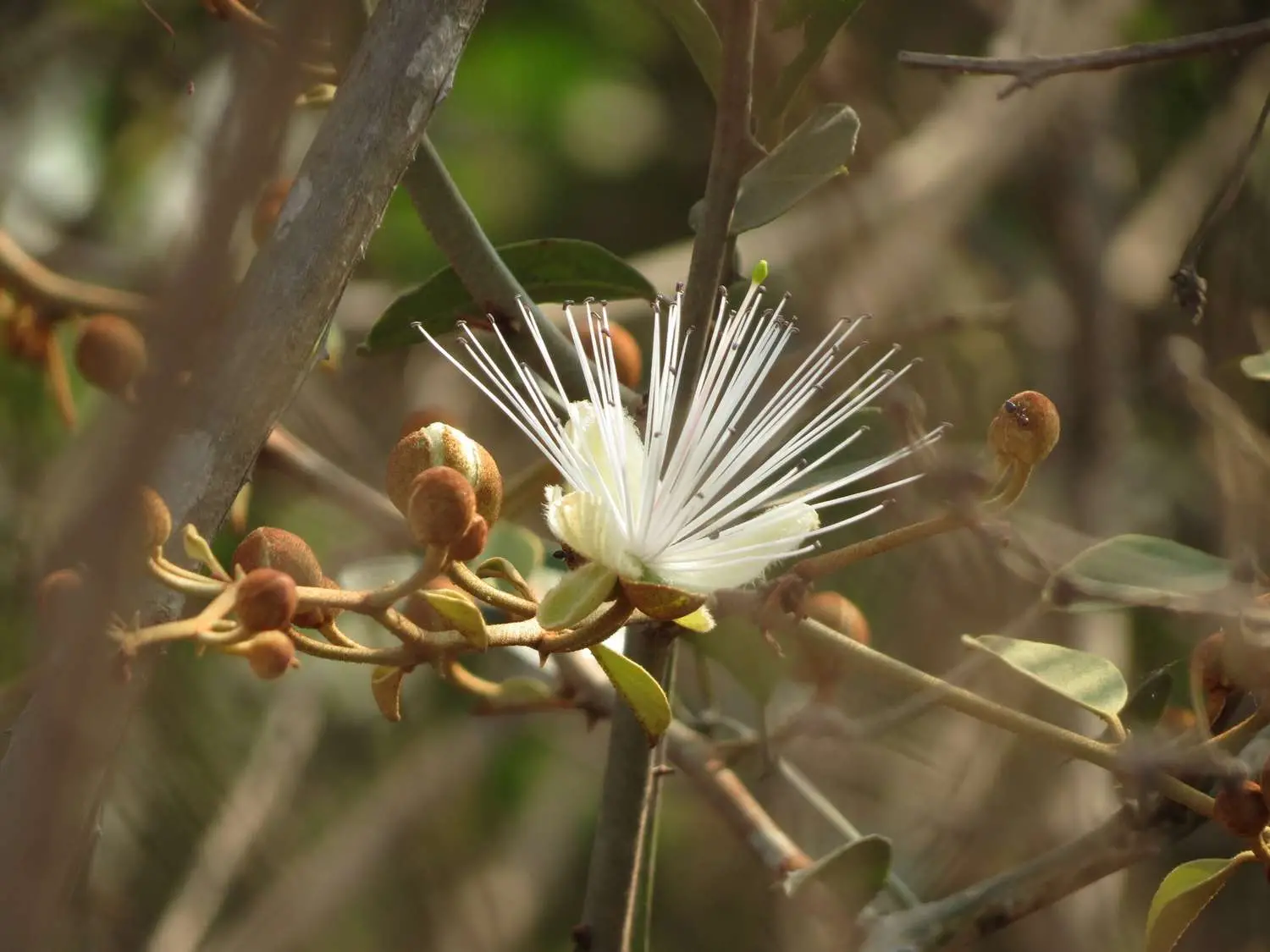
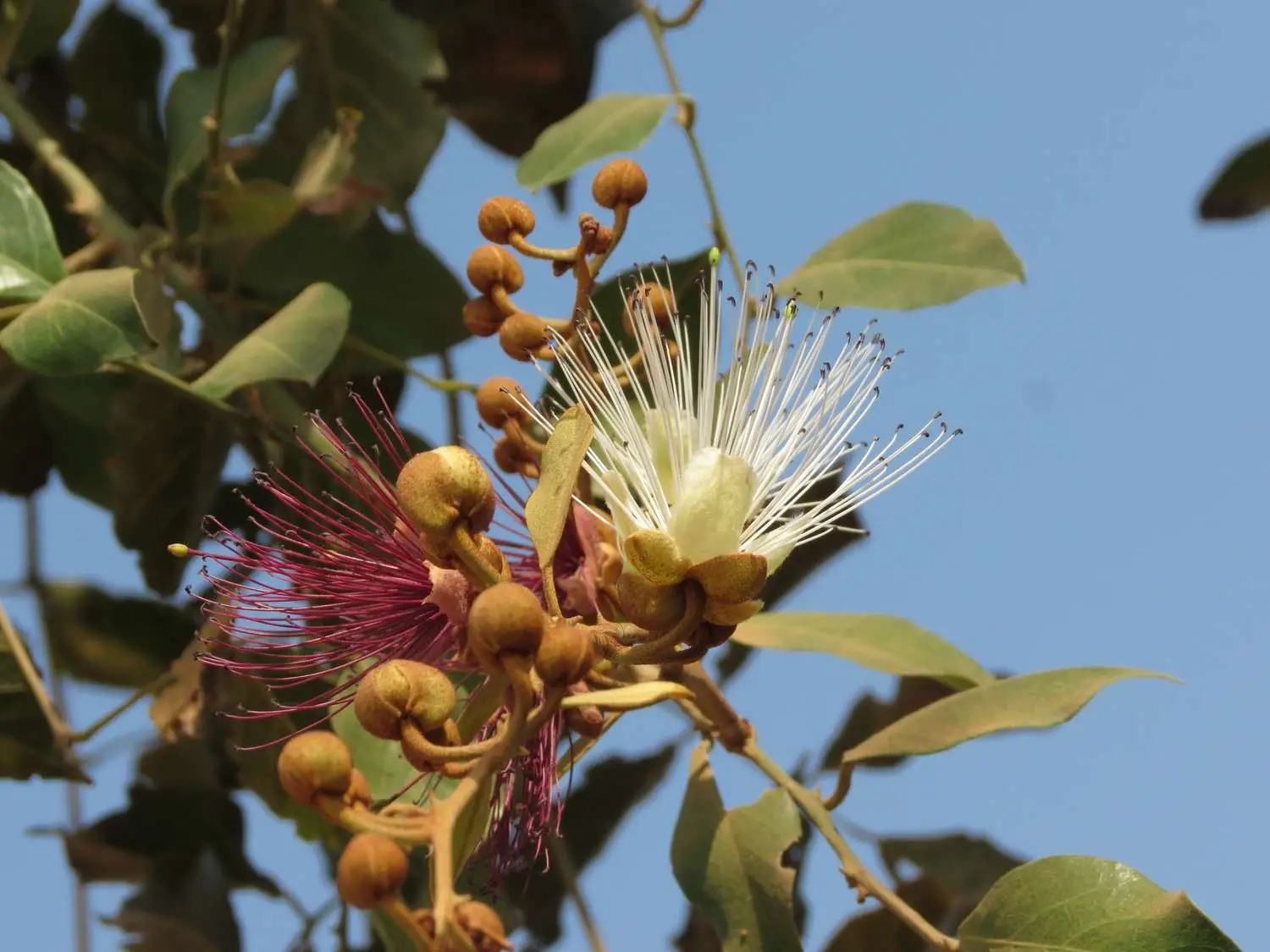
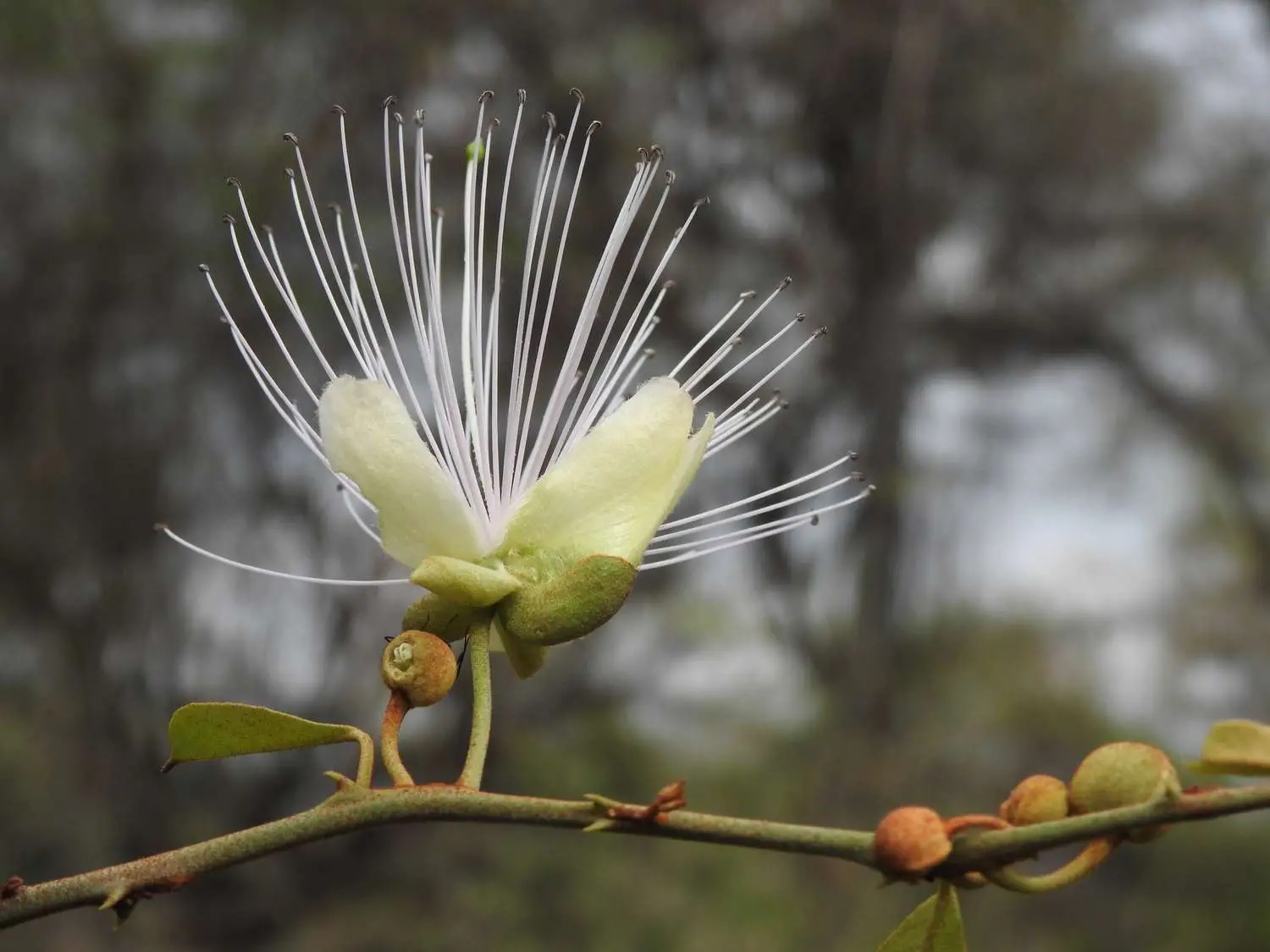
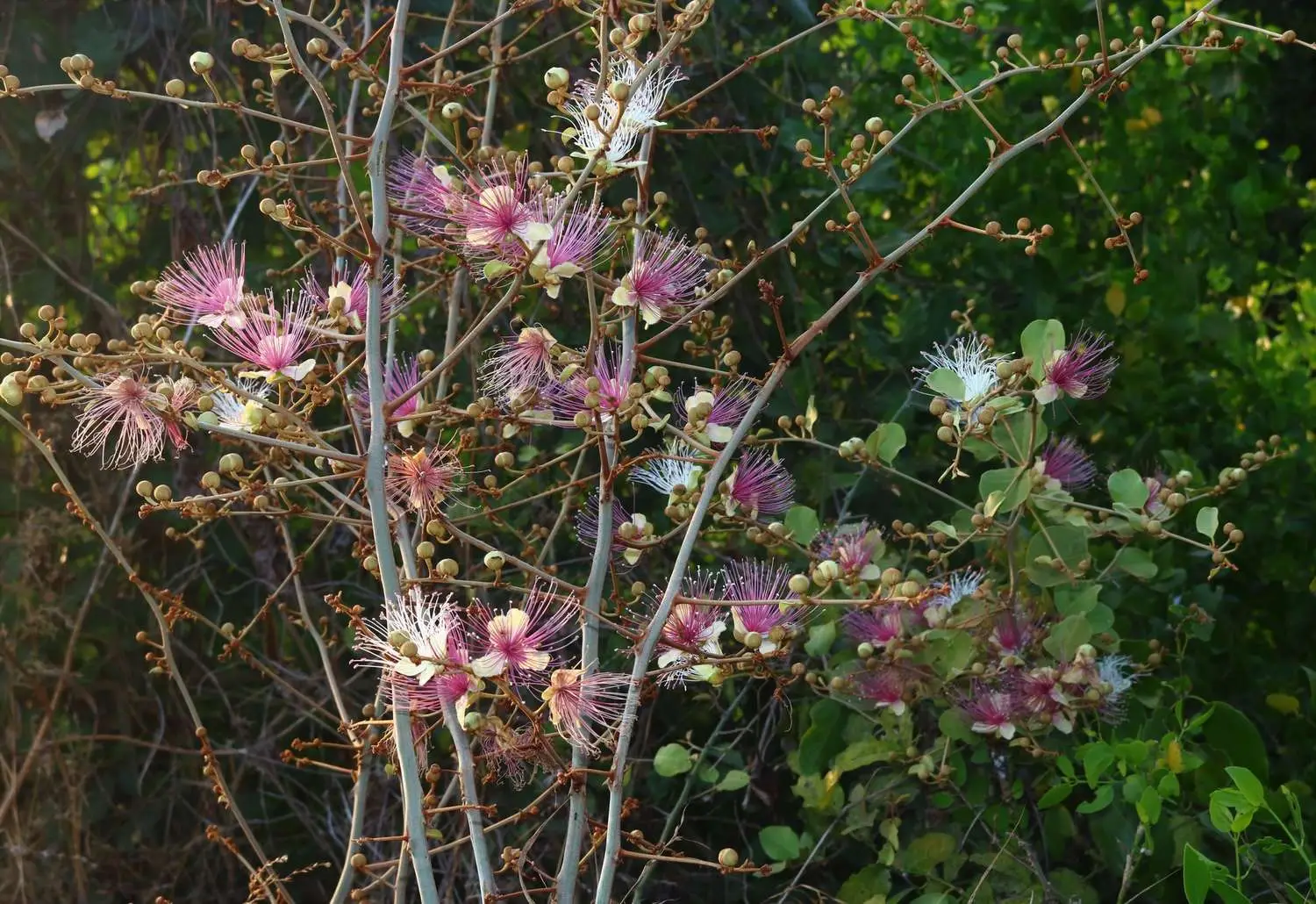
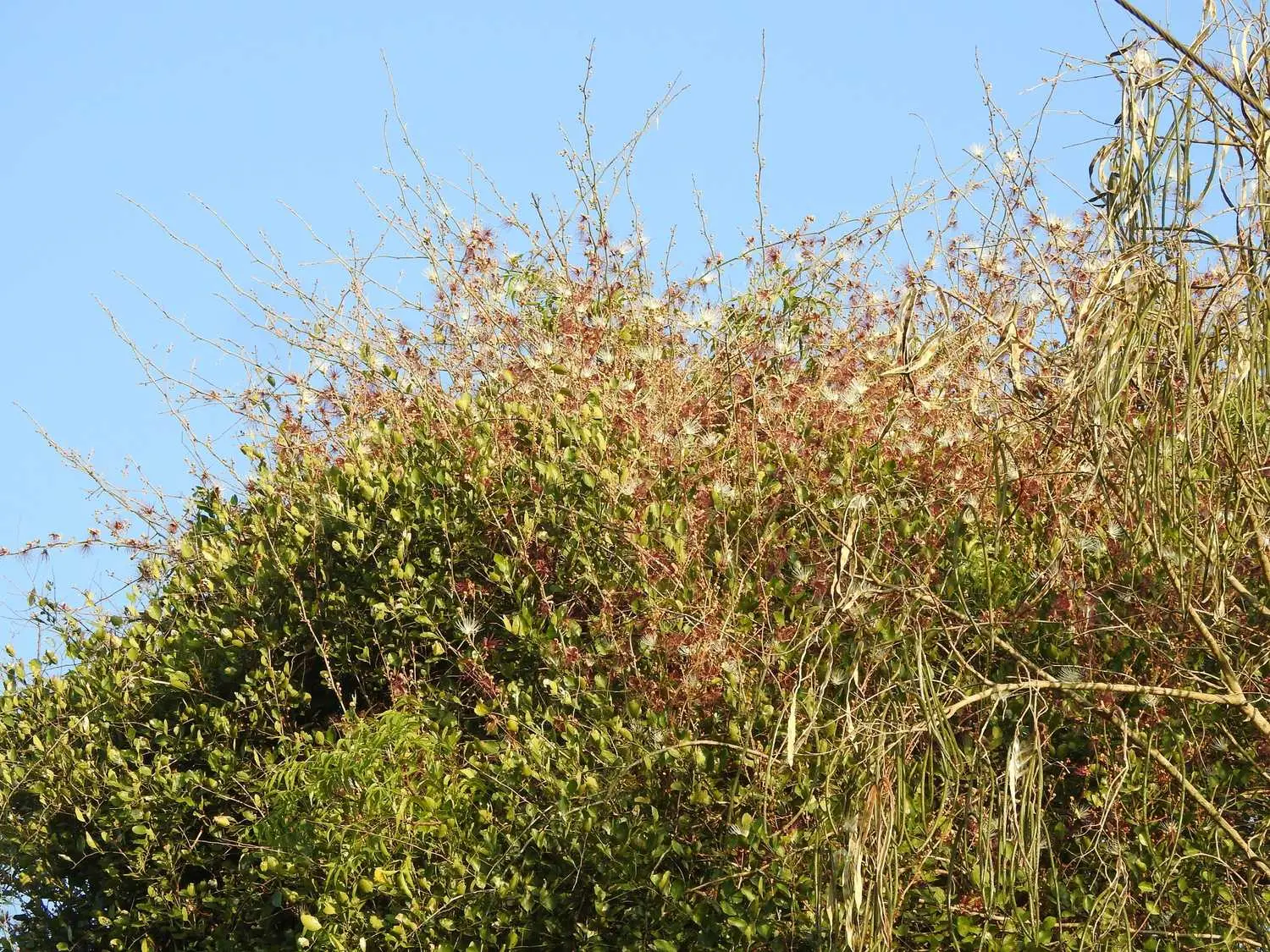
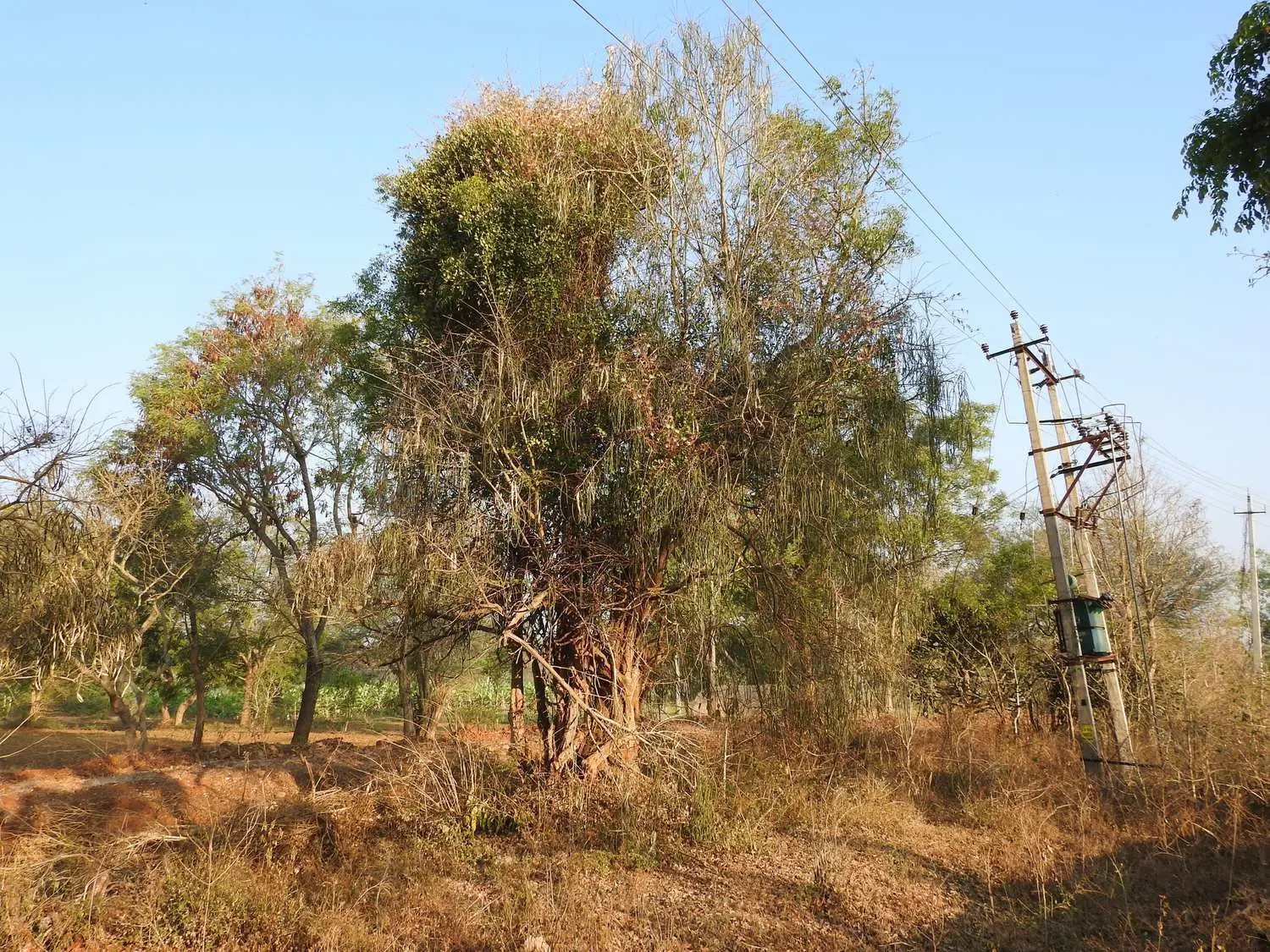
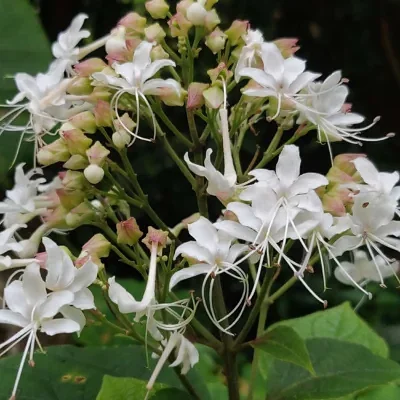
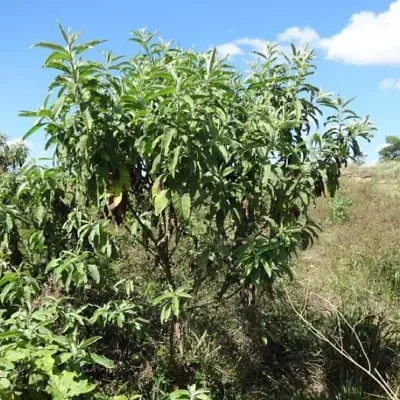
Ceylon caper is a large shrub, usually seen 2-5 m high. Thick stems have many climbing and drooping branches. Alternately arranged elliptic leaves are 3-6 cm long, with rounded base and short stalk. Beautiful flowers, which are essentially a spreading spray of pink-white stamens, are 4-5 sm across, and appear solitary in leaf axils. The flowers turn dark pink while fading.
Medicinal uses: In folk medicine, leaves used as cataplasm for boils, swelling and hemorrhoids. Decoction of root-bark used for vomiting and for improving the appetite. Leaves also used to improve the appetite.
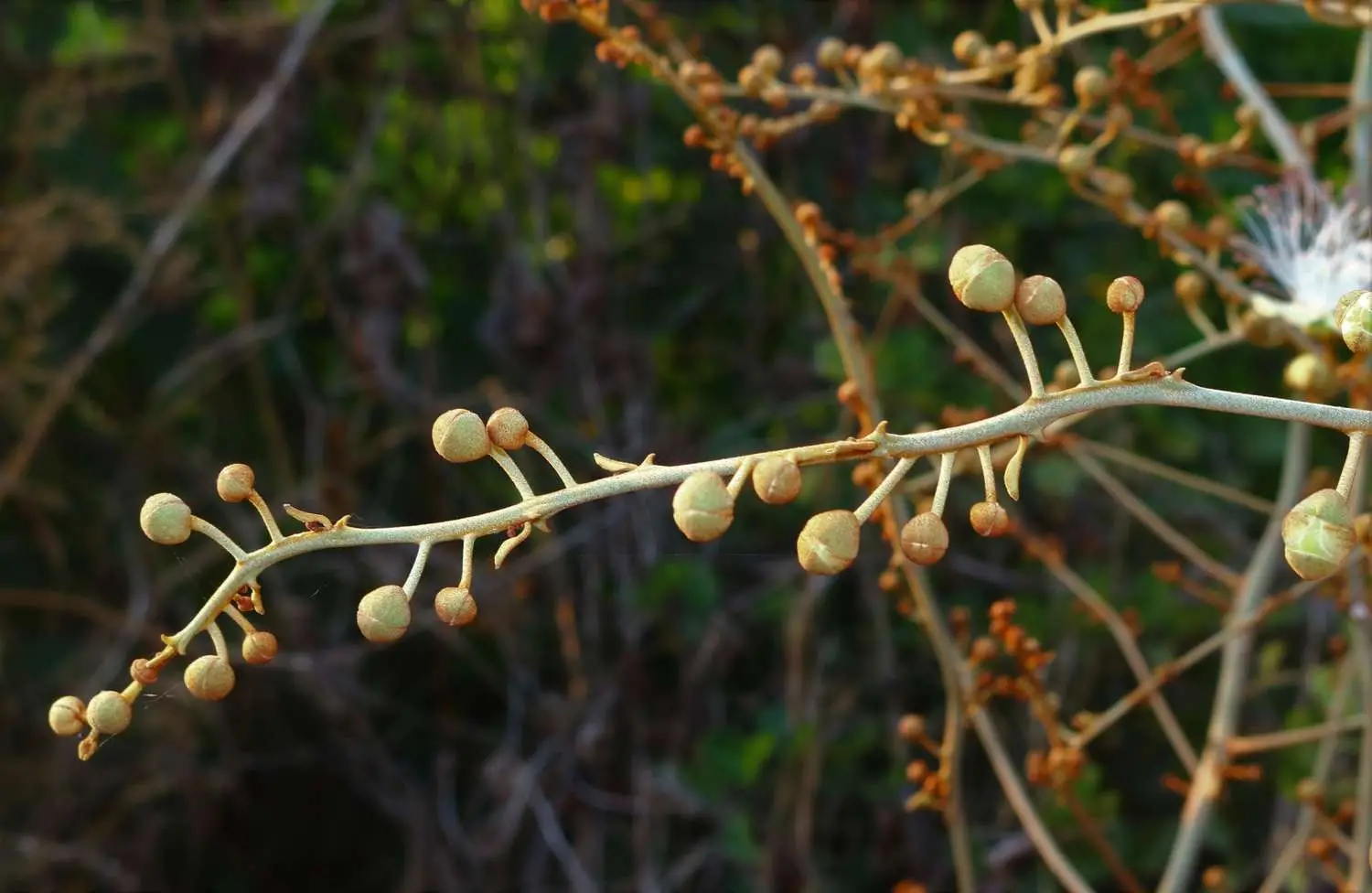
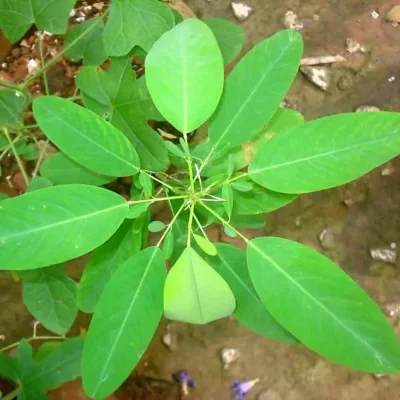
Stragglers, branchlets adpressed tomentose. Leaves 7-9 x 5-6 cm, ovate, apex mucronate, base truncate, pubescent; petiole to 1 cm, densely pubescent, stipular spines small, in pairs, recurved. Flowers in supra axillary rows, 3-4 cm across, white, buds densely pubescent; pedicels 2-4 cm, pubescent; stamens numerous, long exserted, white, turns to brown, gynandrophore as long as or longer than filaments; ovary 2.5 mm, ellipsoid.
Flowering occurs in March and fruits ripen durig October-November. Flowering and fruiting: March-May.
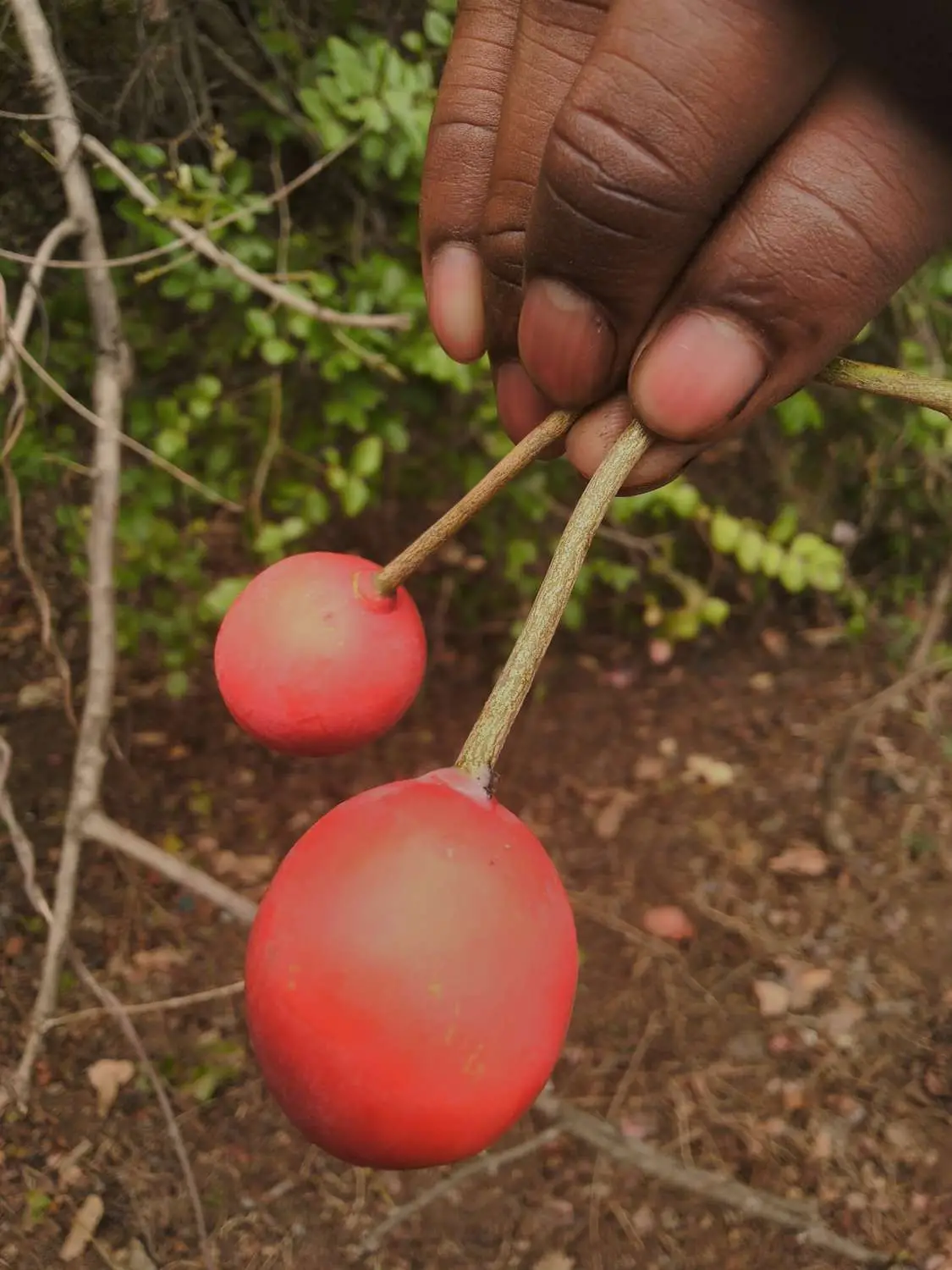
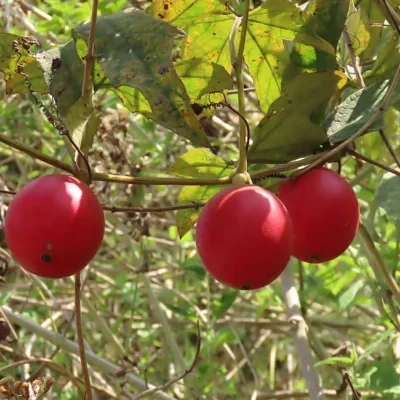
A shrub leaves simple with stipulary thorn found generally in upper Assam. Fruit is hairy and flowers are generally white. Fruit pulp is edible and can be pickled. Monkeys, civets and squirrels disperse seeds. Caterpillars of the Pierid butterflies feed on the leaves.
Germination Guide
🌍 SE China to Tropical Asia, Indian subcontinent, Indo-China, Malesia
Moderate
Capparis zeylanica is an evergreen climbing shrub distributed across the Indian subcontinent, Indo-China, China and Malesia. Seeds have dormancy that requires mechanical scarification and water imbibition to improve germination success.
Germination
Germination time
Expect germination in
14 – 28 days
Temperature
Min 21°C
Ideal 24°C
Max 27°C
Substrate moisture
💧 Medium
Seed Pre-treatment
-
💧
Soaking — 24 hours
Soak seeds in room temperature water for about 24 hours after scarification
-
🔨
Mechanical scarification
Scarify seeds with sandpaper or nick with knife to break hard outer coating
-
📋
Additional notes
Mechanical scarification followed by water soaking recommended to overcome dormancy
Substrate & Container
Recommended substrate
peat moss and perlite mixture, well-draining seed starting mix
Recommended container
seed tray or small pots
Growing Tips
Sow seeds on soil surface and lightly press into mix. Keep soil consistently moist but not waterlogged. Place in warm location with indirect sunlight. Provide ample light to seedlings after emergence.
Only logged in customers who have purchased this product may leave a review.

Reviews
There are no reviews yet.