
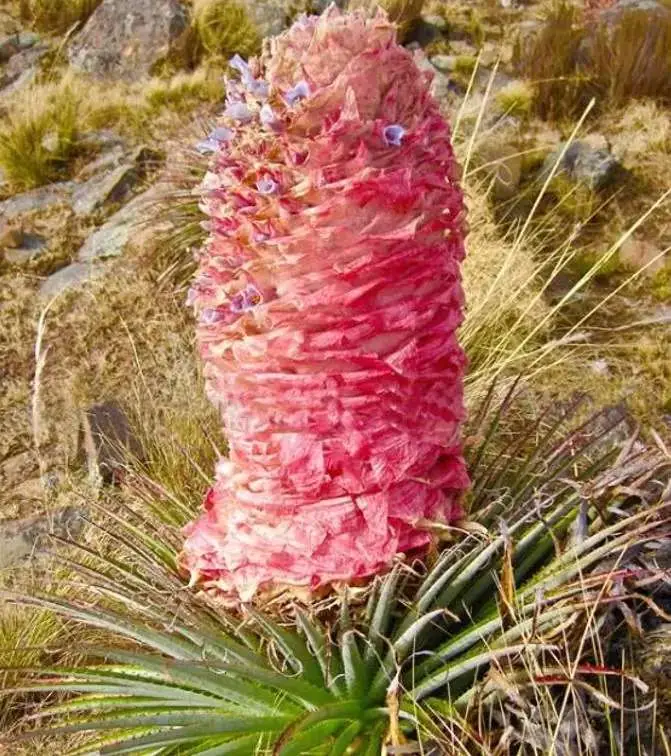

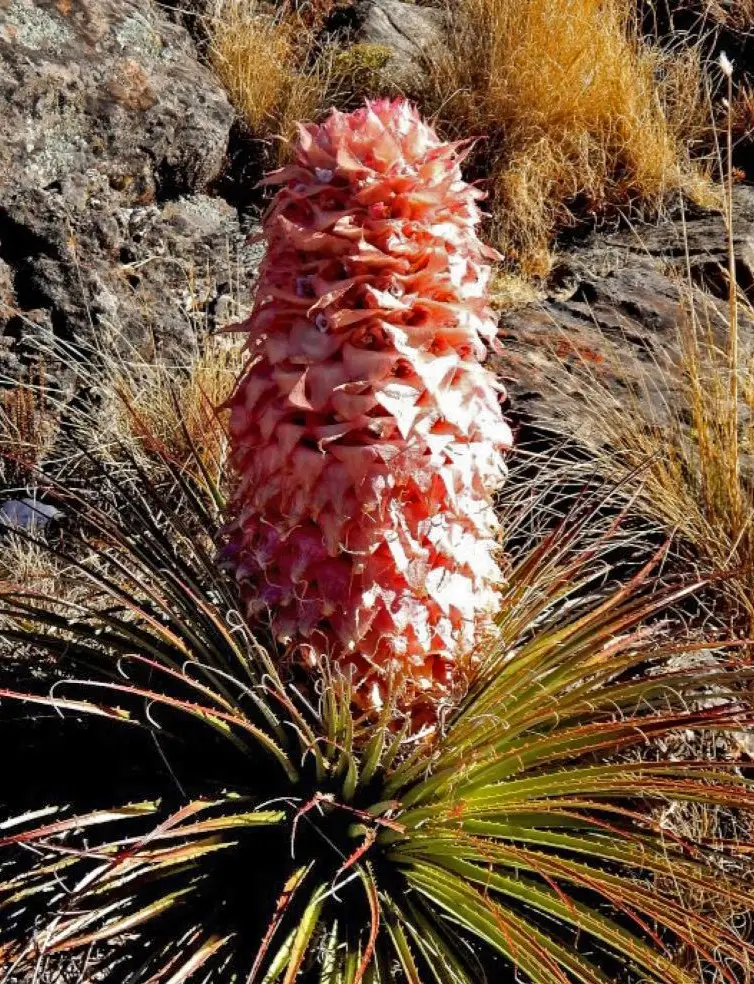
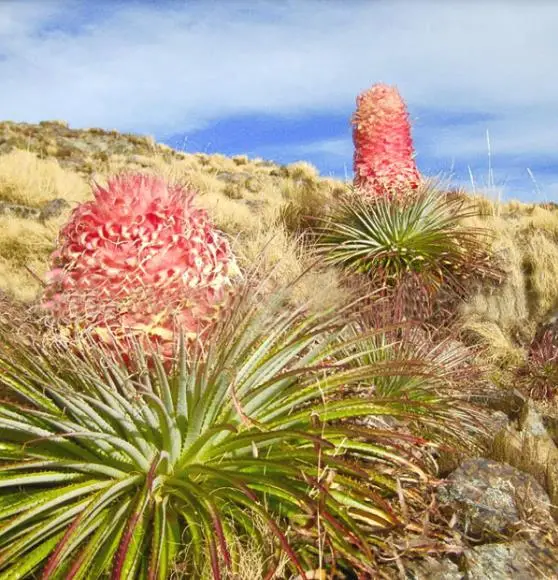
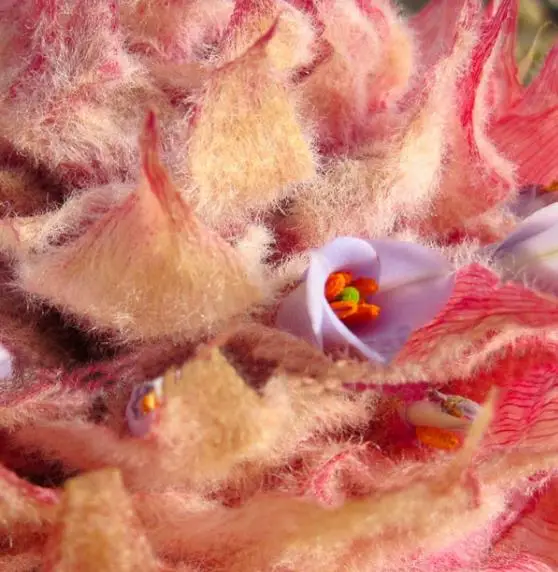
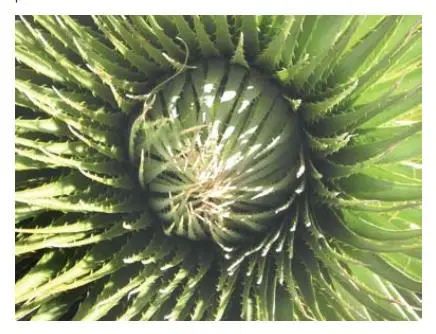
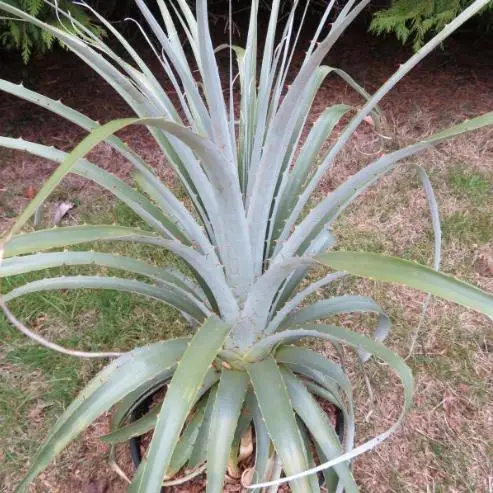
A breathtaking rarity from Argentina’s high Andes: Puya weberiana explodes in massive pink, densely wooly bracts that glow like living lanterns for over two months. Compact rosette with red-tipped, silvery-backed leaves. Underutilized in ornamental horticulture—grow from seed to own this desert princess before she becomes legendary.
€7.12
Picture this: a compact rosette of narrow, light green leaves edged in crimson, suddenly erupting into a massive tower of luminous, bright pink bracts so densely wooly they seem to float like clouds at the heart of your garden. That is Puya weberiana—the Desert Lantern, the Carmine Princess, one of South America’s most spectacular (and rarest) bromeliads.
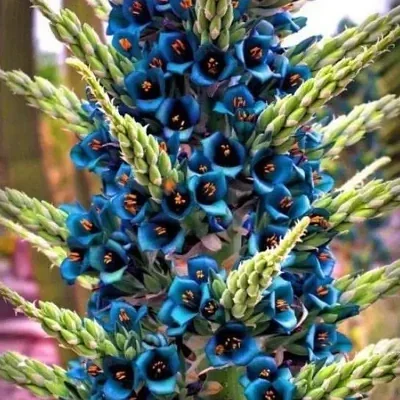
Origin & what makes her extraordinary: Puya weberiana hails from the windswept, high-elevation grasslands of the Andes in Argentina’s Salta and Tucumán provinces, where rocky slopes and thin air forge plants of extraordinary resilience and beauty. She has barely entered cultivation outside the specialist circles of the most passionate bromeliad collectors. While her sister species Puya alpestris (the famous Sapphire Tower) has earned fame and museum space, P. weberiana remains a closely guarded secret—a sleeping legend waiting to bloom. This scarcity alone makes her a trophy plant, a conversation piece, a living investment in botanical rarity.
The show-stopper: ornamental majesty for the designer’s eye. Here is where Puya weberiana becomes unmissable. Unlike most bromeliads that flash their color and fade, this species produces a *massive, short-stalked inflorescence so densely covered in bright pink, densely wooly bracts that it resembles a pink desert lantern—hence the name. Even more precious: these bracts remain gloriously vivid on the plant for *more than two months*, creating an extended display that turns your garden into living art. Imagine this: a sculptural rosette of silvery, red-tipped foliage crowned with what looks like a glowing pink cloud, persisting through season after season. Whether planted as a focal point in a Mediterranean xeriscape, nestled into a rock garden border, or grown in a large container on a patio, P. weberiana commands attention. The compact form (0.6–2.5 meters when mature) makes her far more manageable than many Puya species, perfect for smaller landscapes that still want maximum drama.
How to grow the Desert Lantern: This is where good news arrives. As a native of high-altitude, rocky Andean terrain, P. weberiana is inherently drought-tolerant and low-maintenance. Bright sun is her preference—give her full sun or half-shade, and she’ll thrive. Soil must be perfectly well-draining; use a sandy/cactus compost mix or a 50/50 blend of seed starting compost and fine grit. Water freely during the warm growing season, then switch to dry conditions once temperatures cool—mimicking her native mountain winters where frost dries the soil. She survives frosts down to around 18°C (64°F), making her suitable for cooler Mediterranean climates like coastal California. Container growing works beautifully; pot her in 8–16 inch diameter containers with excellent drainage. The growth rate is moderate—not the glacial pace of some Puyas (P. chilensis takes 20+ years to flower), nor explosive like tropical bromeliads. Patience is required, but manageable. No regular fertilization needed; a light balanced feed in early spring suffices. These Andean natives are warriors; they ask for sun, drain, and respect for their dry heritage.
Grow her from seed and join the pioneers: Starting P. weberiana from seed is your gateway to owning a plant virtually no one else cultivates outside botanical circles. Sow seeds directly on the surface of your sandy/gritty mix—light aids germination. Keep soil consistently moist (not waterlogged) until seedlings establish, then allow drying cycles. Warmth helps: 20–25°C (68–77°F) and a heat mat accelerate germination. Patience will reward you within weeks to months. What you’re growing isn’t just a plant—you’re growing legend, rarity, and the next generation of an underutilized masterpiece. When your Desert Lantern finally crowns itself in those pink, wooly bracts, you won’t just have a garden accent. You’ll have proof that the most beautiful things are sometimes the hardest to find, and the sweetest to grow from seed.
Only logged in customers who have purchased this product may leave a review.

Reviews
There are no reviews yet.