
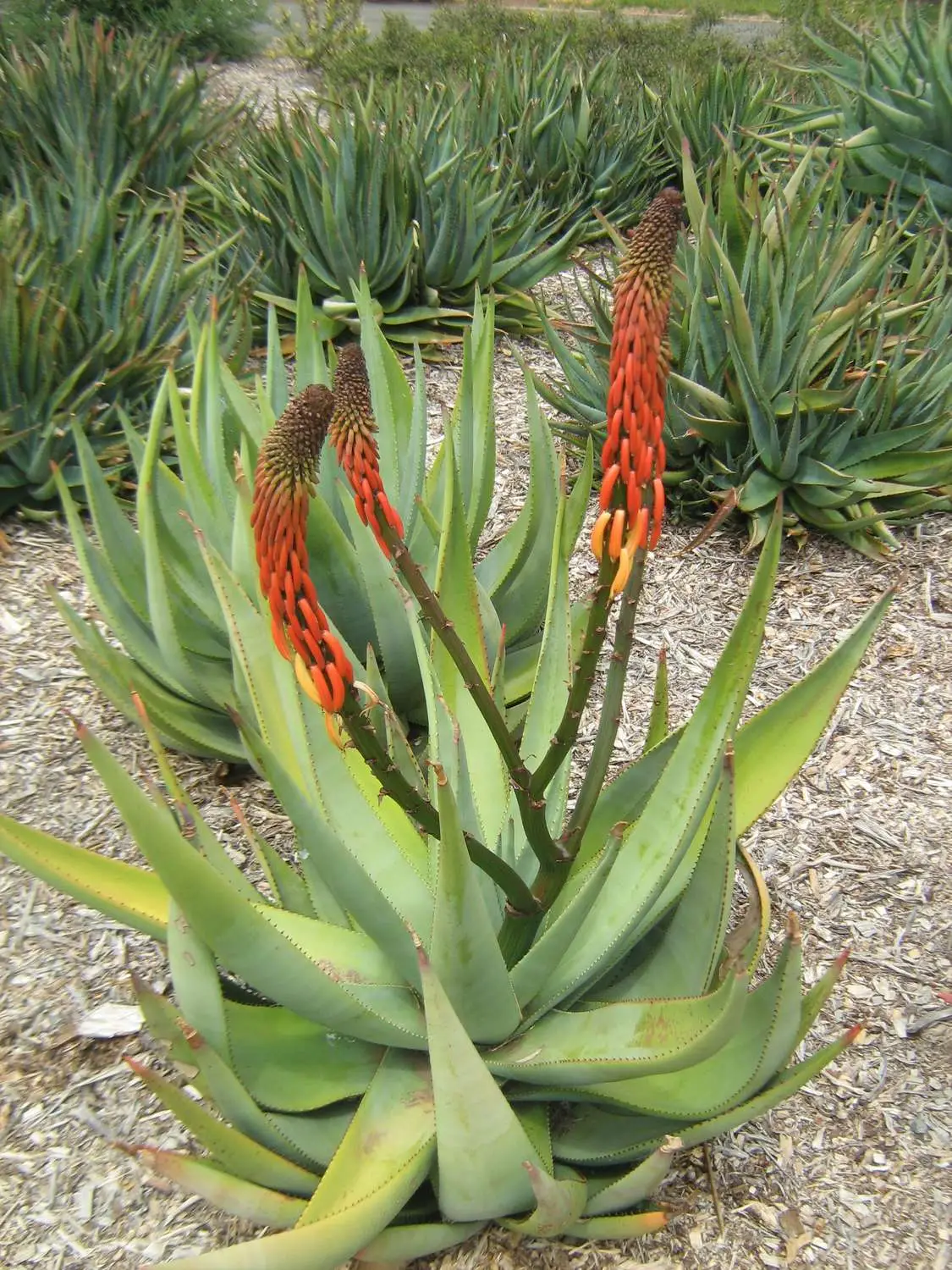
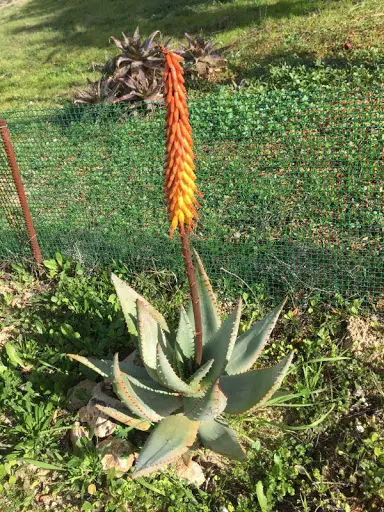
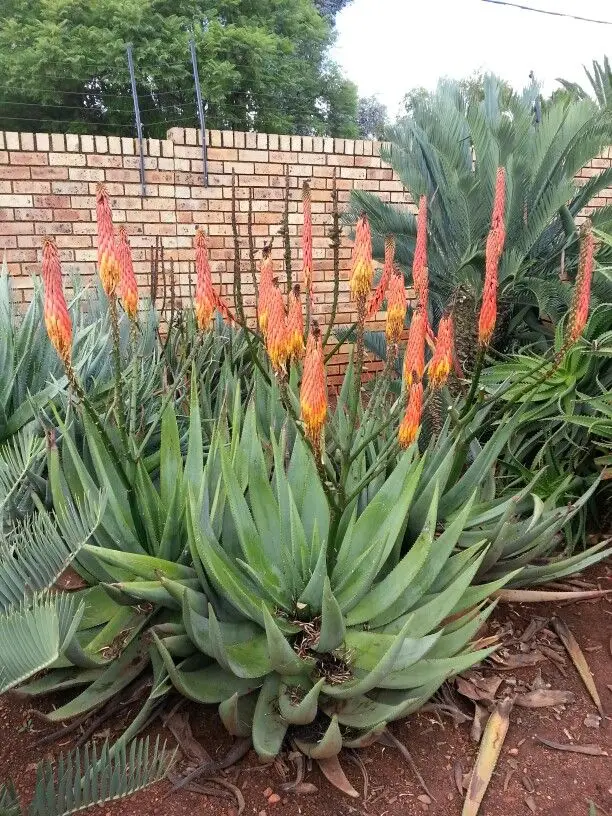
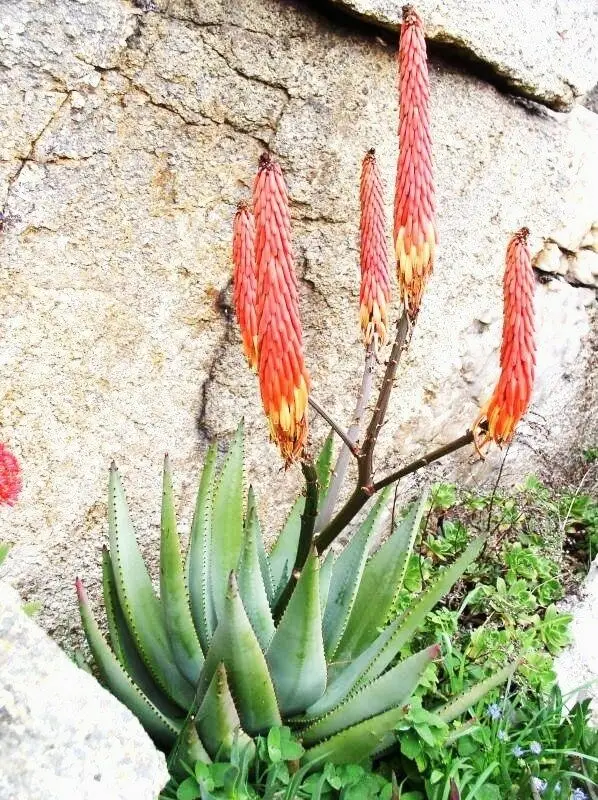
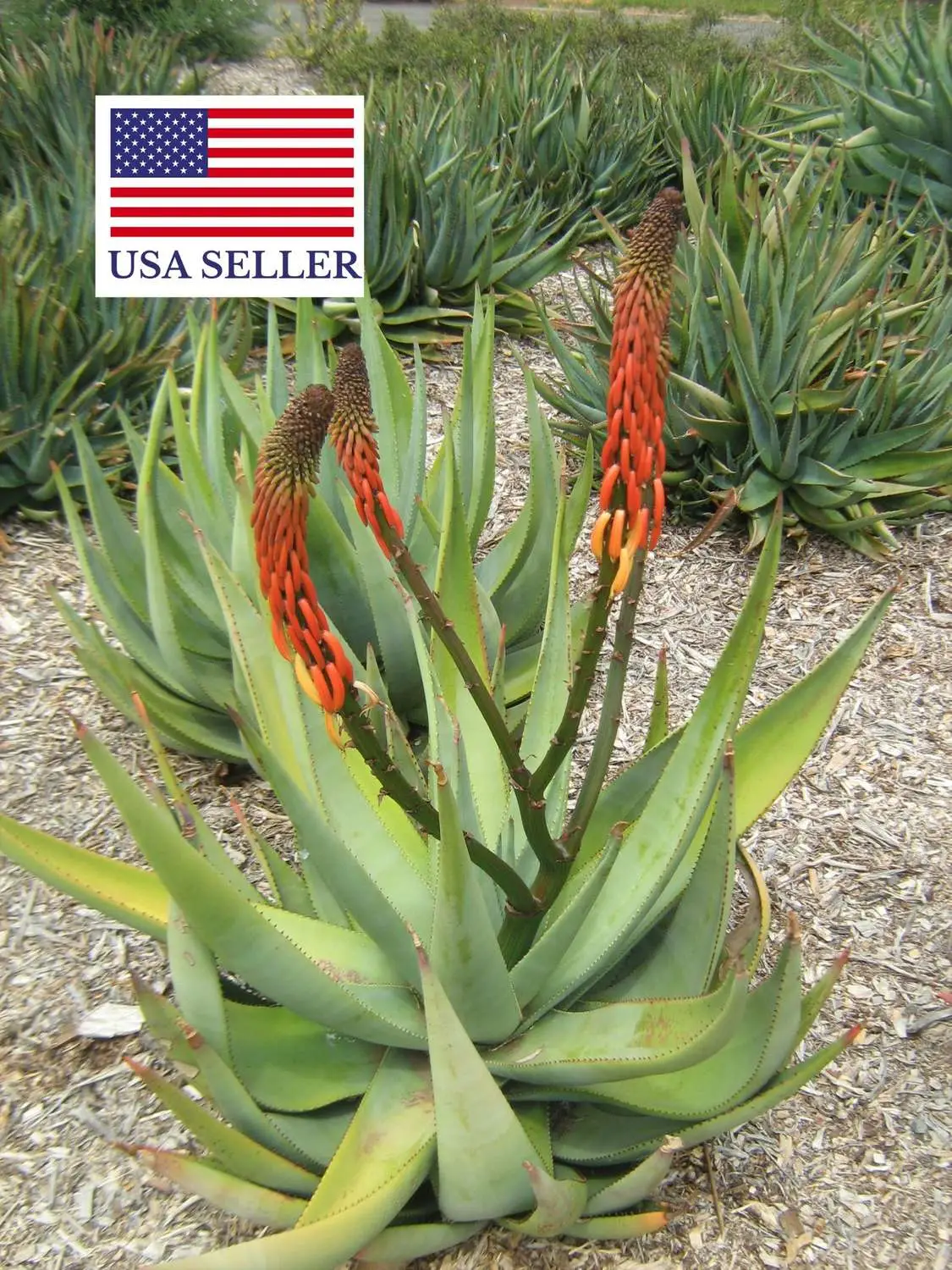
Rare South African aloe that defies tradition: stunning dark-red and lemon-yellow flowers explode in summer when most aloes sleep. Silvery blue-green rosettes draw sunbirds and hummingbirds to your garden year-round. Easy to grow with minimal water, thrives in well-drained soil and full sun. Grow from seed—a slow burn worth the wait.
€3.56
This is the aloe that blooms when the world expects silence.
Aloe reitzii is endemic to a tiny, sacred corner of South Africa’s Mpumalanga grasslands—a rare species found nowhere else on Earth. It was discovered and named in 1943 to honor Francis William Reitz, a South African naturalist who first brought it into cultivation. Today, it remains coveted by serious collectors and drought-garden designers who understand that rarity paired with drama is irresistible.
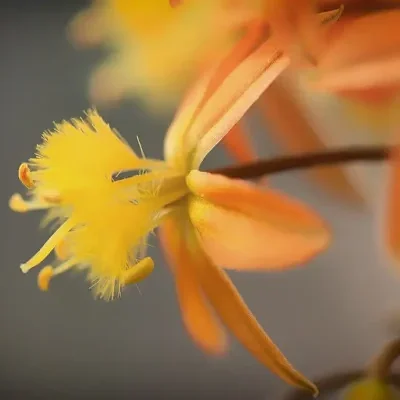
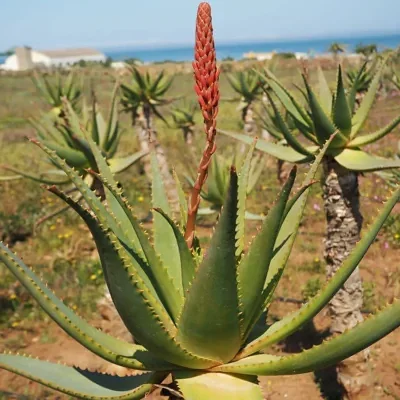
What makes this aloe truly special is its defiant flowering time. While nearly every other aloe in cultivation blooms in winter, Aloe reitzii ignites in summer—launching cylindrical spikes of brilliant red to orange-red flowers that rise above its silvery blue-green rosette like small torches. The flowers themselves are architectural marvels: curved, narrow, tubular, dark red on the exterior and glowing lemon-yellow underneath. Young plants produce a single spike; mature specimens create multiple spires, each reaching well above the foliage. In Northern Hemisphere gardens, this means flowers from September through November—precisely when the garden is fading. In the Southern Hemisphere, you get late February through March. Either way, it’s a jolt of color when you need it most. This summer-blooming habit also makes it priceless for cold gardens: while other aloe flowers freeze off in hard winters, Aloe reitzii’s are already spent and safe. The flowers attract sunbirds in Africa and hummingbirds in North America, making it a living bridge between continents and a pollinator magnet for any dry garden.
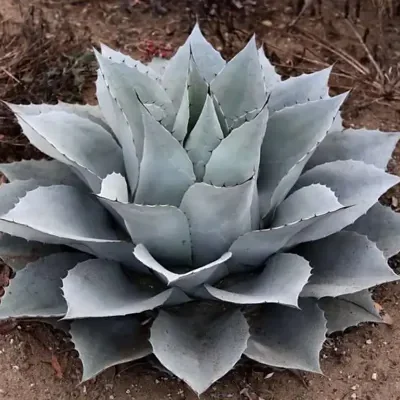
The foliage is equally seductive. A single, stemless rosette grows to 3 feet tall and wide, composed of long, thick, broad leaves (up to 4 inches wide at the base) in silvery blue-green, gray-green, or even blue-gray depending on light and stress. Young plants wear prickles on both leaf surfaces; these fall away with age, leaving only a distinctive line of thorns on the leaf backs and sharp reddish-brown teeth along the margins. This combination—waxy texture, glaucous bloom, reddish armature—creates a sophisticated, almost sculptural presence that works equally well in a container or bold garden statement.
Cultivation is straightforward if you respect its needs. Aloe reitzii is not difficult to grow, making it an excellent first-rare-aloe for committed growers. Give it full sun and well-drained, gritty soil (sandy loam, cactus mix, or rocky compost works beautifully). Once established, it is drought-tolerant and requires minimal water—this is a plant that thrives on neglect. It prefers dry winters and regular but not excessive summer water. Drainage is non-negotiable; poor drainage kills it far faster than dry spells. Container-grown plants appreciate a shallow pot (aloe roots are fibrous and modest) with excellent drainage holes and a sandy or gravelly mix. In-ground, ensure it sits on a well-draining slope or in raised beds. Hardy to around 20°F (-6°C) in brief cold snaps if kept dry, making it suitable for USDA zones 9b–12. It is slow-growing—plan for 5–10 years to reach flowering maturity from a young plant—but this patience is part of its charm. Seed germination is reliable (2–4 weeks on well-drained seedling mix) and seedlings transplant easily at 6 months; expect flowering in 5–7 years from seed.
Grow Aloe reitzii from seed and you’re committing to something rare, something patient, something that will reward you with spectacle. This is not a plant you buy for instant gratification; it’s the plant you choose because you believe in slow living and believe that witnessing a cultivated wildflower recover from the brink of extinction is worth the years of care. It is the aloe for gardeners who want to be different, who garden in anticipation, and who understand that the most beautiful things are often the rarest things. Sow the seed. Wait. In seven years, your garden will bloom red and gold when no one else’s is blooming at all.
Only logged in customers who have purchased this product may leave a review.

Reviews
There are no reviews yet.