
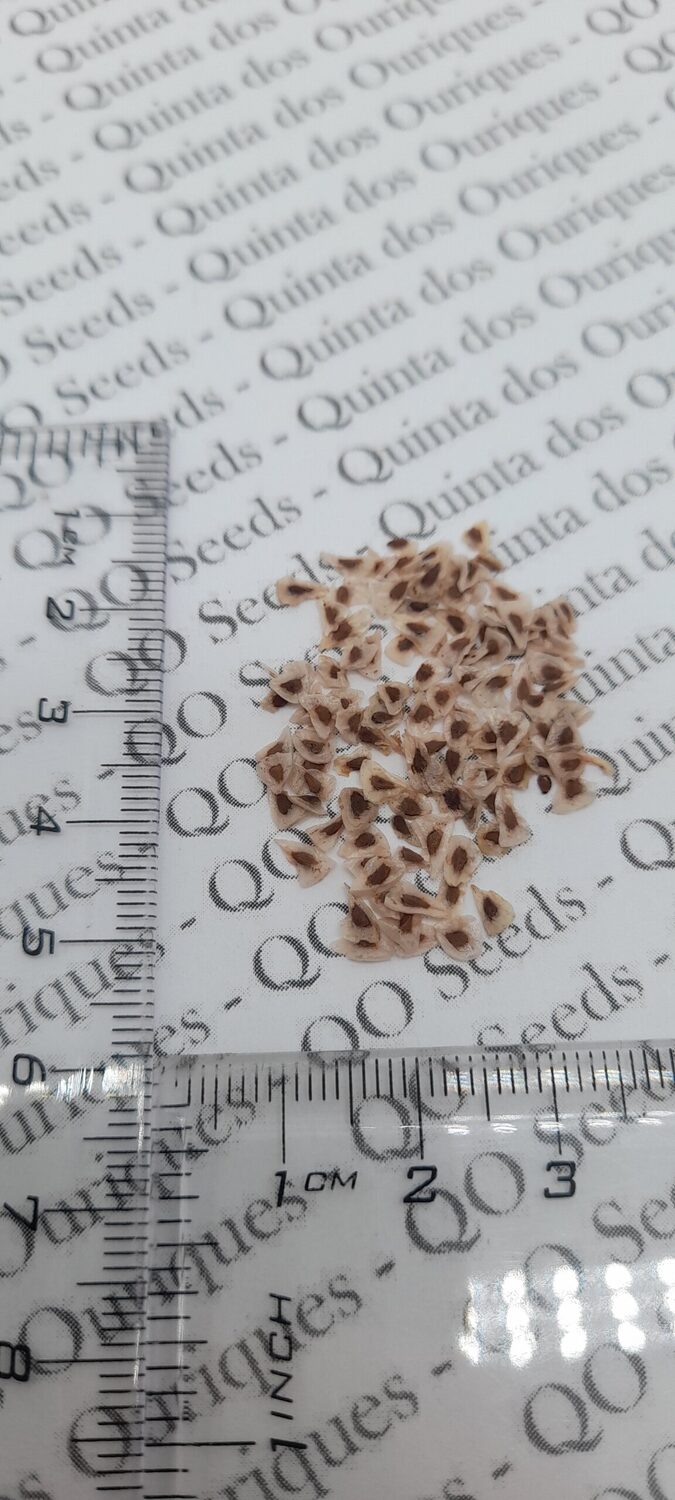
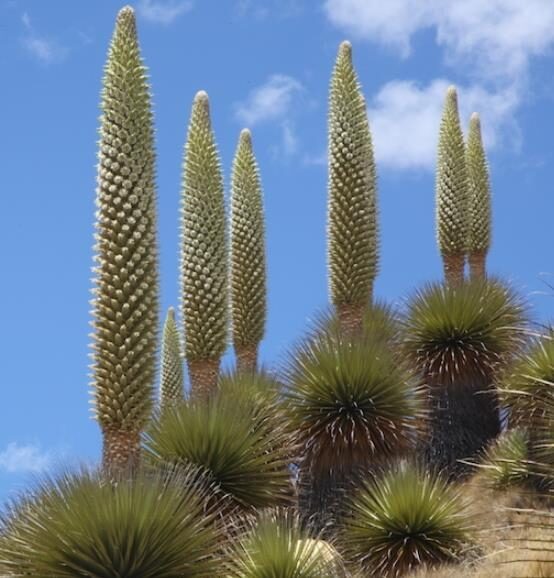
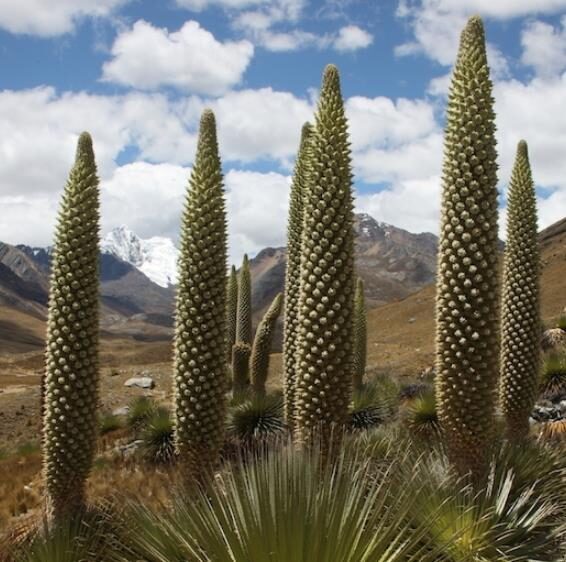
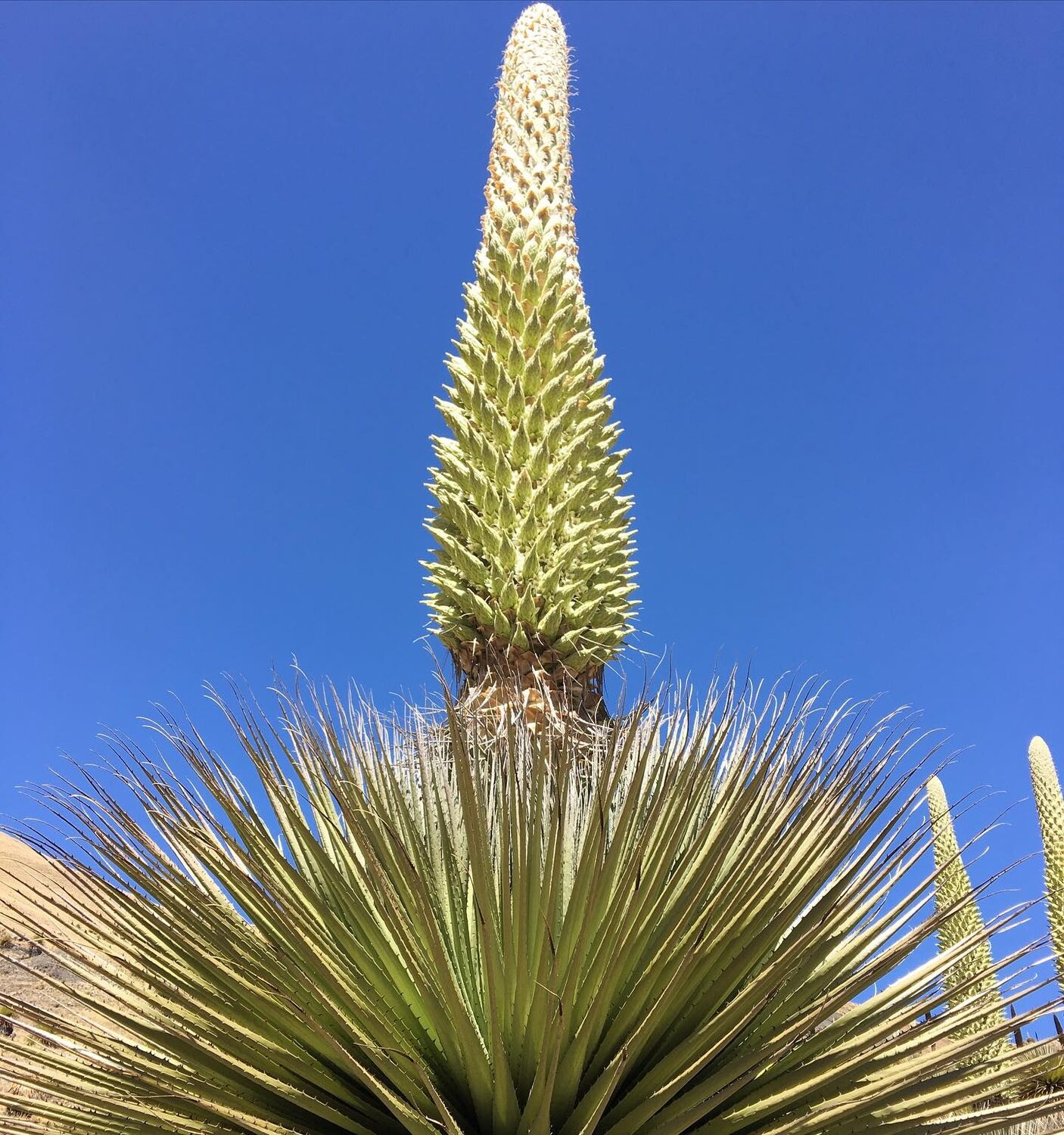
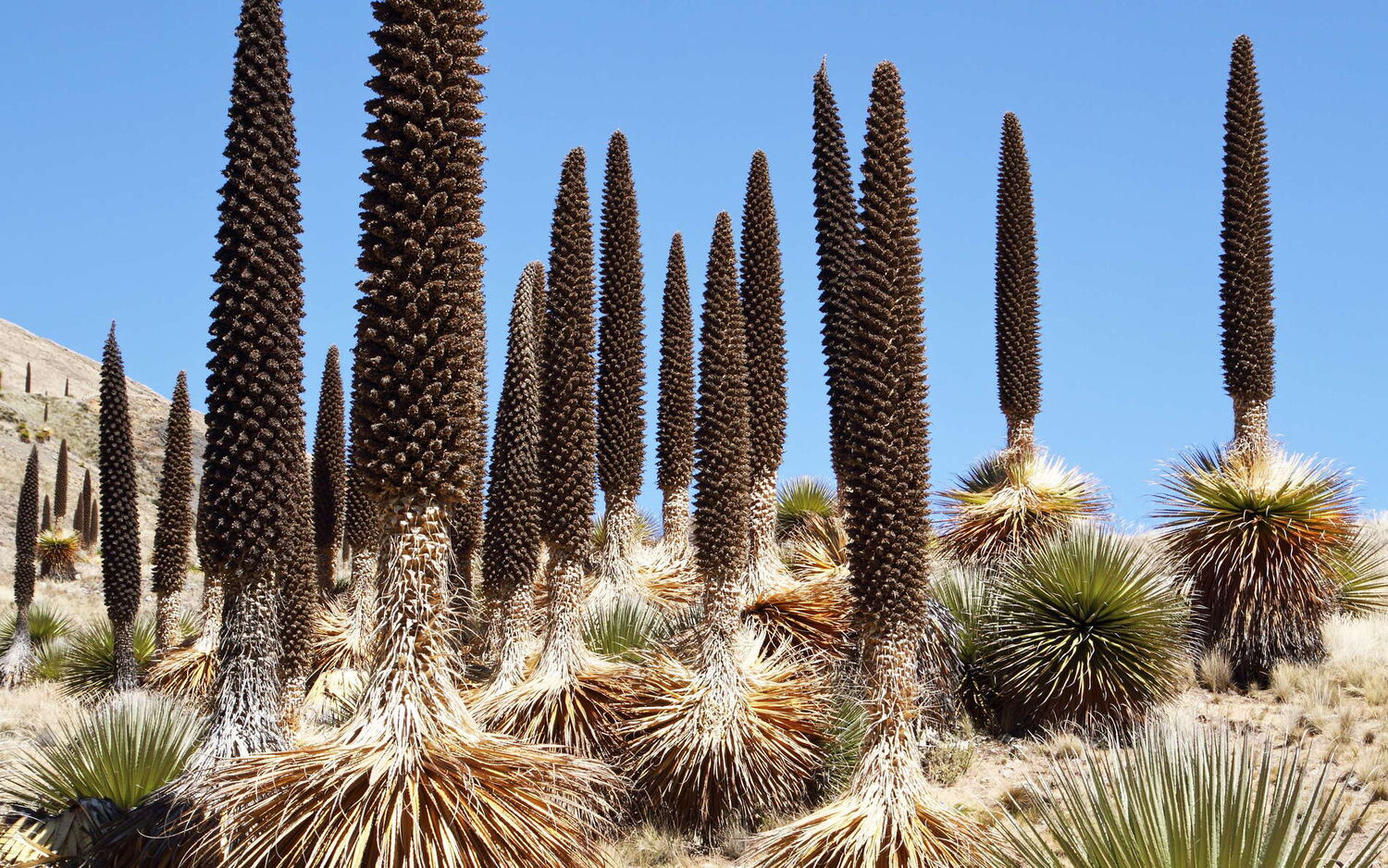
The world’s largest bromeliad waits 40–150 years to unleash one spectacular, once-in-a-lifetime inflorescence—a towering monument to patience and beauty. Imagine a colossal flower spike stretching 40 feet into the sky, clothed in thousands of ivory-white blossoms that draw hummingbirds, insects, and awe for months. Slow-growing and drought-tolerant once established. Grow this living legend from seed.
€4.93
The Queen of the Andes is the largest species of bromeliad, its inflorescences reaching up to 15 m (50 ft) in height. Nothing—and I mean nothing—compares to the moment your Puya raimondii finally explodes into its singular, monumental act of reproduction.
Native to the high Andes of Bolivia and Peru, this titan of the plant world has earned its name through sheer geological presence. In English known as Queen of the Andes, in Quechua it is called titanka, ilakuash, or puya de Raimondi—names whispered across high mountain communities for centuries. First described scientifically in 1830 by French naturalist Alcide d’Orbigny, the species name commemorates the 19th-century Italian scientist Antonio Raimondi, who made extensive botanical expeditions in Peru. This is a plant steeped in history, rarity, and legend.
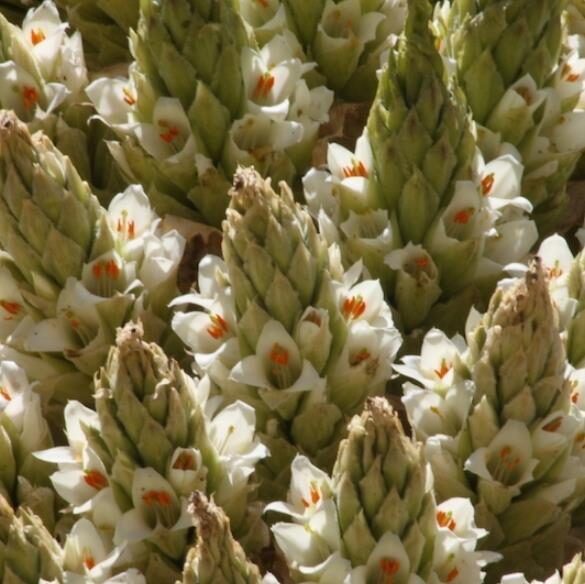
The inflorescence—the reason collectors obsess over this species—is the irresistible centerpiece. It is long-lived, lasting 60-100 years before producing one of the most spectacular flowering displays in the plant kingdom—a once-in-a-lifetime inflorescence that reaches up to 6 meters in length, the most massive of any flowering plant. The massive flowering spike may bear 8,000 to 20,000 individual flowers, each producing copious nectar that attracts hummingbirds, insects, and even Andean bears. Picture this: after many years of growing a huge rosette of slender leaves, a massive stalk erupts which can rise to more than 5 metres and contain countless thousands of ivory-white flowers, each creamy-white blossom being 2 inches (5 cm) wide, with bright orange anthers. For a brief, intoxicating window, these gorgeous flowers will attract hordes of pollinating insects and butterflies, as well as hummingbirds in warmer climes. At least six hummingbird species have been reported visiting the flowers of P. raimondii, which all act as potential pollinators. Growing Puya raimondii means becoming a custodian of pollinator paradise—and a participant in one of nature’s most dramatic botanical rituals.
Cultivation is where patience becomes your superpower. Puya raimondii thrives on a less-is-more approach once mature, with long-term care largely about maintaining suitable environmental conditions rather than intensive daily tasks. Established plants are highly drought-tolerant; deep, infrequent watering is far preferable to shallow, frequent applications, and excellent drainage prevents root rot. Full sun with well drained soil and occasional to little water when established. From the cool Andean highlands, at about 13,000 feet, it is believed to be frost-tolerant down to about 20 degrees F (-6°C). Sow in a nutrient-poor, free-draining compost such as a cactus mix, place the seed on (not in) the compost, and press gently—Puya raimondii seeds require light to initiate germination. Germination is irregular; once the first seedlings emerge (usually 5–6 weeks), you may wait another 10–12 weeks before all viable seeds have germinated. Growth is glacial, but that is part of its mystique: you are not simply gardening; you are conducting a multi-decade horticultural symphony.
This is your chance to grow a botanical legend. In its native habitat, Puya raimondii is endangered due to habitat loss and protected by conservation laws. This endangered species is growing in only a few places outside its native Andes range, so it is rare to find the genuine species for sale. Nurturing Puya raimondii from seed is an act of love, patience, and ecological reverence. When
Only logged in customers who have purchased this product may leave a review.
Reviews
There are no reviews yet.