Description
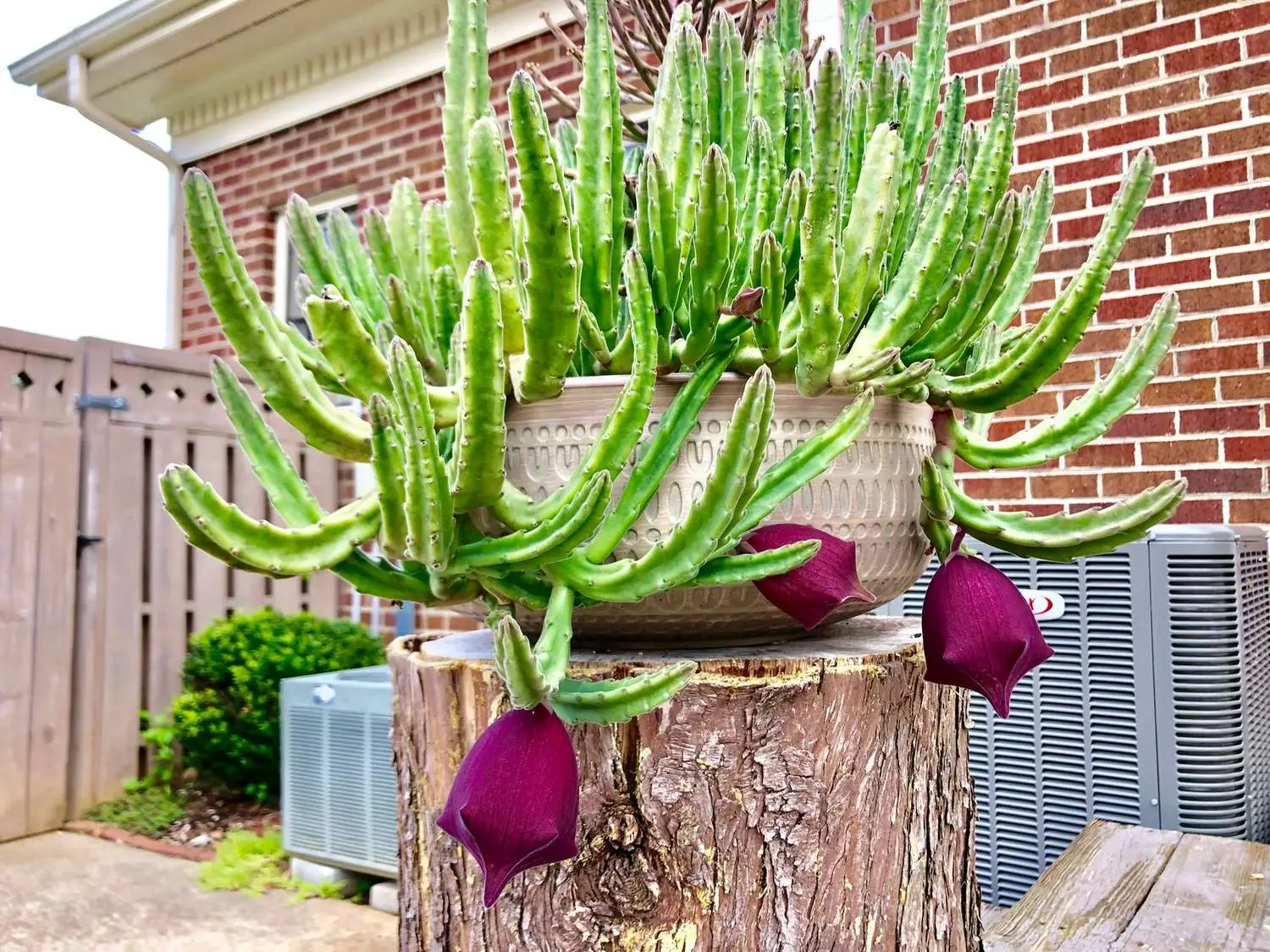
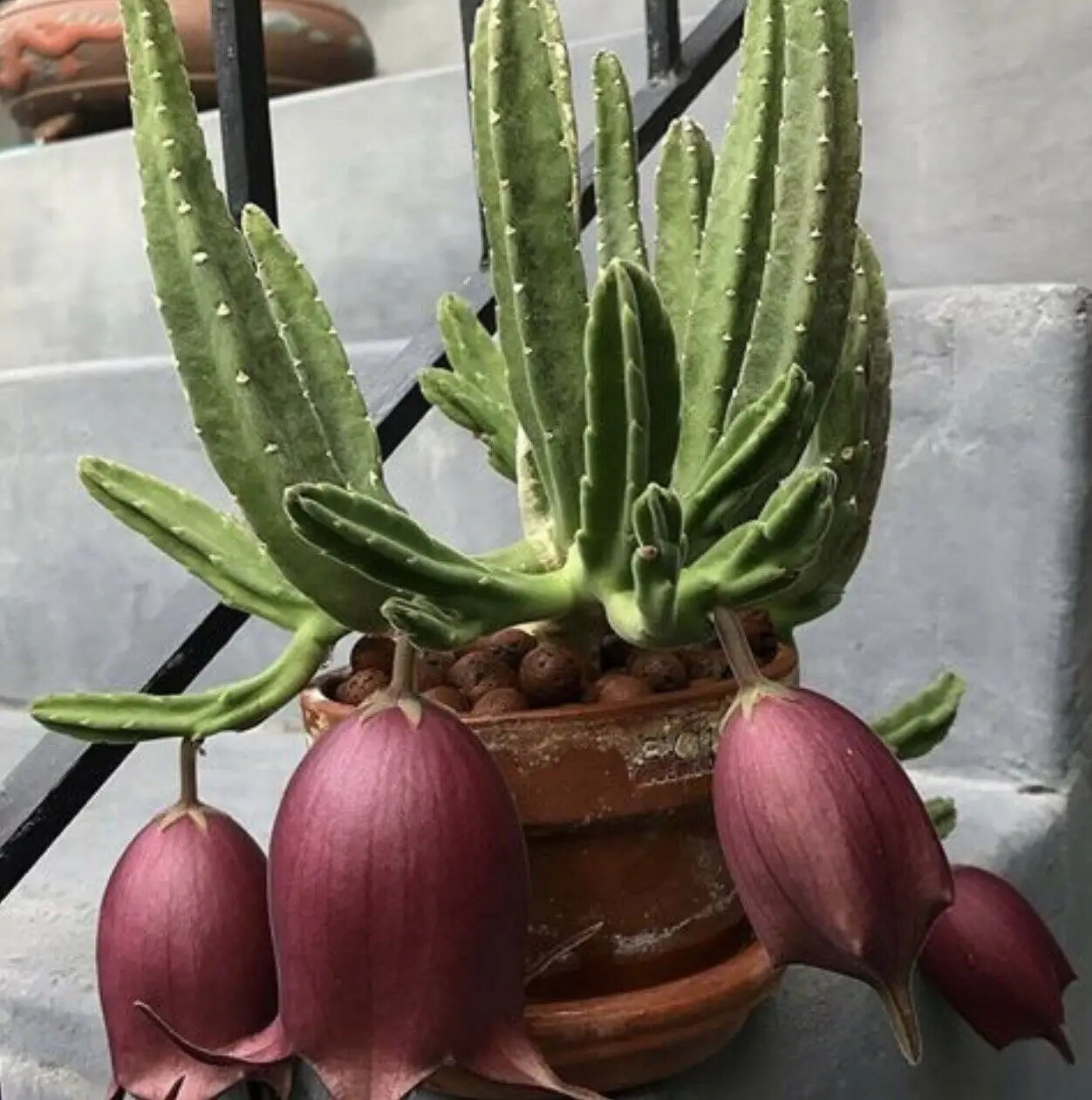
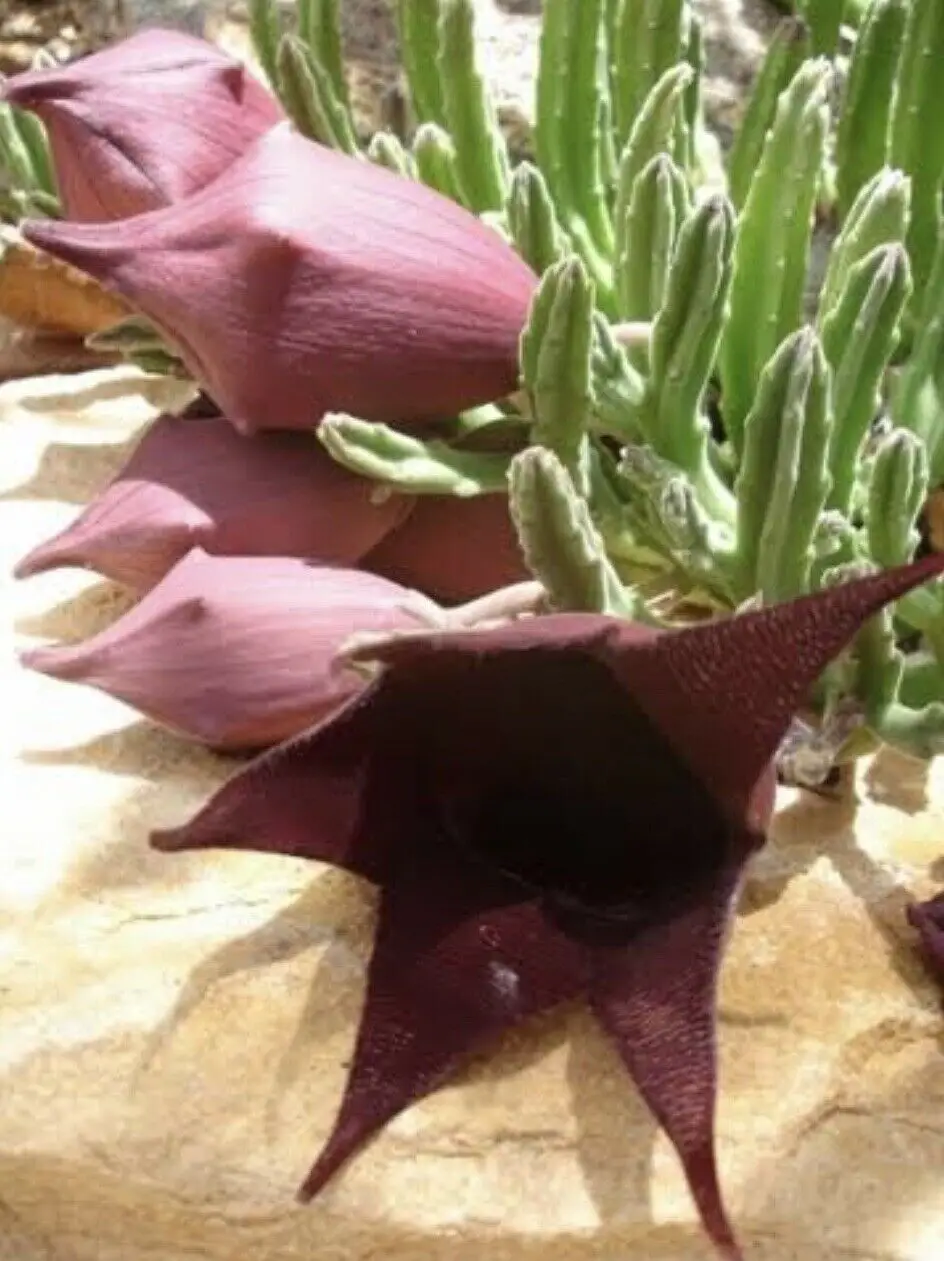
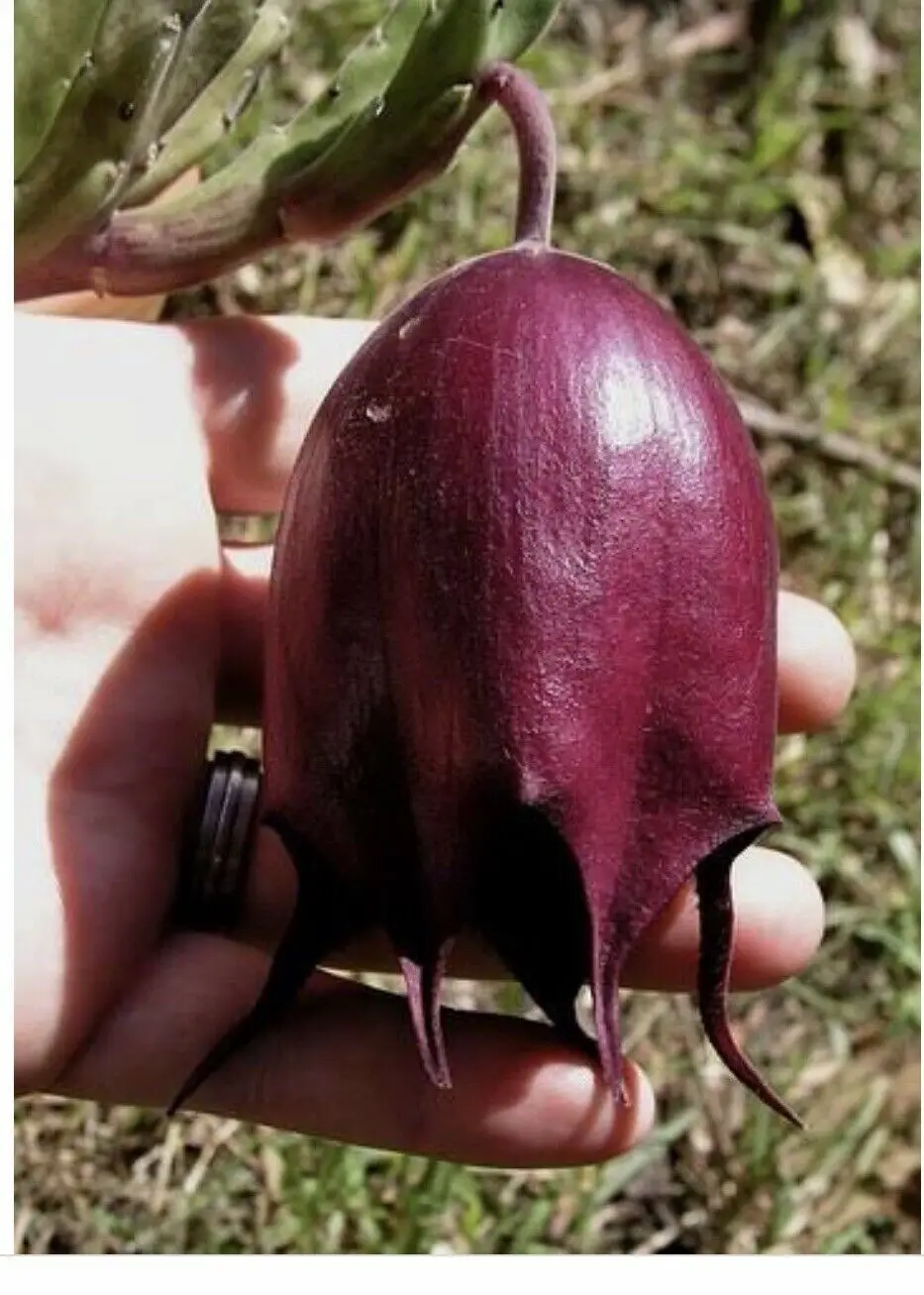
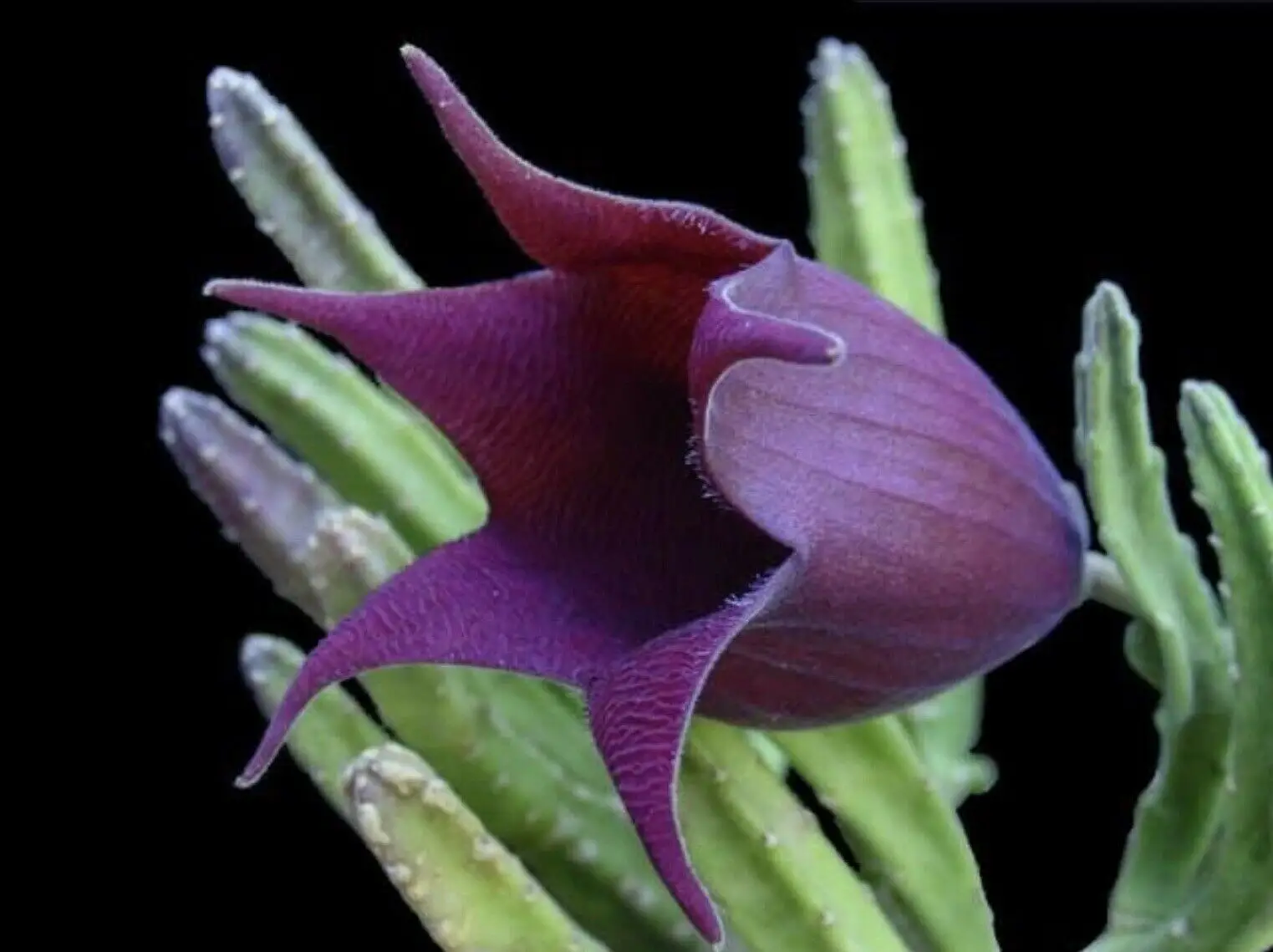
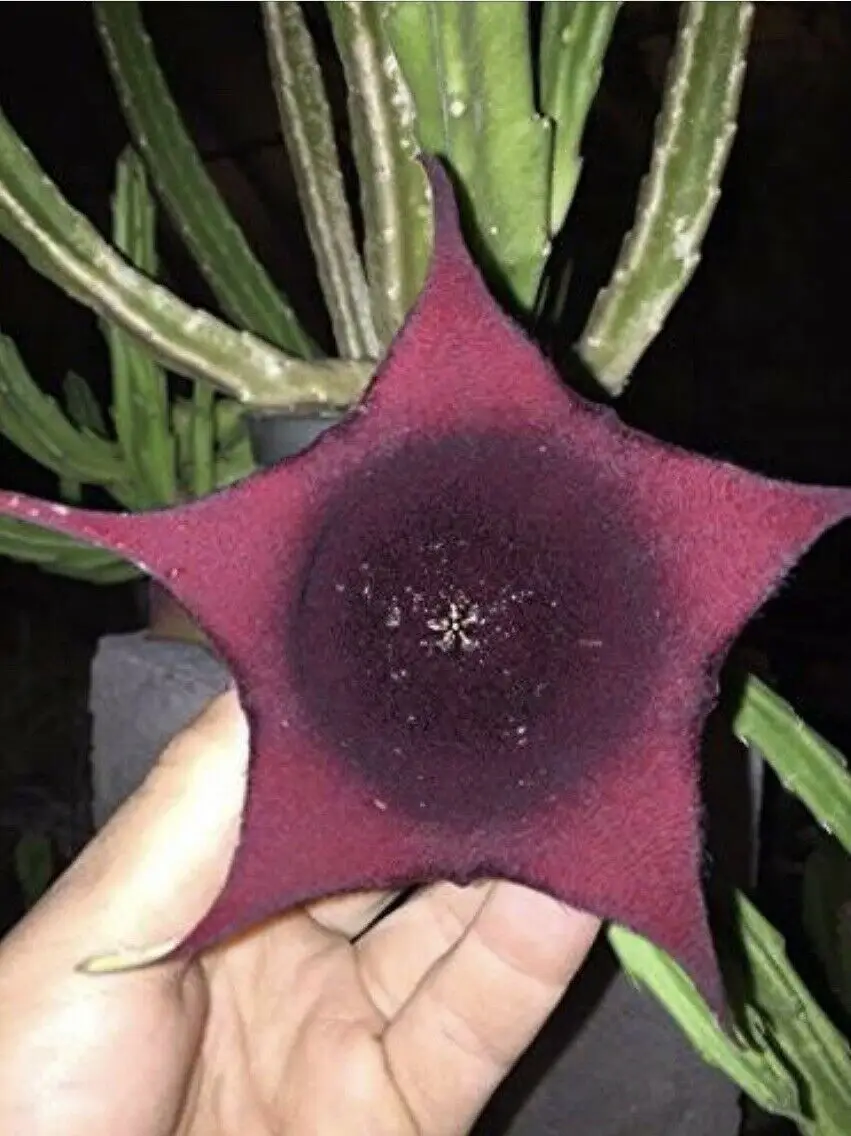
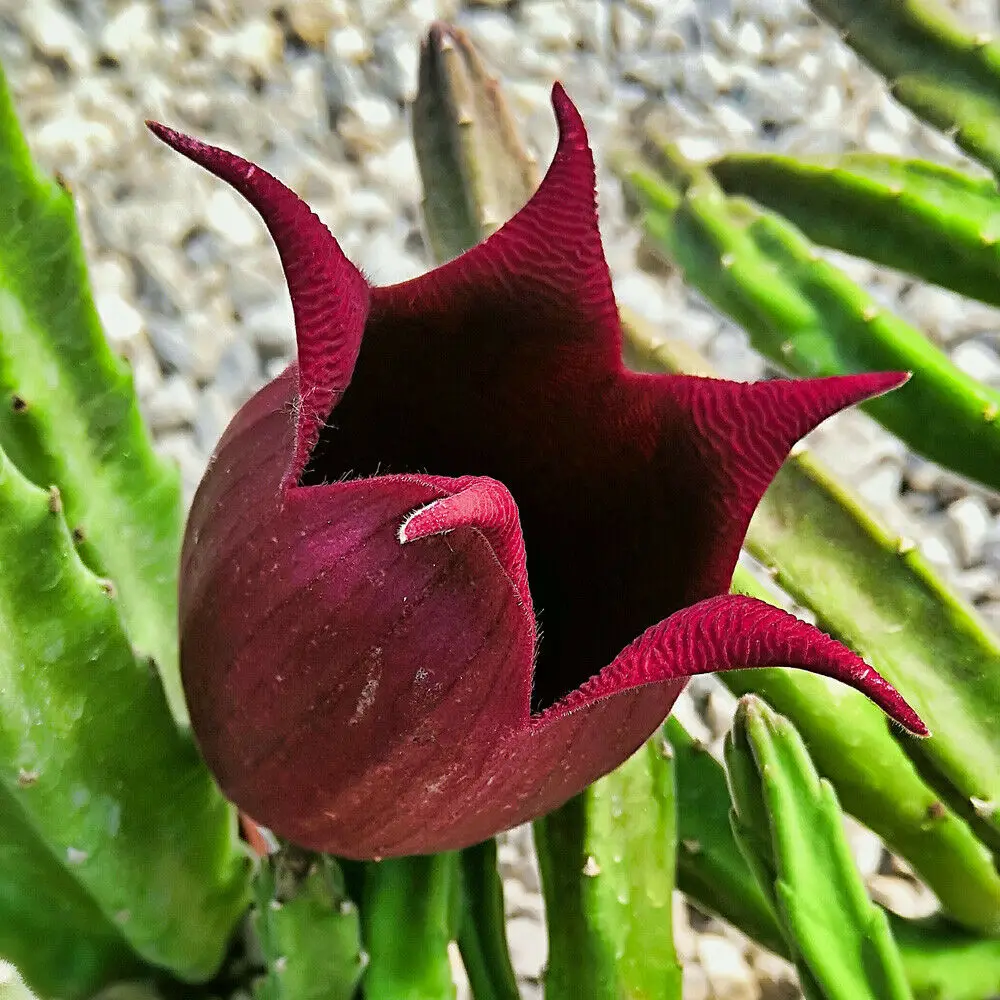
Stapelia leendertziae is probably the most striking species of the genus Stapelia, especially when in flower, due to the unique, large, bell-shaped, deep reddish to dark purple flowers that are up to 12 cm long. This is the plant that stops you mid-breath when those velvet blooms open—a masterpiece of evolutionary trickery wrapped in drama.
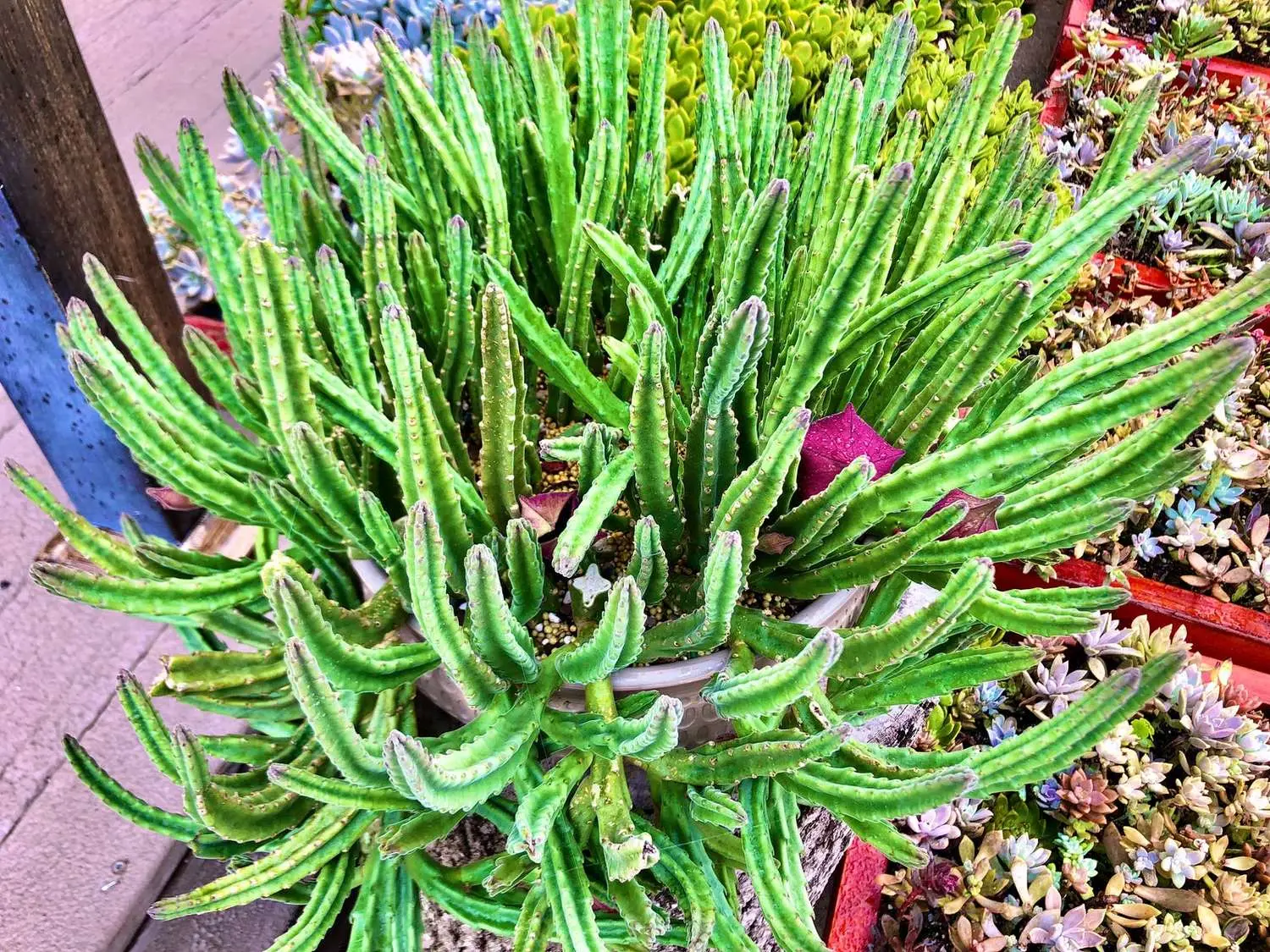
Native to the mountains of the northeastern escarpment of South Africa from the Abel Erasmus Pass southwards to Barberton and Komatipoort, extending into Swaziland, Black Bells leendertziae has been cultivated, both locally and abroad, since its discovery in the early 1900s. An attractive succulent that forms large clumps of green, shortly pubescent stems with small tubercles on the angles and purple mottling towards the tips, it looks sculptural even before flowering.
But the real magic lives in the flowers. The blooms are large and dramatic, deep maroon to dark purple, with a waxy, glossy texture that resembles leather. They emit a faint carrion scent, a natural adaptation for attracting fly pollinators. Here’s the beautiful truth: the flower has a very strong and disagreeable, musty or carrion-like odour which attracts flies for pollination. The scent is, however, not overpowering and one really has to inhale deeply to smell them — from a few metres away, one hardly notices the aroma at all. Flies are sometimes so deceived by the odour that they lay their eggs around the fleshy corona, convinced that it will be a food source for their hatching larvae. This is pollination as theatre—nature’s masterwork of deception. Grow this, and you’re hosting an ecosystem drama that unfolds in the flower cup itself.
Cultivation is wonderfully straightforward. This evergreen, relatively fast-growing species is easy to cultivate, relatively frost resistant and is an extremely low-maintenance garden subject. These are enormously forgiving and very easy to grow, provided you trend towards under-watering, rather than overwatering. While forgiving, they do require the key elements of succulent soil: well draining! Use a gritty compost, or some growers prefer to use a mineral-only compost to minimize a chance of fungal attack on its roots. Blooms appear in late spring–mid summer, and most will flower within two to three years when grown from seed. Provide with bright light and water stapelia leendertziae sparingly, only when the soil is completely dry, and reduce watering frequency during winter months.
Grow Stapelia leendertziae from seed and you’ll cultivate not just a plant, but a living conversation starter—a botanical trickster that brings the raw intelligence of nature into your home and garden. Every flower that opens is a small miracle of evolutionary design. This is the succulent that separates the curious from the ordinary.
Germination Guide
🌍 South Africa (KwaZulu-Natal, Gauteng, Northern Provinces) and Eswatini
Easy
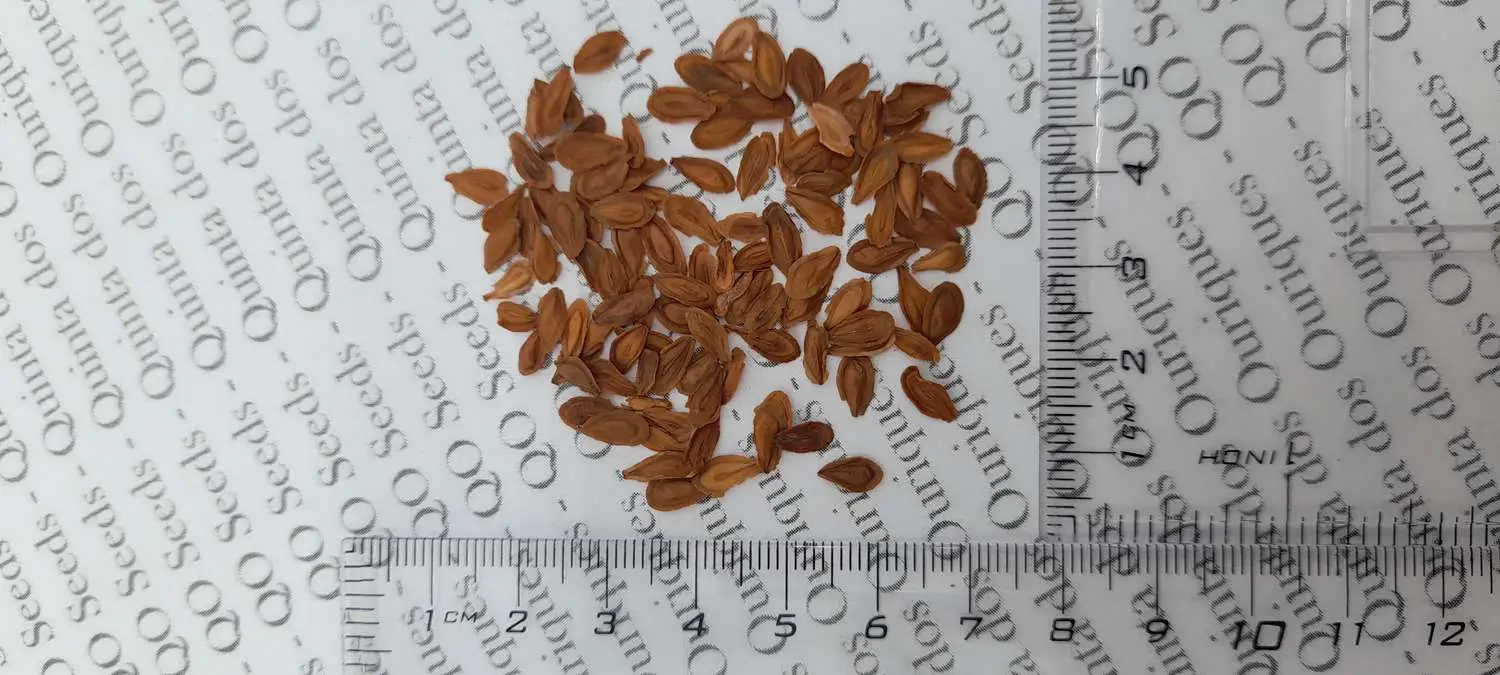
Stapelia leendertziae, known as Black Bells or Carrion Flower, is a striking succulent native to southern Africa. Seeds germinate rapidly when sown fresh, though they are most commonly propagated from stem cuttings.
Germination
Germination time
Expect germination in
3 – 14 days
Temperature
Min 25°C
Ideal 30°C
Max 35°C
Substrate moisture
💧 Medium
Sowing depth
Lightly covered
Substrate & Container
Recommended substrate
Sandy peat moss, light sandy soil with compost, sand and sowing mix 1:1
Recommended container
Well-draining pot, sealed plastic bag or terrarium initially
Growing Tips
Seeds germinate very quickly, usually within a week or two. Fresh seeds germinate better than old seeds. Keep soil moist during germination. Maintain good ventilation to prevent damping off. Use fungicide treatment if damping off occurs. Once seedlings reach 50mm height, prick out and pot individually. Plants will flower within 2-3 years when grown from seed.
Only logged in customers who have purchased this product may leave a review.


Reviews
There are no reviews yet.