Description
Protea scolymocephala can benefit from Seed Smoke Primer, which is also available in our shop. Make sure to take a look!
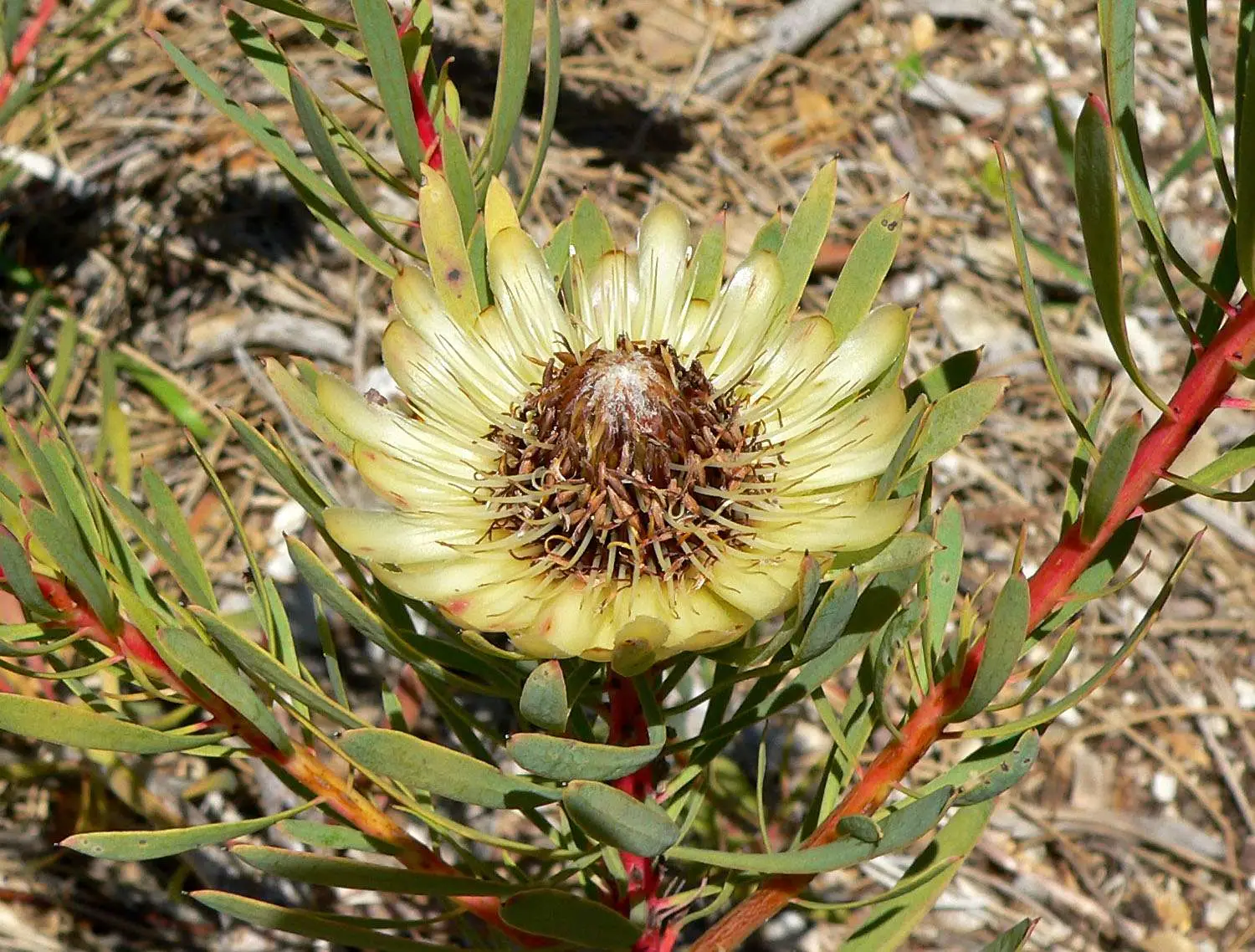
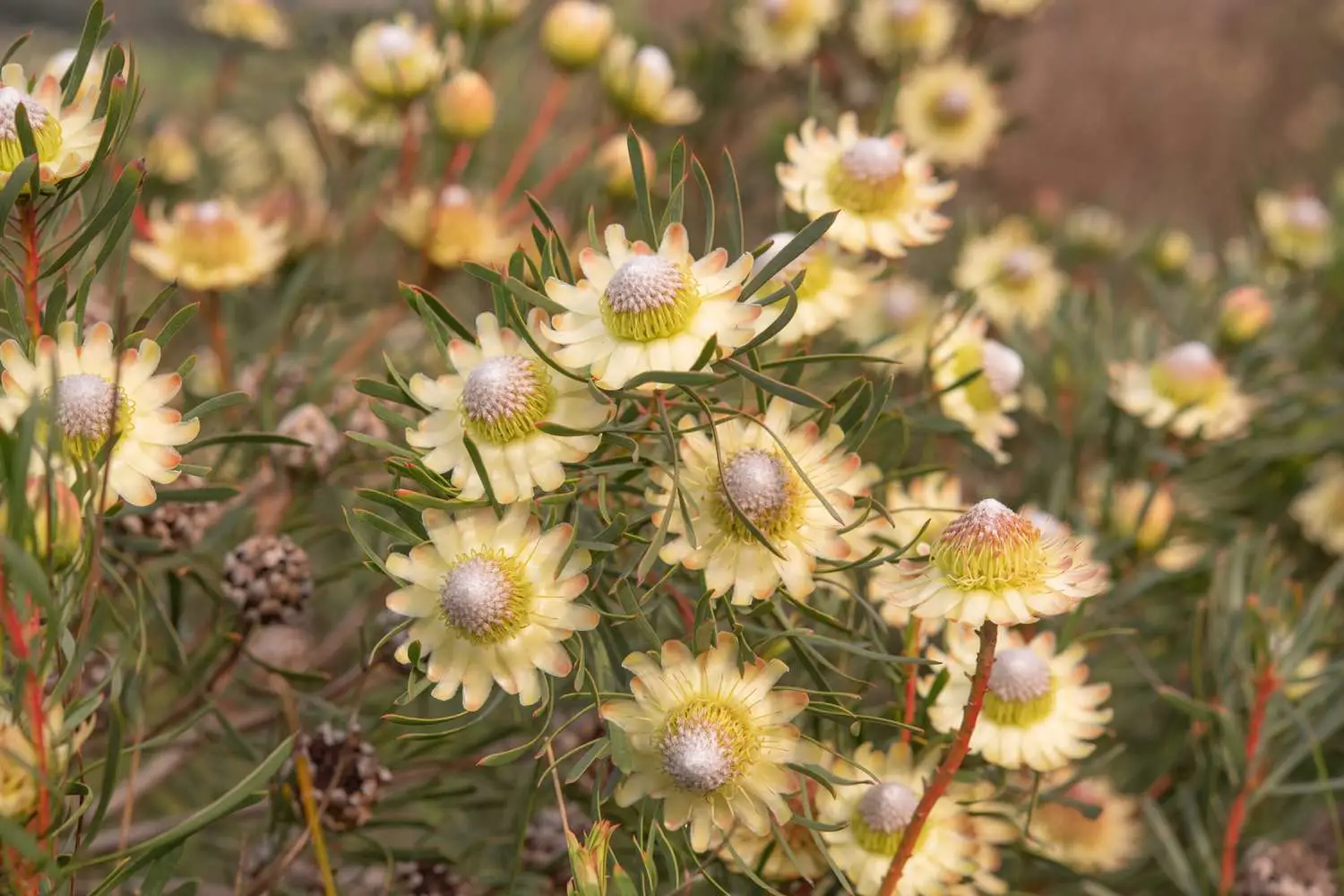
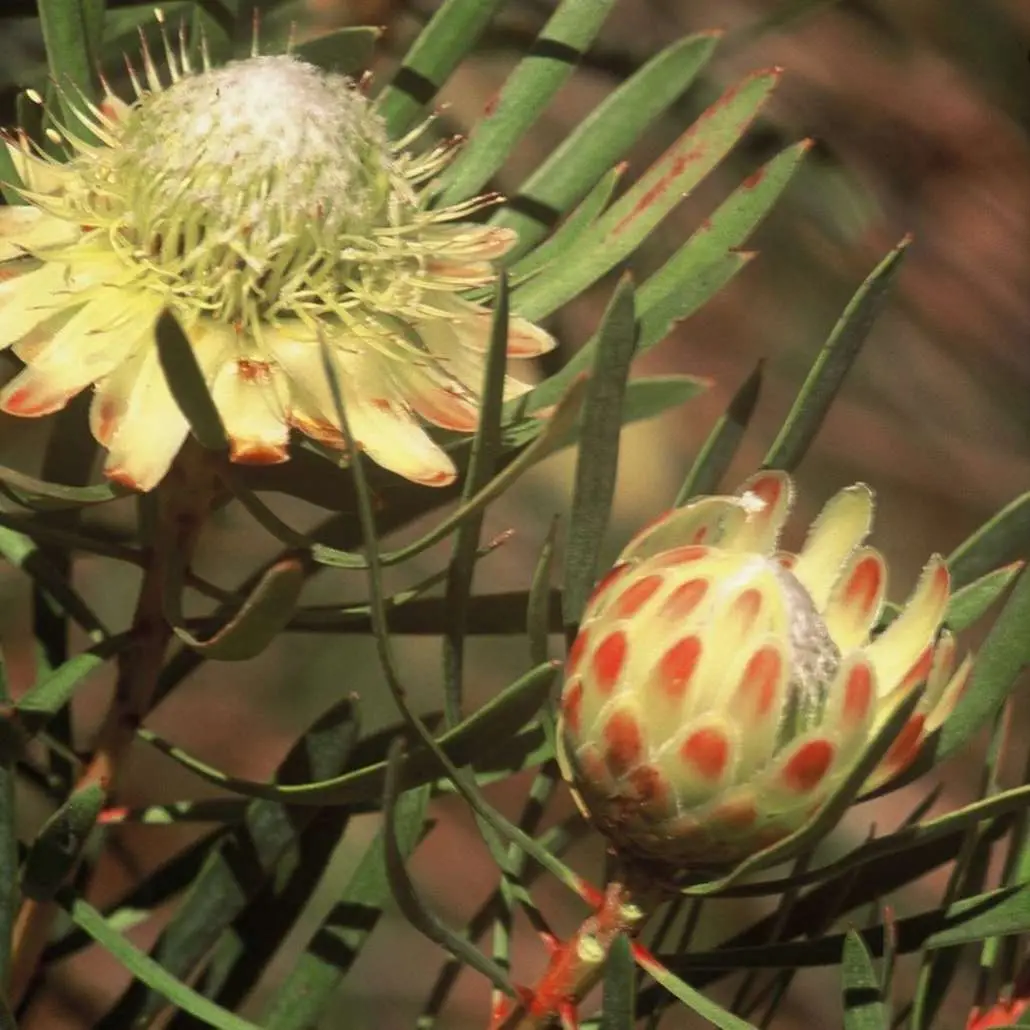
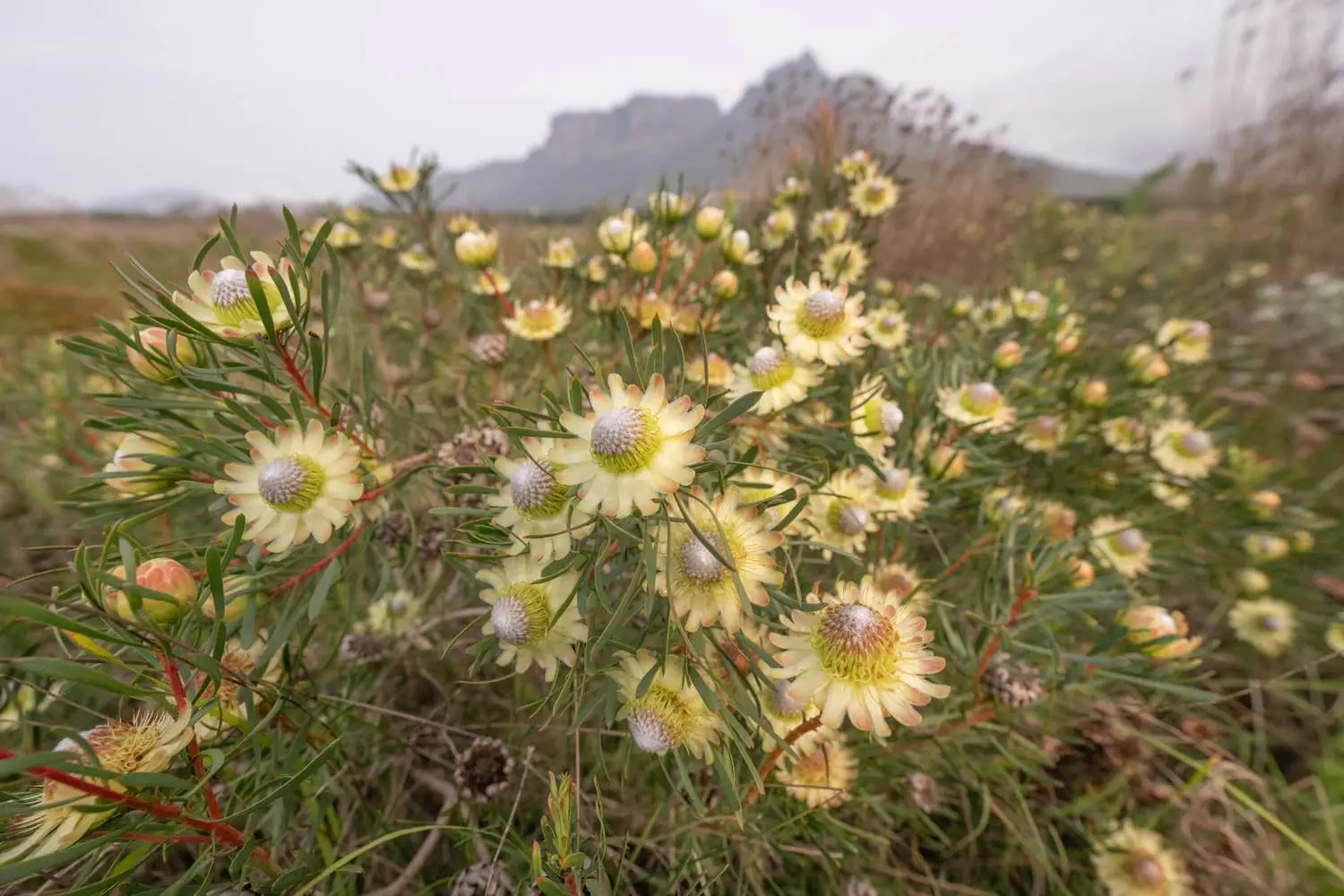
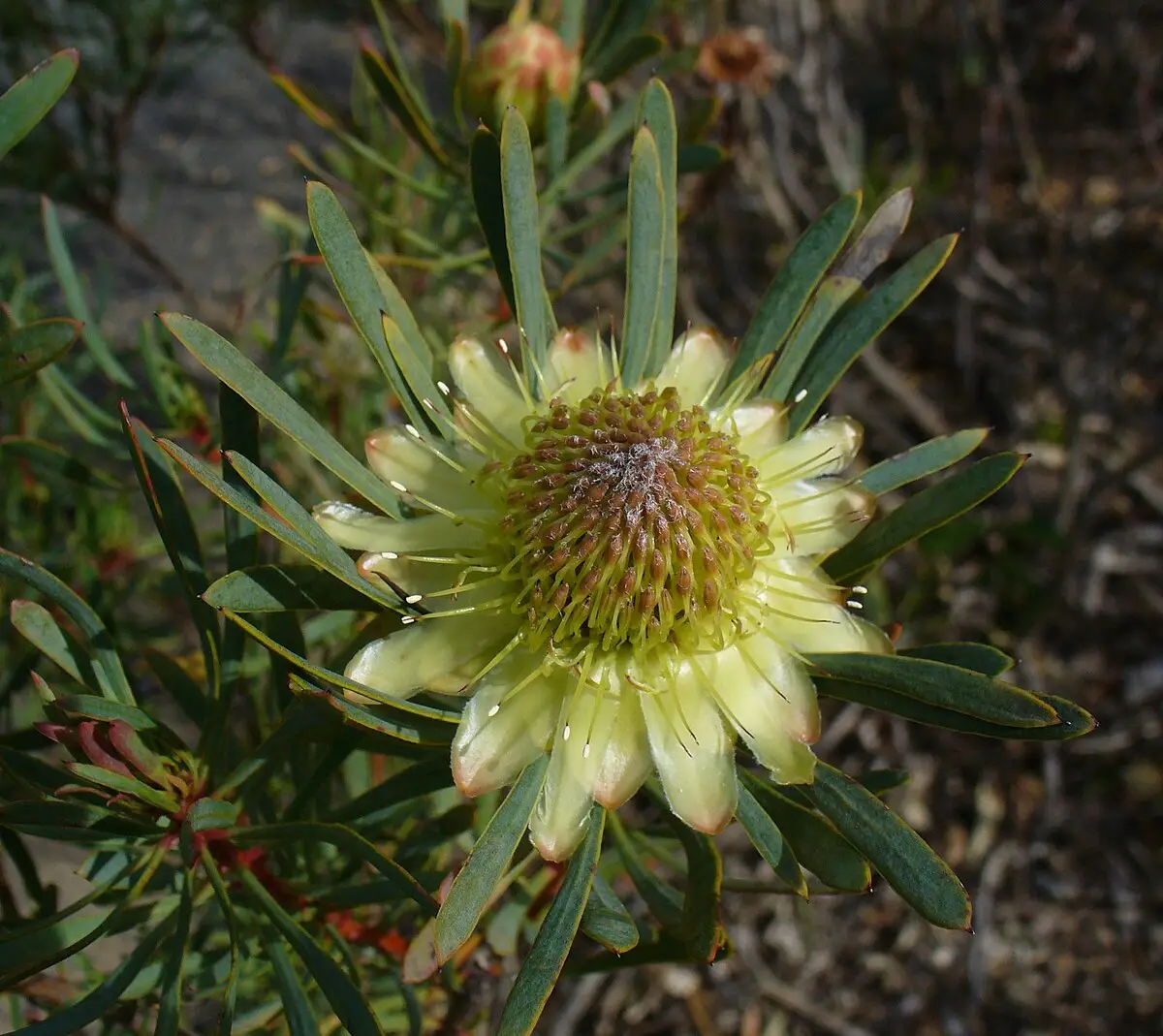
Protea scolymocephala, commonly known as the thistle protea or thistle sugarbush, is a small, upright, and well-branched shrub in the genus Protea. It is endemic to the Western Cape province of South Africa, where it thrives in sandy flats and coastal lowlands within the Cape Floristic Region. This species is named for its distinctive flower heads, which are relatively small for a protea, measuring about 3.5 to 4.5 cm in diameter. The buds are almost perfectly spherical, with the floral bracts covering the young flowerheads like scales. When they open, the creamy-green bracts, often with a reddish-pink flush, open wide to expose the central cluster of flowers.
The thistle protea is a tough and adaptable plant, well-suited to the harsh conditions of its native fynbos habitat, including nutrient-poor soils and a Mediterranean-type climate. It is a “serotinous” species, meaning it stores its seeds in the old, fire-resistant flower heads for years. After a fire, the adult plants are typically killed, but the seeds are released and germinate with the next rains, regenerating the population.
Germination Guide
🌍 Western Cape Province, South Africa (Cape Floristic Region, coastal lowlands and sandy flats)
Moderate
Protea scolymocephala, commonly known as Thistle Protea or Thistle Sugarbush, is a small, well-branched shrub endemic to South Africa's Western Cape Province. Native to sandy coastal lowlands, this serotinous species exhibits remarkable fire adaptation, storing seeds in fire-resistant flowerheads that release seeds after fire as a survival strategy. Seeds germinate freely and easily within 30-60 days when provided appropriate temperature fluctuations and smoke treatment.
Germination
Germination time
Expect germination in
30 – 60 days
Temperature
Min 16°C
Ideal 19°C
Max 22°C
🌡️ Temperature alternation recommended
— Temperature alternation essential: day/night difference of approximately 12 degrees Celsius. Best sowing in autumn or spring when this natural temperature fluctuation occurs. Minimum day temperature 16-22°C, night can be as low as 10°C.
Substrate moisture
💧💧 High
Sowing depth
Lightly covered
Seed Pre-treatment
-
💧
Soaking — 24 hours
Soak in smoke seed solution for 24 hours, or warm water as alternative. Fungicide treatment recommended to prevent damping off.
-
🔥
Smoke/Fire treatment
Smoke seed treatment strongly recommended. Beneficial for reducing germination time and increasing germination rates. Soak seeds in smoke solution for 24 hours, or apply smoke-impregnated paper discs. Without smoke treatment, germination will still occur but takes longer.
-
📋
Additional notes
Pre-treatment with smoke solution or smoke-impregnated paper discs for 24 hours highly recommended. Alternative: soak in warm water for 24 hours. Fungicide dip before planting to reduce fungal losses.
Substrate & Container
Recommended substrate
Well-drained acidic sandy medium with pH 5.5. Recommended mix: 2 parts peat or decomposed pine needles, 2 parts coarse river sand, 1 part perlite or polystyrene pellets. Alternative: 60% peat with 40% perlite.
Recommended container
Plastic seed trays or pots with good drainage. Keep in semi-shade with protection from mice and birds using shade cloth or wire mesh.
Growing Tips
Use high-quality acidic sandy soil mix (pH 5.5) and ensure excellent drainage to prevent fungal diseases. Avoid using fertilizers with phosphorus, which is toxic to Proteaceae. After germination, do not expose seedlings to extreme heat until true leaves develop. Water with clean rainwater or boiled/cooled tap water, avoiding stored rainwater which may contain pathogens. Maintain cool, frost-free nights with warmer daytime temperatures for optimal growth. Transplant seedlings into individual pots once first true leaf pair appears. Never use bottom heat or glass coverings during germination. Treat seeds with fungicide before planting to reduce damping-off losses. First flowers appear in second year.
Only logged in customers who have purchased this product may leave a review.


Reviews
There are no reviews yet.