FREE SHIPPING OVER €30 FREE SHIPPING OVER €30

Syagrus romanzoffiana — Queen Palm | Edible Exotic Fruits in Your Own Garden

Grow your own jewel-crowned tropical sentinel—where architecture meets appetite. These feather-soft fronds tower above bright orange dates you can harvest and transform into wines, syrups, and gourmet spreads. Fast-growing, cold-hardy, and genuinely easy to cultivate from seed. Watch birds flock while your palms reward you with years of architectural beauty and actual harvests.

6.47

SKU: P-1892 Category: Tags: , ,

You May Also Like

Description

Imagine opening your garden gate to find a 50-foot silhouette of pure tropical grace—and tasting its fruit.

Syagrus romanzoffiana, the Queen Palm, is the rare plant that succeeds in two worlds: as a showstopping ornamental that commands landscape attention, and as an edible producer that rewards your patience with real, processable harvests.

Originally from South America—the warm lowlands and gallery forests of Brazil, Paraguay, Argentina, and Uruguay—this species has traveled the world and thrived everywhere subtropical warmth exists. It was first scientifically described in 1823, named after Nikolay Rumyantsev, Russia’s Foreign Minister and patron of exploration. For centuries, it has been both revered and harvested; in 1920s Argentina, it was cultivated as a serious commercial crop. That history matters: this isn’t a prima donna ornamental. It has proven its worth.

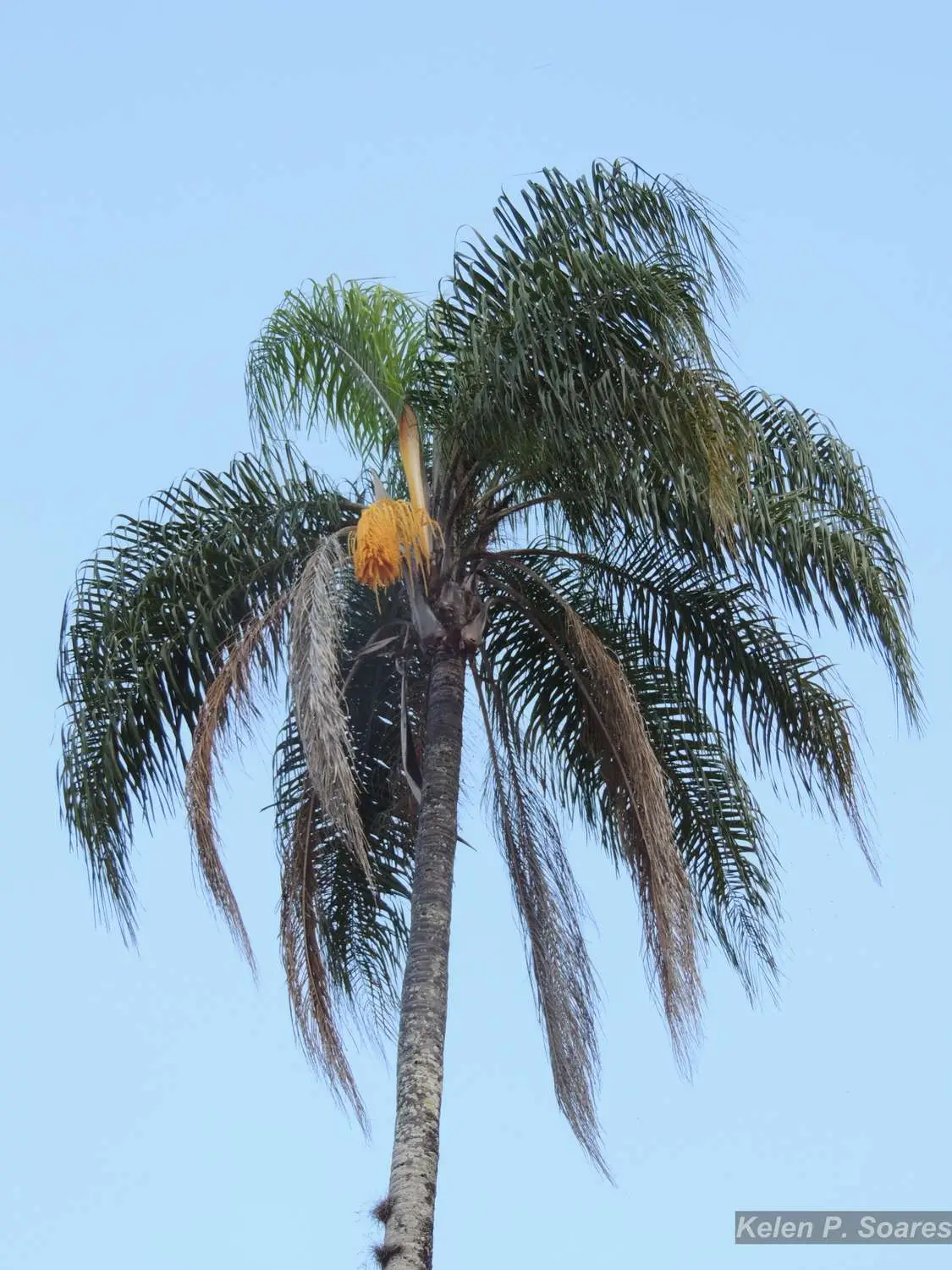
But let’s talk about what makes hearts race: the fruit. Unlike most palms that produce ornamental seeds, Syagrus romanzoffiana yields genuinely edible dates. The fruits hang in astonishing 6-foot clusters of brilliant orange drupes, each sweet and fibrous, with flavor notes botanists describe as a cross between plum and banana. Local communities process them into wines, syrups, juices, ice creams, preserved sweets, liquors, and gelatins. The sticky texture even served as natural chewing gum for children in its native range. These aren’t novelty fruits—they’re a harvest. You’re not just growing a tree; you’re growing a pantry. And unlike harvesting palm hearts (which kills the plant), the fruit production is renewable, year after year, each autumn cascading with golden abundance.

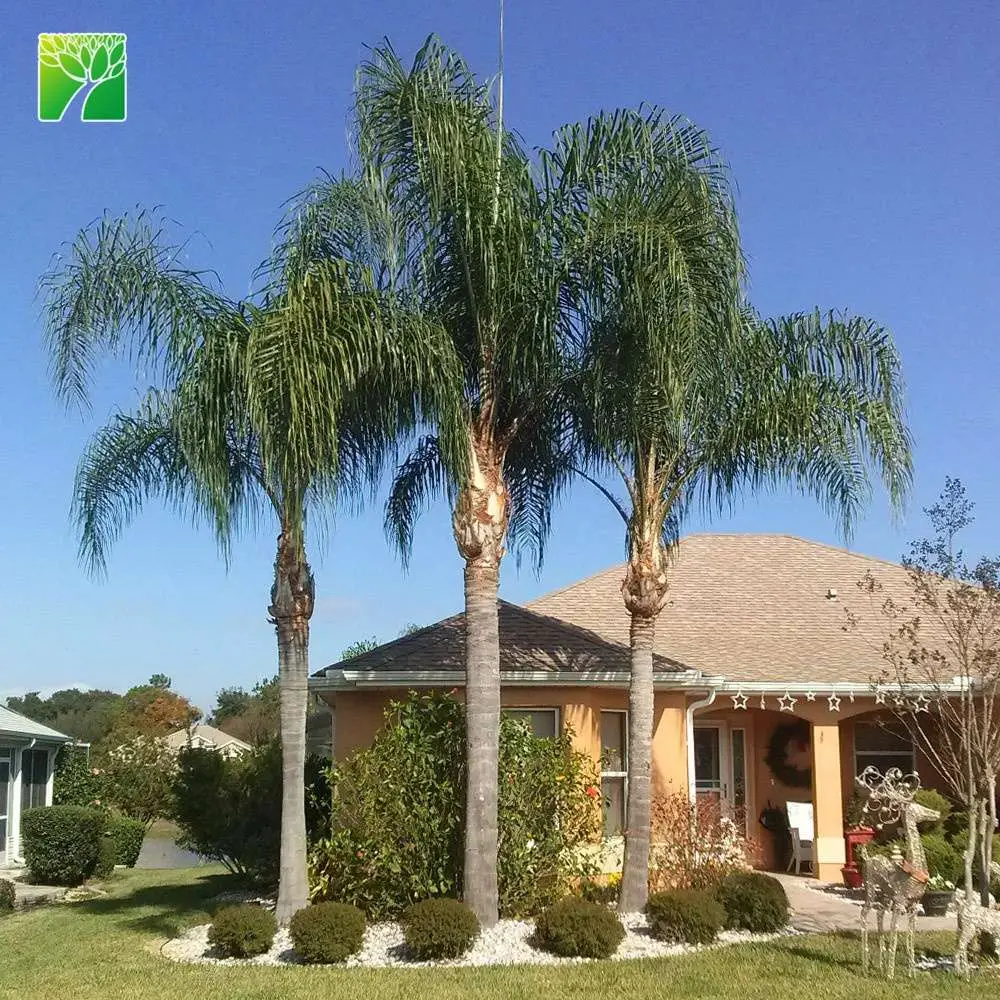
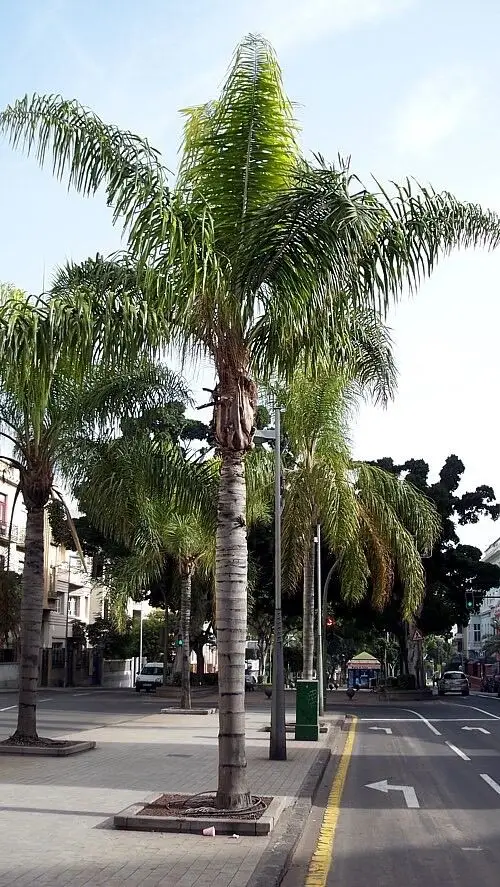
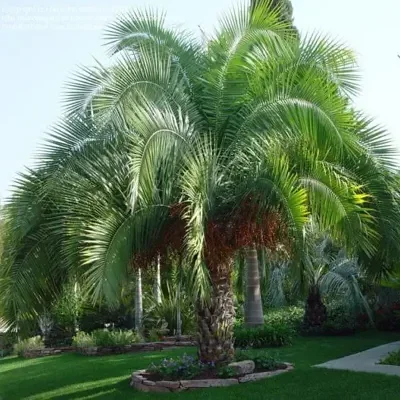
Visually? The Queen Palm is architectural mastery. A single, smooth gray trunk, ringed with old leaf scars, rises 30 to 50 feet (sometimes more) and is crowned with feather-like pinnate fronds—each up to 16 feet long, composed of 300 to 500 delicate leaflets arranged like green lace. In late spring and summer, pale creamy flowers emerge in cascading clusters before transforming into that famous fruit show. The canopy is graceful and open, creating dappled shade beneath—tropical, refined, unmistakably elegant. This is the palm that defined subtropical street-scaping in California and Florida for generations. It’s iconic for a reason.

Cultivation is refreshingly straightforward. Syagrus romanzoffiana is genuinely easy to grow—it’s popular in nurseries worldwide precisely because success is likely. It wants full sun (though it tolerates partial shade) and prefers acidic, well-drained soils; avoid alkaline conditions, which trigger micronutrient deficiencies. It’s hardy to USDA Zones 9–11 and tolerates temperatures down to 25°F (some specimens survive to 18°F), making it viable across much of the subtropical world. It withstands moderate drought and heat. Water regularly during establishment, then allow some drought tolerance. The species thrives in containers during its young years and is straightforward to grow from seed—though germination is patient work, taking six weeks to six months at warm temperatures (90–95°F). Start with fresh, cleaned seeds soaked for two days in water before planting in well-drained, moist potting soil. The reward for that patience? A tree that will produce for decades, eventually reaching 50+ feet, living 50 to 150 years if cared for.

One consideration: the fruit drop. When thousands of ripe dates fall, they create sticky piles on the ground. In urban settings, this is manageable; in orchards, it’s the whole point. The fallen fruit attracts birds and small mammals—a bonus for biodiversity. Some seedlings may volunteer in undisturbed soil, offering the bonus of natural regeneration.

Grow Syagrus romanzoffiana and you’re not just planting a ornament. You’re planting heritage, elegance, and function in one seed. You’re joining centuries of growers who recognized that the greatest plants do more than beautify—they nourish, they shelter, they prove themselves y

Germination Guide

🌍 South America - Brazil, Paraguay, Uruguay, Argentina, Bolivia
Moderate

Queen Palm (Syagrus romanzoffiana) is a popular ornamental palm native to South America. Seeds exhibit dormancy and slow, erratic germination requiring specific pretreatment for successful propagation.

Germination
Germination time
Expect germination in

42 – 180 days

Temperature

Min 25°C
Ideal 30°C
Max 35°C

Light
☀️ Light required

Substrate moisture
💧💧 High

Sowing depth
Lightly covered

Germination rate
82 %


Seed Pre-treatment
  • 💧

    Soaking — 24 hours
    Water soaking for 24 hours after operculum perforation increases germination rates to 82-90%
  • 🔨

    Mechanical scarification
    Perforation of operculum (seed coat) recommended
  • 📋

    Additional notes
    Fresh seed from intermediate or mature fruits recommended; operculum perforation + 24hr water soaking yields best results (82-90% germination)

Substrate & Container
Recommended substrate
Sand or well-draining soil mix

Recommended container
Plastic boxes or pots with drainage


Growing Tips
Use fresh seeds from mature fruits; seed storage reduces germination dramatically (less than 10% after 2 years); constant light during incubation beneficial; very high temperature (90-95°F/32-35°C) recommended; maintain high humidity; seeds are slow and erratic germinating

Reviews

There are no reviews yet.

Only logged in customers who have purchased this product may leave a review.

Related Products