
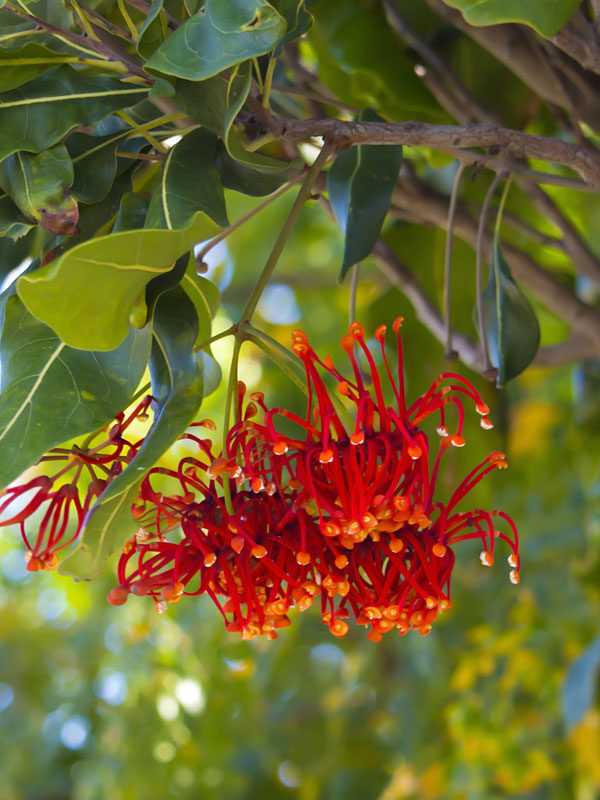
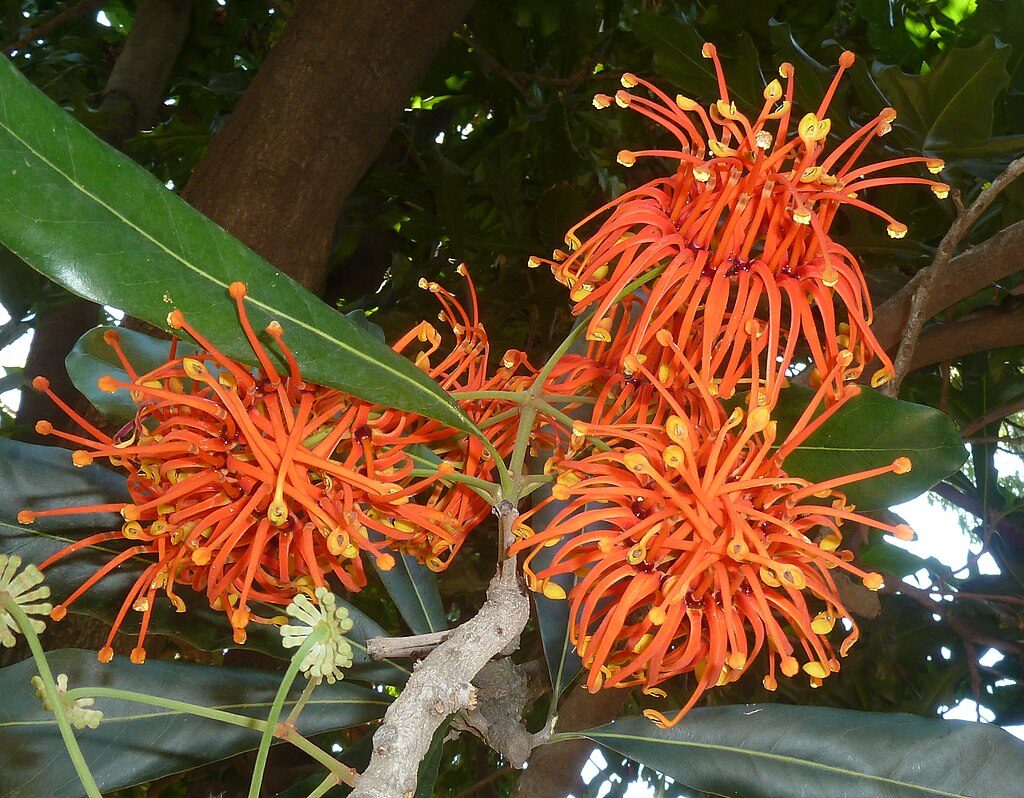
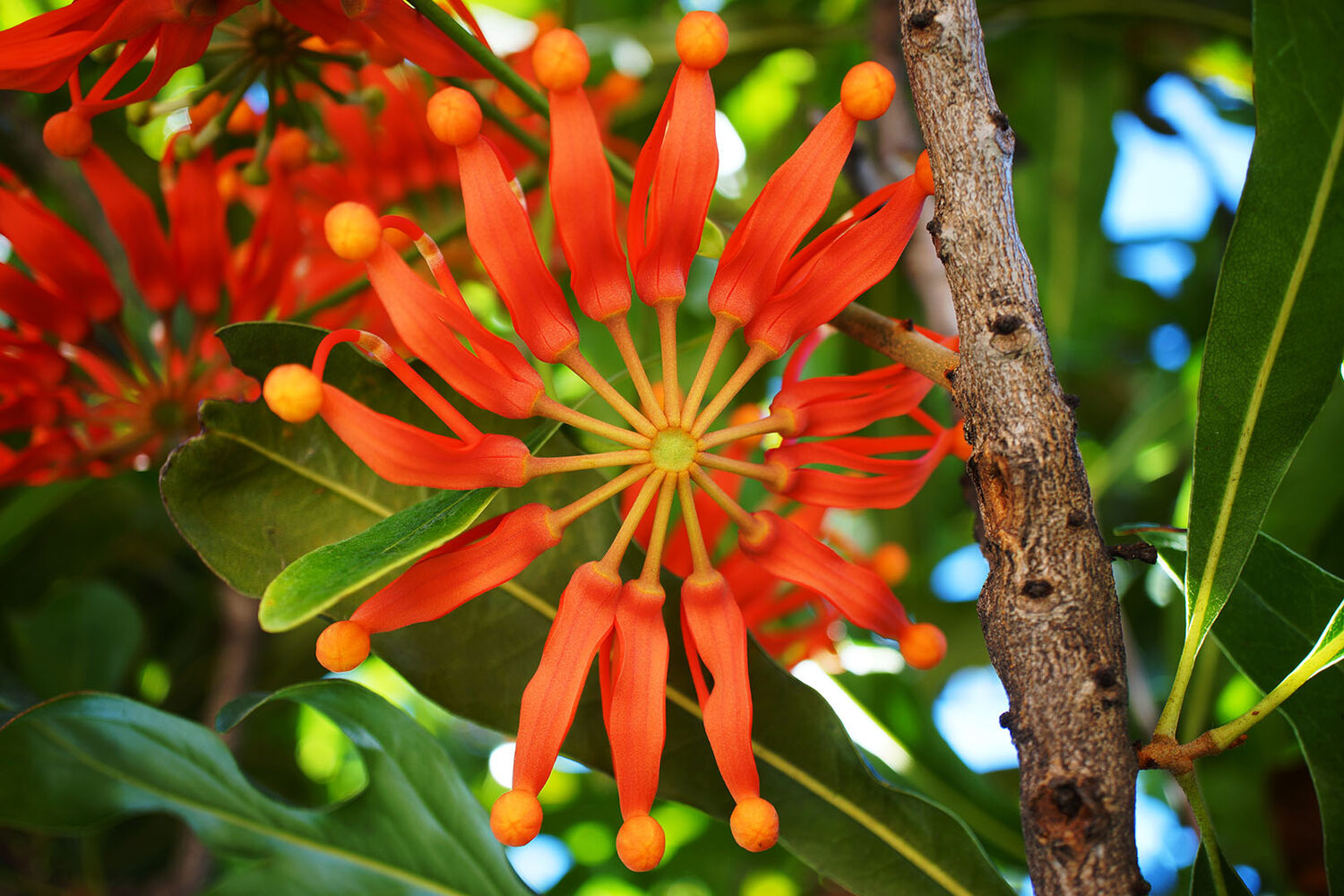
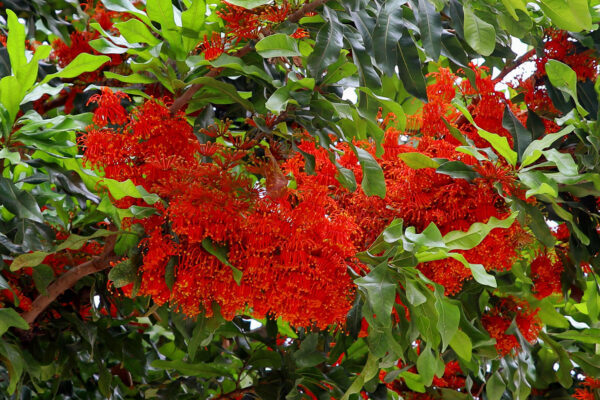
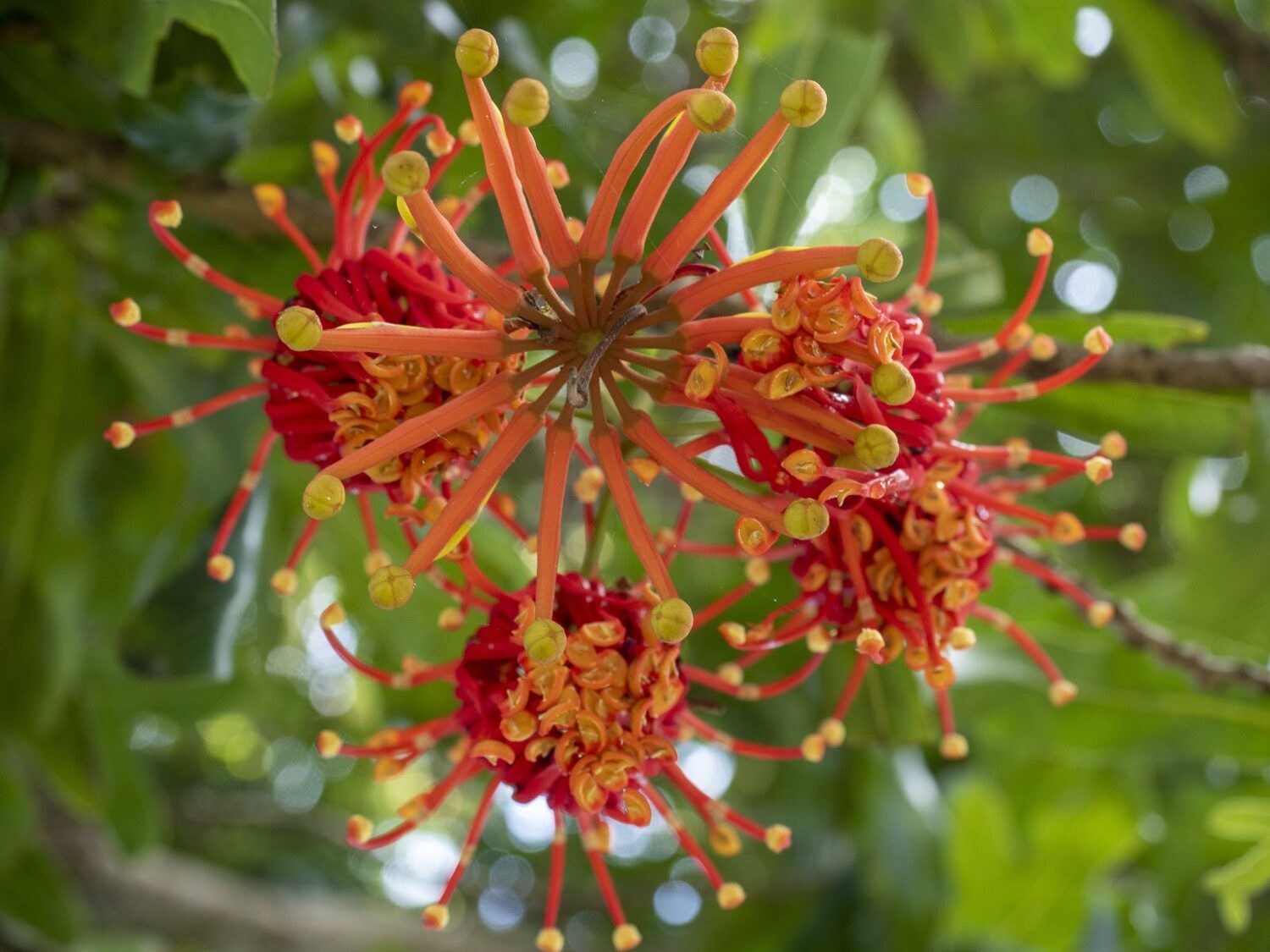
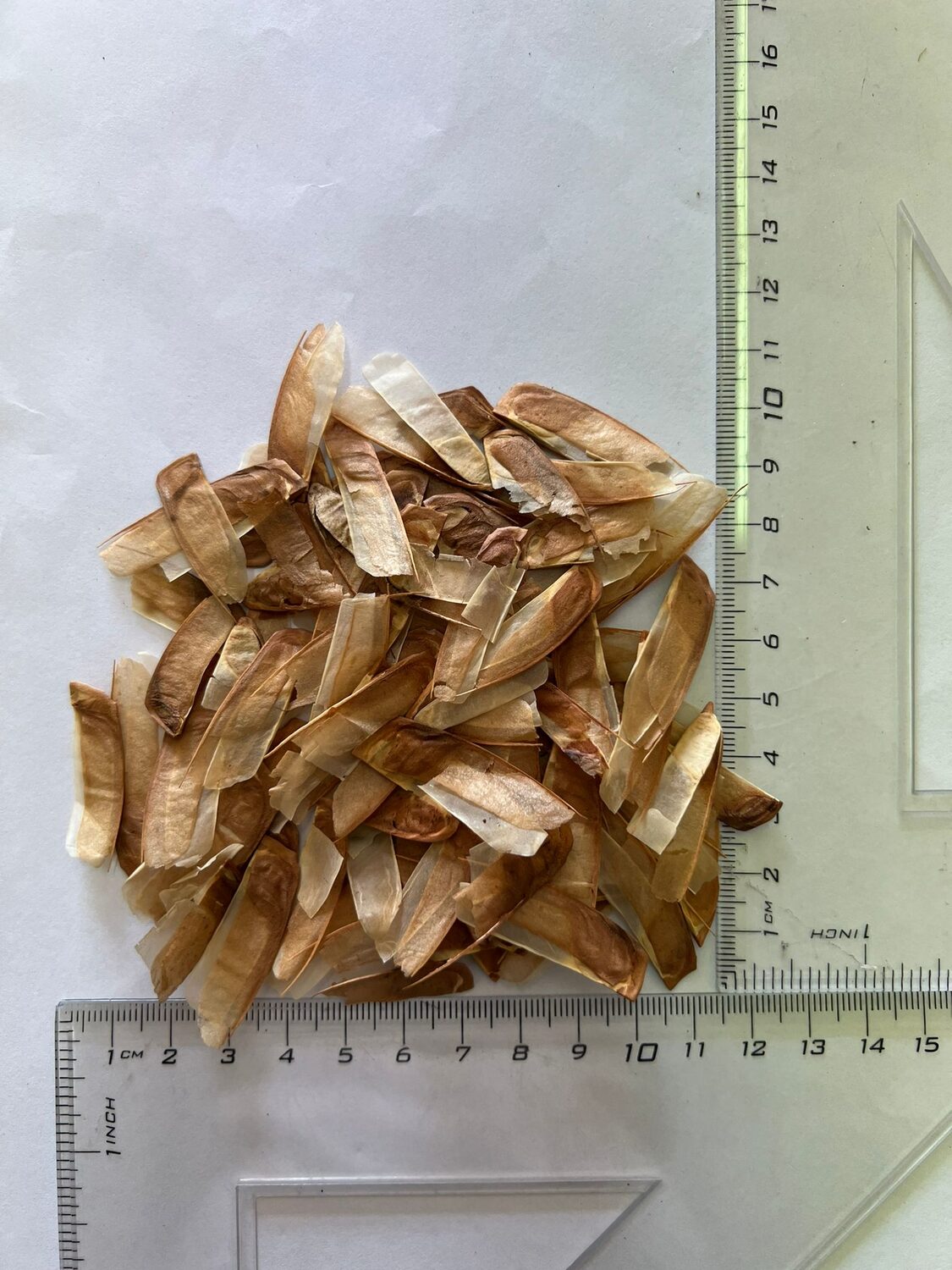
Pure visual fire meets nature’s purpose: wheel-shaped flowers in flame-red and orange ablaze against glossy, dark foliage—and birds, bees, and butterflies cannot resist. This Australian rainforest jewel transforms gardens into living sanctuaries, blooming reliably in summer with spectacular clusters. Slow to establish means you’re growing architecture, not impatience. Every seed you plant becomes a legacy tree.
€4.86
There are trees that merely exist in a garden, and then there is Stenocarpus sinuatus—a living explosion of botanical theater.
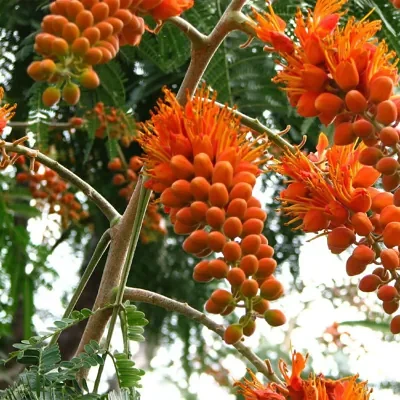
Imagine flowers arranged like wheels of fire, each petal-less bloom glowing firecracker-red with bright yellow stamens thrusting from the center like sparks frozen mid-dance. This is the Firewheel Tree, named for good reason: when it blooms in late summer and autumn, it doesn’t whisper—it burns.
Native to the subtropical and tropical rainforests of eastern Australia, from New South Wales through Queensland, Stenocarpus sinuatus is a Proteaceae family masterpiece that has been cultivated worldwide for its ornamental magnificence. Its deep olive-green, glossy foliage provides the perfect dark canvas; juvenile leaves emerge with pinkish tones before maturing into broad, sometimes deeply lobed forms that catch the light. The bark itself is distinguished—greyish-brown, irregular, and dramatic. Every part of this tree speaks. And when the wheel-shaped umbels appear on trunk and branches (a trait called cauliflory—flowers emerging directly from woody stems—that few trees possess), the visual impact stops conversation.
But here lies the true magic: this is not vanity alone. The Firewheel Tree is a pollinator’s banquet. Its tubular flowers produce copious nectar that magnetizes lorikeets, honeyeaters, native bees, butterflies, and beneficial insects. If you dream of a garden alive with movement and song, alive with the sound of wings and the presence of nature’s most vibrant creatures, this tree becomes essential. The flowers themselves last through warm months, providing reliable sustenance when many plants have faded. The dense evergreen canopy offers shelter and nesting habitat year-round. You’re not simply planting beauty—you’re planting a wildlife sanctuary with a pulse.
Growing Stenocarpus sinuatus requires patience, but not difficulty. Young trees appreciate full sun to part shade and consistent moisture as they establish—this is your two- to three-year investment in foundation. Once rooted, the tree becomes moderately drought-tolerant and adaptable, though it prefers well-drained loamy soils with slightly acidic to neutral pH. In its native rainforest habitat it reaches 30 meters; in cultivation, expect a more manageable 10–15 meters with an upright, elegant columnar habit. Avoid waterlogged clay and ensure good drainage to prevent root rot—respect its rainforest origin by giving it air around the roots. The tree tolerates light frost and grows reliably in warm-temperate to tropical zones (USDA 10–11). Seed germination happens quickly when sown fresh; established trees reward patience with flowering that intensifies over years.
When you sow these seeds, you’re not planting a shrub or a passing trend. You’re planting a generational statement—a living wheel of fire that will bloom for decades, attracting generations of birds and pollinators, creating a landscape moment that will have visitors stopping mid-stride. Start your Firewheel Tree from seed, and watch patience become abundance.
Only logged in customers who have purchased this product may leave a review.
Reviews
There are no reviews yet.