
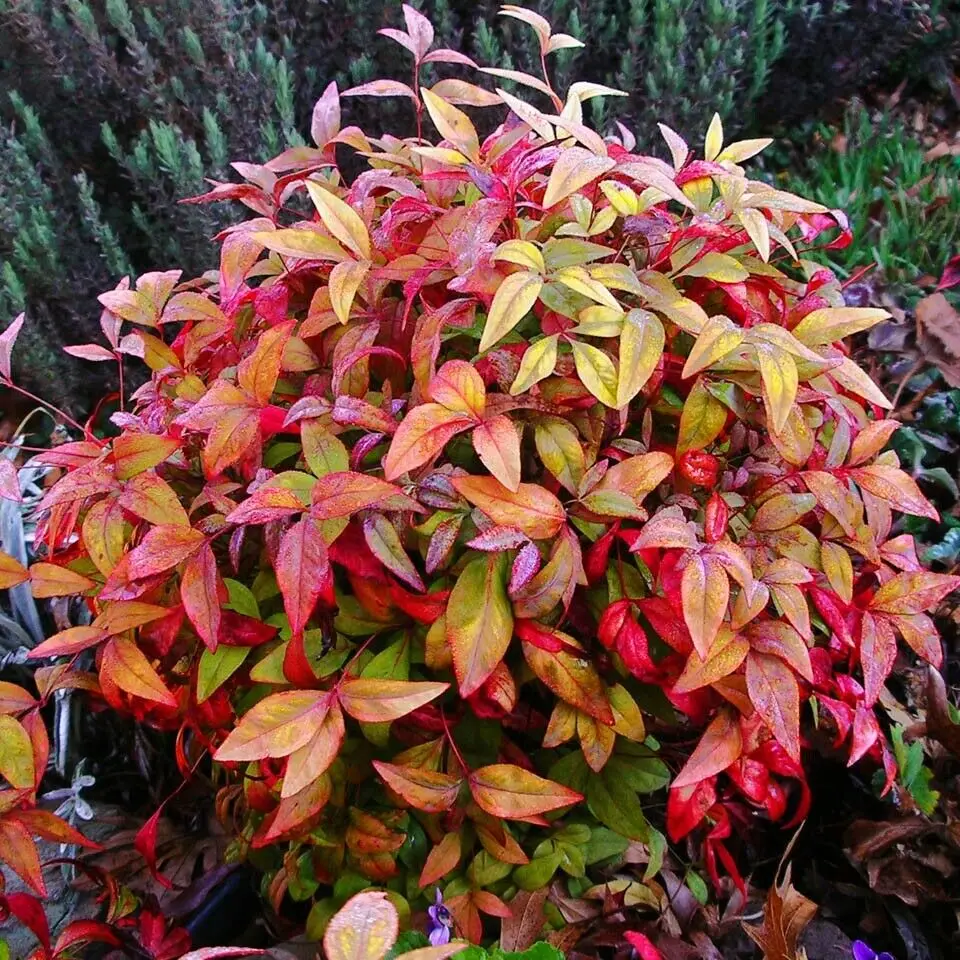
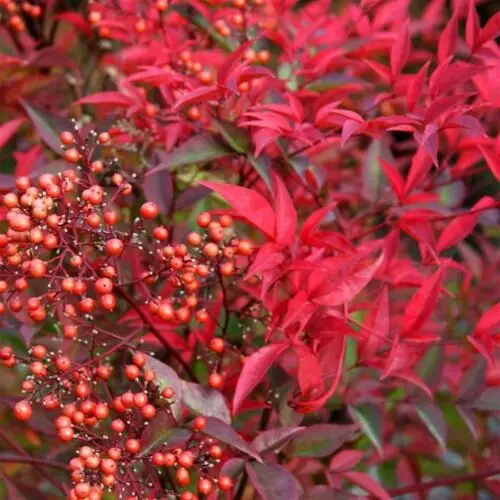

Watch Nandina transform your garden into a living art installation. Delicate bronze foliage erupts in white flowers, then births glossy coral-red berries that persist through winter. For centuries, Asian healers have treasured this shrub’s potent leaves and branches for wellness. Easy to grow from seed in sun or partial shade—a low-maintenance masterpiece that rewards you year after year.
€3.63
Imagine a single shrub that rewrites your garden’s entire visual narrative across four seasons.
Nandina domestica—the sacred bamboo of Eastern legend—is not what its name suggests. It isn’t bamboo at all. It’s a reverent member of the Berberidaceae family, native to the misty mountains and temple gardens of China and Japan, where it has been cultivated for over a thousand years. It has been grown in Chinese and Japanese gardens for centuries, noted in Song dynasty texts from 973 CE, and mentioned in Japanese imperial gardens by 1230 CE. This is a plant with pedigree. With soul.
What makes Nandina incomparable is its transformative power. New growth emerges in shades of bronze, copper, or red, matures to medium or dark green in summer, and often shifts to burgundy, reddish purple, or scarlet in cooler weather. In late spring to early summer, it produces large, airy panicles of small white flowers sprinkled with golden anthers and rich in nectar, making them attractive to bees and other pollinating insects. Then comes the crown jewel: fruits that ripen to a vivid red hue akin to coral and are grouped together like grapes. These spherical, two-seeded red berries persist from fall to spring, providing winter interest.
But Nandina’s power extends beyond beauty. For generations, traditional Asian medicine has recognized this plant as a profound healer. It has long been used in China and Japan for the treatment of colds, fevers, asthma, chronic bronchitis, conjunctivitis, whooping cough, pharyngeal tumors. Modern pharmacological studies confirm antitumor, dermatological, anti-inflammatory, antioxidant, antimicrobial, and detoxification activities. The extract is known for its humectant properties, helping to retain moisture in the skin, making it a valuable ingredient in various cosmetic formulations. Its leaves, flowers and berries are used in ikebana, the Japanese art form. In Asia, it symbolizes protection, prosperity, and the turning of the year—strongly connected with the new year in both China and Japan. Growing Nandina isn’t just gardening; it’s inviting ancient wisdom into your home.
Growing Nandina from seed is a gift to yourself. This plant is low maintenance and easy to grow. It grows well in full sun to part shade, with full sun producing the most intense foliage color, especially in fall and winter. It prefers well-drained soil with average fertility and tolerates clay and sandy soils but struggles in overly wet or poorly drained locations. Water regularly during establishment, and mature plants are drought-tolerant but benefit from occasional deep watering during hot or dry spells. Most cultivars thrive in USDA Zones 6–10. Many compact cultivars perform very well in containers using high quality potting mix and regular watering. This is a shrub that meets you where you are—whether you’re a gardening novice or a seasoned cultivator. No fuss. No drama. Just steady, year-round beauty.
When you grow Nandina domestica from seed, you’re not just planting a shrub. You’re becoming a guardian of an ancient lineage. You’re inviting a living bridge between past and present into your garden. You’re choosing slow beauty over fast trends, and healing wisdom over passing fashion. Start your Nandina journey today, and watch as your garden transforms into something truly sacred—one bronze leaf, one white flower, one glowing berry at a time.
Only logged in customers who have purchased this product may leave a review.

Reviews
There are no reviews yet.