
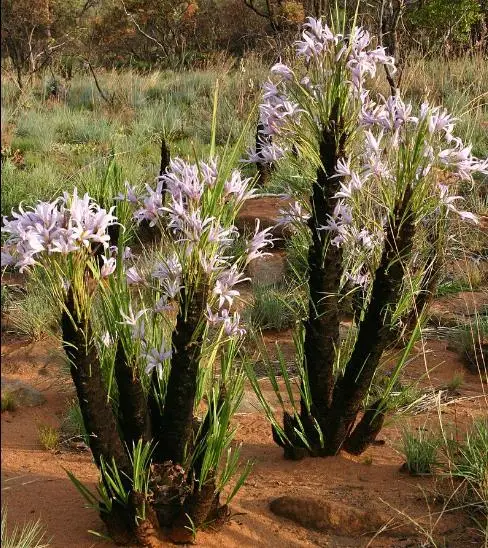

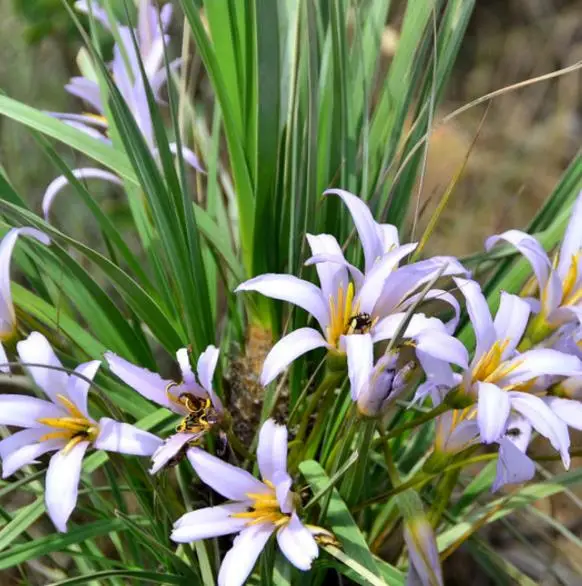
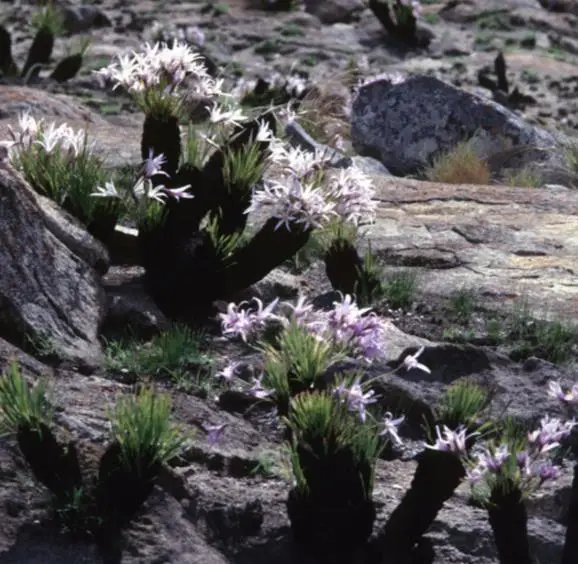
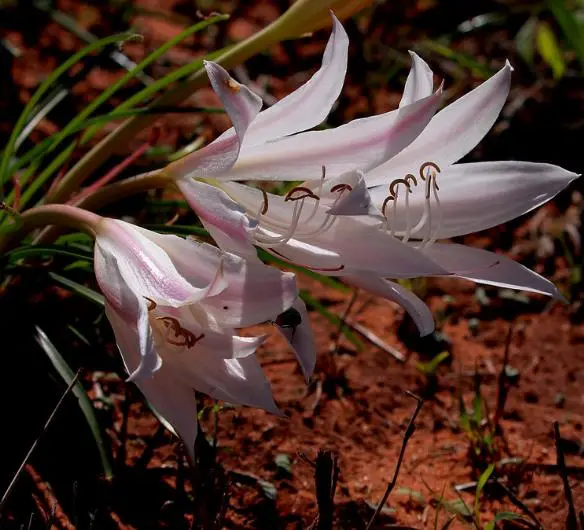
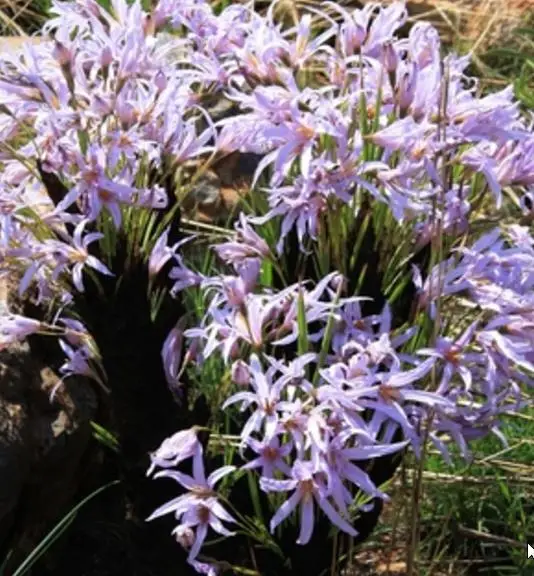
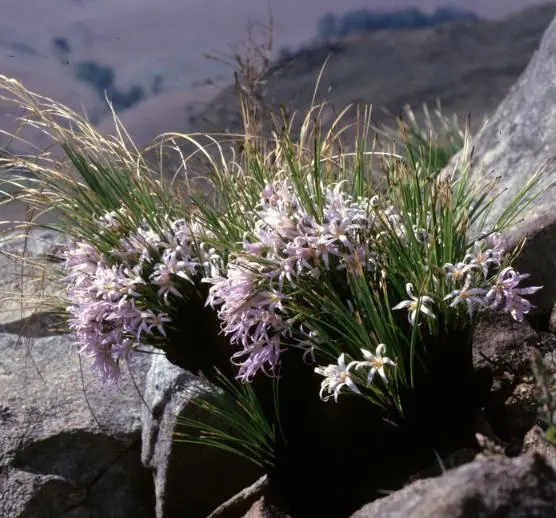
Meet nature’s ultimate survivor: a dramatic, dark-stemmed beauty that vanishes in drought, then resurrects in a blaze of lilac blooms after rain. Beyond its raw mystique, traditional medicine has revered this plant for centuries—its roots ease asthma, its bark delivers anti-inflammatory relief. A conversation piece and a healer in one. Grow it from seed and witness the magic unfold.
€1.92
A plant that dies and returns to life. That is not mythology—that is Xerophyta retinervis, the African Resurrection Lily, and it grows in your hands.
Origin and Uniqueness
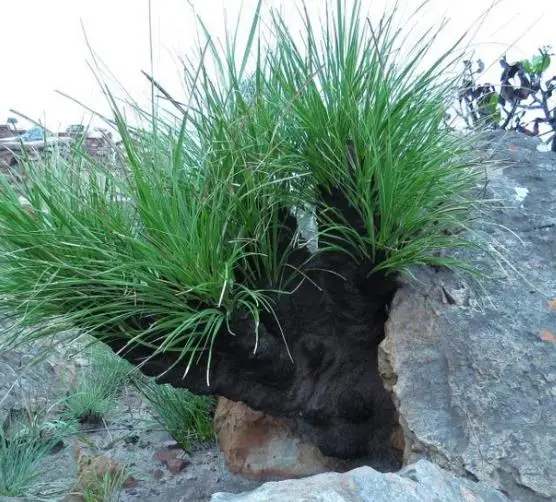
Native to the rocky grasslands of South Africa, Xerophyta retinervis exists in one of Earth’s harshest environments: seasonally drenched, then bone-dry for months. Its appearance reflects this duality—a dark, fibrous stem densely clothed in persistent leaf bases, charred black by natural veldfires, stands like a sentinel. In winter, it looks dead. Come spring rains or summer fire, the magic begins.
The Resurrection Power: Nature’s Alchemy
This is where Xerophyta retinervis transcends mere ornamental status. It is a resurrection plant—one of only 135 angiosperm species on Earth capable of surviving the loss of up to 95% of its cellular water content, then reviving completely unharmed within days of rehydration. When drought comes, it sheds its leaves and enters a state of suspended animation, its metabolic machinery grinding to a halt. When water returns, it reawakens, fully functional, as if the drought never happened. Scientists study these plants to unlock drought-tolerance secrets for agriculture. You can grow one in your living room and hold in your hands the botanical equivalent of resurrection itself. Beyond this botanical wonder, traditional South African medicine has used Xerophyta for centuries: the roots are smoked to relieve asthma, stem bark preparations deliver anti-inflammatory and analgesic relief, and the active compound amentoflavone—also found in ginkgo—makes this plant a functional healer. The fibrous stems have even served as humble brushes and rope, proving its utility across cultures.
How to Grow Your Resurrection Lily
This is not a plant for the impatient, but it rewards the devoted. Grow it in a wide, shallow, well-drained container filled with cactus or sandy soil—it despises waterlogging. Place it in full sun or dappled light. Here is the secret: let the soil dry completely between waterings, sometimes for weeks. The plant prefers this. Its roots are sensitive and demand stillness—never repot unnecessarily. It thrives in intermediate difficulty: not beginner-proof, but entirely achievable for anyone willing to embrace a plant’s true nature. The reward? Upright stems up to 2 metres tall, and when conditions favor it—after fire, after abundant rain—brilliant lilac flowers emerge en masse, creating a moment of transcendent beauty. In temperate zones, keep it as a striking indoor or container specimen. In Mediterranean or warm climates, it becomes an unforgettable garden focal point.
Grow It from Seed
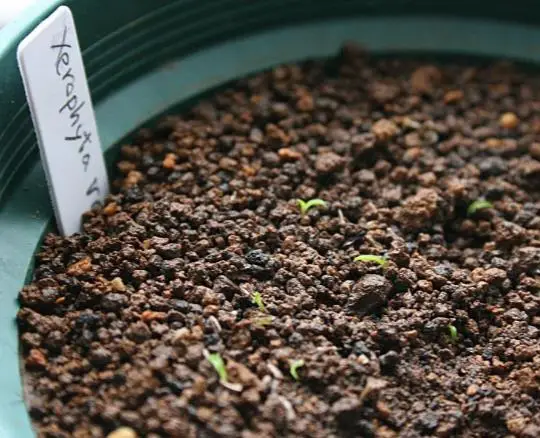
Start from seed and you become part of the story. You are not simply buying a plant; you are awakening a resurrection. Place seeds on the surface of moist, sandy seedling mix, keep conditions humid (a mist house is ideal), and watch as this ancient survival strategy unfolds before your eyes. Every seedling that sprouts carries within it the genetic memory of a thousand droughts survived, a thousand fires weathered. This is a plant that asks you to slow down, to respect its rhythms, to understand that true beauty often lies not in ease, but in the extraordinary capacity to endure. Your Xerophyta will teach you patience, resilience, and the botanical wonder that ordinary life often obscures.
Only logged in customers who have purchased this product may leave a review.
Reviews
There are no reviews yet.