Description
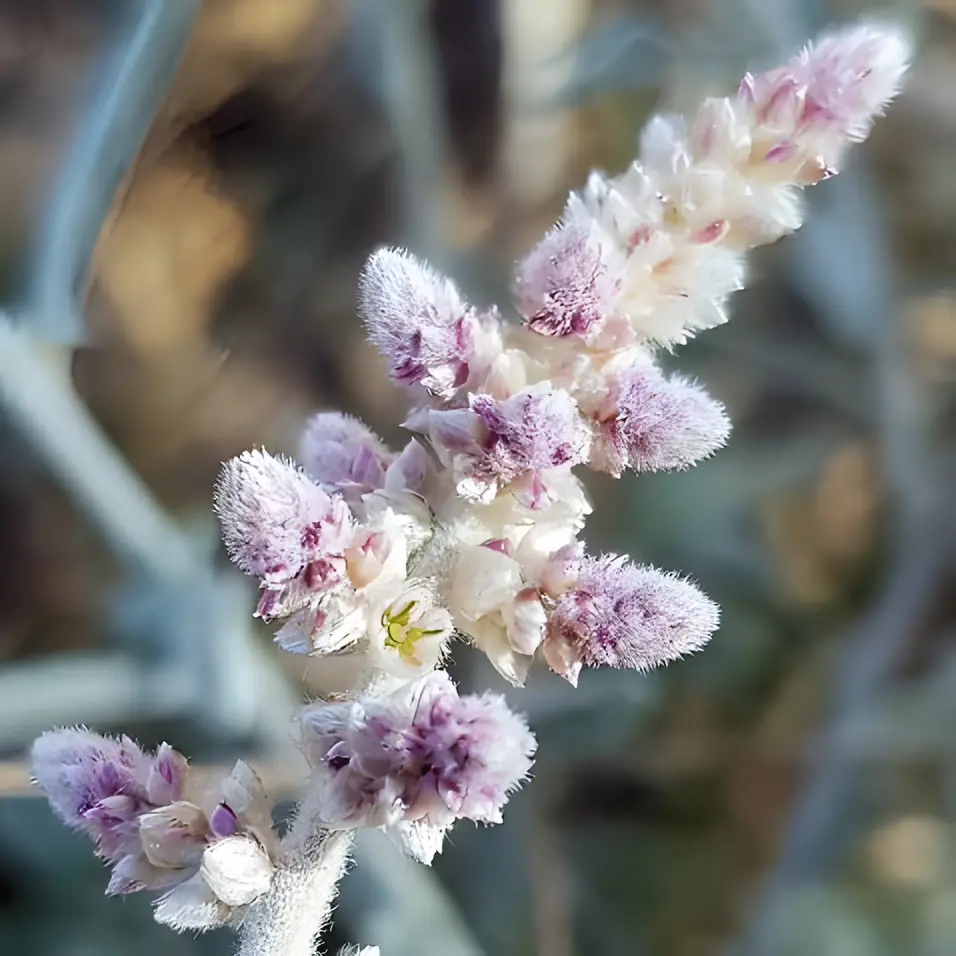
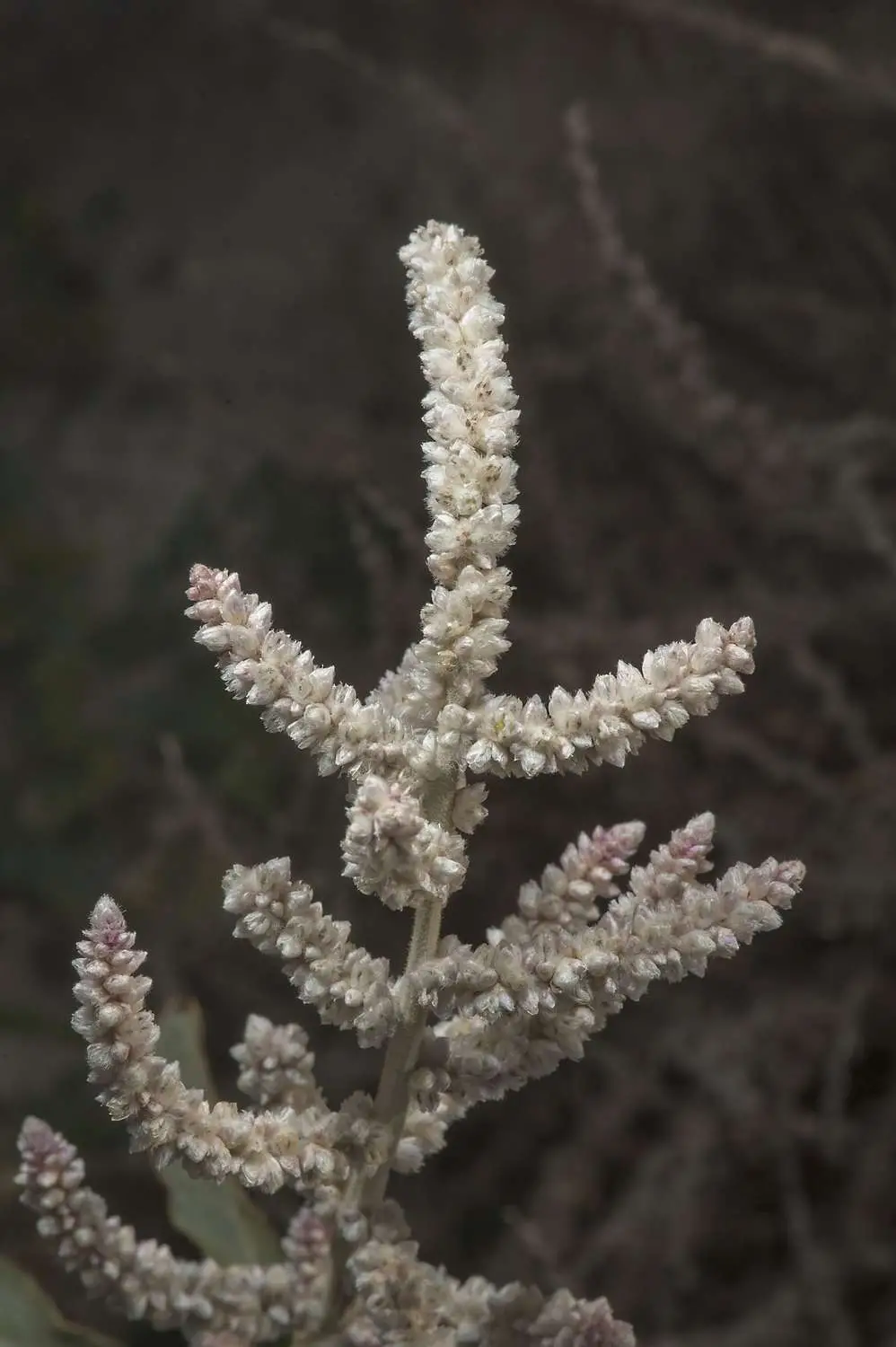
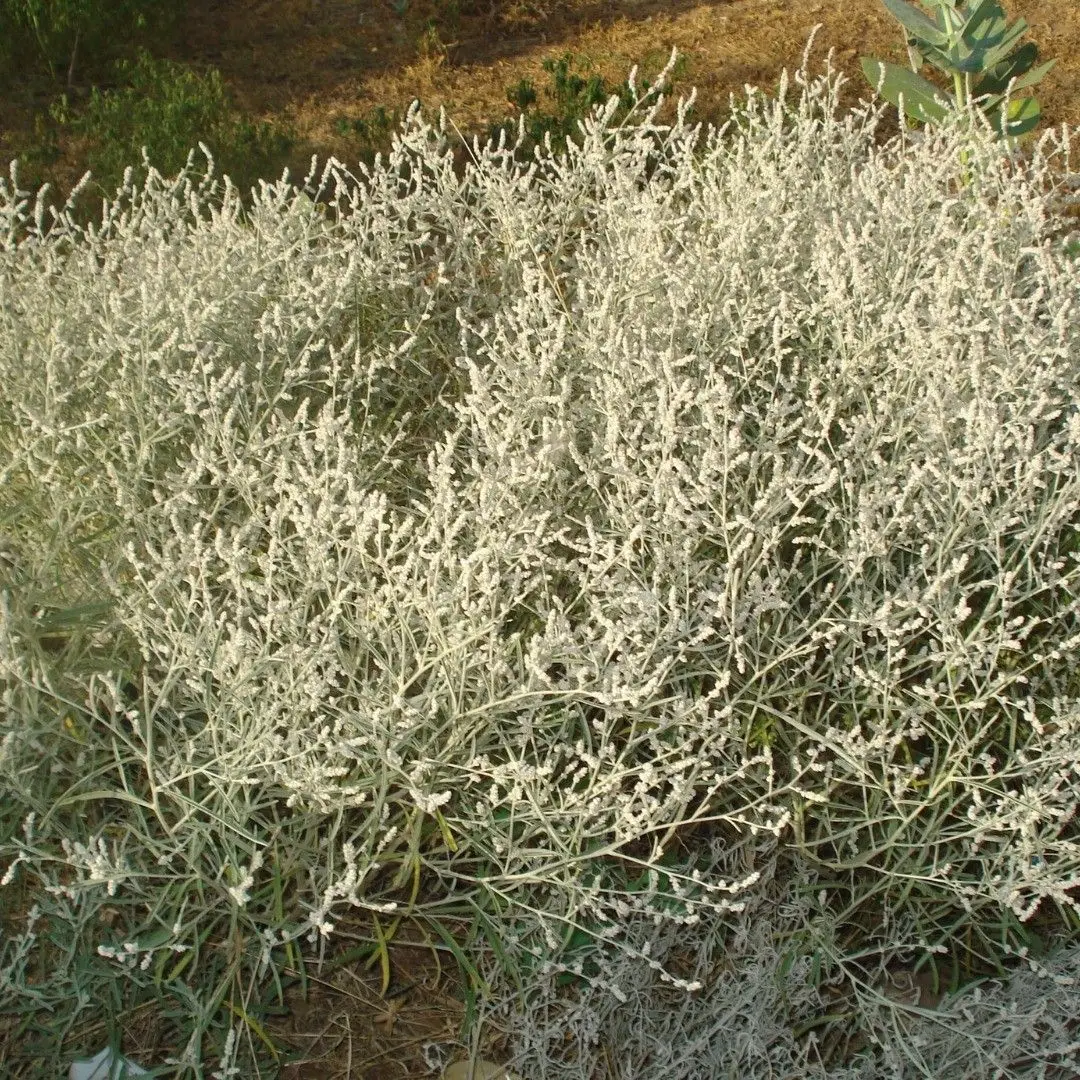
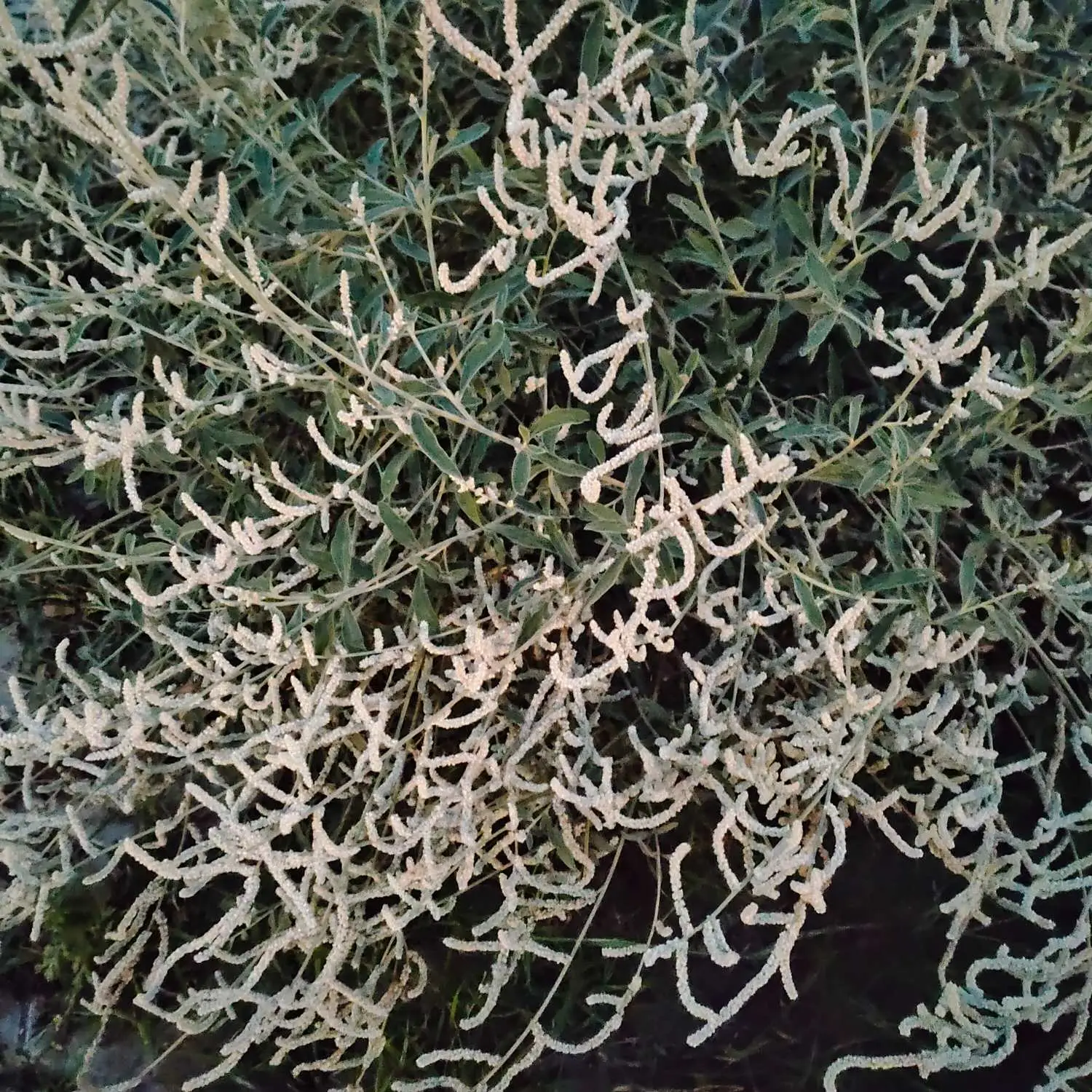
Aerva javanica, the kapok bush or desert cotton, is a hardy perennial plant that belongs to the family Amaranthaceae. It has a native distribution incorporating much of Africa (including Madagascar), and the south-west and south of Asia, and it has become adventitious in northern Australia.
This herb is deep rooted, and is used as soil binder in desert reclamation. It is used for fuel and for fodder for goats. In traditional medicine the seeds are believed to cure headaches. A gargle is made from the plant to try to treat toothache.
The plant has naturalised in northern regions of Australia, as an alien introduction, and is cultivated and utilised by the indigenous peoples. The thick, white inflorescences have traditionally been harvested in Arabia for stuffing cushions and saddle pads. Today, the soft fibres are still used as kapok for pillows. It is called Bilhangga in the languages of the Yindjibarndi and Ngarluma people, the English term is Kapok Bush.
Germination Guide
🌍 Africa (including Madagascar), southwest and south Asia
Easy
Aerva javanica (kapok bush/desert cotton) is a xerophytic perennial herb in Amaranthaceae family with little seed dormancy. Seeds germinate well under laboratory and nursery conditions.
Germination
Germination time
Expect germination in
7 – 14 days
Temperature
Min 15°C
Ideal 21°C
Max 35°C
🌡️ Temperature alternation recommended
— Best germination at lower alternating temperature (15/25°C); higher at 25/35°C but lower overall than lower temperature regime
Light
🌑 Darkness required
Substrate moisture
💧 Medium
Seed Pre-treatment
-
💧
Soaking — 24 hours
Soak seeds in room temperature water after scarification to further soften seed coat
-
🔨
Mechanical scarification
Gently nick seed coat with knife or rub with sandpaper to enhance water absorption
-
📋
Additional notes
Seeds have little dormancy and germinate well under favorable conditions
Substrate & Container
Recommended substrate
well-draining seed starting mix (peat moss and perlite blend)
Recommended container
any container with drainage holes
Growing Tips
Germination significantly higher in darkness vs light at lower temperatures (15/25°C with 81% germination vs 60% in light). Plant prefers dry conditions and sandy/calcareous soils. Requires sunny position. Keep soil moist but not waterlogged during germination.
Only logged in customers who have purchased this product may leave a review.

Reviews
There are no reviews yet.