

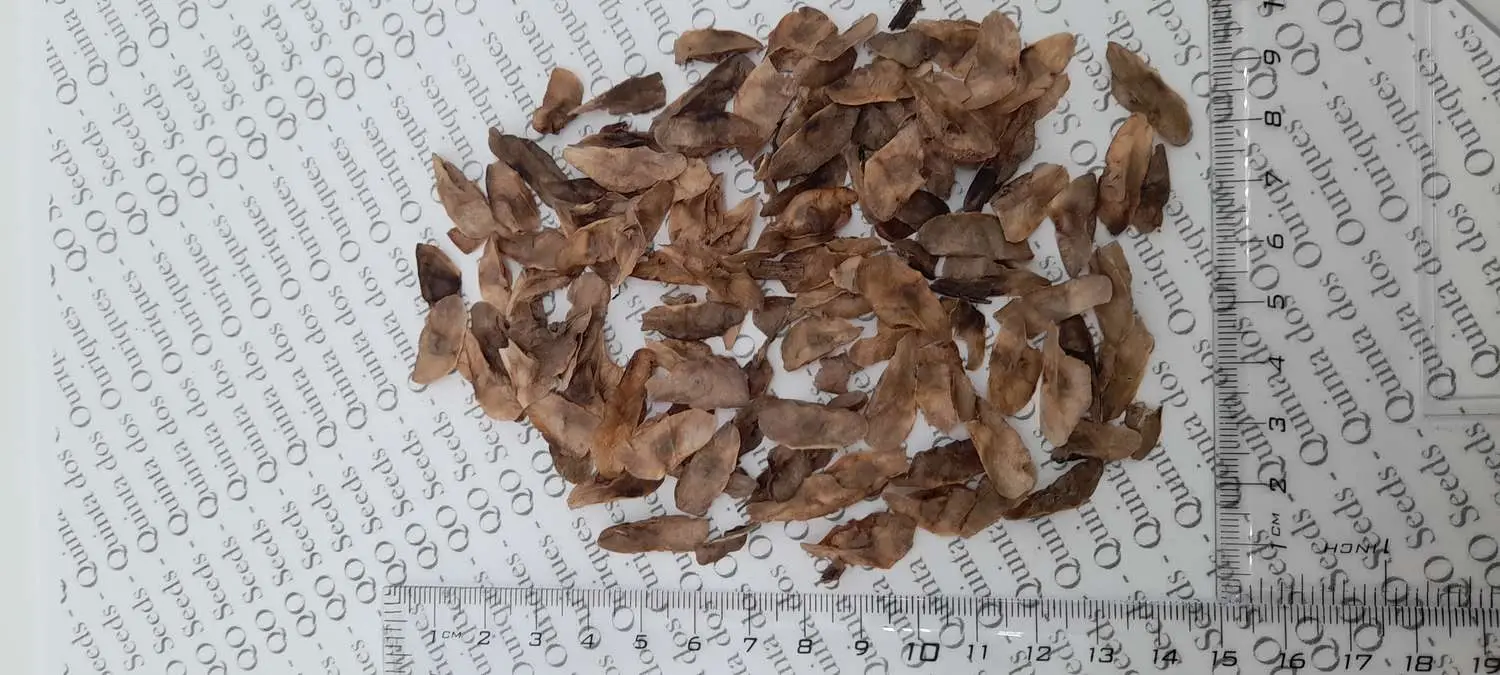
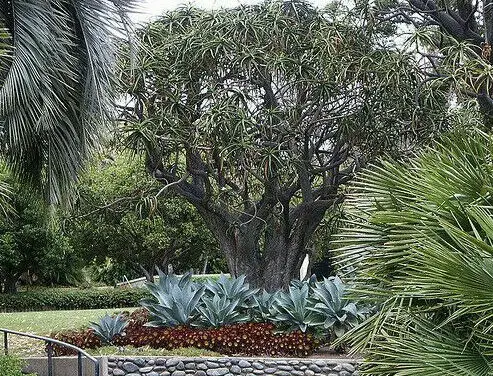


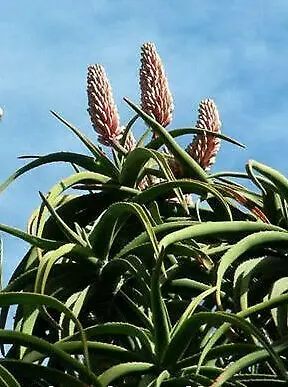
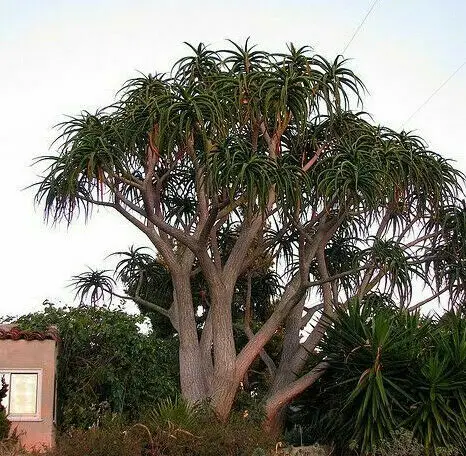


Africa’s largest aloe—a towering sculptural tree with a massive silvery-gray trunk and crown of luminous green foliage capped by winter salmon-pink flowers. Ornamental perfection: thrives on neglect, grows fastest of all tree aloes, easily cultivated from seed. Watch it transform into a 20-meter living monument to desert majesty. Full sun, minimal water, maximum impact.
€2.78
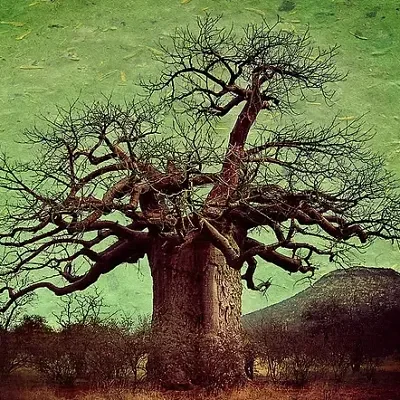
Imagine a living Dr. Seuss creation: a colossal aloe with a gray-smooth trunk that branches in perfectly symmetrical forks, crowned with dense rosettes of long, deeply channeled green leaves that curve gracefully downward—this is Aloe barberae, Africa’s largest aloe and one of nature’s most spectacular architectural statements.
Native to the subtropical coastal forests and dry valleys of South Africa, Eswatini, and Mozambique, Aloe barberae stands as the undisputed giant among all African aloes. It was first collected and named in 1874 by the pioneering botanist Mary Elizabeth Barber, a woman who recognized its singular beauty and power. The species embodies the wild botanical legacy of southern Africa—a slow-growing monument that will outlive you, changing slowly from seedling to forest-dominating presence.
This aloe’s true brilliance is purely ornamental. There is nothing subtle about it. A mature specimen becomes a focal point so compelling it reshapes your entire landscape. The massive, dichotomously branching trunk—eventually reaching 1-3 meters in diameter—develops a textured grayish-brown bark that ages like weathered sculpture. Above this architectural trunk rises a rounded, neat crown composed of rosettes of long (60-90 cm), narrow, deeply channeled leaves in dark green with recurved, toothed margins. The visual rhythm is hypnotic: form atop form, geometrically precise yet wildly dramatic. In winter (June-July in the Southern Hemisphere, December-January in cultivation), mature plants reward patience with magnificent cylindrical spikes of tubular flowers—salmon-pink to rose-pink with green tips—held proudly above the foliage. These flowers attract sunbirds in their native habitat, adding movement and life to this monumental green sculpture. Easily grown from seed and increasingly used for drought-tolerant landscaping, this is the aloe for collectors who understand that rarity comes from size and patience, not obscurity.
Growing Aloe barberae from seed is straightforward and deeply rewarding. It needs full sun or very bright partial sun—at least 6 hours of direct sunlight daily for optimal growth and flowering. The plant thrives in well-drained, loamy, sandy soil with neutral to slightly acidic pH; use a good-quality cactus or succulent mix amended with extra drainage material. In containers, use fast-draining soil; outdoors, it prefers sloped sites to prevent waterlogging. Water sparingly: weekly in hot, dry summers; once monthly during mild seasons; barely at all in cold winter months. This is a forgiving succulent that actually tolerates underwatering far better than excess moisture—root rot from overwatering is the only real enemy. In warm climates (USDA zones 9-11), it grows outdoors year-round, reaching 4-12 inches per year under favorable conditions. In cooler zones, grow in a large container and bring indoors before frost. The plant is sensitive to cold below 5°C, so protect young specimens in frost-prone areas. Propagate easily from seed (slow but rewarding) or from stem cuttings/truncheons (faster, more dramatic). Seeds should be sown in coarse sand or seed mix in autumn; cuttings should be dried for 3+ weeks before planting.
This is your chance to grow not merely a plant, but a living sculpture—a slow-motion monument to patience and beauty that will define your garden for decades. Start from seed and witness the magical transformation from tiny seedling to an architectural presence so commanding that visitors stop mid-conversation to ask, “What is THAT?” In Aloe barberae, you are not buying a houseplant. You are planting legacy. You are becoming steward of one of Africa’s most magnificent botanical treasures.
Only logged in customers who have purchased this product may leave a review.
Reviews
There are no reviews yet.