
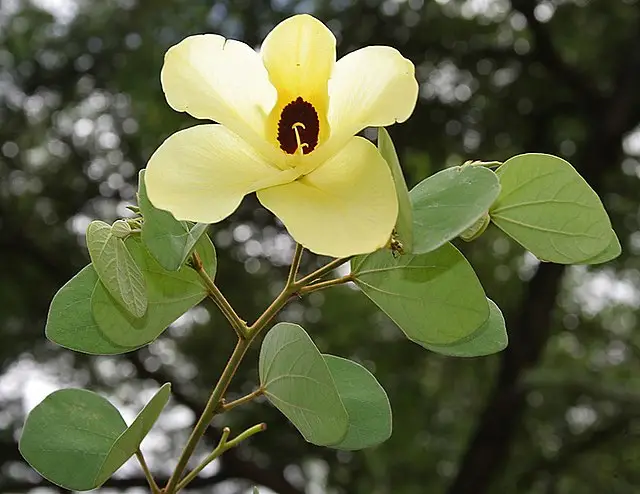
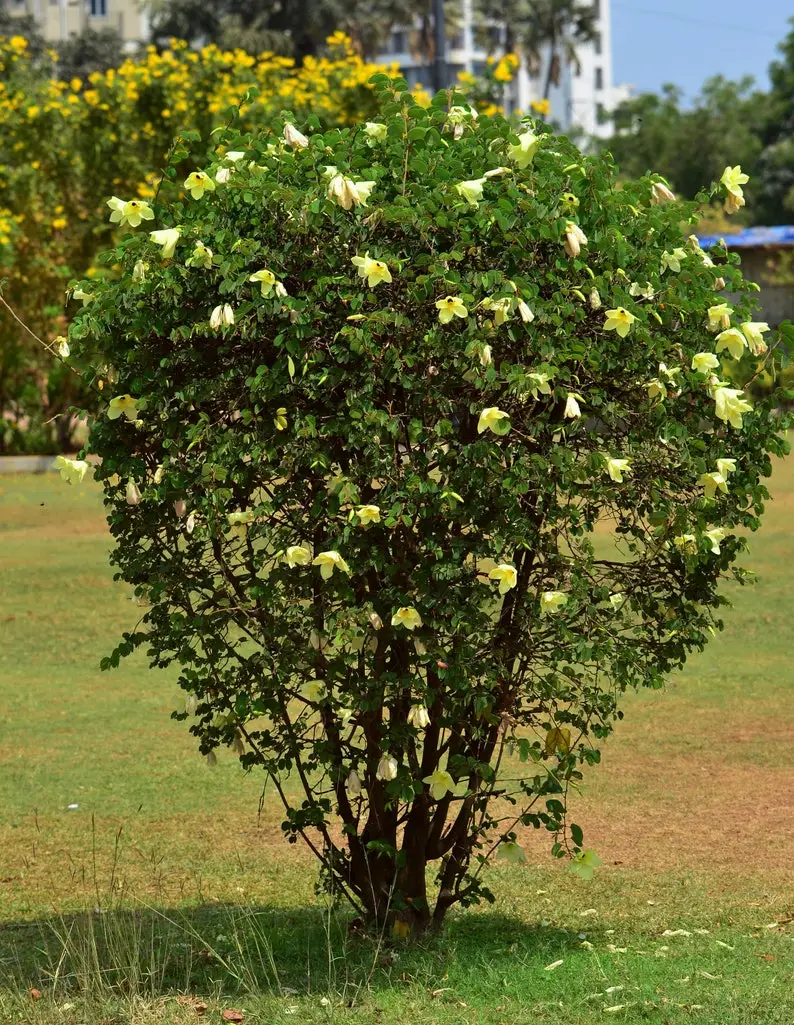
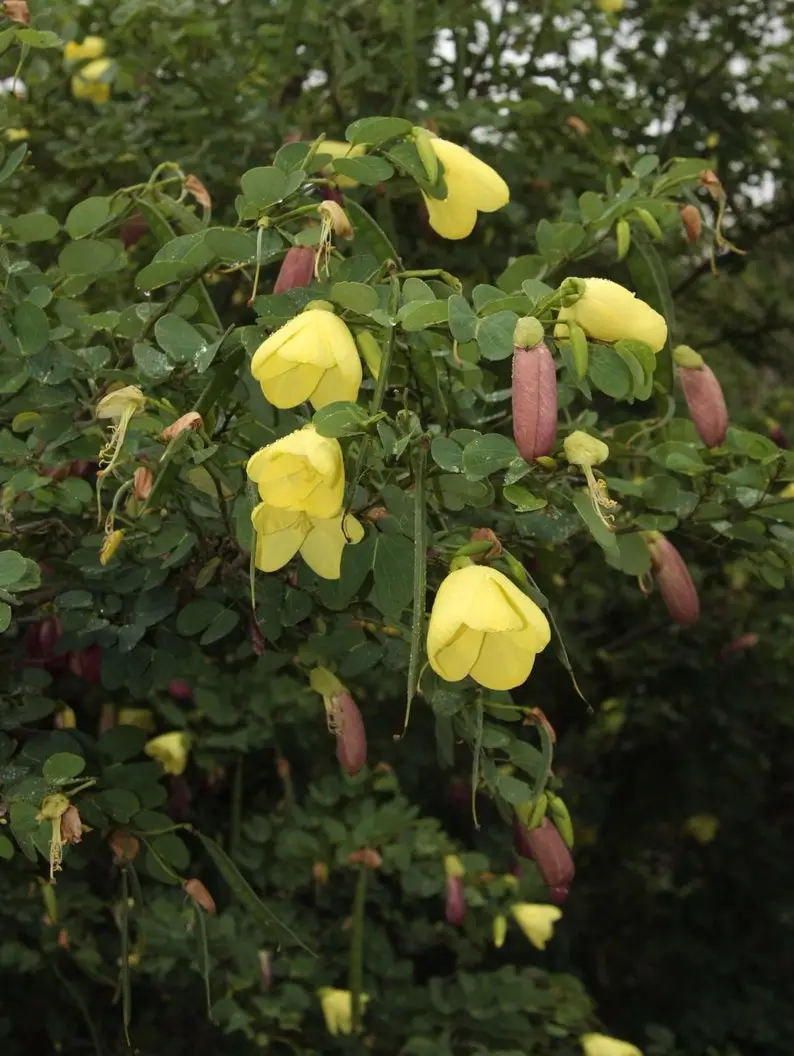
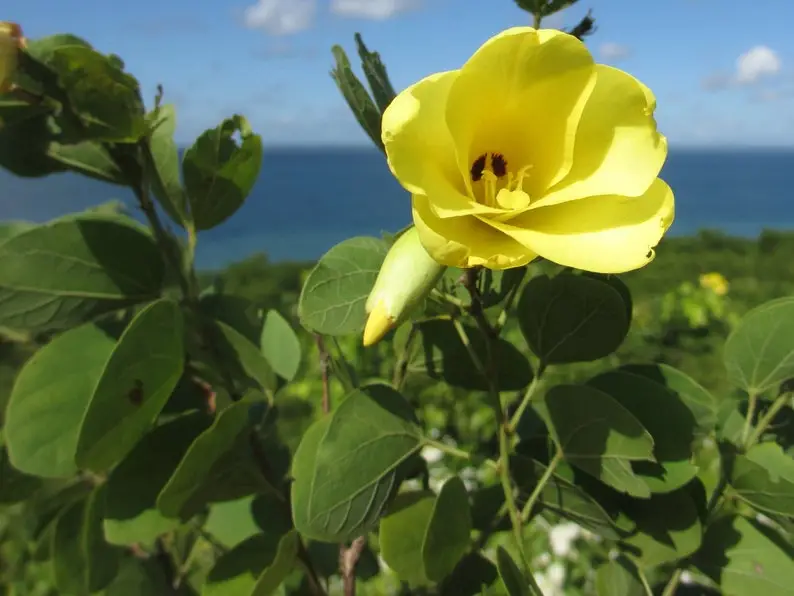
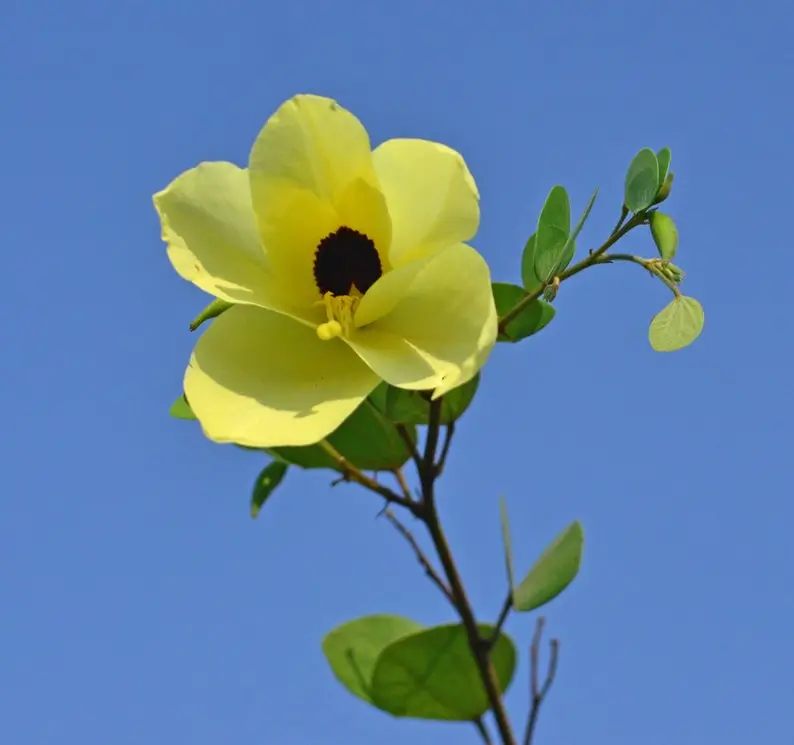
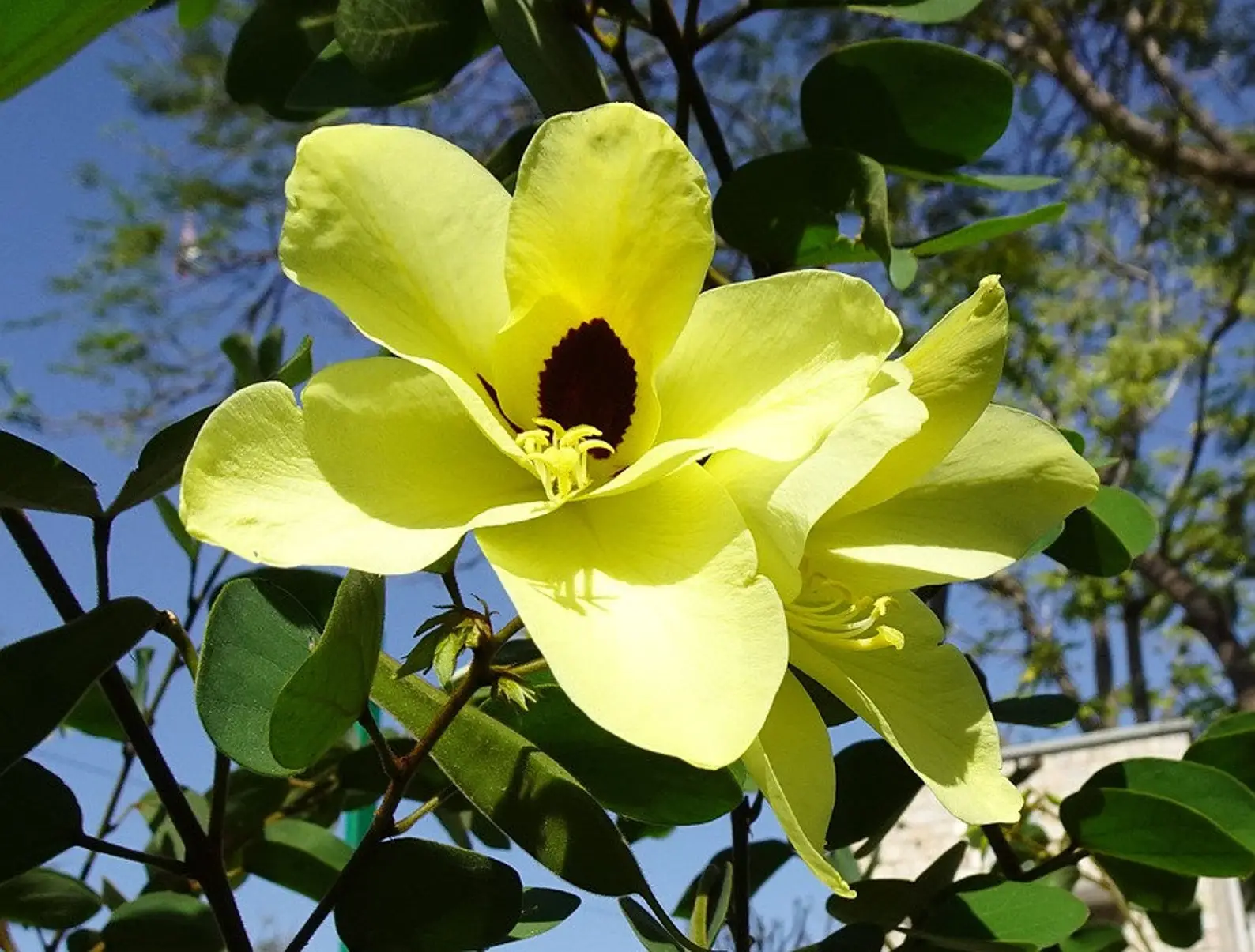
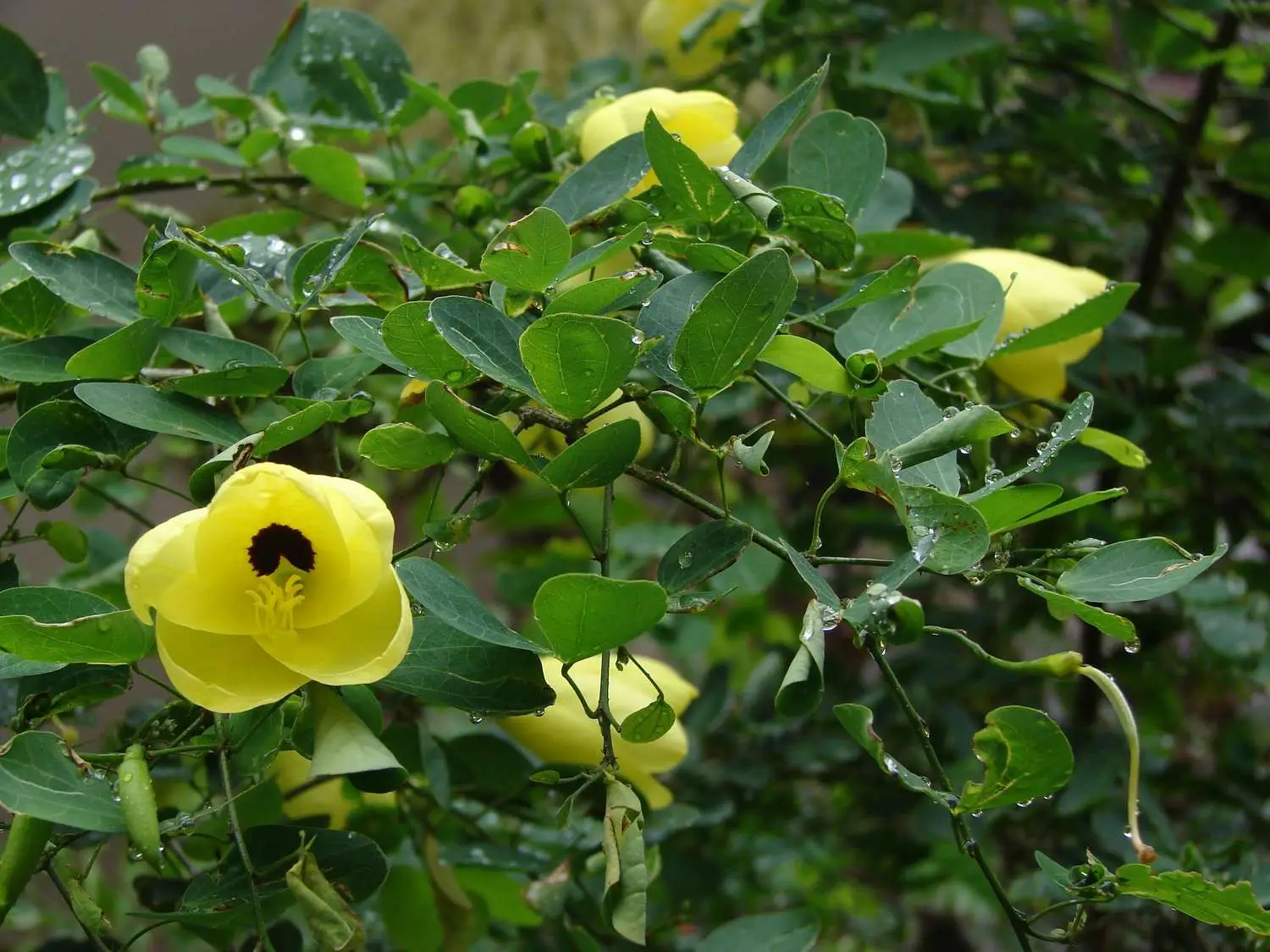
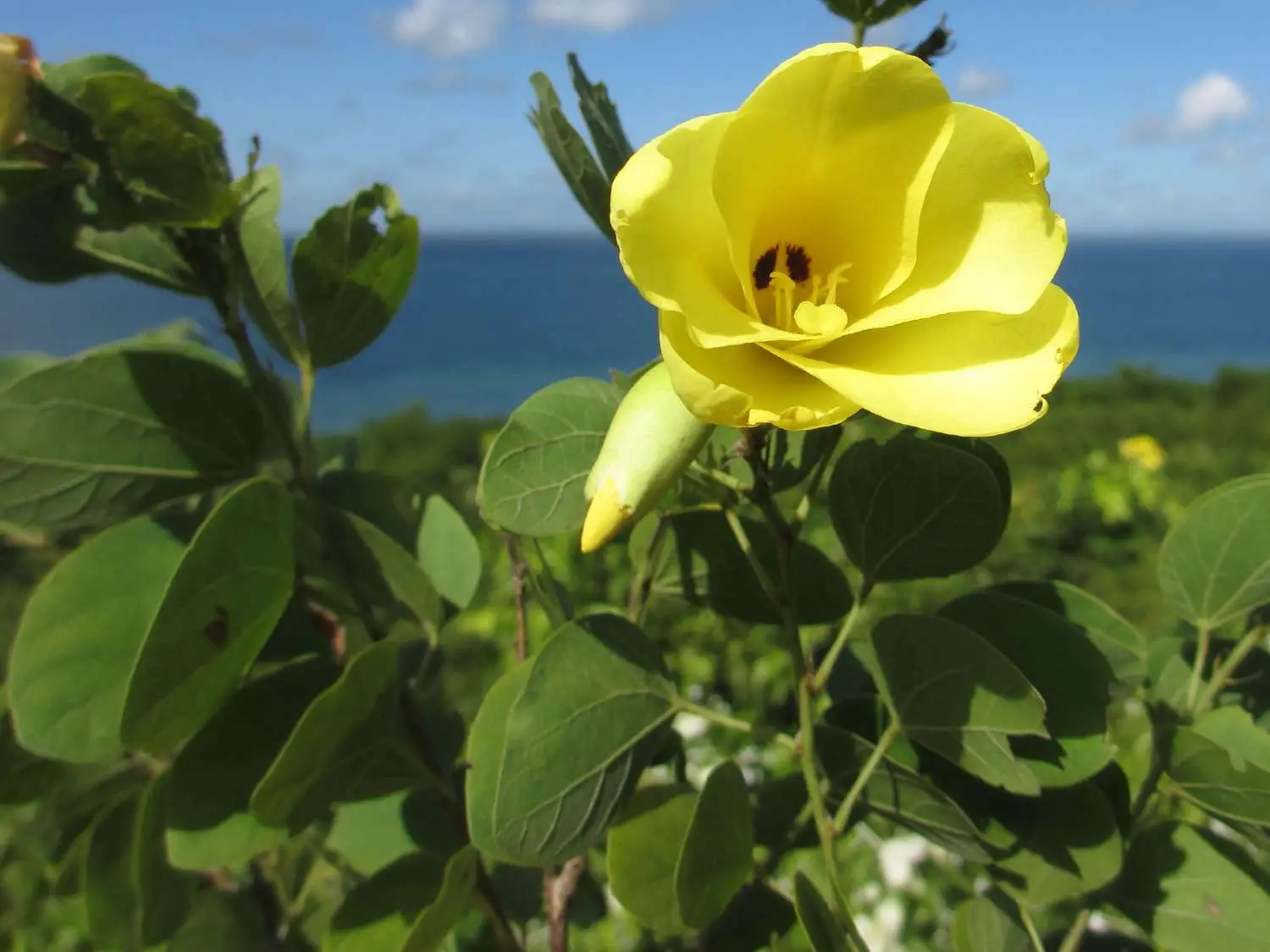
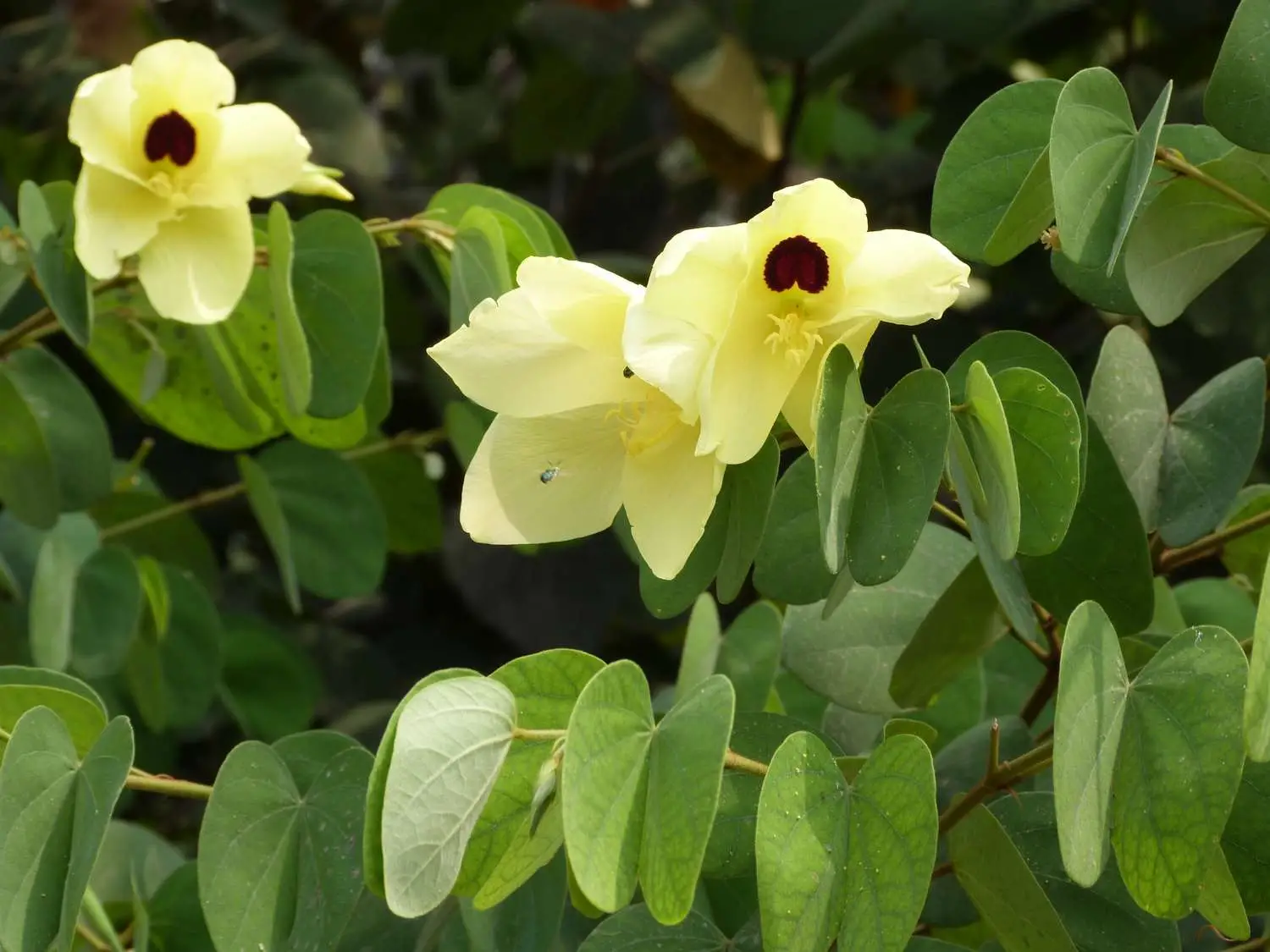
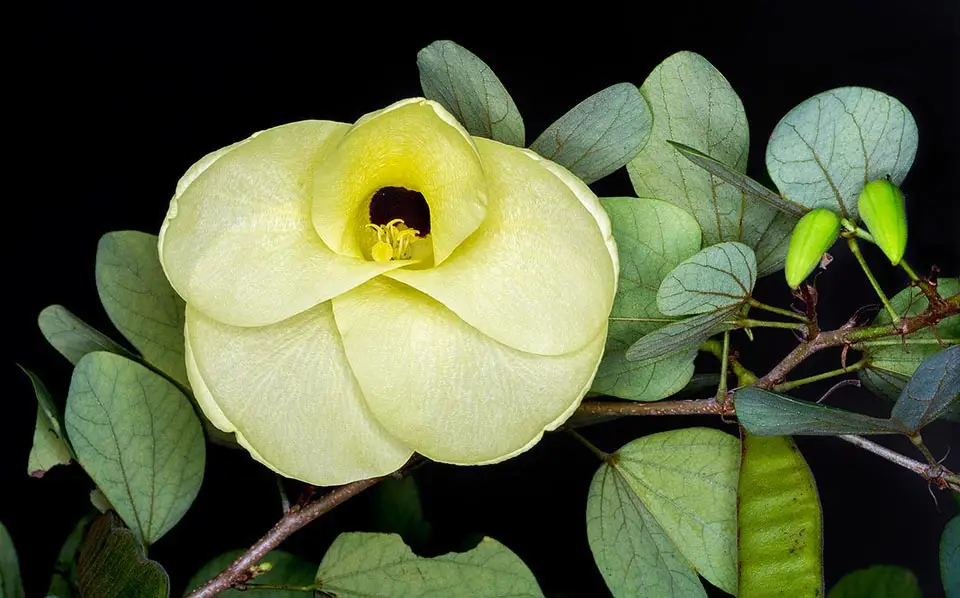
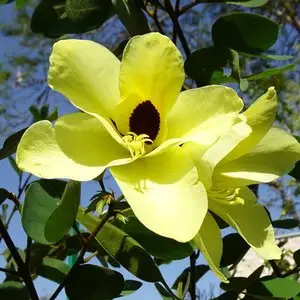
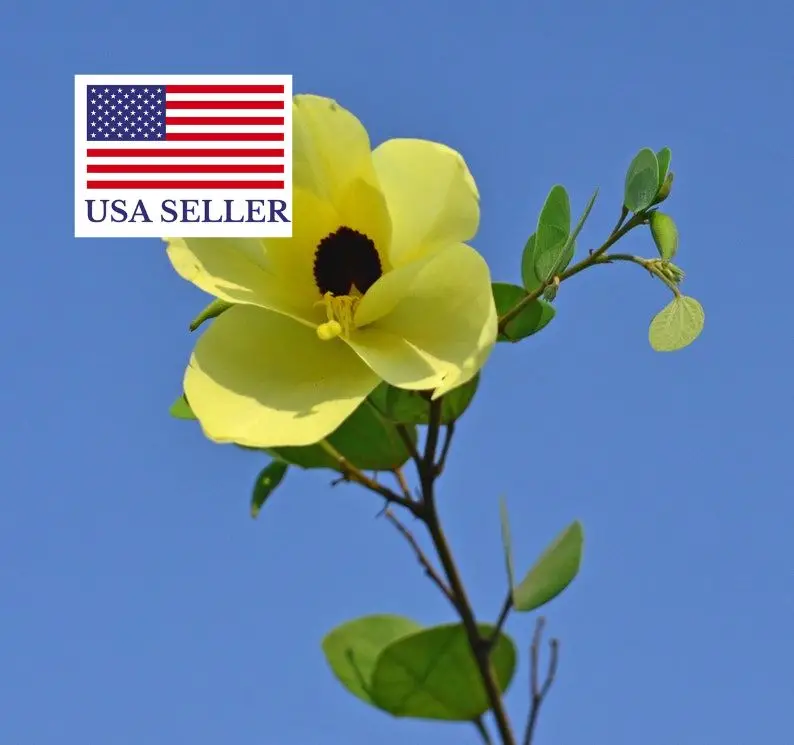
Grow the legendary healer: luminous bell-shaped yellow flowers with maroon throats that bloom prolifically, plus bilobed butterfly leaves packed with centuries of medicinal tradition. From throat tonics to skin remedies, this fast-growing tree is a living apothecary. Easy from seed—germination in 7-15 days, thrives in warmth and sun.
€1.92
Imagine a small tree that whispers of ancient healings every time you brush its distinctive butterfly-wing leaves—and then erupts into glowing golden bells that attract butterflies and bees all season long.
Bauhinia tomentosa, native to tropical Africa, India, and Sri Lanka, is a plant that carries centuries of ethnobotanical wisdom in its tissues. The name itself honors two 16th-century Swiss botanist brothers, Jean and Gaspard Bauhin; the tree’s bilobed leaves perfectly mirror their twin legacy. This graceful scrambler with drooping slender branches and soft grey bark has been treasured across three continents—not just for beauty, but for profound healing power.
What sets this species apart is its documented role in traditional medicine across Africa and Asia. Practitioners have long made the leaves, flowers, and roots into remedies for liver inflammation, wound healing, skin disorders, and digestive troubles. In India, a food supplement called Kachnar is prepared from this plant—used as a gargle for sore throats, as a topical paste for skin conditions, or taken internally for diarrhea. Recent scientific research has isolated compounds with antimicrobial, antioxidant, and even tyrosinase-inhibitory properties (potential for skin-whitening applications), validating what traditional herbalists knew for generations. Whether you’re building a home herbal apothecary, seeking natural remedies, or exploring ethnobotany, this tree becomes your partner in wellness.
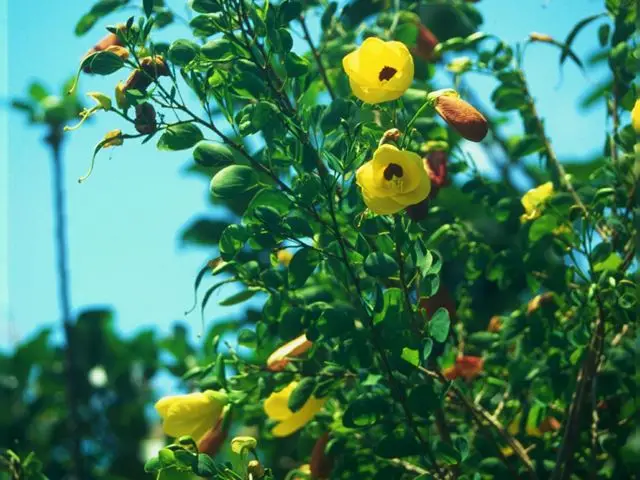
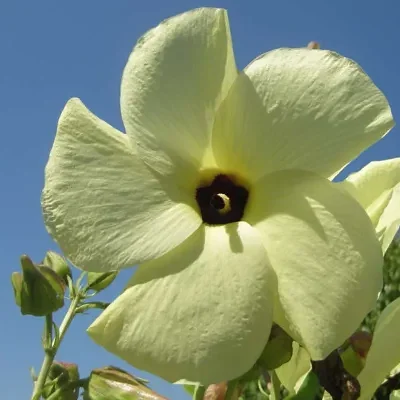
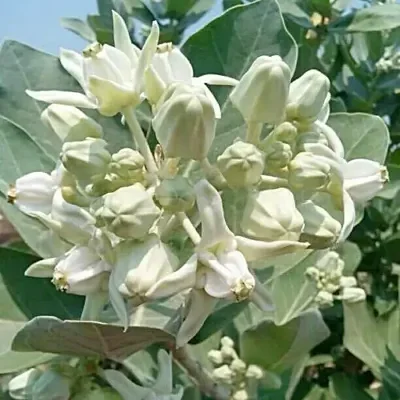
Bauhinia tomentosa thrives with refreshing ease: it germinates reliably within 7-15 days from seed (simply soak overnight in hot water first), and young plants shoot upward fast with almost no transplant shock. It loves full sun and moderate watering, preferring drier conditions once established—making it ideal for warm-temperate to tropical zones (USDA 9b–11). The bark is smooth and elegantly grey; the leaves are small and distinctly bilobed, sometimes releasing a faint burnt-rubber aroma when brushed. Most enchanting: the flowers themselves—bell-shaped, pendulous, lemon-yellow with a deep maroon blotch at the base—shift to pinkish-brown as they age, creating a continuous color show. And here’s a bonus: those nectar- and pollen-rich blooms attract butterflies, bees, and beneficial insects relentlessly, making this a pollinator magnet. Some cultivators prize it as a bonsai specimen due to its small leaves and manageable growth habit.
Grow this tree and you’re not planting mere ornament—you’re cultivating a bridge between beauty and healing tradition, a living library written in flowers and leaves. Start from seed this season, and within months you’ll have a fast-growing companion that rewards you with radiance, wellness, and the gentle knowledge that you’re growing something humanity has cherished for centuries.
Only logged in customers who have purchased this product may leave a review.
Reviews
There are no reviews yet.