
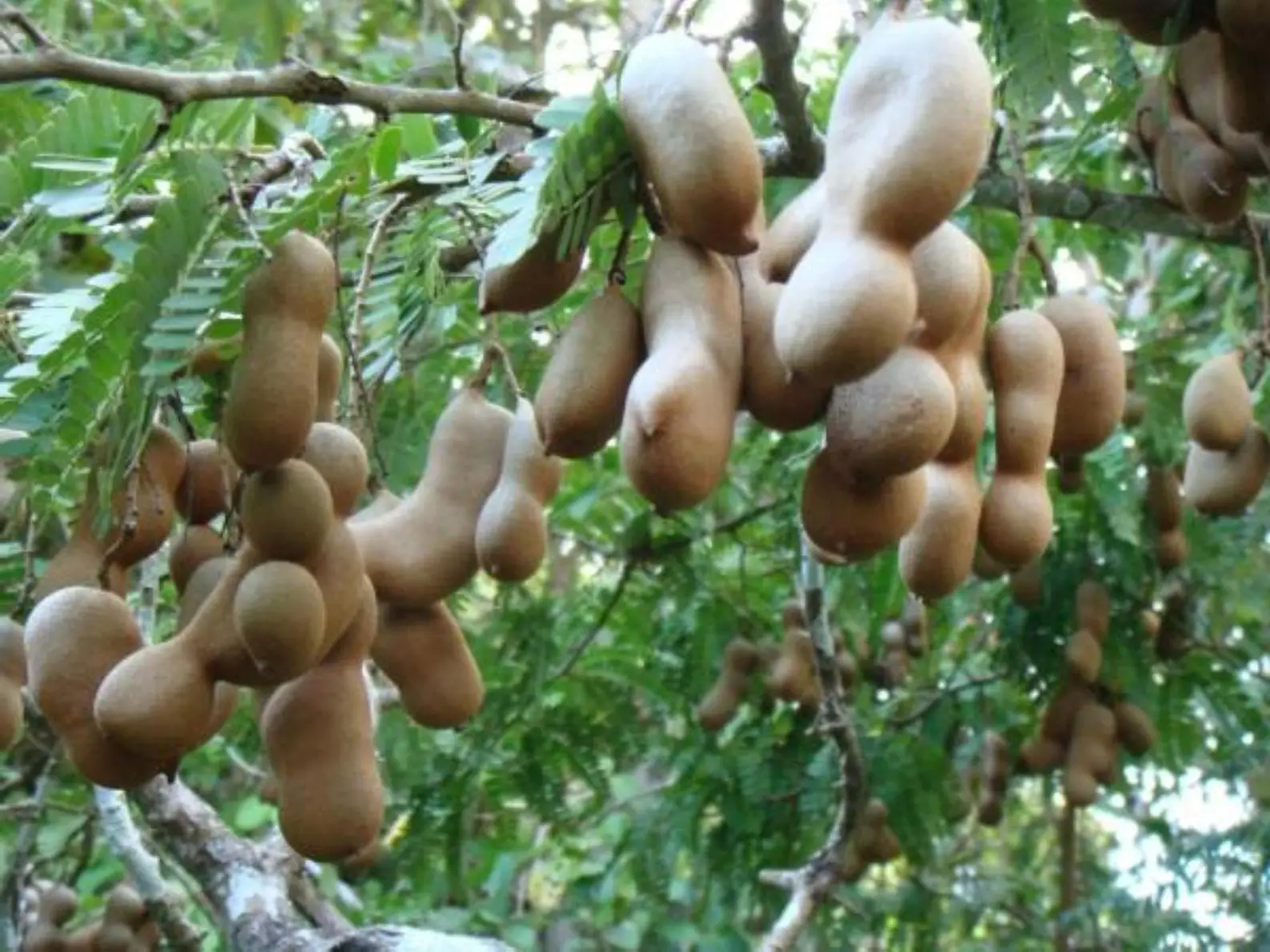
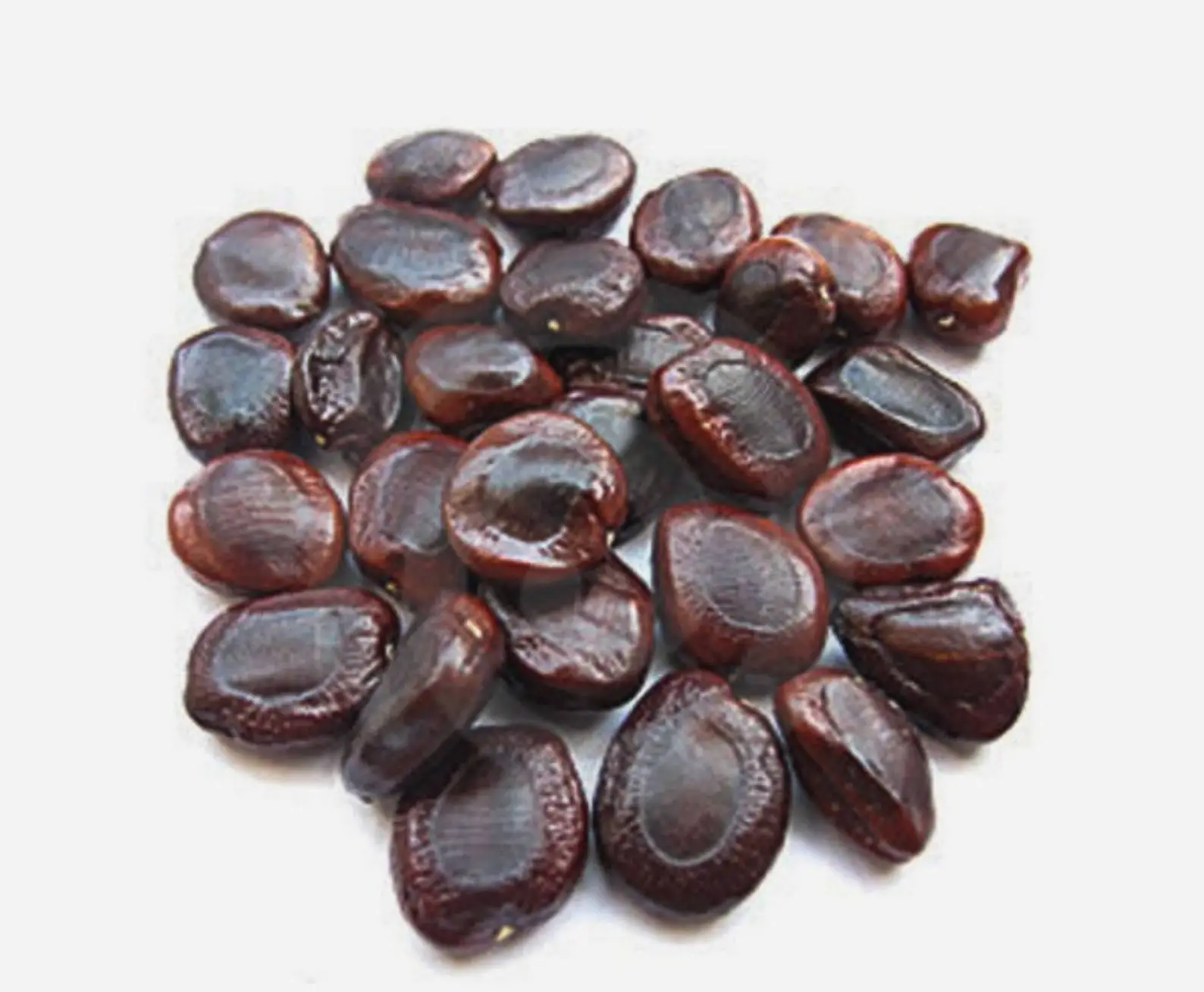
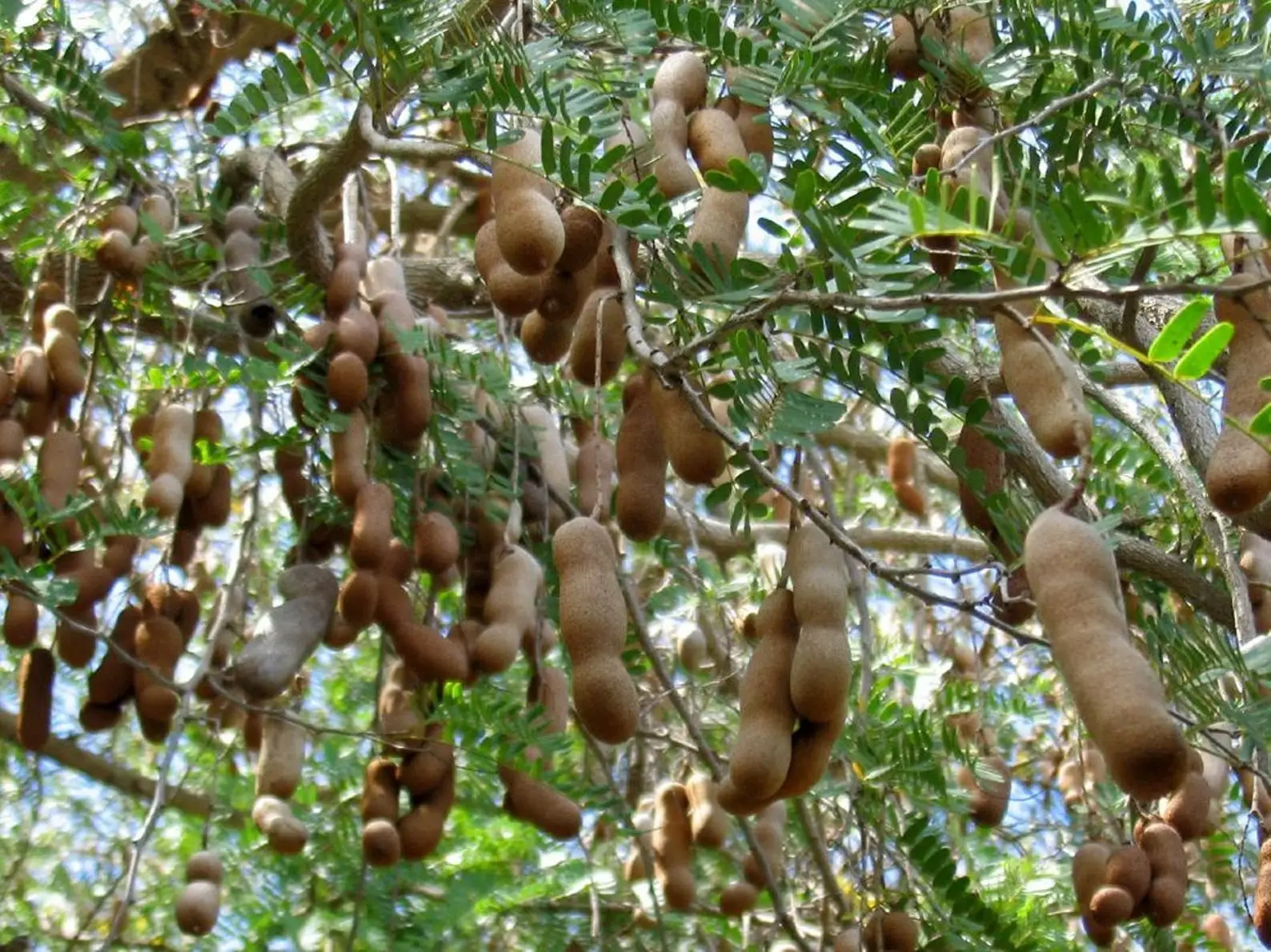
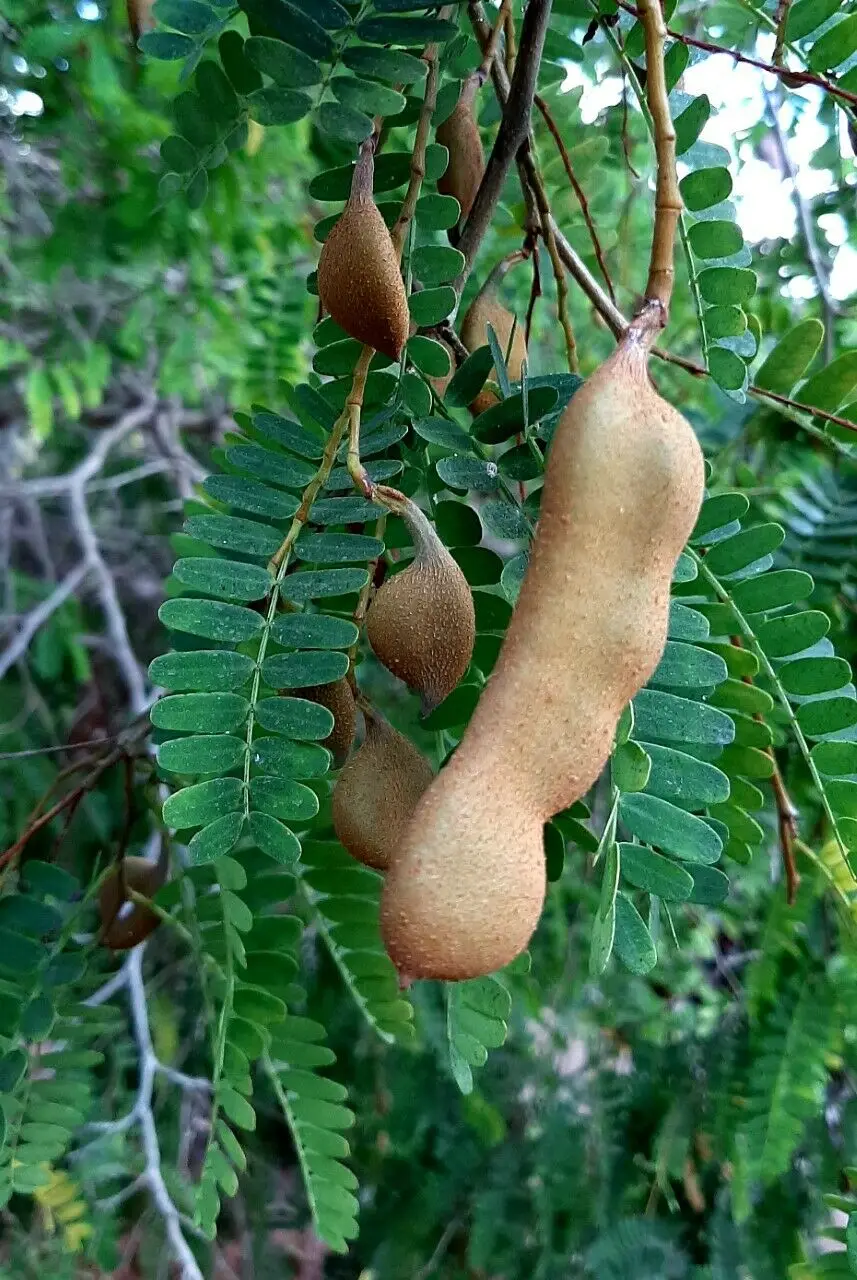
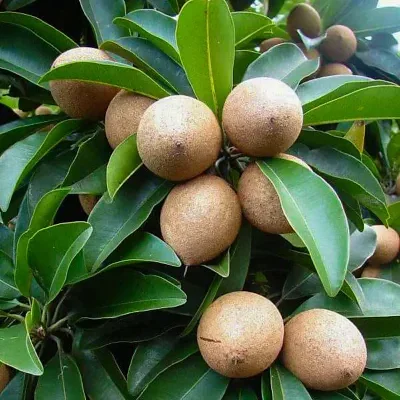
Grow the legendary tropical fruit prized across four continents for its intoxicating sweet-sour pulp. Brown pod-like fruits with sticky pulp used in chutneys, sauces, candies, and drinks. Unlike most fruit-bearing trees, tamarind has a sour pulp that serves as both a seasoning and a sweetener, and is remarkable as a sustainable food source, since tamarind trees can live for well over 100 years, producing fru
€2.33
One of nature’s longest-living tropical trees, the tamarind is both legendary and easy to love. Imagine stepping into your own tropical kitchen garden where a single magnificent tree produces decades of the most coveted souring agent on Earth—the dark, sticky pulp that transforms every curry, sauce, and drink into something irresistibly tangy and alive.
Tamarind is indigenous to Africa, but due to its crossover appeal, influencing South Asia, the Middle East, and the Americas, it has undoubtedly become a global ingredient for traditional and contemporary uses. The genus name Tamarindus is derived from the Arabic tamar hindi, meaning “Indian date,” a name given by Arab traders who encountered the tree’s sweet-sour pulp during trade routes through the Indian subcontinent, though the species itself is of African origin. This is a tree with *history*, with migration routes written into its very name.
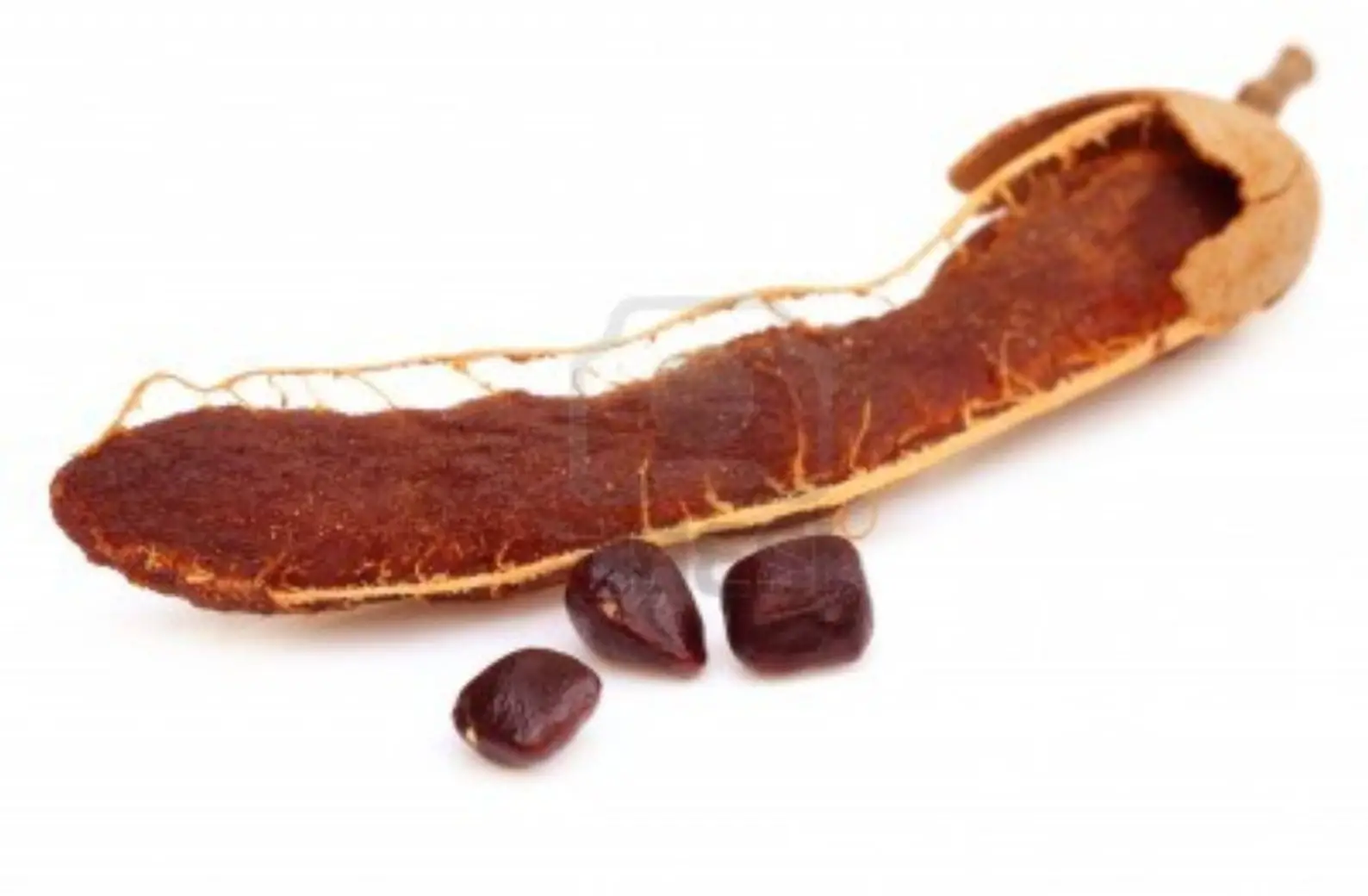
But the real magic? The culinary supremacy. Its tangy depth appears in chutneys, curries, marinades, drinks, and sauces, including great classics like Worcestershire sauce. This edible pulp/paste from the pods is used in a variety of culinary applications including curries, chutneys, sauces, sherbets, jams, syrups, and beverages. It is an ingredient in Worcestershire sauce. Tamarind is also the base for popular street drinks across Latin America, such as Mexico’s agua de tamarindo. The leaves are edible and used in soups, stews, and salads, especially in Southeast Asian and Filipino cuisine. A single tree gives you fruit *and* edible leaves—you’re not just growing a tree, you’re cultivating a year-round pantry. Unlike most fruit-bearing trees, tamarind has a sour pulp that serves as both a seasoning and a sweetener, and is remarkable as a sustainable food source, since tamarind trees can live for well over 100 years, producing fruit for generations. Bonus: The flowers are also important as a pollen source for bees. The flowers of Tamarind are considered a good source of nectar for honeybees in South India. The honey is golden-yellow and slightly acid in flavor.
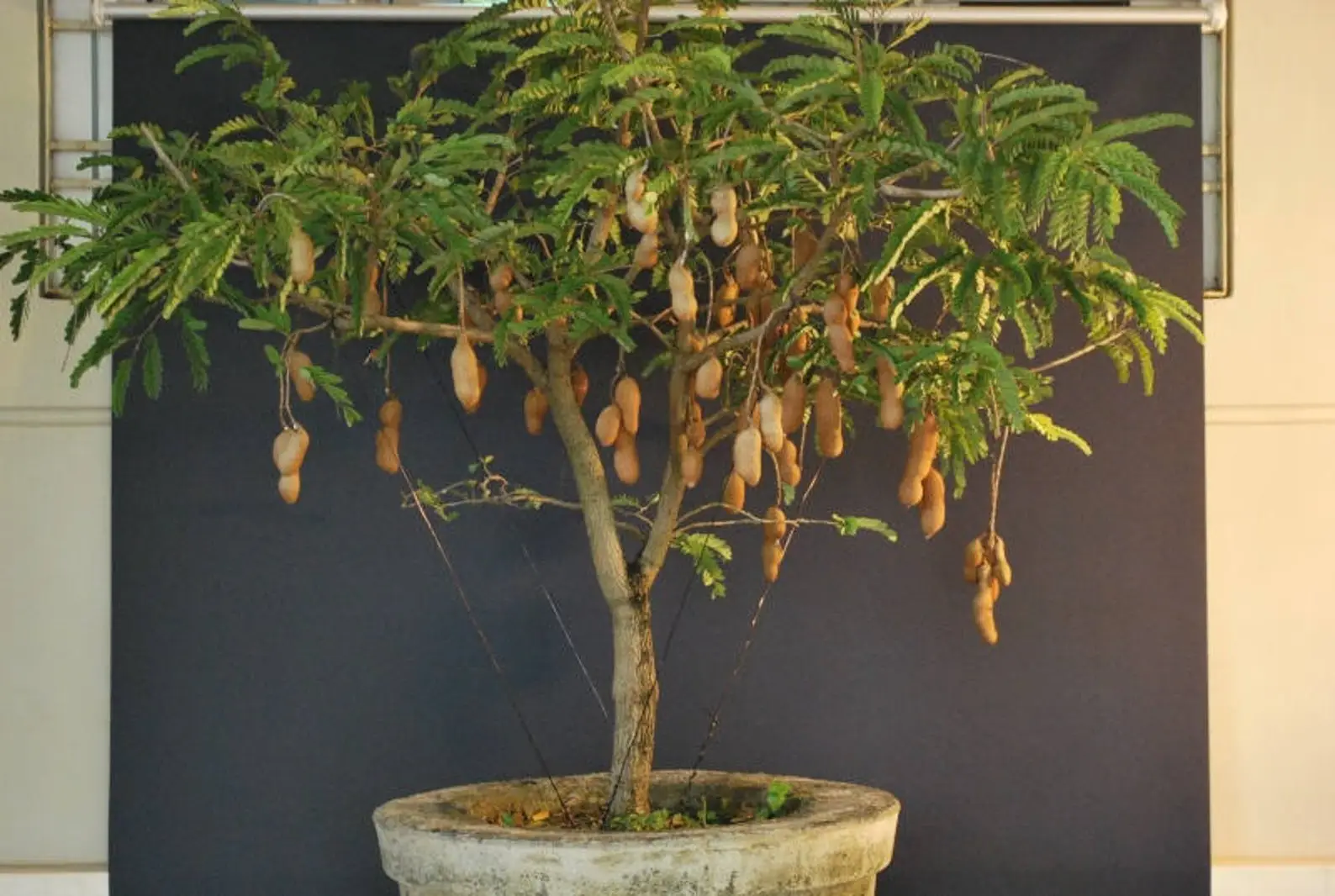
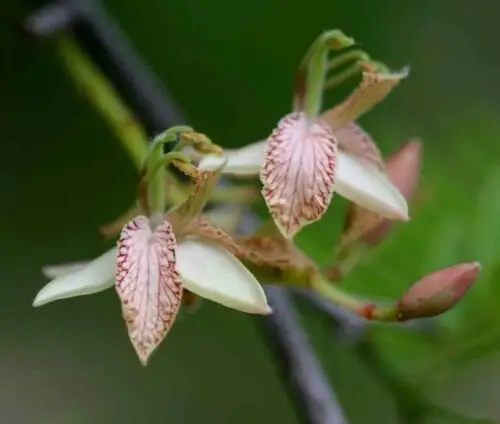
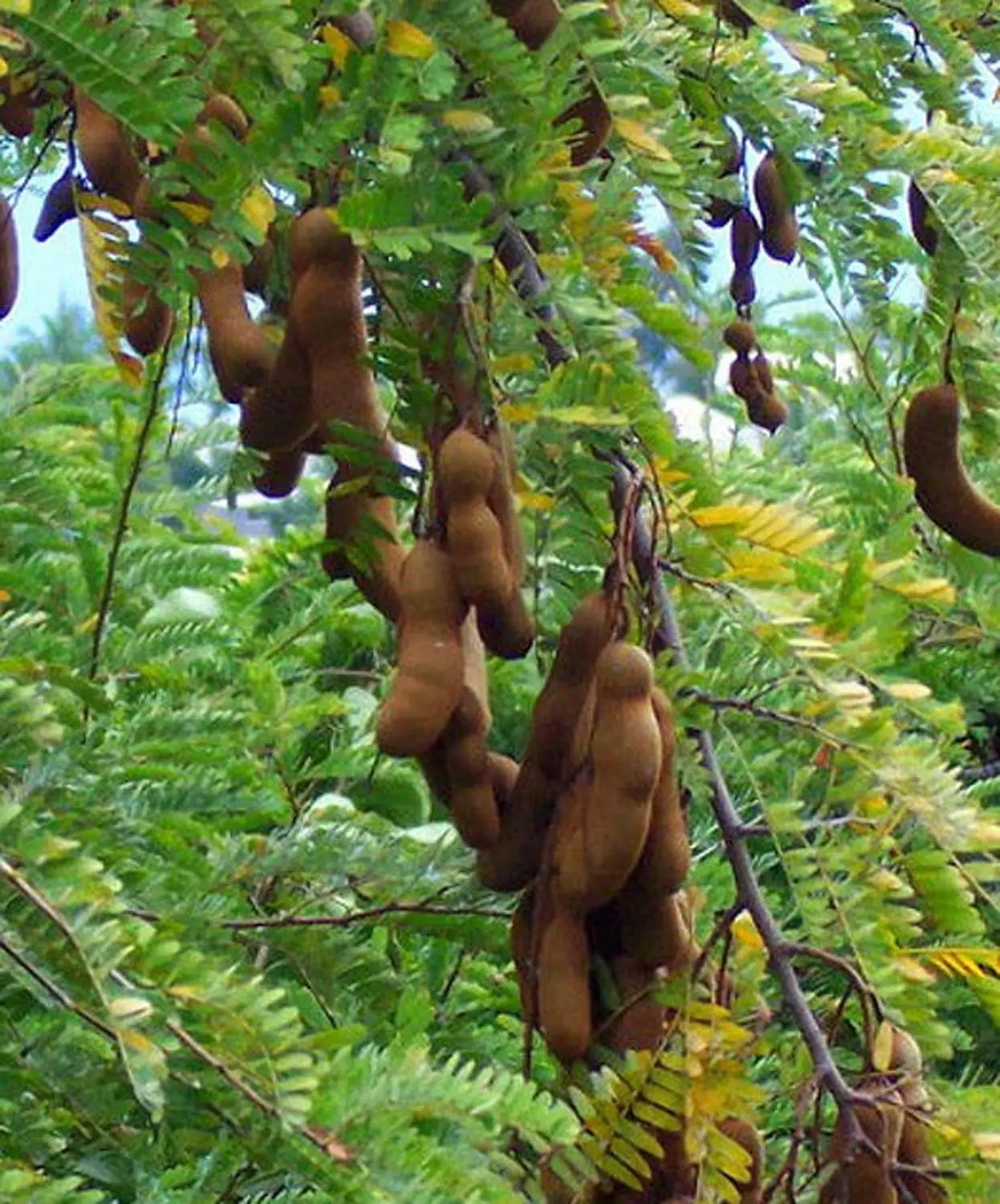
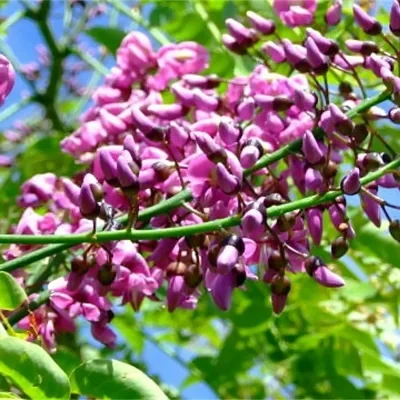
Visually, this is a tree that seduces the eye. The tree is also practical with its fernlike foliage, graceful shape, and sturdiness. Tamarind trees feature ferny, even-pinnate, compound leaves with light green leaflets, summer bloom of red-veined cream to pale yellow flowers in drooping racemes and plump cinnamon-brown bean-like seed pods filled, when ripe, with an edible sweet-sour pulp. It is a long-lived tree with high resistance to wind dark-gray and rough bark and strong, supple branches that are gracefully drooping at the ends. Those drooping branches don’t just look graceful—they provide the dappled shade that makes a garden feel like a sanctuary.
Growing tamarind from seed is straightforward and deeply rewarding. Tamarind thrives in USDA Zones 10–11 and is extremely drought-tolerant once established. From seed (soak or scarify) germinates in 1–2 weeks. The tamarind tree grows easily in South Florida and requires little care. Tamarind should be grown in the full sun. Tamarind prefers deep loamy soil. It thrives in neutral, gritty, clay, even saline soil type. Soil should be well drained. Tamarind trees need regular water, especially when they’re young. They get better at handling drought as they grow. Once established, the tree becomes a model of independence—incredibly drought-tolerant, unfussy about soil pH, and resistant to most pests. For container growing in cooler
Only logged in customers who have purchased this product may leave a review.


Reviews
There are no reviews yet.