
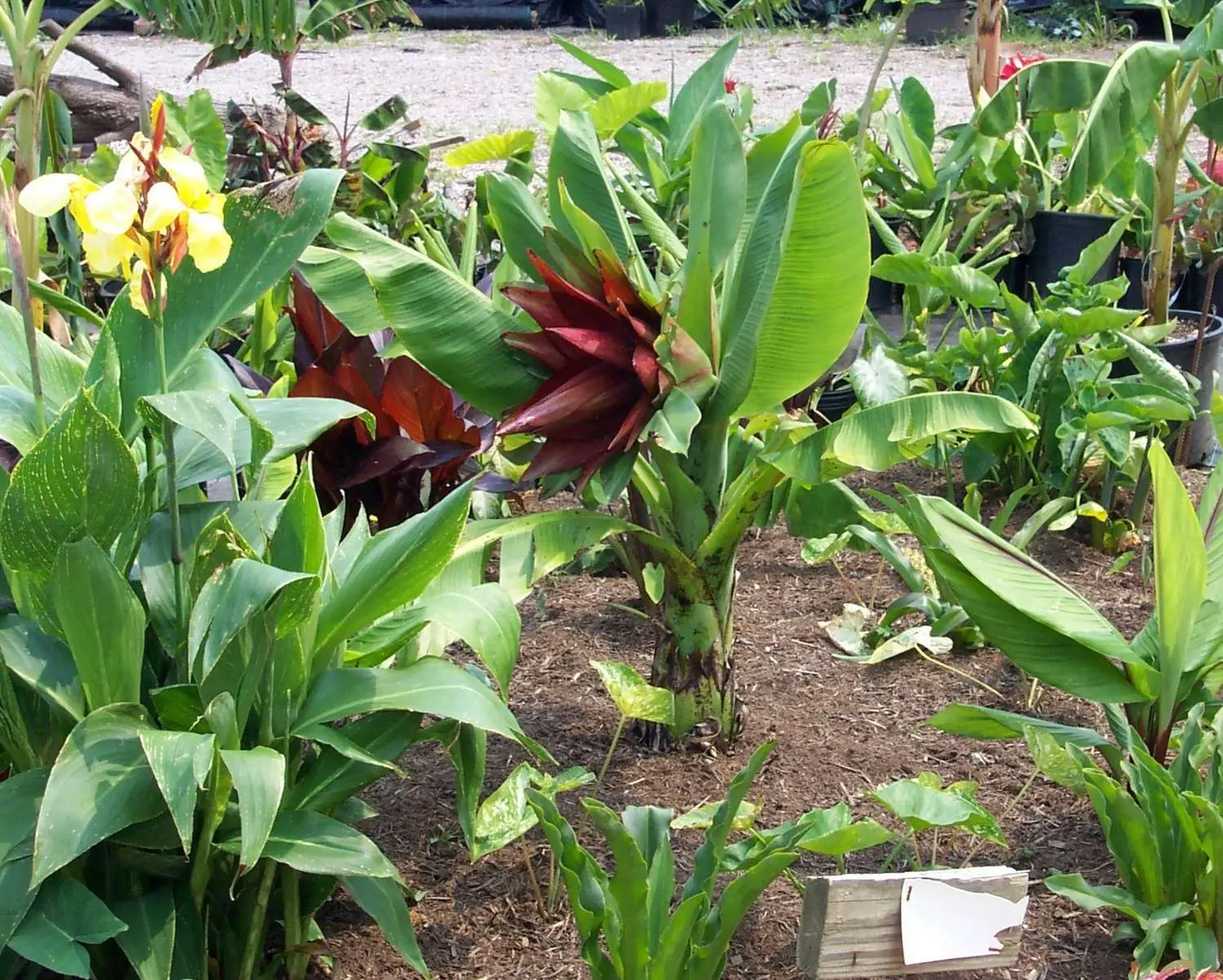
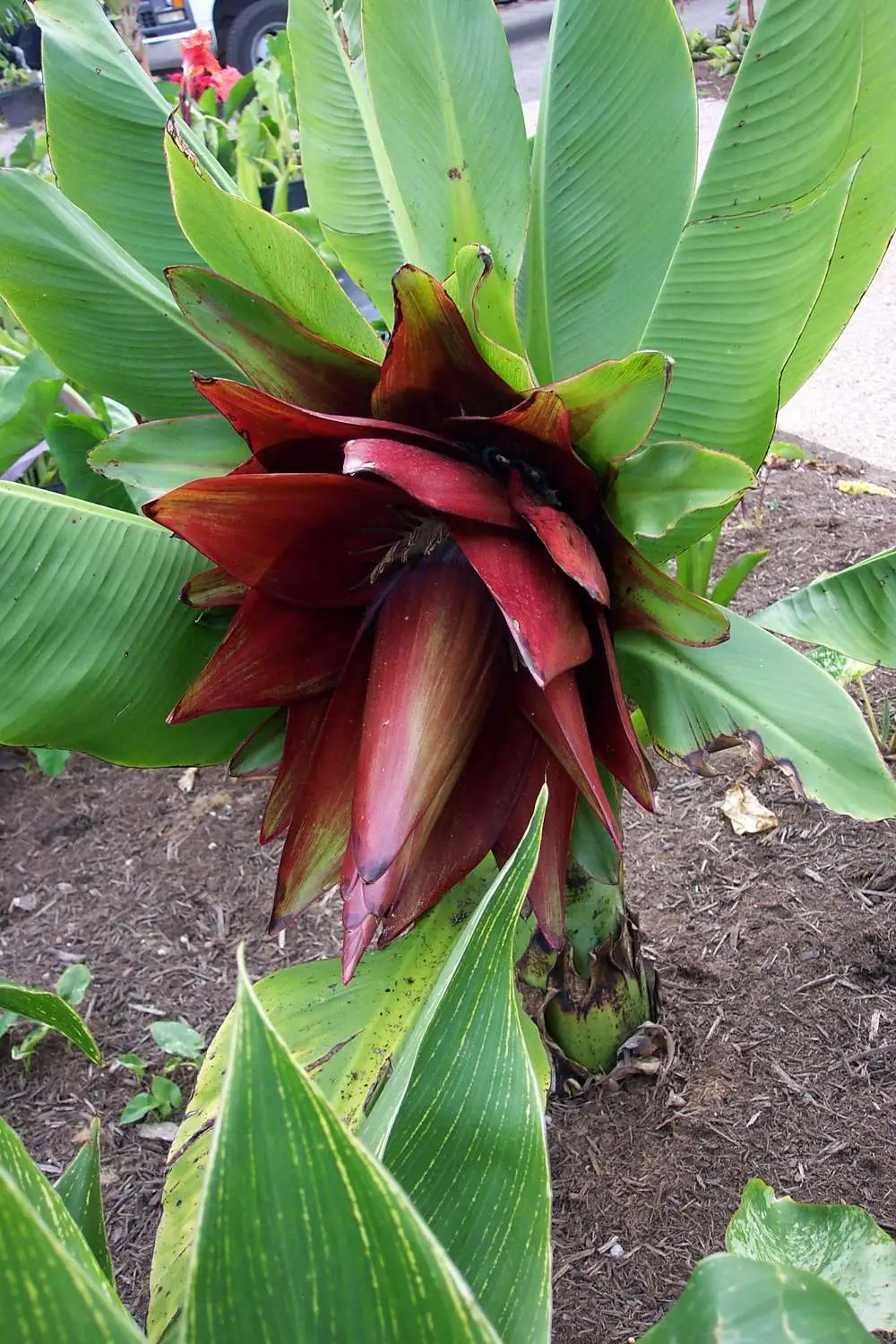
A botanical treasure born from Vietnamese limestone cliffs: compact Ensete lecongkietii reaches just 6–8 feet and erupts with a massive scarlet inflorescence that commands every eye in the garden. Vibrant foliage—pale green tops crowned with golden midribs, reddish veins beneath—creates art you grow. Perfect for containers and tropical displays. Easy to moderate; responds eagerly to generous water. Grow this rare Asian gem from seed and cultivate a living
€3.24
Imagine a botanical rarity so striking, so impossibly compact yet dramatic, that it rewrites everything you thought you knew about ornamental bananas.
Ensete lecongkietii—the Orphan Banana—was only scientifically described in 2012, a gift from the limestone cliffs of northern Thailand and Vietnam. For centuries, locals called it ‘Kluay Pa,’ a secret kept in seasonally dry forest. Now, at last, it grows in the world’s gardens. This species is a revolution in compact tropical splendor: while its cousins tower into skyscrapers, lecongkietii maintains an elegant 6–8 feet, making it genuinely viable for large containers and garden statements where space whispers limits.
But here’s where your heart stops: the inflorescence. Picture a flower architecture so commanding it demands a pilgrimage—a massive bloom reaching over a foot across, wrapped in striking maroon bracts that emerge proudly from the plant’s heart. Those bracts hold the color like fine burgundy wine against the leathery, glaucous (waxy pale) foliage. Above this drama, the leaves sing: luminous pale green on top, each midrib traced in golden yellow; flip them over and discover deep red veining that runs like watercolor beneath a glaucous blue-grey base. Short petioles create that coveted compact ‘bird’s nest’ architecture—the plant is an architectural statement, not a tangled giant. The small, shiny black seeds that follow the flowers are Musella-like curiosities, botanical jewelry for collectors who understand that rarity compounds beauty.
Why lecongkietii has captured collectors and plantspeople worldwide is simple: it delivers the full Ensete spectacle—the living-sculpture pseudostem, the graphic foliage architecture, the absolutely stopping flower show—in a footprint that fits. This is the orphan that was never supposed to belong anywhere, yet belongs everywhere. It whispers ‘tropical’ without roaring ‘impossible to fit.’ For the ornamental garden, for containers on terraces, for the indoor atrium that can hold a 3-meter column of living drama—this is your plant. Unlike its edible cousin Ensete ventricosum, lecongkietii asks nothing of you but light, water, warmth, and admiration.
Growing it is a straightforward pleasure. Give it full sun to partial shade; it thrives in warmth (20–30°C / 68–86°F) and suffers frost, making it suitable for USDA zones 9–11. It loves fertile, well-draining soil rich in organic matter—slightly acidic to neutral—and grows almost eagerly with consistent moisture during the growing season (keep it moist, not waterlogged). In containers, use large pots with excellent drainage and nutrient-rich mix; in the ground, allow room to spread. Feed monthly with balanced, potassium-rich fertilizer during growth; reduce in winter. The plant itself is remarkably pest-resistant. Seeds germinate reliably if you soak them 24–48 hours beforehand in warm water to soften the hard coat—a small ritual that yields a magnificent reward. Unlike many Musa species, Ensete lecongkietii reproduces by seed alone; the mother plant flowers after 3–4 years, then passes its legacy to the next generation. There’s something sacred about that life cycle.
Grow this seed now. In three to four years, you will stand before a living sculpture—a plant that tourists photograph, that neighbors envy, that friends ask about in hushed, wonder-struck tones. You’ll have cultivated not just a banana, but a botanical story: the orphan that came home, the rare treasure of Vietnam and Thailand, now thriving in your garden as a testament to the beautiful improbabilities of the plant world. This is how legends grow.
Only logged in customers who have purchased this product may leave a review.
Reviews
There are no reviews yet.