
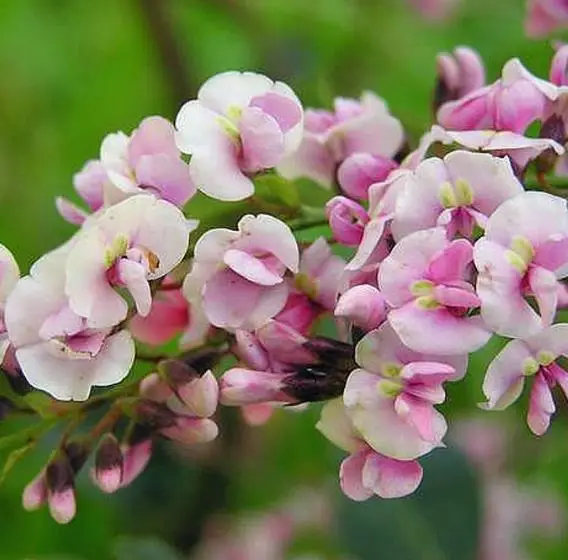
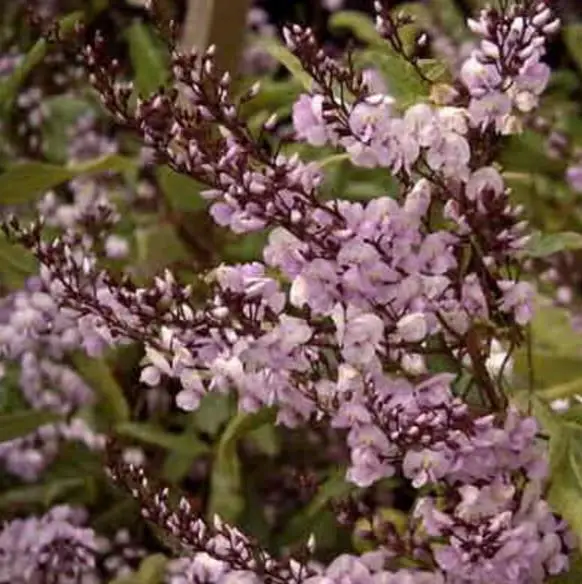
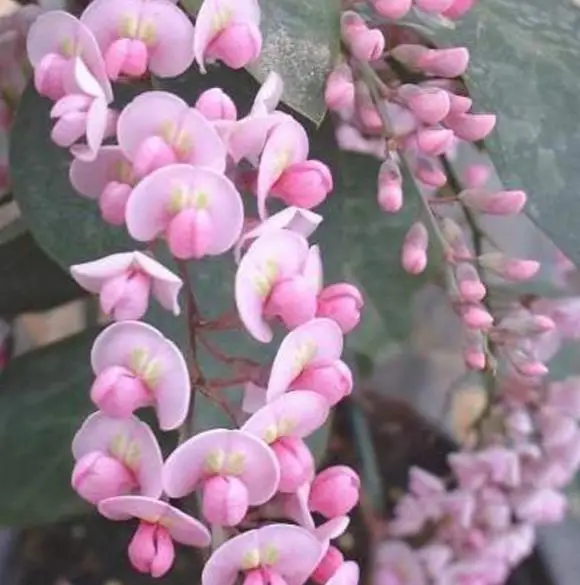
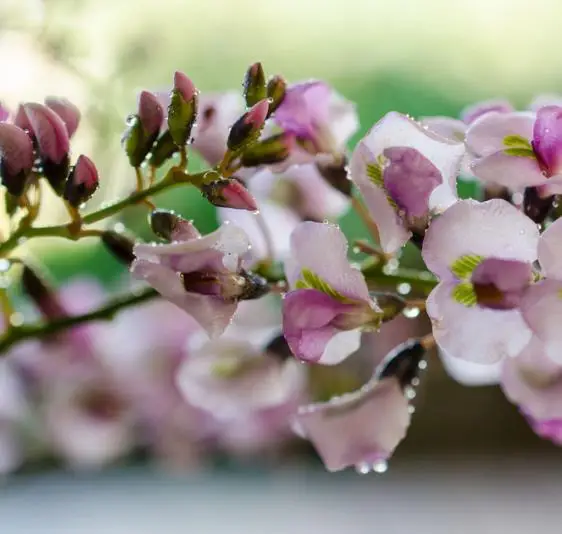
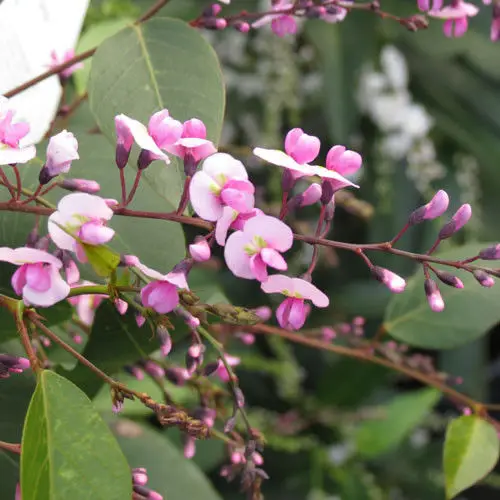
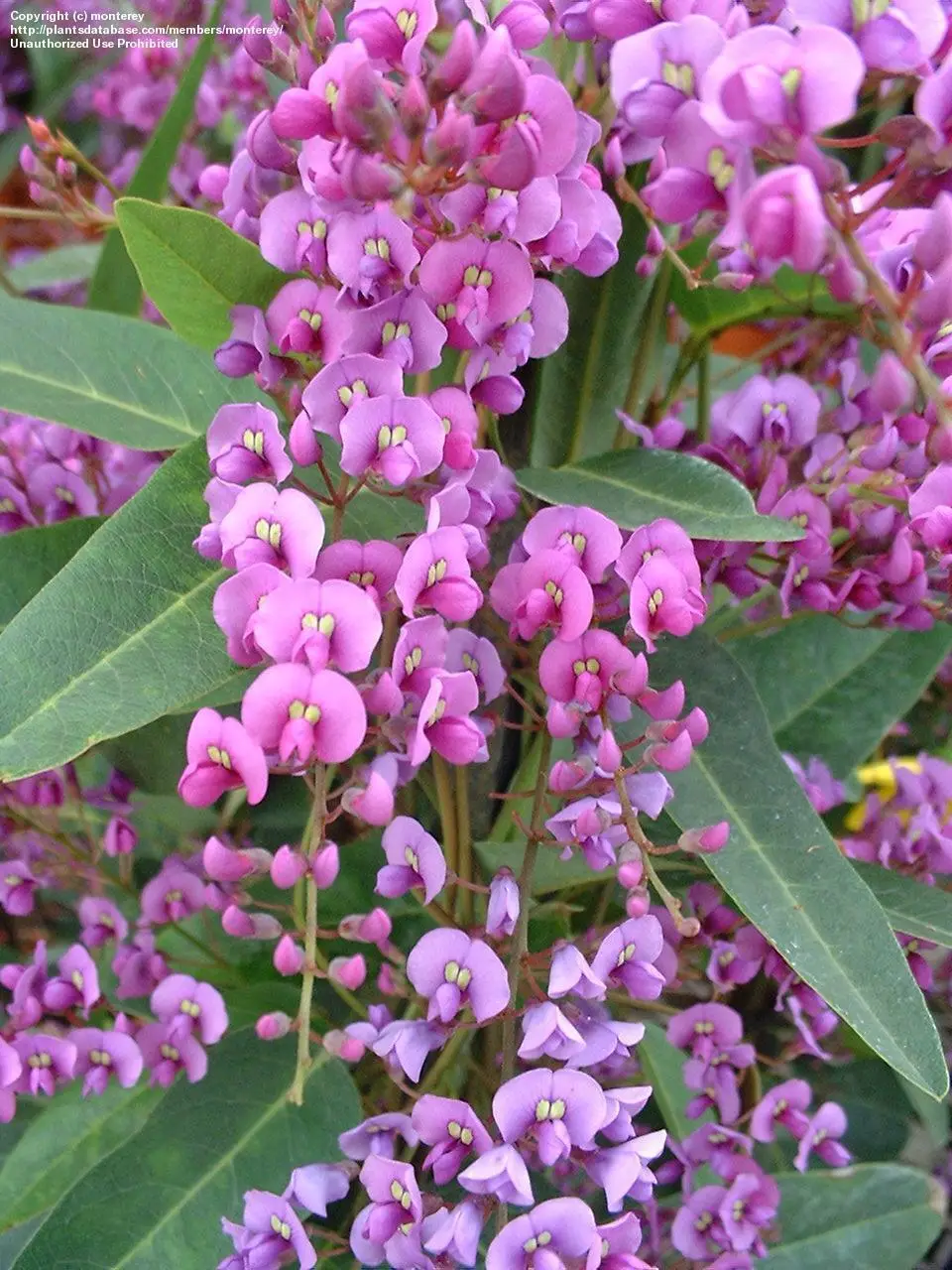
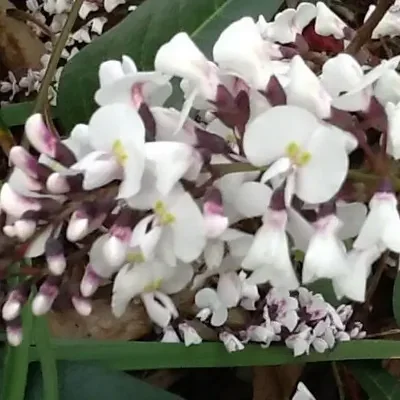
Soft pink pea-shaped flowers cascade from your trellis in winter-spring like a living watercolor—while native bees queue up to feast. Fast-growing, drought-tolerant, and a secret: the leaves are edible. Brew them for a delicate herbal tea, or watch this Australian beauty transform fences and structures into a nectar paradise. Easy to grow from seed.
€4.54
Imagine winter mornings transformed by cascades of blushing pink blooms that seem to glow against your garden’s bare scaffolding. This is Hardenbergia violacea ‘Climbing Form’ at its finest—a Western Australian native that has enchanted gardeners for centuries with its delicate, abundant flowers and restless, rambling spirit.
Native to the sandy coastal regions and open woodlands of Western Australia, Hardenbergia violacea has evolved into a plant of remarkable character. Unlike flashy ornamentals that exhaust themselves in a single season, this species practices a quieter magic: it appears when the garden most needs color and life. The climbing form, with its wiry stems reaching several meters, becomes a vertical gardener’s dream—weaving through trellises, softening rigid fence lines, and creating living screens with apparent effortlessness.
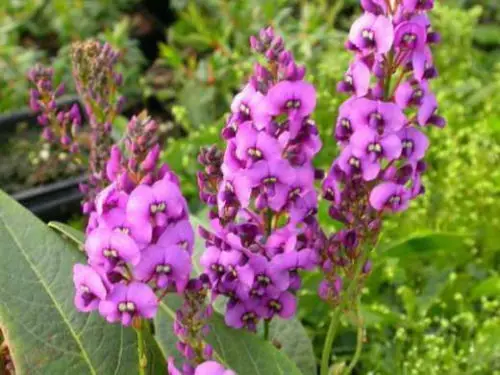
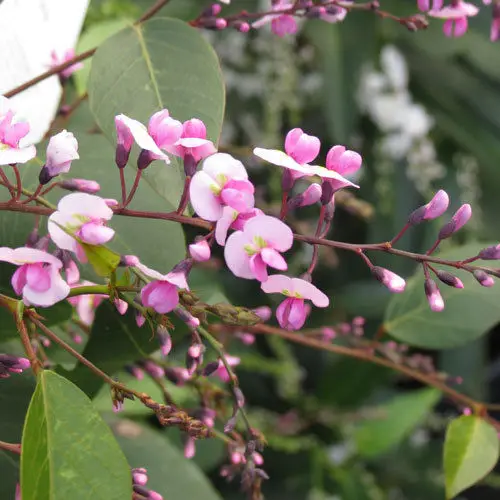
But here’s where passion meets practicality: this plant is a pollinator magnet wrapped in edible leaves. From late winter through spring, your coral pea vine produces thousands of soft pink, pea-shaped flowers in hanging racemes—each one a tiny beacon drawing native bees, beetles, and hoverflies when they need it most. The flowers resemble miniature sweet peas and appear in such abundance that a mature plant becomes a living restaurant for early-season pollinators rebuilding their populations. Beyond their ornamental drama, the leaves are genuinely edible: steep them fresh for a subtly sweet herbal drink, or include them in traditional preparations. Early Australian bushcraft practitioners understood this dual nature—the plant provides both beauty and sustenance. Plus, as a nitrogen-fixing legume, every plant you grow quietly improves your soil’s health, making future plantings thrive.
Growing Hardenbergia violacea ‘Climbing Form’ is refreshingly straightforward. Sow seeds in spring at 18-22°C (the hard seed coat appreciates scarification or a 24-hour soak in warm water beforehand). The seedlings emerge readily and grow with vigorous enthusiasm—this is a fast-growing vine that won’t demand your constant attention. Once established, it becomes remarkably drought-tolerant, asking only for well-drained soil and full sun to partial shade. In full sun, flowering is most abundant and reliable. The plant handles both clay and sandy soils with equanimity, showing the adaptive resilience of its native habitat. Height reaches 5-7 meters on support structures, making it ideal for tall trellises, pergolas, or fence coverage. After flowering, light pruning encourages dense growth and prevents legginess—a simple task that rewards you with even more blooms next season.
There’s something profoundly satisfying about growing a plant that demands little while giving so generously: pollinators get food, your palate gets tea, your soil gets nitrogen, and your garden gets the kind of living architecture that can’t be bought pre-made. When you see native bees mobbing those pink flowers on a cool winter morning, when you taste the delicate sweetness of a leaf-steeped drink, you’ll understand why gardeners who know this gem refuse to garden without it. This is not a plant that compromises. Grow it from seed, watch it climb, and let it become the seasonal punctuation your garden has been waiting for.
Only logged in customers who have purchased this product may leave a review.
Reviews
There are no reviews yet.