Description
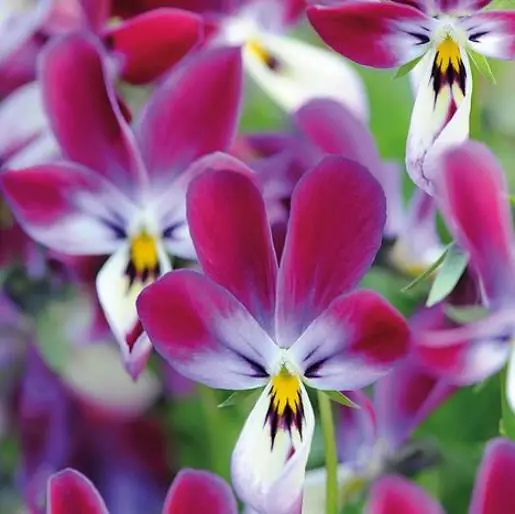
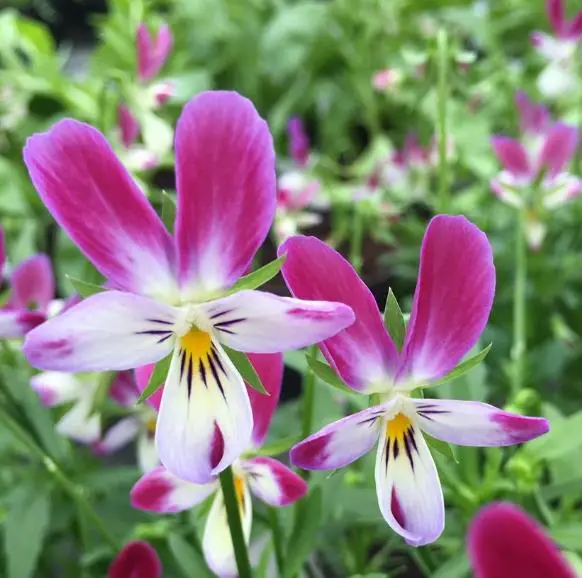
Viola x wittrockianna cv. Bunny ears was consecrated as a favorite gathering the very first place in the violas festival of 2018.
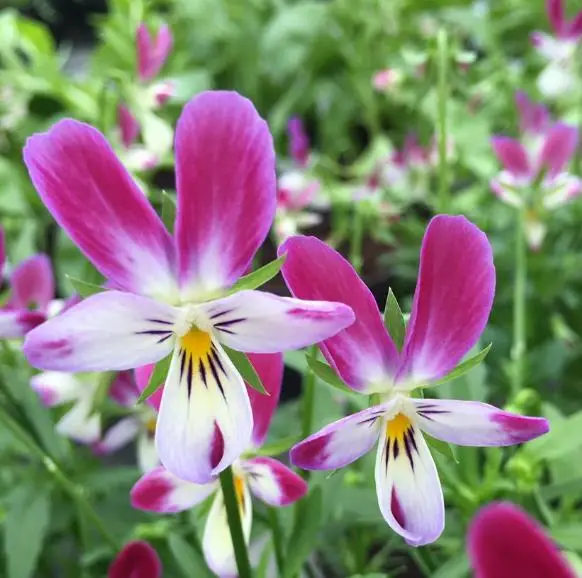
Small and daring violas that keep that classic pansy face under unusually long top petals like bunny ears.
The mime and color of all the gardens for its beautiful flowering and soft aroma that permeate and enchant the world outside.
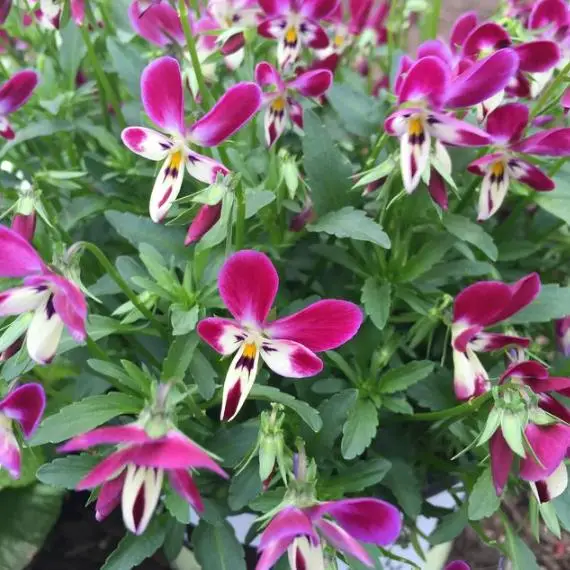
Despite their size, these viola plants pack a true floral impact, promote lovely surrounds, frame paths and often surprise us in gaps in walls or in ornamental rock clusters; can make beautiful massifs, flowerbeds and bibs.
In addition to its unique flowering form, violets bunny ears are winter resistant, have good heat tolerance in summer and blooms profusely throughout the year.
Edible flowers:
Violas are among the most popular edible flowers, and with good reasons. All the flowers are beautiful, but the violas are easy to grow and are among the few flowers that really taste very good. Edible flowers usually lend their color to green salads, decorate sweets, cakes and pies, jellies, jams and teas; add charm to the dishes of great chefs of gourmet cuisine. The flowers can also be crystallized for various uses in the gastronomy, they are perfect in ice cream, cookies and other desserts.
Germination Guide
🌍 European hybrid (Viola x wittrockiana), derived from Viola tricolor, Viola altaica, and Viola lutea
Easy
Viola x wittrockiana 'Bunny Ears' is a short-lived evergreen perennial pansy hybrid prized for its distinctive elongated upper petals resembling rabbit ears and hyacinth-scented blooms. These cold-hardy charming plants are widely grown as annuals or biennials and germinate reliably when provided complete darkness at cool temperatures between 60-70°F. Starting seeds indoors 10-12 weeks before the last spring frost produces blooming-size plants ready for early spring and fall gardens.
Germination
Germination time
Expect germination in
7 – 20 days
Temperature
Min 60°C
Ideal 65°C
Max 70°C
Light
🌑 Darkness required
Substrate moisture
💧 Medium
Sowing depth
Lightly covered
Seed Pre-treatment
-
💧
Soaking — 12 hours
Soak seeds in room-temperature water for 12-24 hours to enhance germination and improve imbibition
-
❄️
Cold stratification — 7 days at 4°C
-
📋
Additional notes
Soaking seeds improves germination rate. Optional cold stratification for 7-14 days at 4°C (33-39°F) can enhance germination, particularly beneficial for fall sowing
Substrate & Container
Recommended substrate
Sterile seed-starting mix, well-draining, soilless medium
Recommended container
Cell trays, shallow containers, flats with drainage holes
Growing Tips
Essential germination tips: (1) Seeds MUST be kept in complete darkness during germination—cover trays with opaque plastic, cardboard, or place in a dark room or closet; (2) Maintain soil evenly moist but never waterlogged; check daily for germination after 7-14 days; (3) Once majority of seeds have germinated, immediately remove from darkness and place under grow lights (12-16 hours daily) in a cool location; (4) These cool-season plants prefer temperatures around 60-65°F after germination; avoid temperatures above 70°F which can inhibit germination; (5) Lightly press seeds into medium surface or sow 1/8-1/4 inch deep; do not bury deeply; (6) Use bottom watering to avoid displacing tiny seeds; (7) Transplant seedlings when they develop 2-3 true leaves into individual cells or pots; (8) Gradually harden off seedlings over 1-2 weeks before outdoor planting; (9) Plant outdoors after last frost date in cool weather locations for best performance; (10) Prefer 6+ hours of sunlight daily and well-drained, fertile soil rich in organic matter; (11) Avoid planting in same location for more than 3 years to prevent fungal buildup (Pythium); (12) These plants are highly salt sensitive and prefer cool growing conditions between 40-65°F.
Only logged in customers who have purchased this product may leave a review.


Reviews
There are no reviews yet.