
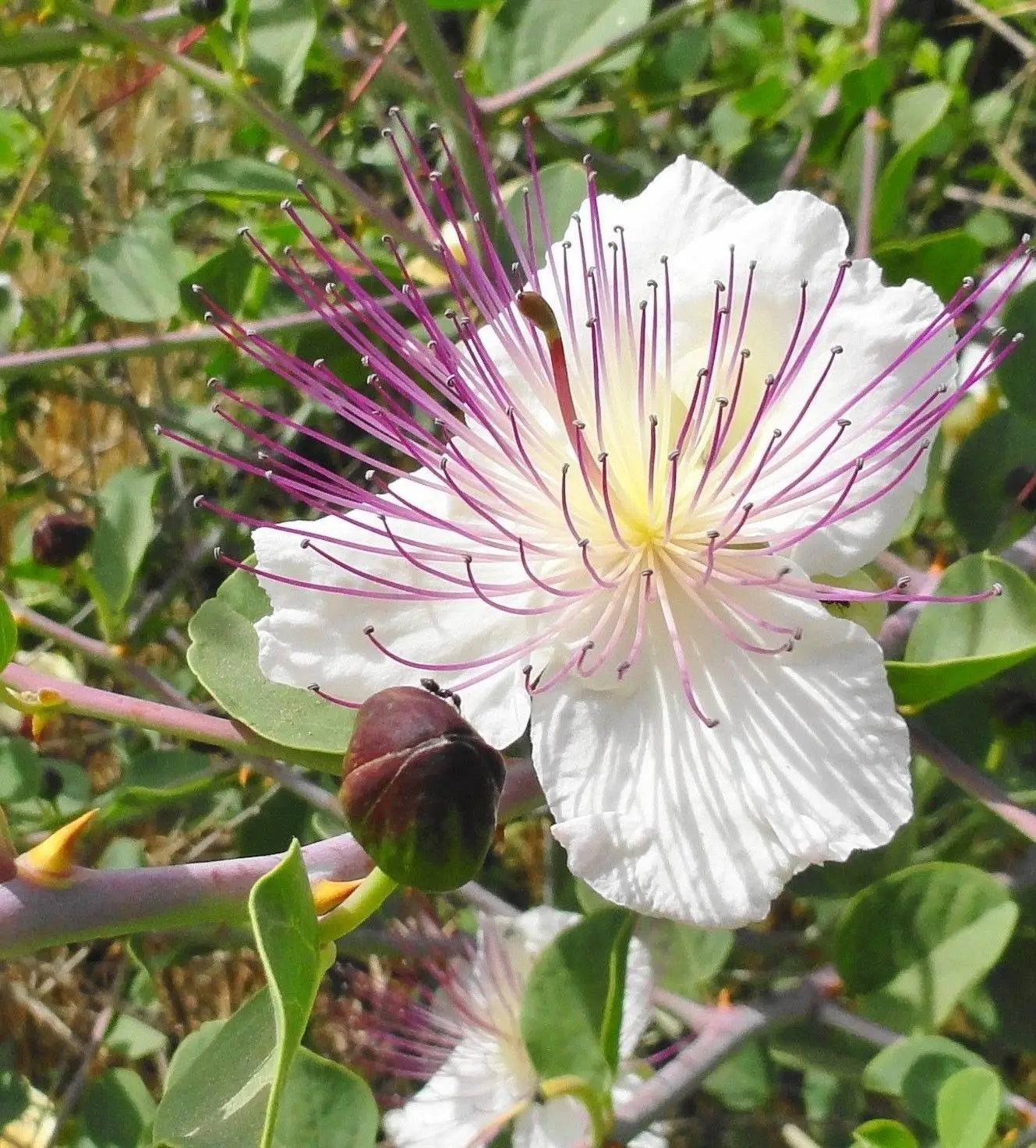
Grow the legendary Mediterranean caper—those salty, pungent flower buds that transform sauces, salads, and fish into something unforgettable. Both the tight flower buds and the fruits of the caper bush are edible, and summer blooms are spectacular white flowers bearing a dense tuft of long stamens—like a beautiful explosion. Thrives in full sun with excellent drainage and is rema
€1.92
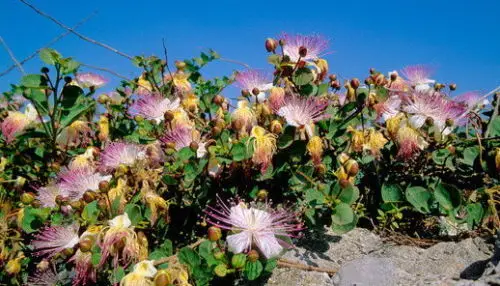
Capparis spinosa, the caper bush, also called Flinders rose, is a perennial plant that bears rounded, fleshy leaves and large white to pinkish-white flowers—and it is one of the world’s most coveted culinary plants.
Capparis spinosa is native to almost all the circum-Mediterranean countries, where it has thrived in hostile terrain for millennia. It grows wild in sandy or gravelly soils, rocky hillsides, cliffs, stone walls and rock crevices. This ancient plant carries with it the romance of Mediterranean gardens, yet demands almost nothing from you—a rare combination of beauty and resilience.
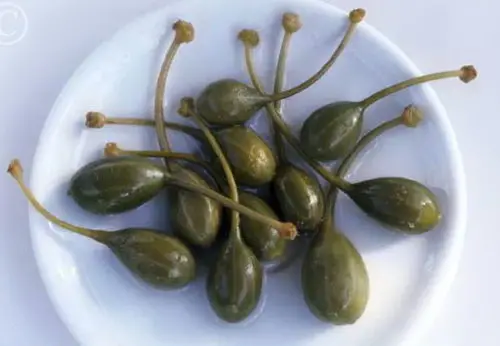
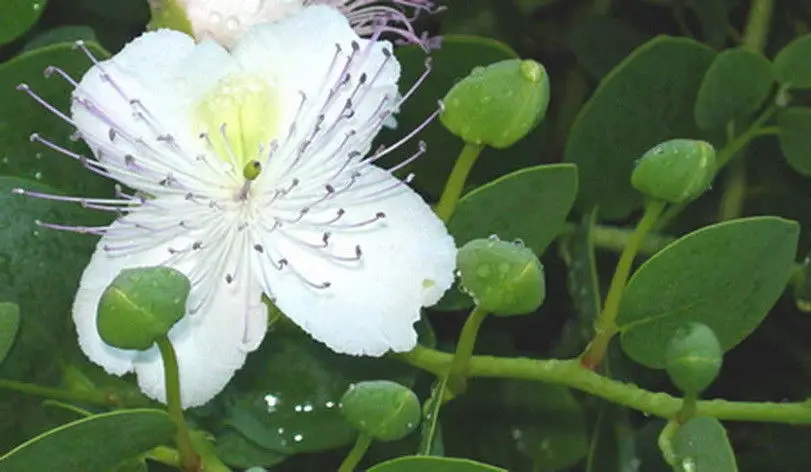
But the true magic lies in the capers themselves. The unopened flower buds are picked and preserved in salt or pickled in vinegar as culinary capers enjoyed world-wide as garnishes or as pungent flavor additives to sauces, butters, salads, fish, meats, pizza toppings and hors d’oeuvres. These are those salty, slightly astringent and pungent, pea-sized, dark green things used as a seasoning, especially in Sicilian and southern Italian cooking, like chicken piccata or spaghetti puttanesca, or served with lox. Buds are often picked daily because the youngest buds have the best quality. What makes this extraordinary is that a single mature plant can produce continuously throughout the summer—daily harvests yielding anywhere from a few dozen to several hundred buds depending on plant size and how diligently you harvest. A single established plant can easily provide enough capers for a household’s annual use. Beyond the buds, unpicked buds open to flowers which are followed by oblong, multi-seeded, edible fruits known as caperberries, and young shoots with leaves may also be picked and pickled. The young shoots are cooked and eaten like asparagus. This is not a plant with one use—it is a multi-generational food source, an edible landscape plant that pays dividends year after year.
If you allow the flower buds to mature and open, you’ll discover why gardeners who haven’t tasted capers still fall in love with this shrub. The large, fragrant flowers open at dawn and fade by sunset, lasting just one day, with blooms ranging from white to pinkish-white and crowned with long, showy purple-red stamens, each flower typically measuring 2–3 inches across. The flowers are complete, sweetly fragrant, and showy, with four sepals and four white to pinkish-white petals, many long violet-coloured stamens, and a single stigma usually rising well above the stamens. Blooming begins in late spring and continues through early fall, peaking in early to midsummer. Other parts of Capparis plants are used in the manufacture of medicines and cosmetics, adding to the plant’s multifunctional appeal.
Growing Capparis spinosa is remarkably forgiving once you understand its origins. It requires a hot, well-drained dry position in full sun and is tolerant of drought. It thrives in dry, rocky, and well-draining soils and is well-suited to regions with a Mediterranean climate, characterized by hot, dry summers and mild, wet winters. It does well in a wide range of temperate climates in USDA Zones 8 to 10 and can survive severe freezes. Unlike many culinary plants that demand pampering, capers actually suffer from too much attention—excess water, heavy nitrogen fertilizer, and humid summers are its enemies. Growing caper plants in containers is ideal if you live outside USDA zones 8–10; containers are a great option for giving this Mediterranean shrub the hot, dry conditions it loves while
Only logged in customers who have purchased this product may leave a review.
Reviews
There are no reviews yet.