Description
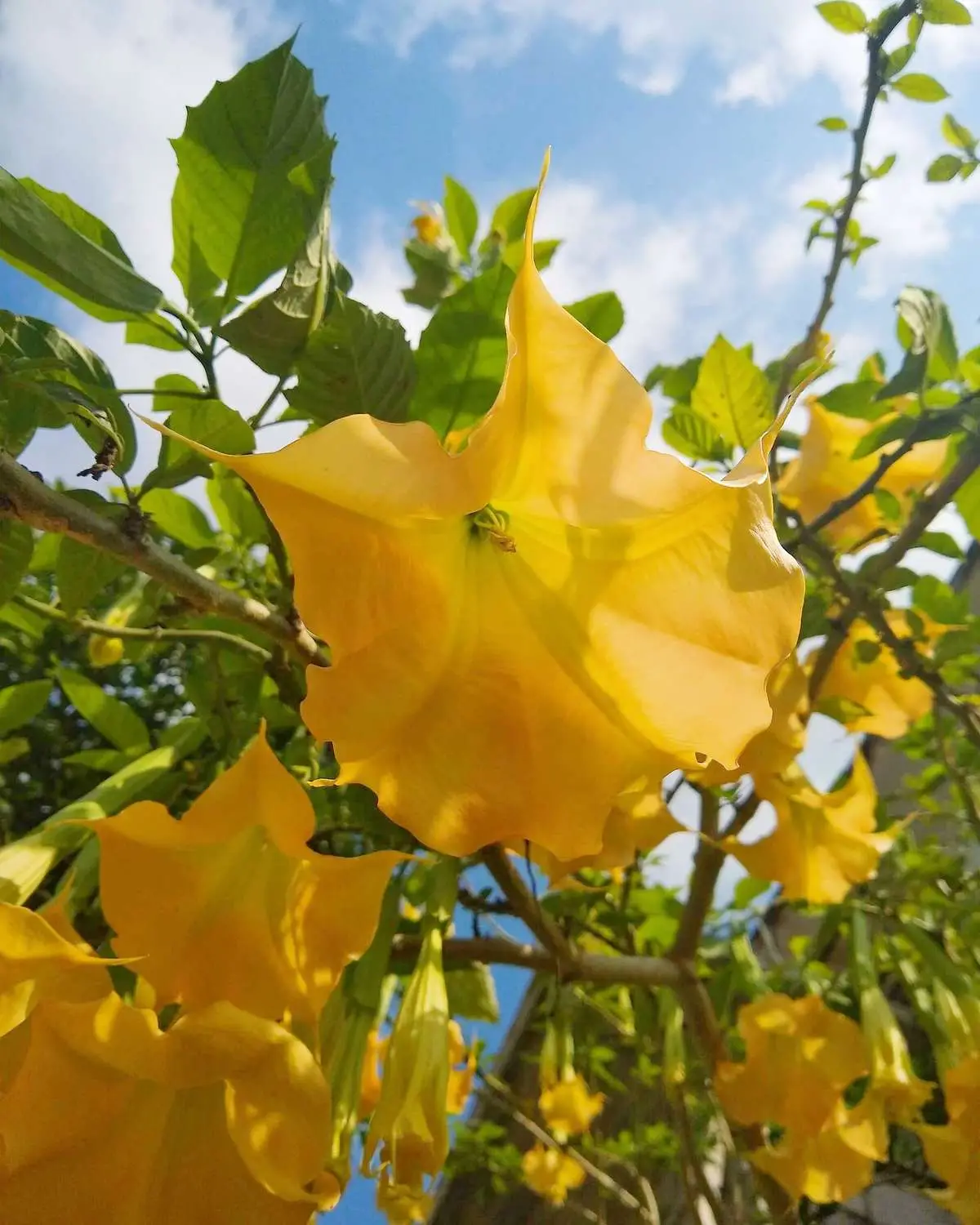
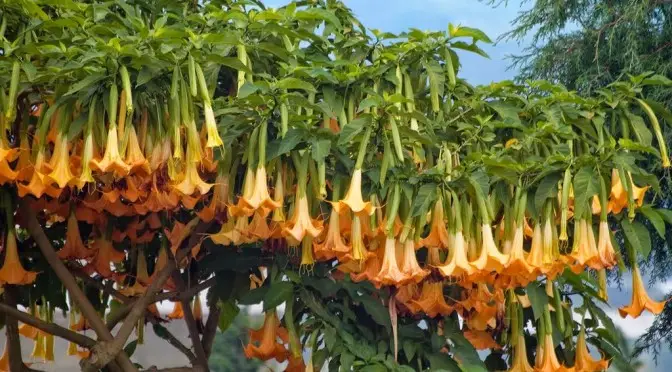
Brugmansia aurea, the golden angel’s trumpet, is a species of flowering plant in the nightshade family Solanaceae, endemic to Ecuador. Since March 2014, it has been listed as Extinct in the Wild by the IUCN but before that, it was listed as Vulnerable.
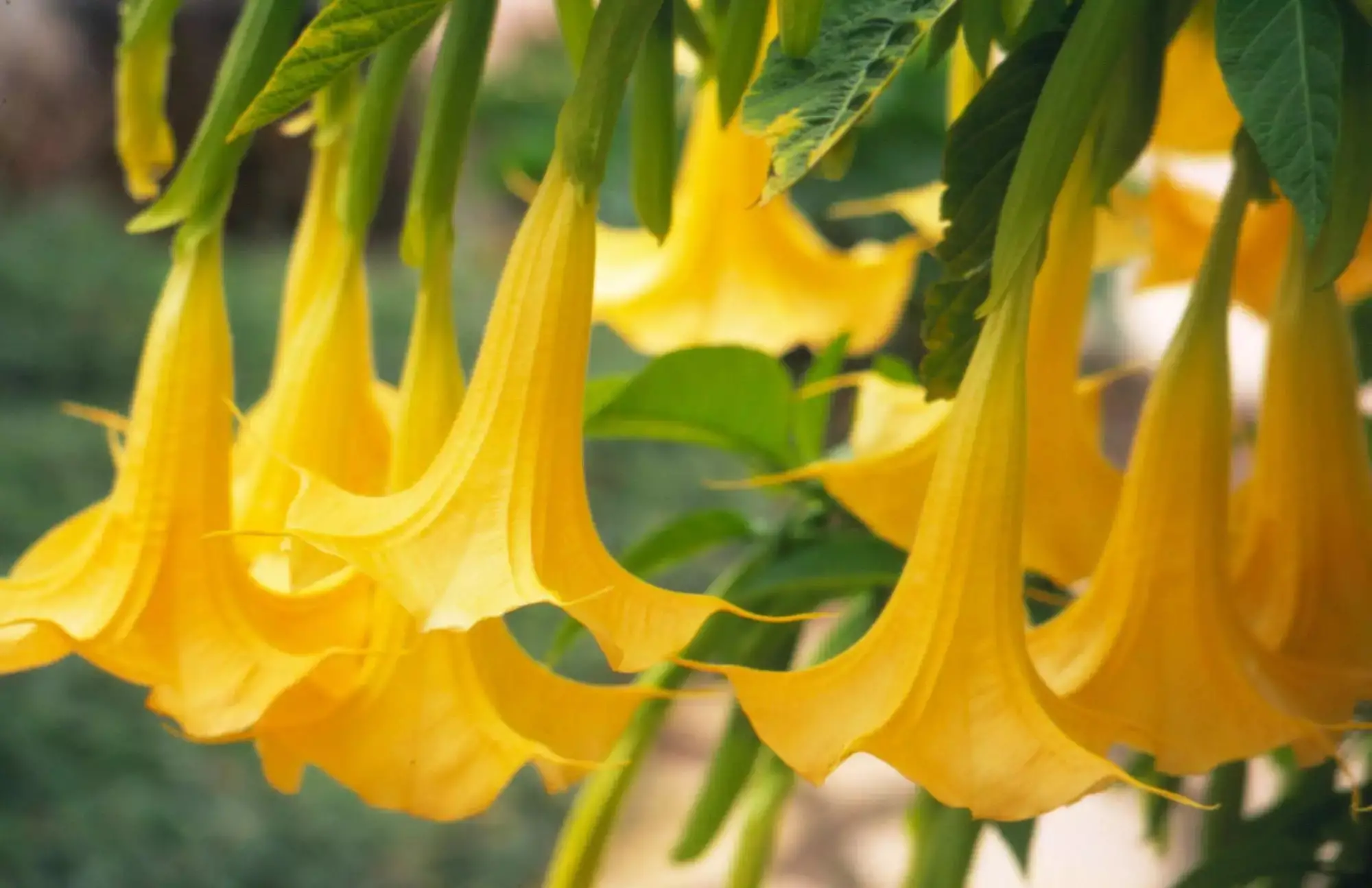
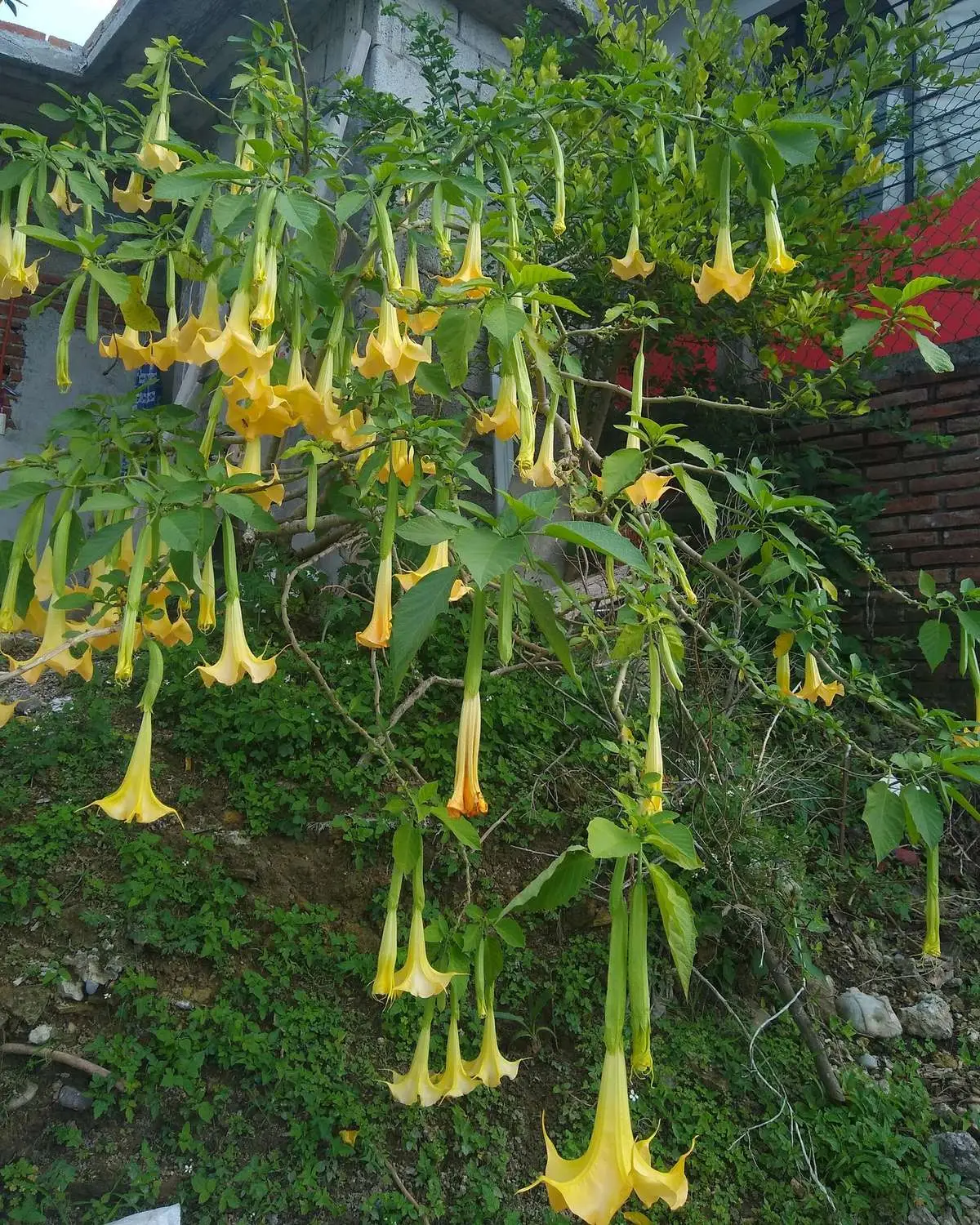
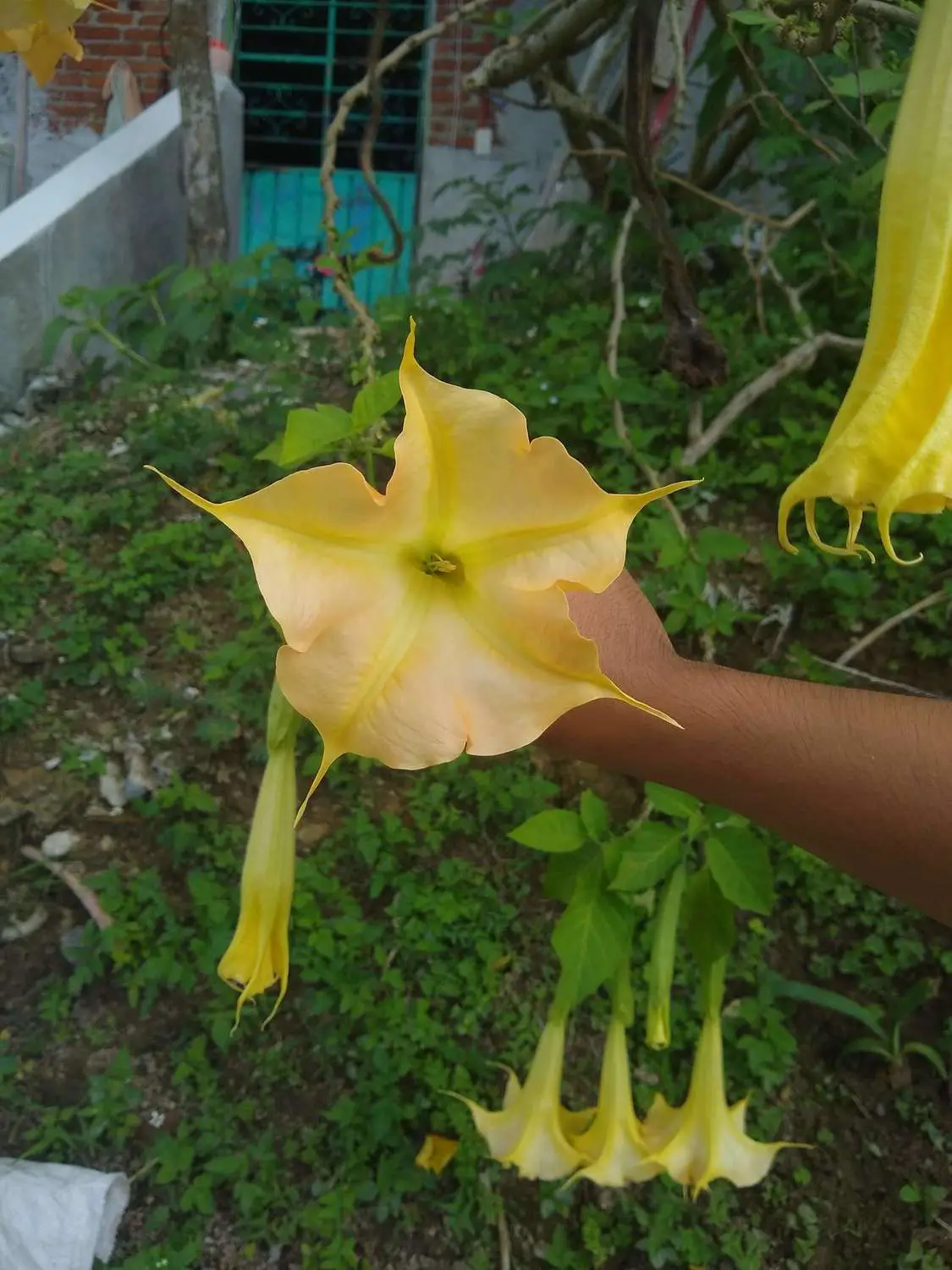
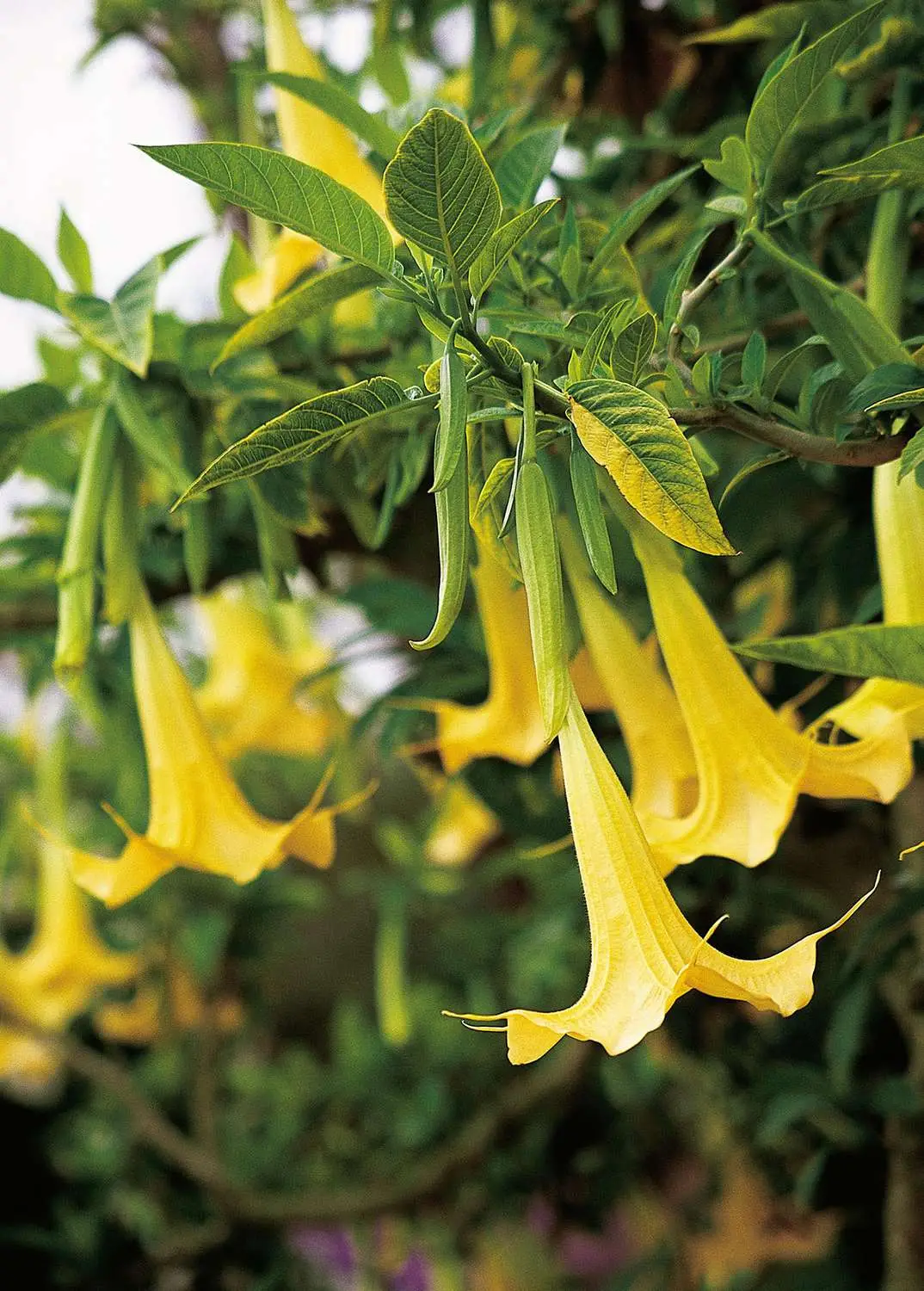
A large, fast growing shrub with soft branches, large and soft furry leaves, and scentless, long, trumpet-shaped, golden yellow flowers. Originally native to high altitudes in the Andes between 2000 and 3000 m (6600 and 9800 ft.) from Colombia to Bolivia, it is a popular ornamental that adapts to a range of warm-temperate climates.
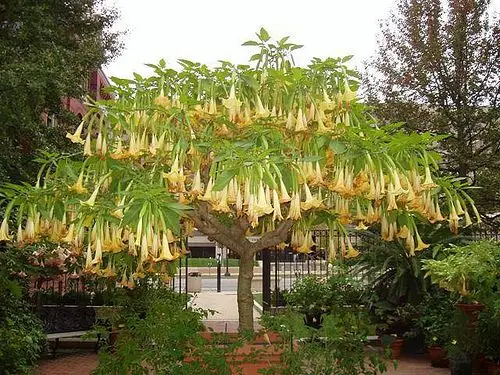
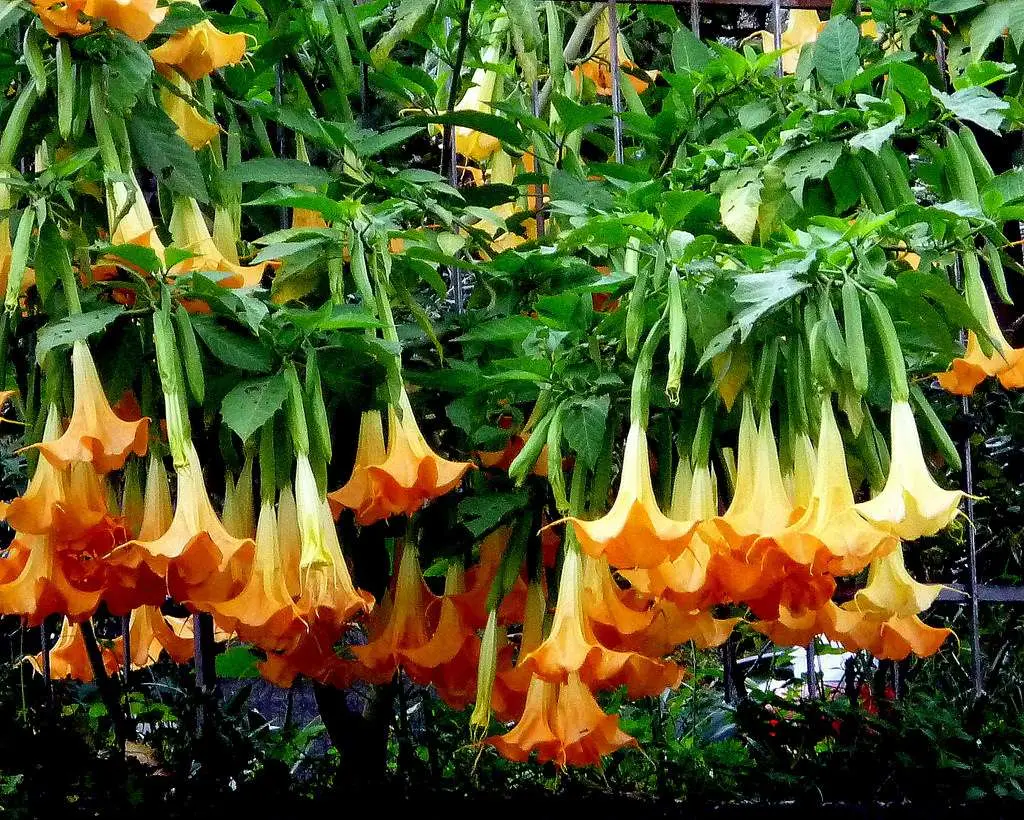
Despite being declared extinct in its native range, Brugmansia aurea is a popular ornamental and is widely cultivated, like the other members of its genus. It is sold and grown as a garden plant, described as a large evergreen subtropical shrub capable of growing to 20 ft (6.1 m) in height. The large, pendent, trumpet-shaped yellow or white blooms appear in summer and autumn in the Northern Hemisphere. The pleasant fragrance is strongest in the evening.
Several cultivars exist, notably ‘Grand Marnier’ with peach-coloured flowers. It dislikes temperatures below 5 °C (41 °F), but may be placed outside in a sheltered spot during the summer months.
All parts of the plant are poisonous.
Germination Guide
🌍 Andes mountains of Colombia, Ecuador, and Venezuela at elevations 2000-3500m
Moderate
Brugmansia aurea, commonly called golden angel's trumpet, is a warm-growing species native to high Andean regions. It has large, fragrant golden-yellow trumpet-shaped flowers and is adapted to subtropical montane climates with warm humid days and cool nights.
Germination
Germination time
Expect germination in
14 – 42 days
Temperature
Min 15°C
Ideal 20°C
Max 25°C
Substrate moisture
💧💧 High
Sowing depth
Lightly covered
Seed Pre-treatment
-
💧
Soaking — 24 hours
Soak seeds in slightly warm water for 24 hours to soften seed coat before planting
-
🔨
Mechanical scarification
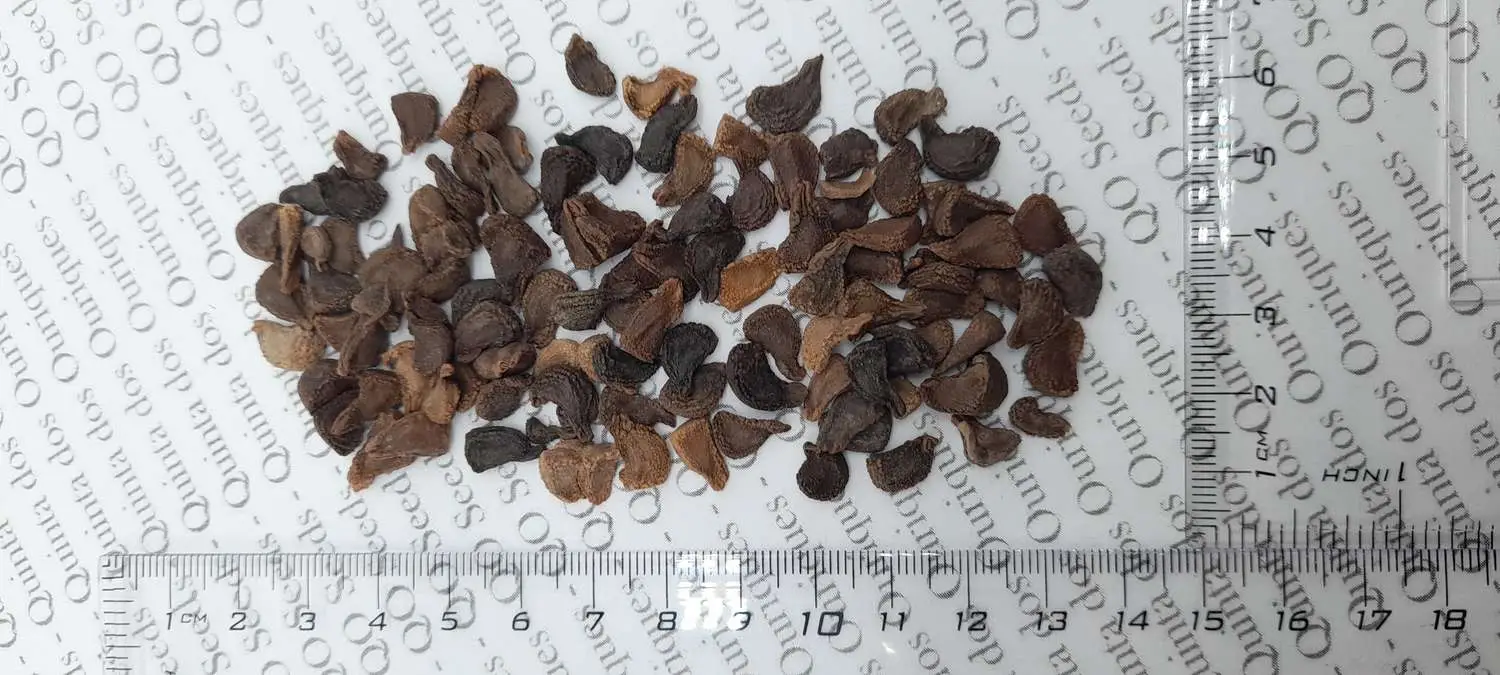
Seeds have thick corky angular seed coat that can be nicked or peeled, though not strictly necessary
-
📋
Additional notes
Disinfecting soak with hydrogen peroxide recommended after initial water soak
Substrate & Container
Recommended substrate
sterile seed starting mix, peat and coarse sand mixture, or well-draining sandy compost
Recommended container
seed trays or small pots with drainage
Growing Tips
Seeds require light to germinate - do not bury deeply. Press lightly into soil surface. Maintain high humidity with plastic cover. Avoid waterlogged conditions to prevent damping off. Fresh seed germinates more readily than older seed. Can take up to several months in some cases. Seedlings need bright light after germination.
Only logged in customers who have purchased this product may leave a review.


Reviews
There are no reviews yet.