
Grow the palm that brings the holidays to life every single year. Adonidia merrillii bursts into brilliant scarlet-red fruit clusters each December—like living Christmas ornaments adorning a graceful, slender canopy of arching green fronds. Compact enough for small spaces, fast-growing, and nearly maintenance-free. Start from seed and watch tropical elegance unfold.
€5.82
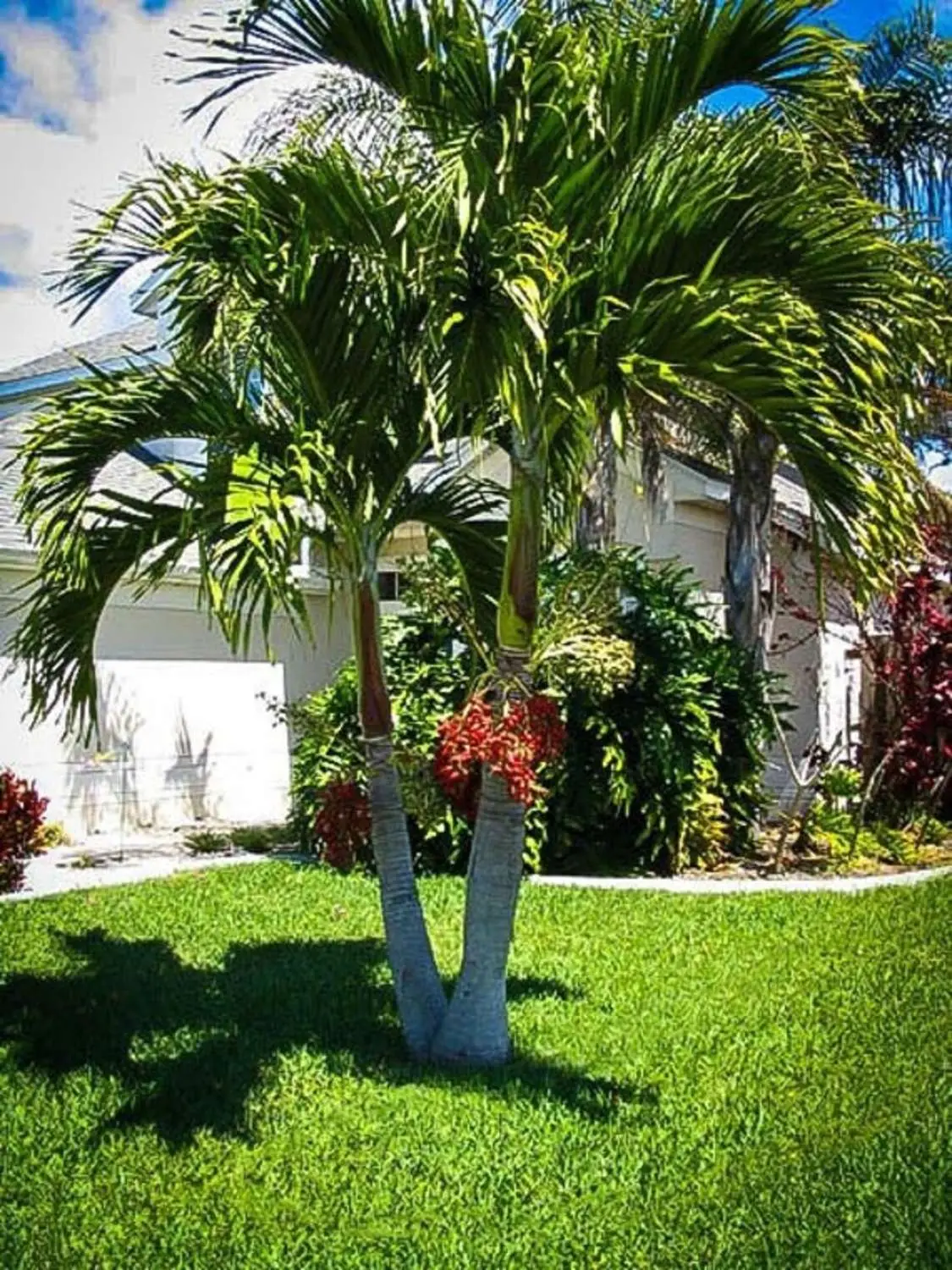
Christmas palm’s main attraction is the fall and winter appearance of very showy clusters of glossy, bright red fruits. Imagine your garden transformed into a living holiday display, year after year—no tinsel required, just nature’s purest festive magic.
Native to portions of the Philippines and Malaysia, this palm thrives in tropical environments. The palm was cultivated for centuries in the Philippines before becoming a staple in the West. The genus name Adonidia is a diminutive of the Latin Adonis, a lover of the goddess Venus—and there’s something deeply romantic about growing a tree named for desire itself.
**The Fruit Show: Nature’s Holiday Decoration**
In summer, large clusters of cream colored flowers appear at the base of the canopy followed by light green fruits around 1″ in diameter. The fruits mature to bright red in winter. The common name, “Christmas palm,” comes from the clusters of bright red fruits that adorn these trees in late fall and winter, giving the plants the appearance of being decorated for the holidays. These aren’t subtle accents—they’re bold, glossy, clustered jewels that hang like ornaments from December through early winter. Post-bloom, it produces bright red fruits, about 1 inch (2.5 cm) in diameter, around Christmastime. Every single year, this palm delivers a seasonal gift without demanding constant fussing. It’s the only landscape plant that naturally commemorates the holidays.
**Visual Elegance: Compact Perfection**
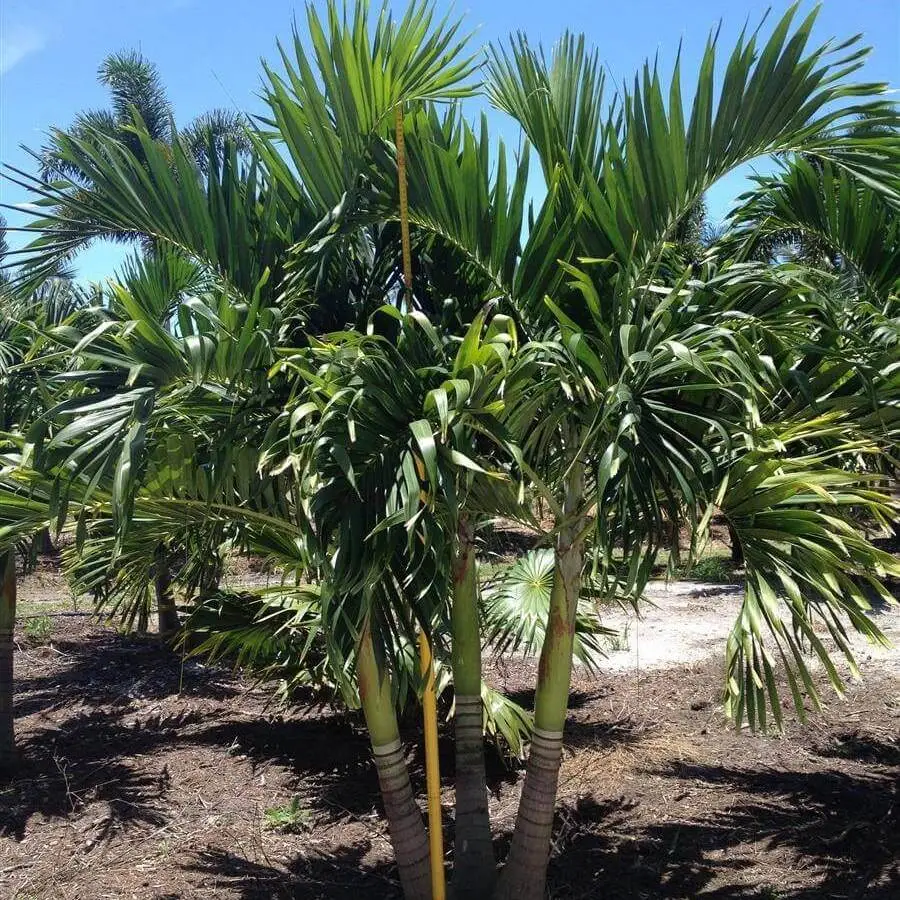
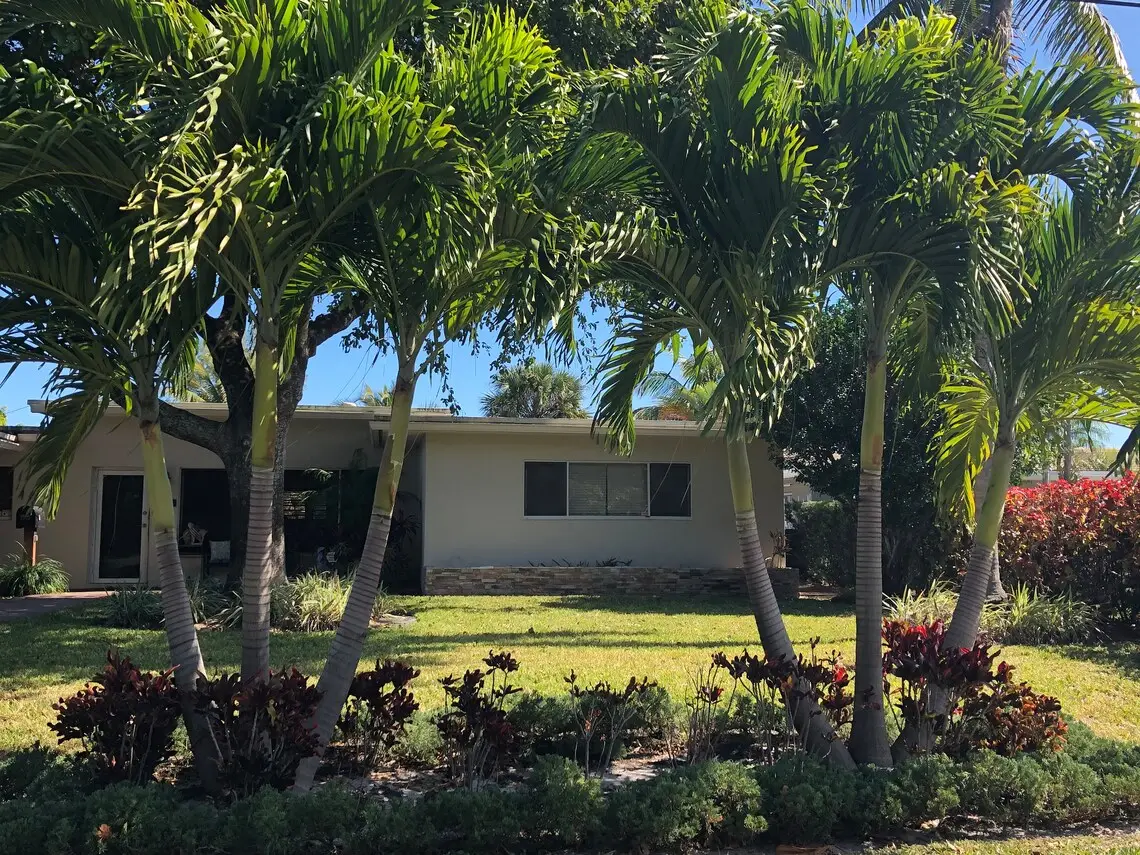
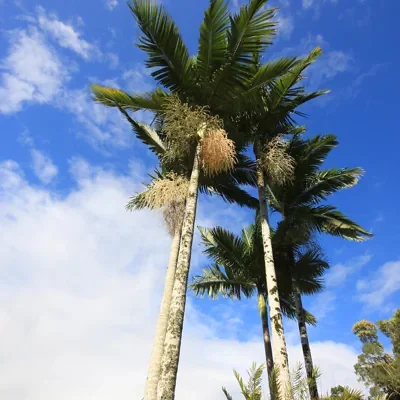
The slender, grey trunks support stiff, arching, bright green leaves (4-5′ long). It is distinguished by its smooth, slender trunk, topped with a crown of glossy, arching fronds. What makes Adonidia special is its refined proportions—few other palm species are so well suited for small sites. Individuals can reach up to 25′ tall and grow relatively quickly compared to other species of palm. Although these are solitary palms, they are often planted in the landscape in groupings of three to give a multi-stemmed appearance. Single or triple, compact or lush—it adapts to your vision.
**Growing Beauty from Seed: Easy to Medium**
The Christmas palm is a fast-growing, tropical perennial in the palm family (Arecaceae). It is native to the Philippines but grown the world over in warm climates. Here’s why it’s a joy to start from seed: This is considered an easy palm to germinate. The overwhelming majority of Christmas Palms in nurseries are seed-grown, as the species fruits readily and seeds germinate well. Germination in Christmas tree palm seeds happens fairly rapidly, and you should see sprouts in just a few weeks.
Once established, it grows fairly quickly to a height of about 6 feet, but very slowly thereafter, retaining its proportions for a long time. This palm can be grown in full sun or partial shade. It is not fussy about soil type, but it does require regular irrigation. Besides its aesthetic appeal, it’s low maintenance and can be used to enhance both indoor and outdoor spaces. Its small size makes it ideal for urban landscaping. They are self-pruning palms and require little to no maintenance. No constant pruning, no fussy demands—just a palm that respects your time.
For indoor cultivation, grow in peat-free houseplant compost in bright, filtered light or partial shade and keep at an optimal temperature of 18-28°C or minimum of 15°C. Water regularly, allowing the top inch or so of soil to dry out between waterings.
Only logged in customers who have purchased this product may leave a review.
Reviews
There are no reviews yet.