
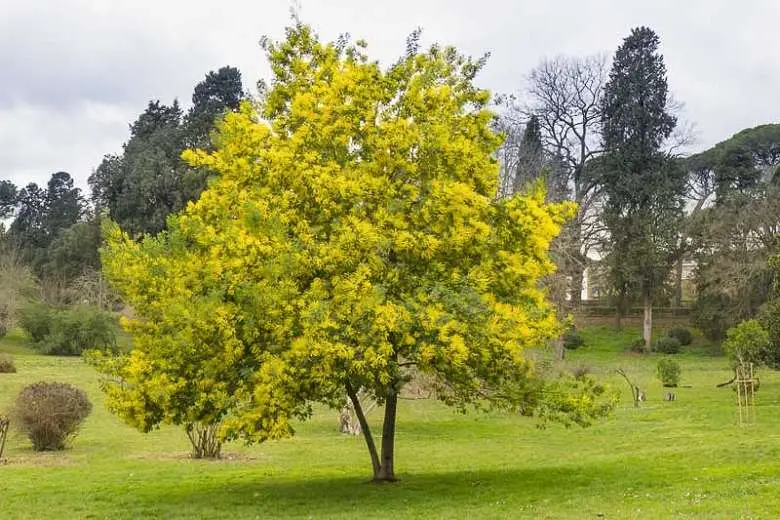

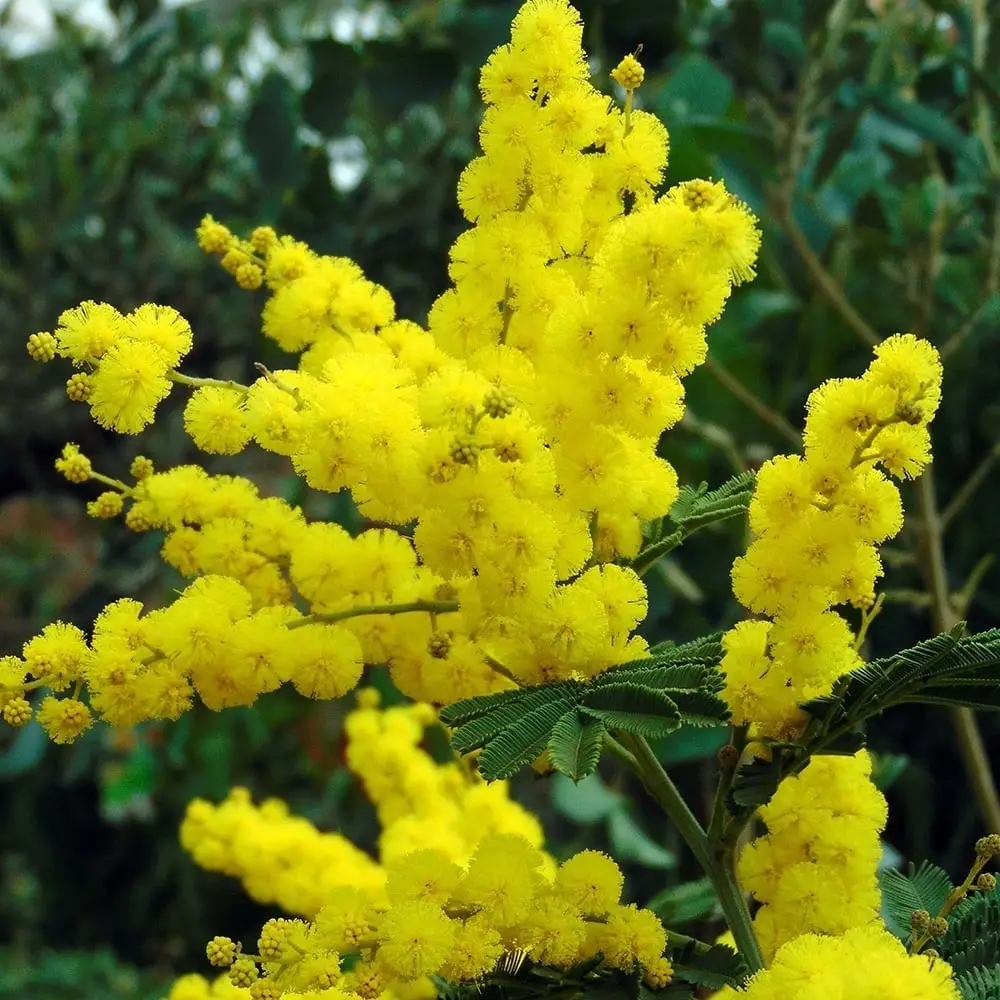
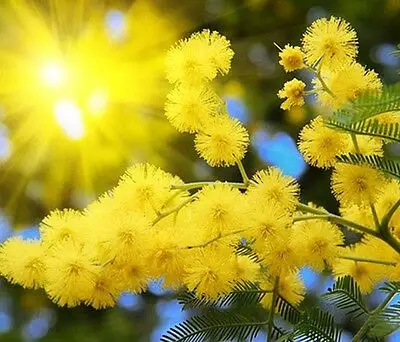
Winter-flowering masterpiece. Clouds of fragrant, brilliant yellow pompom flowers fill bare branches when gardens need them most. Rich in pollen, these blooms work as fresh or dried stems—the florist industry’s secret. Fern-like, silvery-blue foliage glows year-round. Fast-growing and easy from seed. Bring the scent of professional floristry into your own garden.
€5.17
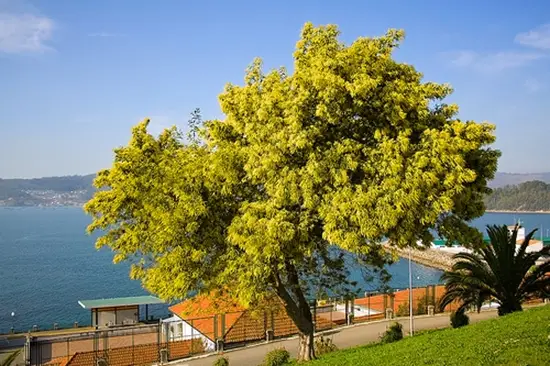
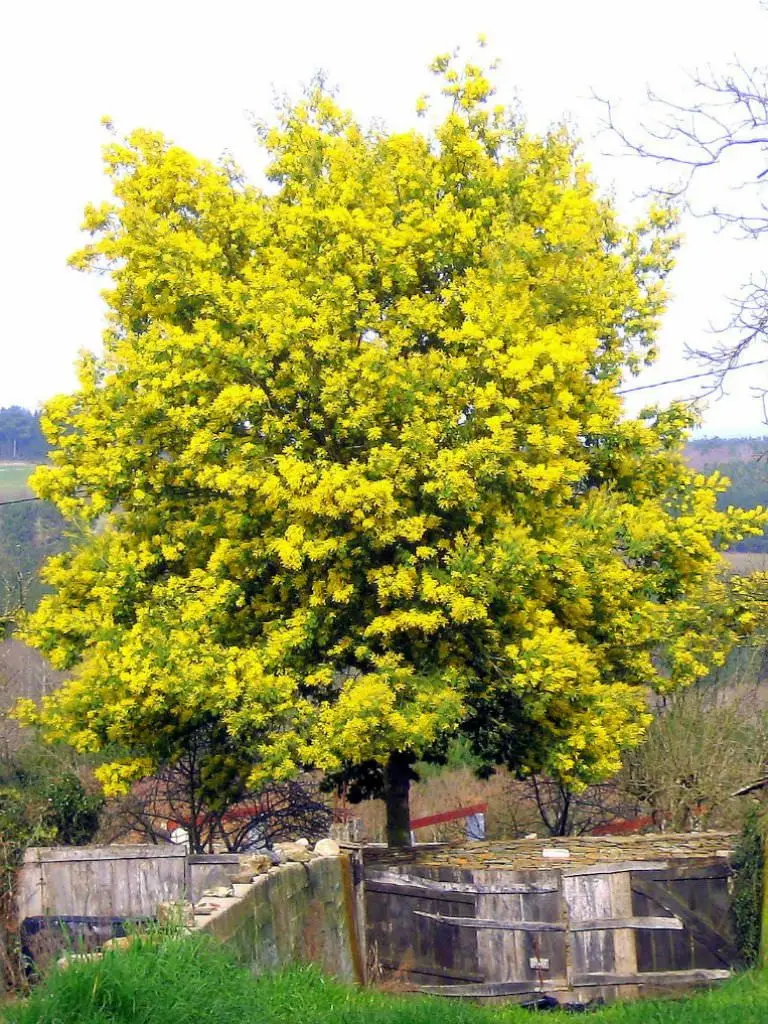
Watch winter transform. This Australian treasure erupts in clouds of golden, fragrant blooms precisely when the world craves color most—January through March in the Northern Hemisphere, July through November in the South. What you’re looking at is the very flower that fills professional bouquets, galleries, and florist coolers worldwide.
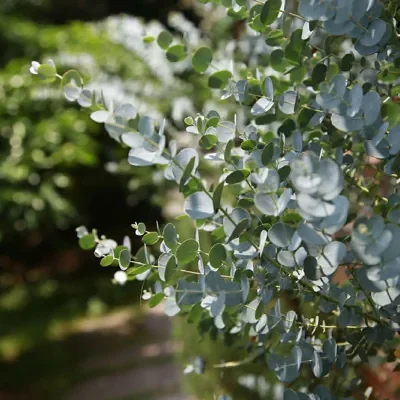
Acacia dealbata, the Silver Wattle, is native to southeastern Australia but has conquered Mediterranean gardens, European winter markets, and the hearts of flower professionals everywhere. Its common name ‘mimosa’ (in the florist trade) comes from those extraordinary spherical flower heads—thousands of delicate stamens compressed into golden pompoms no larger than a marble. The foliage is equally distinctive: finely divided, bipinnate, dusted with a silvery-blue bloom that catches light like frosted silver. Even the bark is ornamental—smooth, greenish-grey, becoming beautifully fissured with age. This is a tree that commands attention in every season, yet explodes with drama when it blooms.
Here’s what makes this species singularly valuable: florists and commercial growers prize it above almost all other wattles. The flowers are not merely beautiful—they’re commercially viable. Rich in pollen, they’re harvested fresh for high-end arrangements and also dry exceptionally well, holding their color and structure for months. The essential oil extracted from the flowers is a fixture in premium perfumery, used as a fixative in luxury fragrances (historically called ‘cassie’). Some gardeners even harvest and cook the flowers for fritters, and a food-grade gum naturally exudes from the trunk—a sweetish, edible substitute for gum arabic that was traditionally used by indigenous Australians. If you grow this tree, you’re not just cultivating beauty; you’re growing a plant with genuine, marketable harvest value. The nitrogen-fixing capacity is a bonus—your Silver Wattle enriches the soil while standing there looking magnificent.
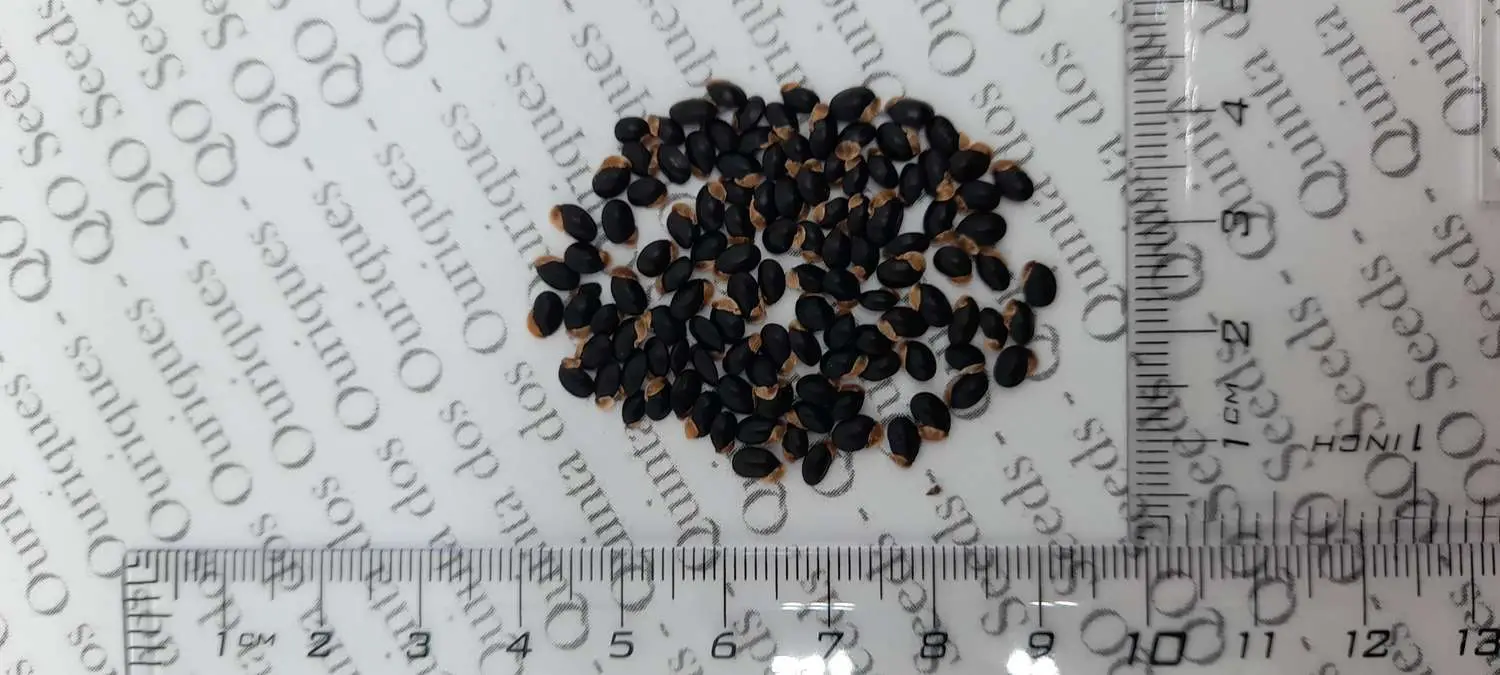
Growing Acacia dealbata from seed is straightforward and rewarding. Soak seeds in boiling water and let them cool before sowing into well-draining, acidic to neutral soil. The tree is fast-growing—expect 25–50cm or more per year—and blooms prolifically from just 3–5 years of age. It needs full sun (no shade tolerance), well-drained soil, and a sheltered position away from strong winds. Hardy to around -5°C (23°F), it thrives in Mediterranean and temperate climates but can be grown in containers in cooler regions and moved indoors over winter. Once established, it’s drought-tolerant and asks little of you. The tree lives 20–30 years, so you’re making a lasting investment. It’s one of the hardiest acacias and has earned the Royal Horticultural Society’s Award of Garden Merit—proof of its garden-worthiness across varied climates.
Grow this from seed and you’ll stand in your garden in the heart of winter, surrounded by the scent professionals pay for, holding stems of gold that can grace a vase or a florist’s portfolio. You’re not just growing a tree; you’re growing luxury, fragrance, and the quiet pride of cultivating something genuinely rare. Start your seeds today.
Only logged in customers who have purchased this product may leave a review.
Reviews
There are no reviews yet.