
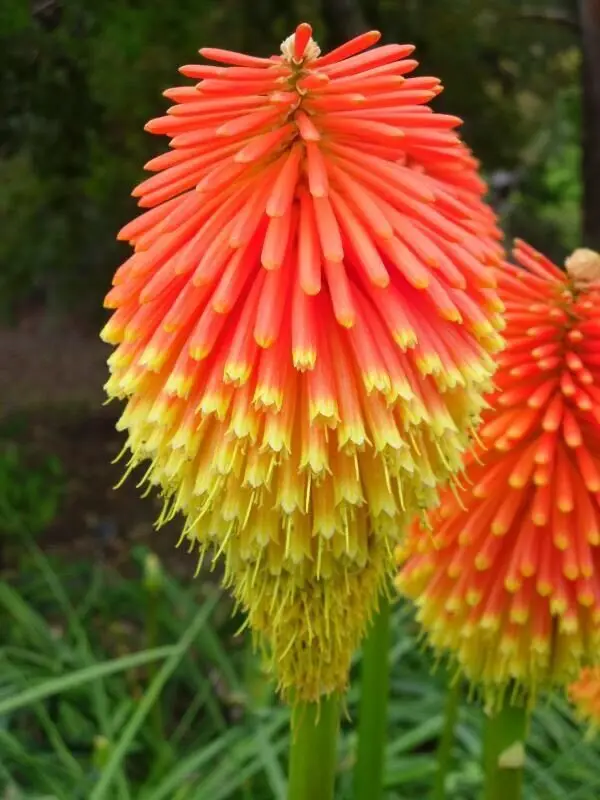
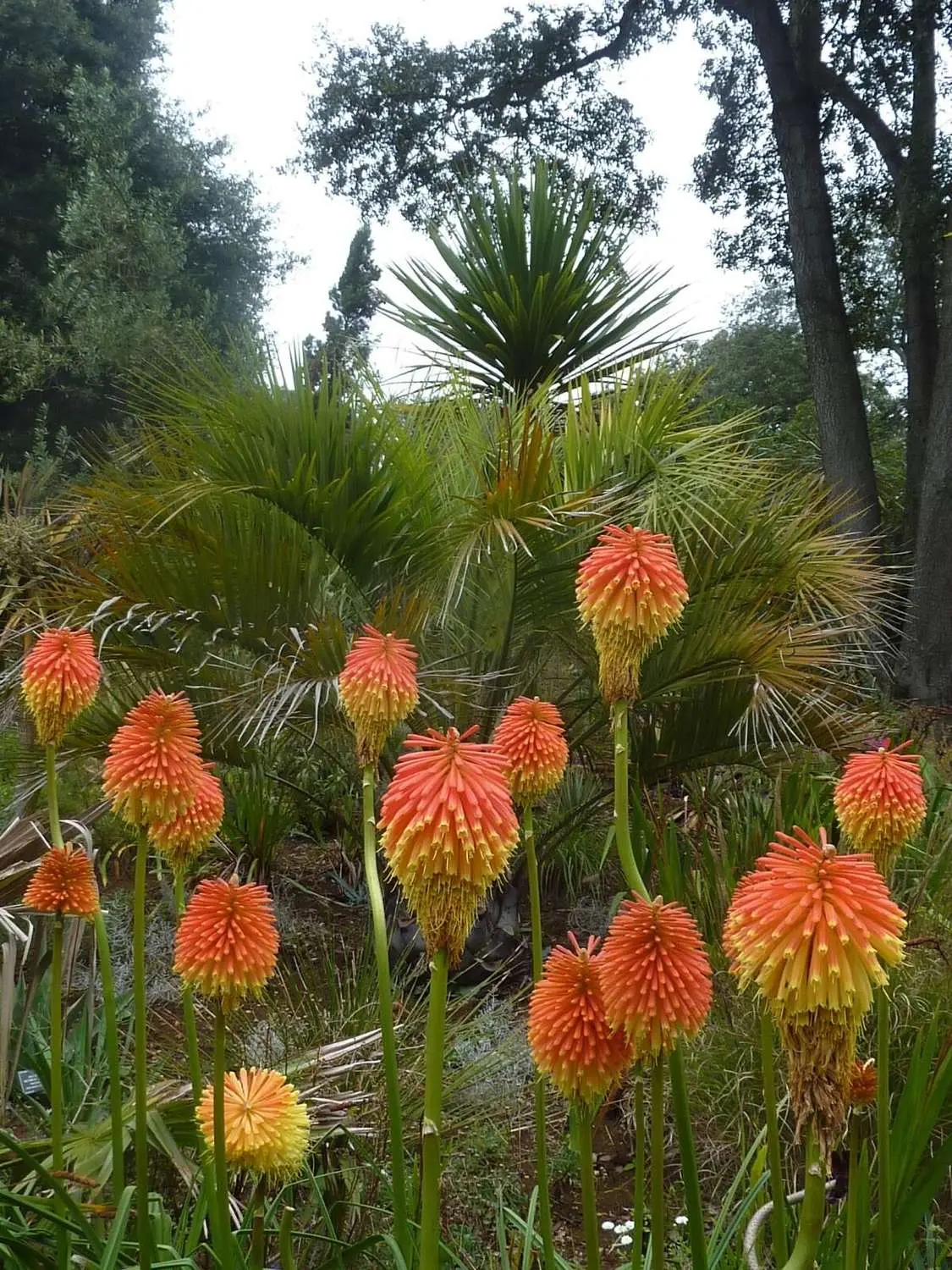
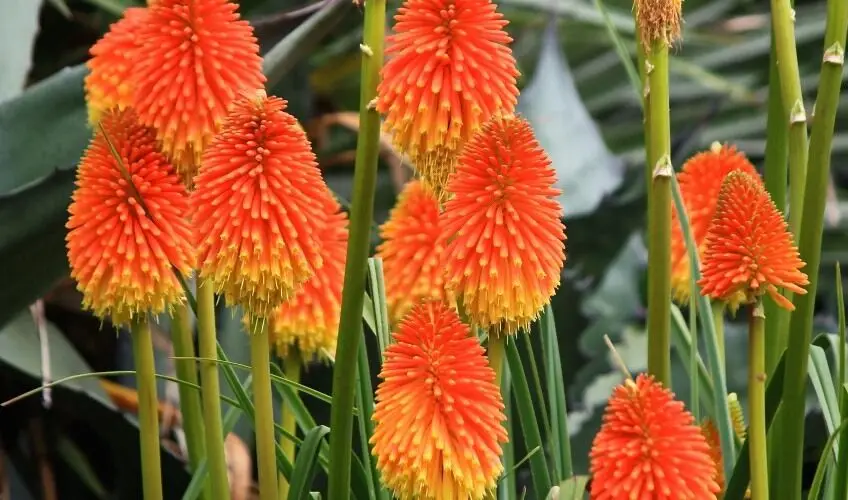
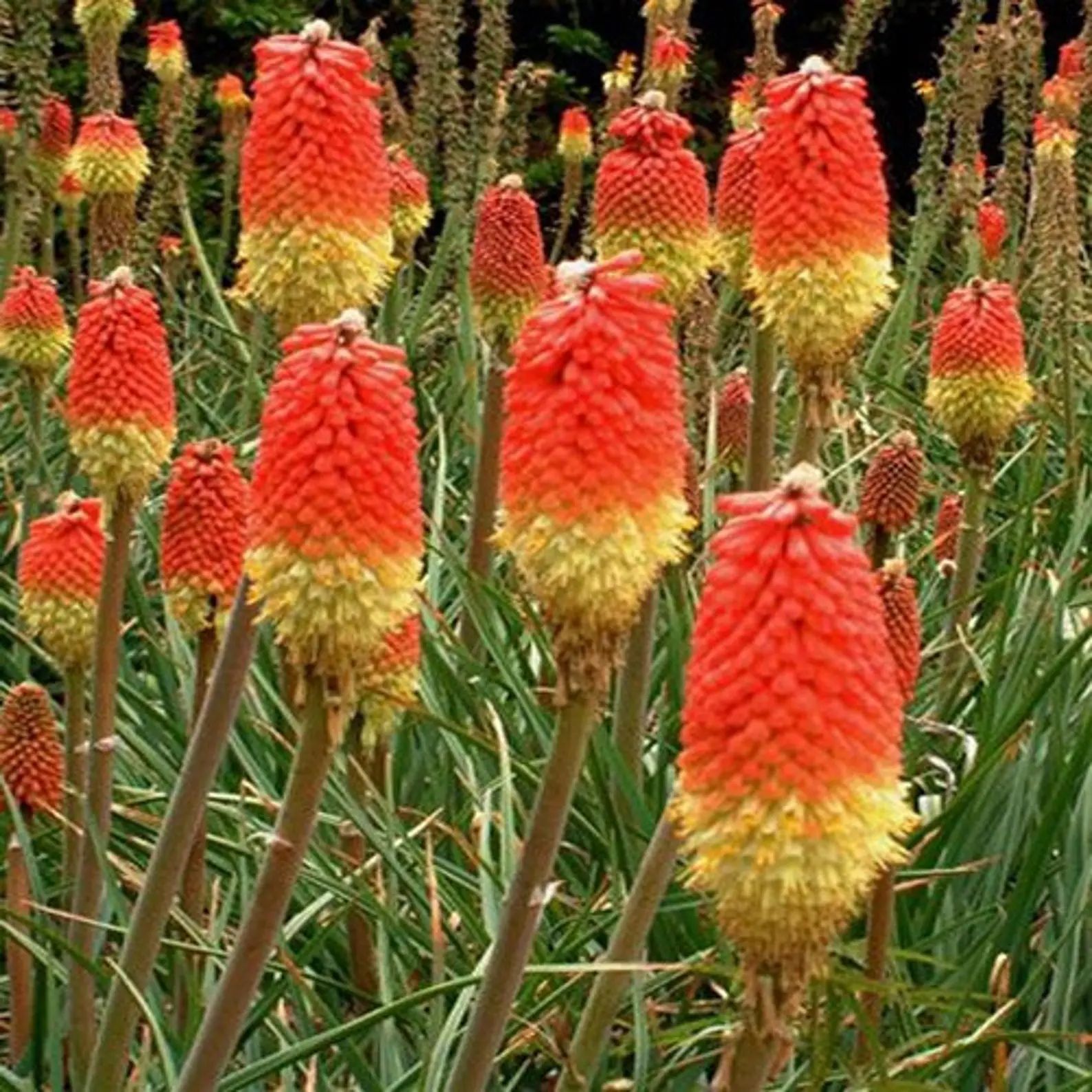
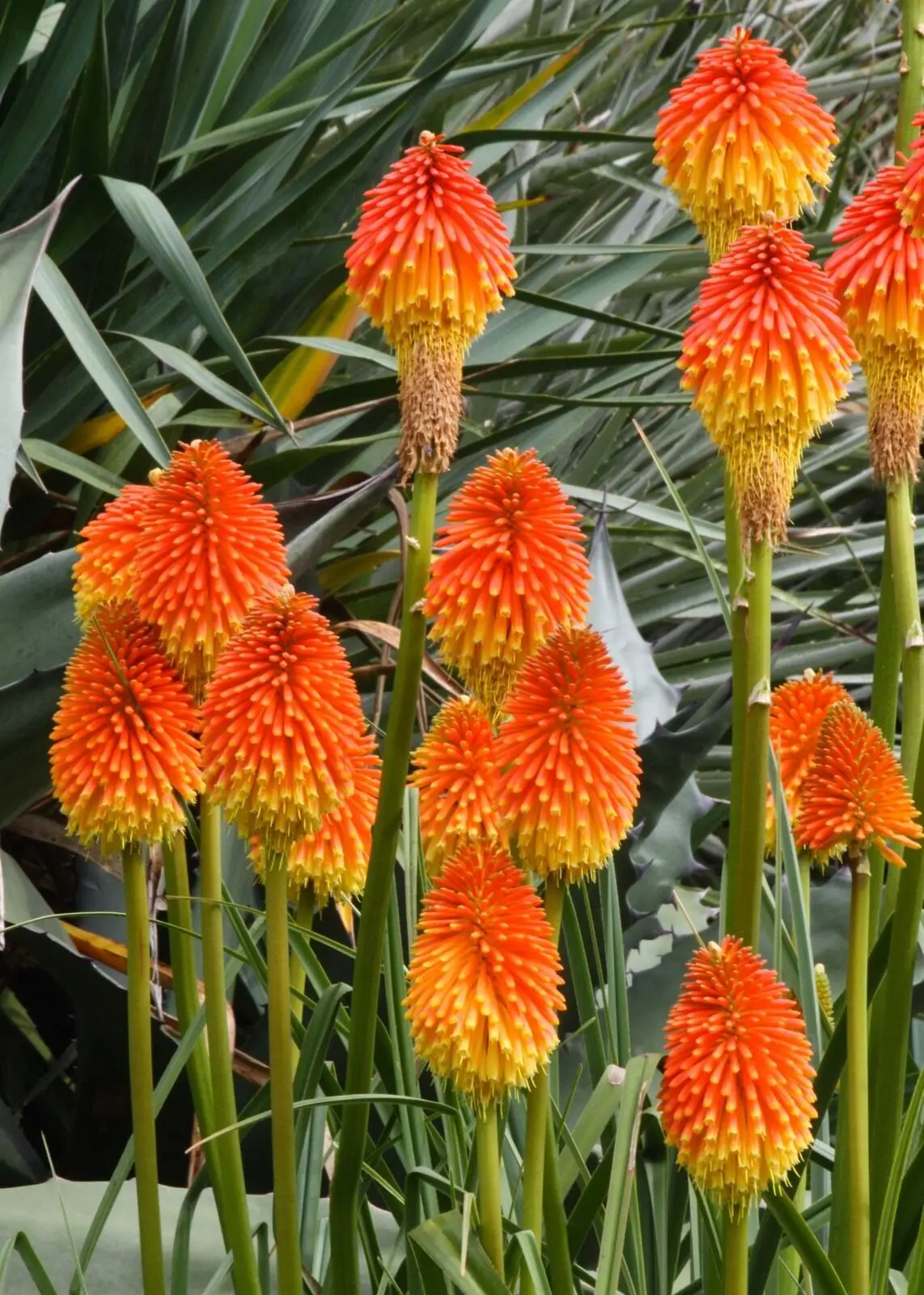
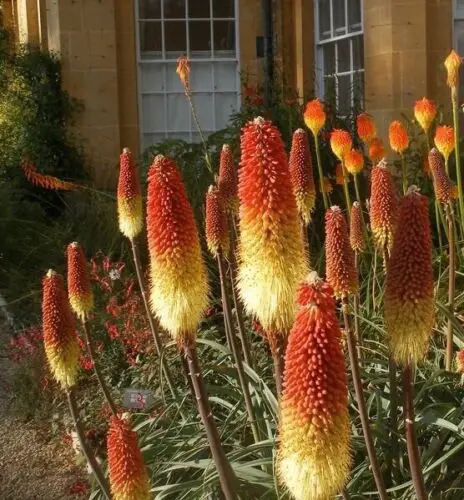
When your garden tires in late summer, Kniphofia rooperi ignites. Dense, bulbous flower heads in brilliant orange-red fade to gold—each spike a magnetic torch drawing hummingbirds, bees, and butterflies through October. These nectar-rich blooms flowering August-October outshine spring bloomers. Robust, fast-growing, and remarkably easy from seed—germinating in 1-2 months. A pollinator’s paradise and a showstopper in any border.
€2.26
Late summer is when most gardens fade. Kniphofia rooperi ignites.
Native to the coastal marshes of South Africa’s Eastern Cape, this extraordinary perennial rewrites the season’s narrative. While spring-flowering varieties are a distant memory by August, K. rooperi rockets to 4 feet tall on sturdy stems, brandishing one of the most distinctive flower heads in the entire Kniphofia genus—broad, squatty, and globe-like rather than the typical elongated poker shape. It’s a botanical character unlike any other.
Here’s what makes it irresistible: those dense, egg-shaped flowerheads are nature’s nectar delivery system. Opening as luminous reddish-orange and fading to golden yellow, each tubular floret is laden with the sweet nectar that hummingbirds crave—and bees, butterflies, and native birds will literally queue for. This isn’t ornamental filler; it’s a living restaurant for pollinators. The nectar-rich flowers create a visible buzz of activity, turning your garden into a wildlife stage from August straight through October, often even into November. In warmer zones, they re-bloom in spring. Cut the spent spikes and you’ll often get a second flush.
Beyond the show: the plant is rock-solid reliable. Its evergreen, keeled foliage—arching and deeply textured—provides year-round architectural interest. It’s hardy to -15°C (5°F), thriving in USDA zones 7-11. The plant earned the prestigious Royal Horticultural Society Award of Garden Merit in 2004, a recognition that speaks to its garden-proven excellence.
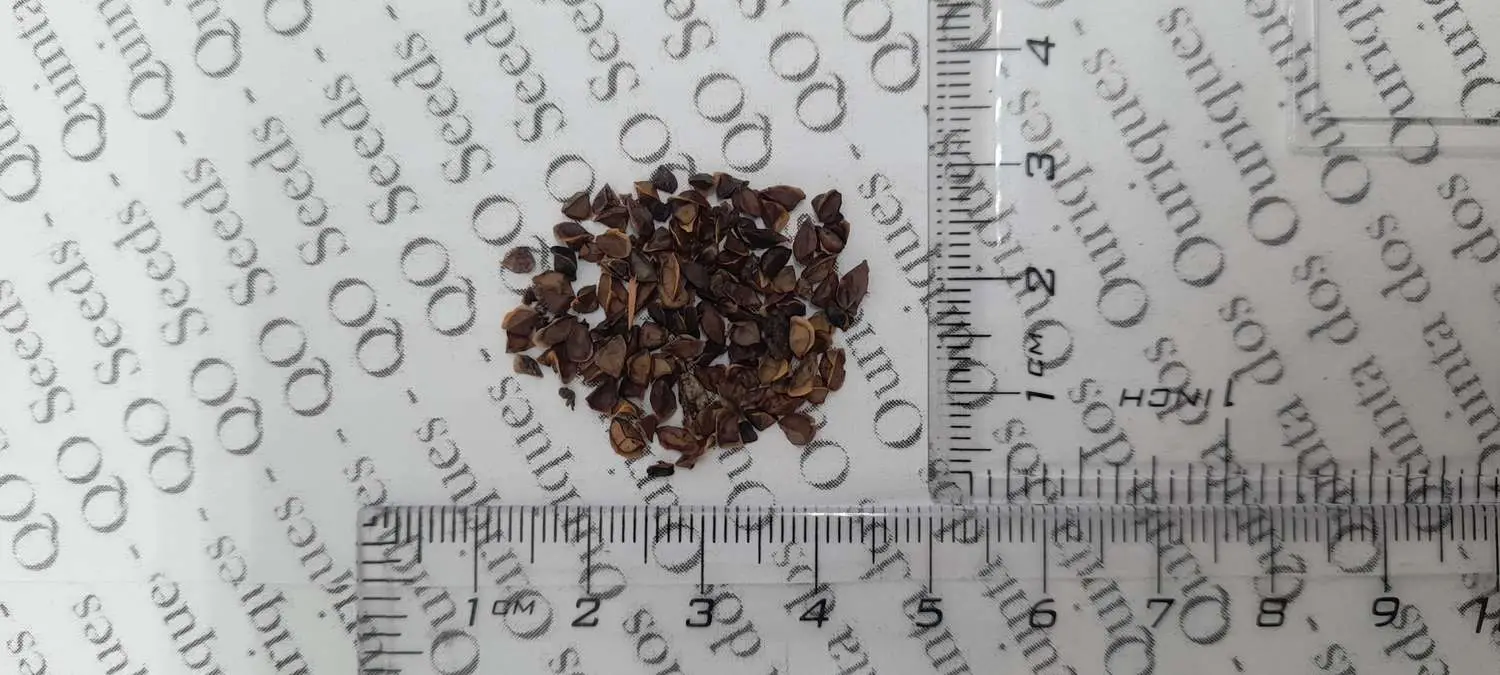
Cultivation is refreshingly straightforward. K. rooperi prefers full sun in well-drained soil enriched with humus—though it tolerates heavy clay and even coastal salt spray. Once established, it becomes remarkably drought-tolerant, making it forgiving during dry spells. It dislikes only waterlogged winter conditions (excellent drainage is non-negotiable for crown health). Seeds germinate quickly—in just 1-2 months—and seedlings often flower in their second year. From seed, you get robust, thrifty plants at a fraction of nursery-bought cost.
Grow Kniphofia rooperi from seed and you’re not just cultivating a plant—you’re building a pollinator beacon. Watch hummingbirds hover above those glowing orange orbs. Listen to the hum of bees. Watch butterflies dance among the blooms. This is the plant that transforms an ordinary autumn border into a living ecosystem, proving that late-season color is the most spectacular color of all.
Only logged in customers who have purchased this product may leave a review.
Reviews
There are no reviews yet.