
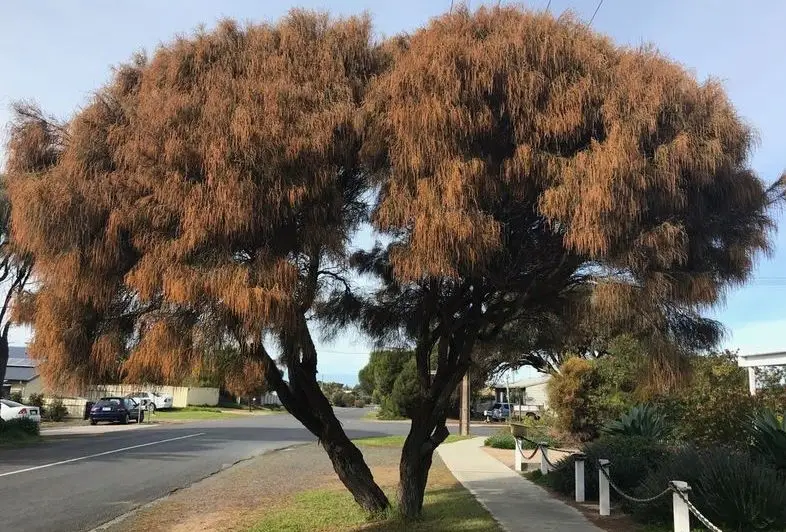
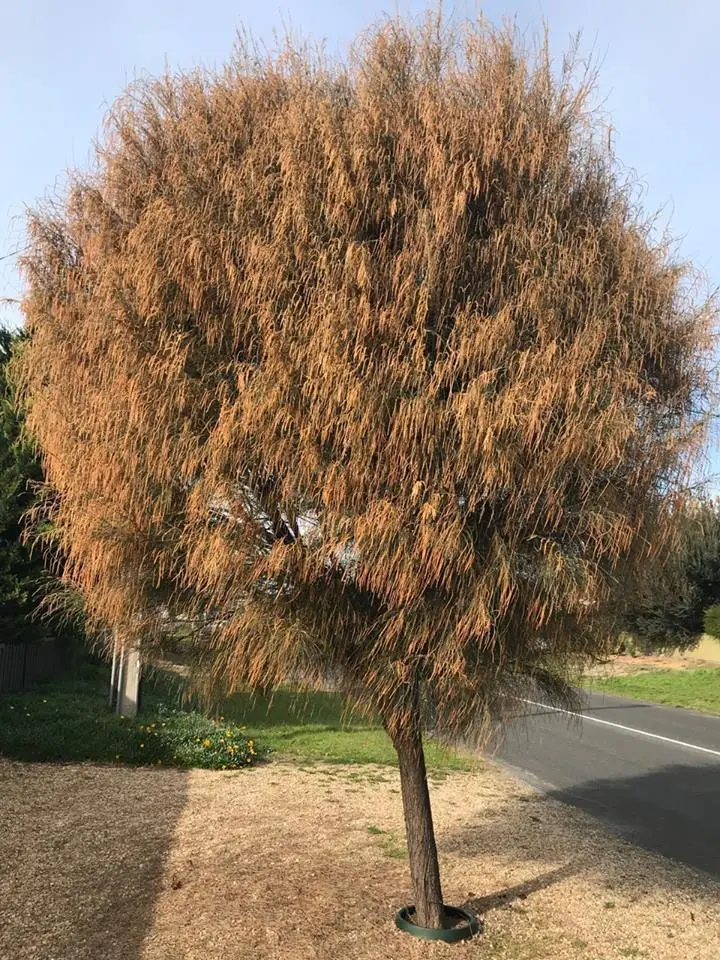
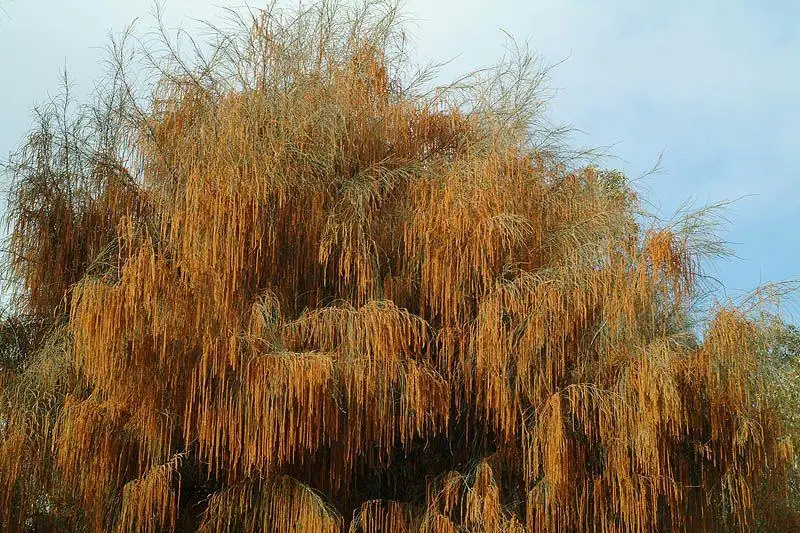
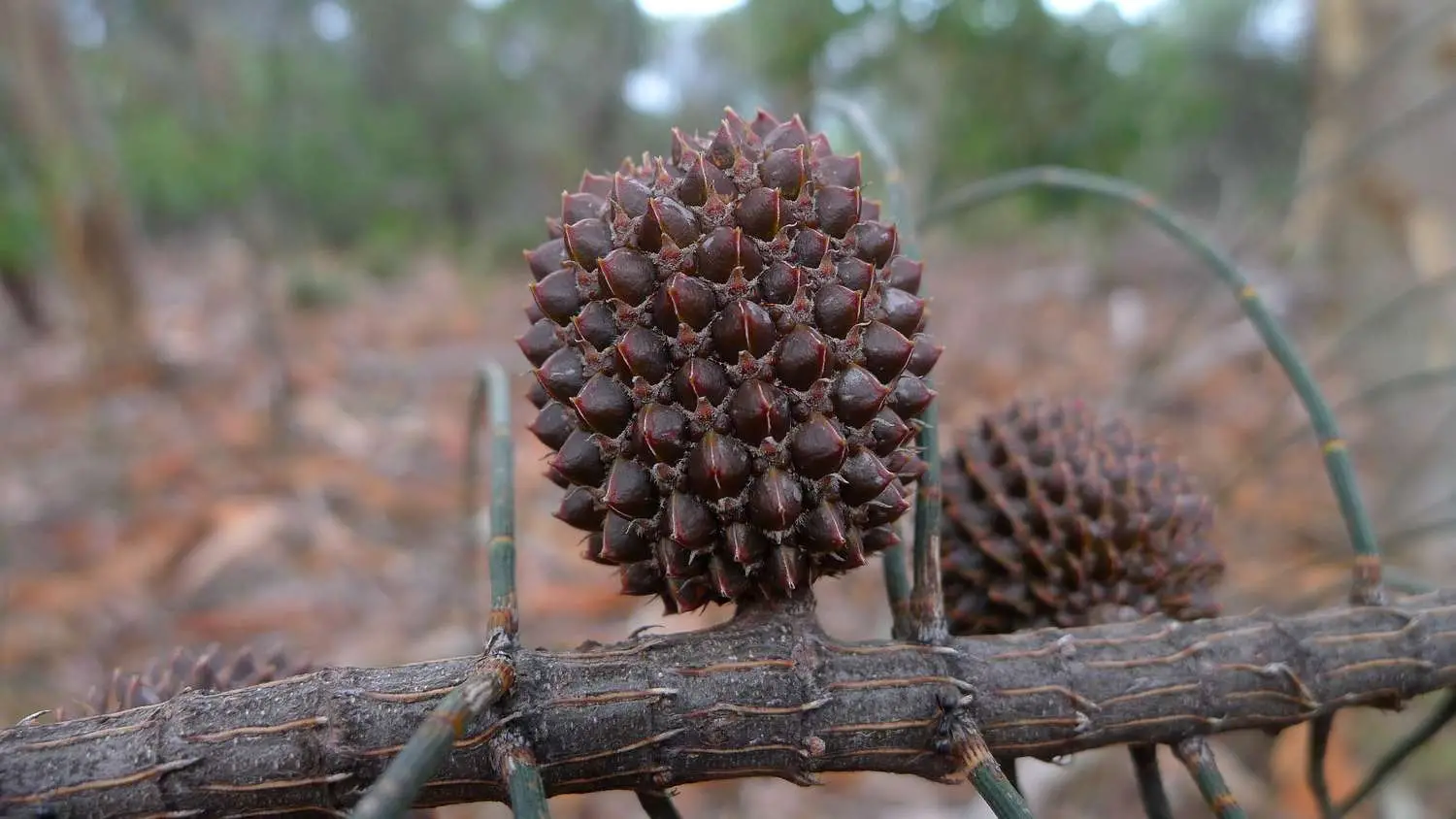
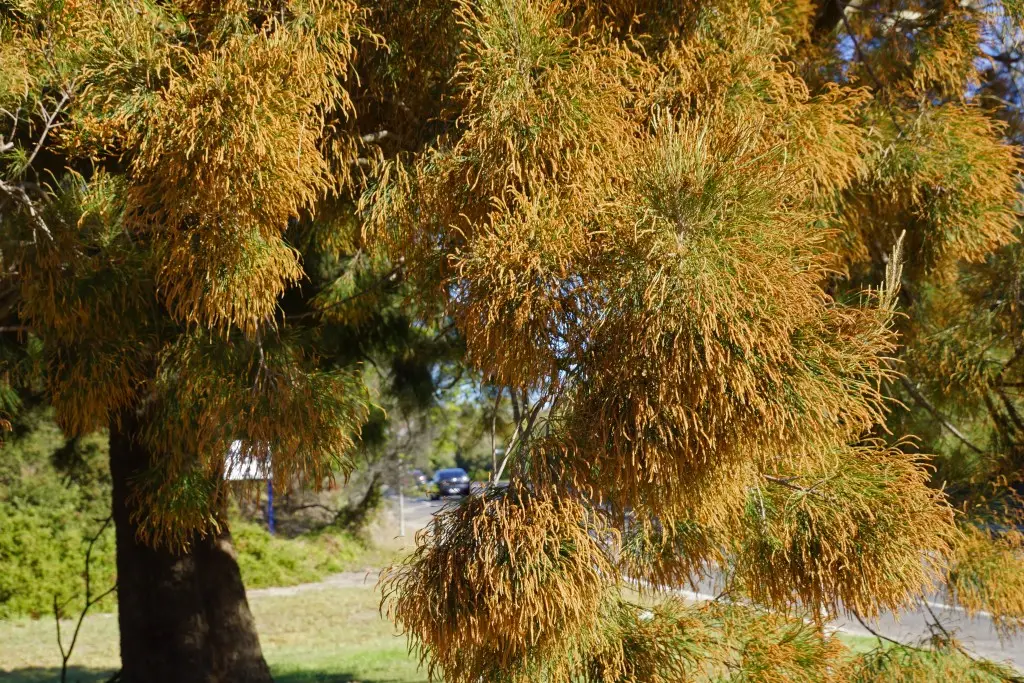
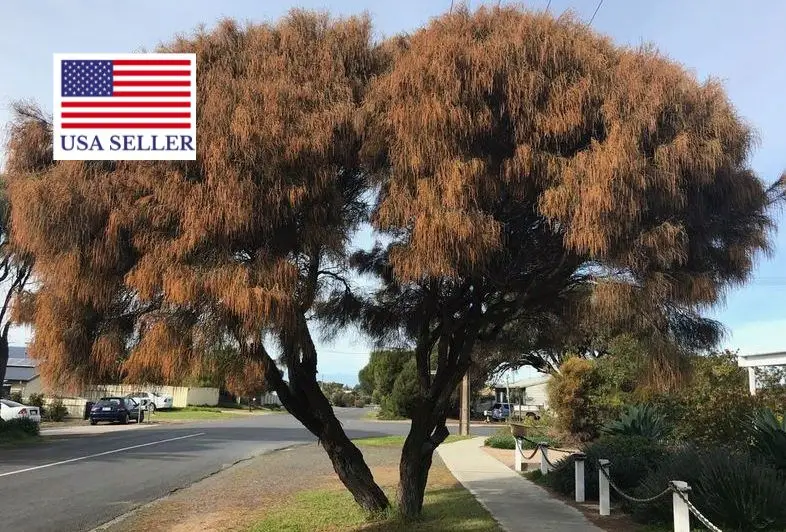
Plant a living sanctuary for the endangered Glossy Black Cockatoo—Drooping Sheoak’s precious cones are their lifeline. This stunning Australian native transforms into a graceful, drought-proof tree with fine needle-like foliage and subtle bronze flowers that honeybees adore. It thrives in poor soils, fixes nitrogen as it grows, and asks nothing but sun and well-drained earth. Grow it from seed and watch refuge bloom.
€1.92
Grow an icon of Australian wildness—a tree that feeds the rarest cockatoos, shelters native insects, and transforms barren ground into thriving forest.
Allocasuarina verticillata—the Drooping Sheoak—is a small to medium evergreen tree native to south-eastern Australia’s woodlands, ridges, and windswept coastal zones. Its name captures its soul: drooping branchlets resembling cassowary feathers, needle-like foliage in soft grey-green, and a graceful, weeping habit that brings understated elegance to any landscape. The wood itself is storied—tough, durable, and beautifully grained, once valued by Indigenous peoples for tools, boomerangs, and ceremonial implements. Today, it’s a botanical hero of conservation and restoration.
Here’s why Drooping Sheoak commands passionate devotion: it is the primary food source for the endangered Glossy Black Cockatoo, one of Australia’s most threatened parrots. The tree’s remarkable cone-like fruiting structures, available much of the year, contain the seeds that sustain these magnificent birds—and on Kangaroo Island, where 54% of cockatoo habitat burned in 2019-20, revegetation with Drooping Sheoak has become critical to species recovery. Beyond cockatoos, the cones feed native birds, the flowers attract bees and butterflies in bronze-hued profusion, and fungi on the roots feed bandicoots and potoroos. By growing this tree from seed, you join an urgent rewilding movement. The pollen itself is a prized food source for honeybees, helping colonies build reserves to survive winter—making it invaluable for apiarists. Young shoots and cones are even edible (with a lemon-like flavour when soaked), a bushman’s secret revived.
Growing Drooping Sheoak from seed is surprisingly rewarding. Choose a position with full sun to light shade and well-drained, sandy or loamy soil—it laughs at poor, rocky ground where other trees fail. Once established, it becomes phenomenally drought-tolerant and demands minimal maintenance; a young tree grows quickly, though it matures slowly and lives 50–100 years. The tree tolerates coastal salt spray, frost, wind, and even some wetness. It’s happiest in rainfall zones of 500–900 mm. Crucial to success: the seeds carry a hard coat that benefits from scarification (soak in boiling water or nick mechanically) and germinate best at warm temperatures (up to 50°C in 2–5 weeks). Even better, seedlings benefit from inoculation with Frankia bacteria—nitrogen-fixing nodules found on parent tree roots—which ensures vigorous growth and transforms the soil beneath. This nitrogen-fixing ability is the tree’s ecological superpower: as it matures, it converts atmospheric nitrogen, improves soil condition, activates soil microbial life, and enriches the ground for understory plants to thrive. In revegetation and restoration projects, it’s gold.
Imagine a future where your garden shelters cockatoos, feeds bees, stabilises eroding hillsides, and quietly rewrites the story of a threatened landscape. Drooping Sheoak isn’t just a tree—it’s a commitment to wildness. Start it from seed, watch those graceful drooping branchlets unfold, and know that you’re growing refuge for some of Australia’s rarest creatures. This is how restoration happens, one seed at a time.
Only logged in customers who have purchased this product may leave a review.
Reviews
There are no reviews yet.