
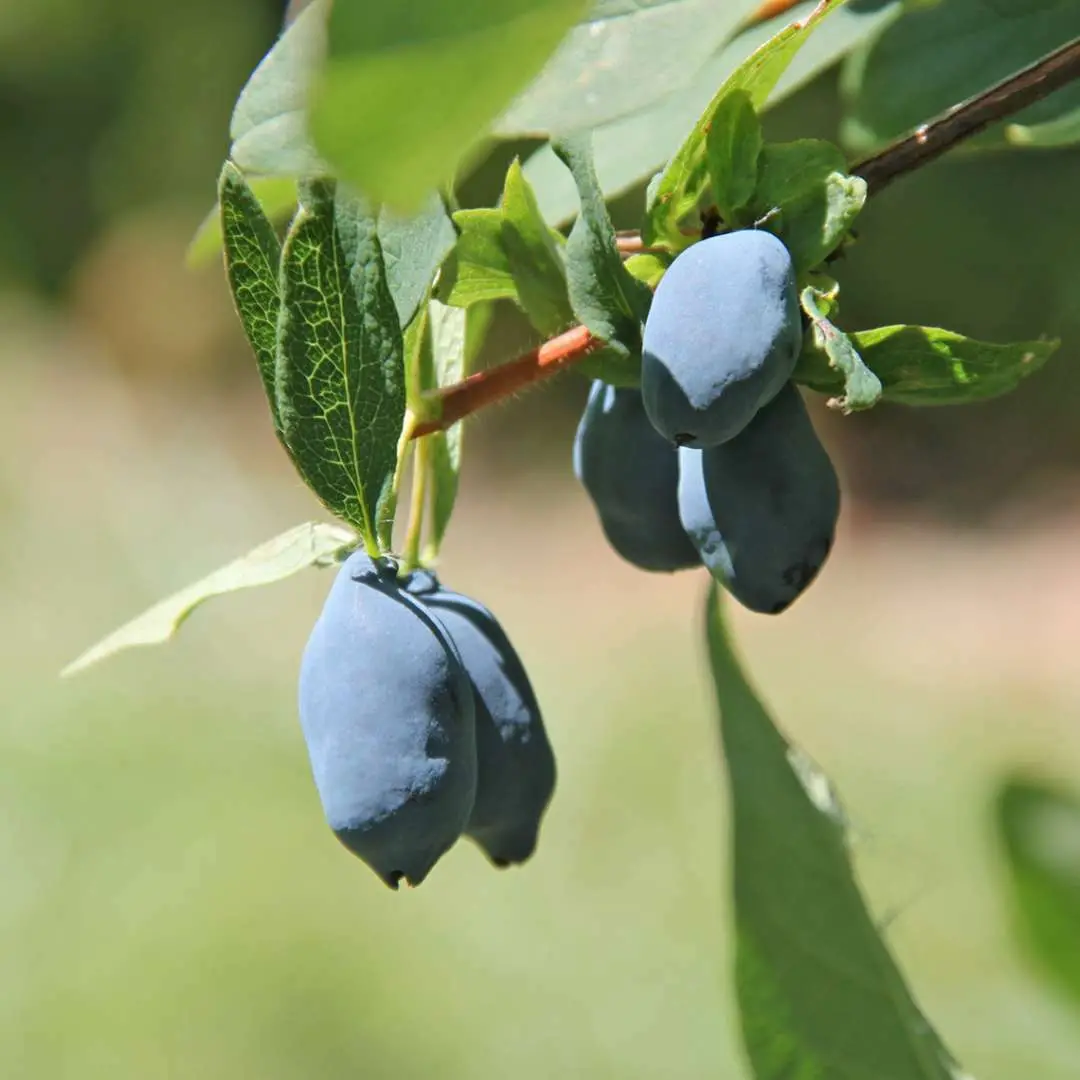
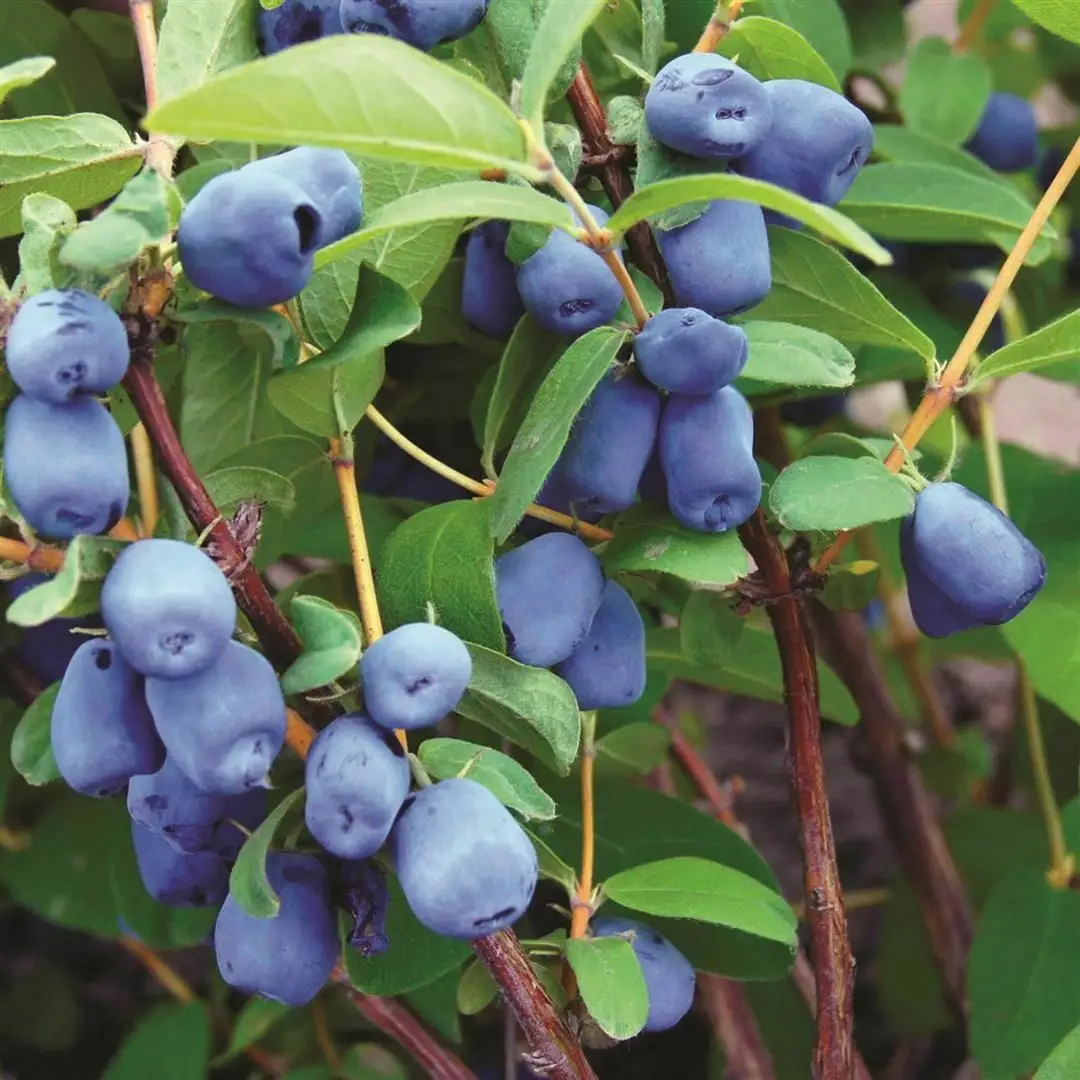
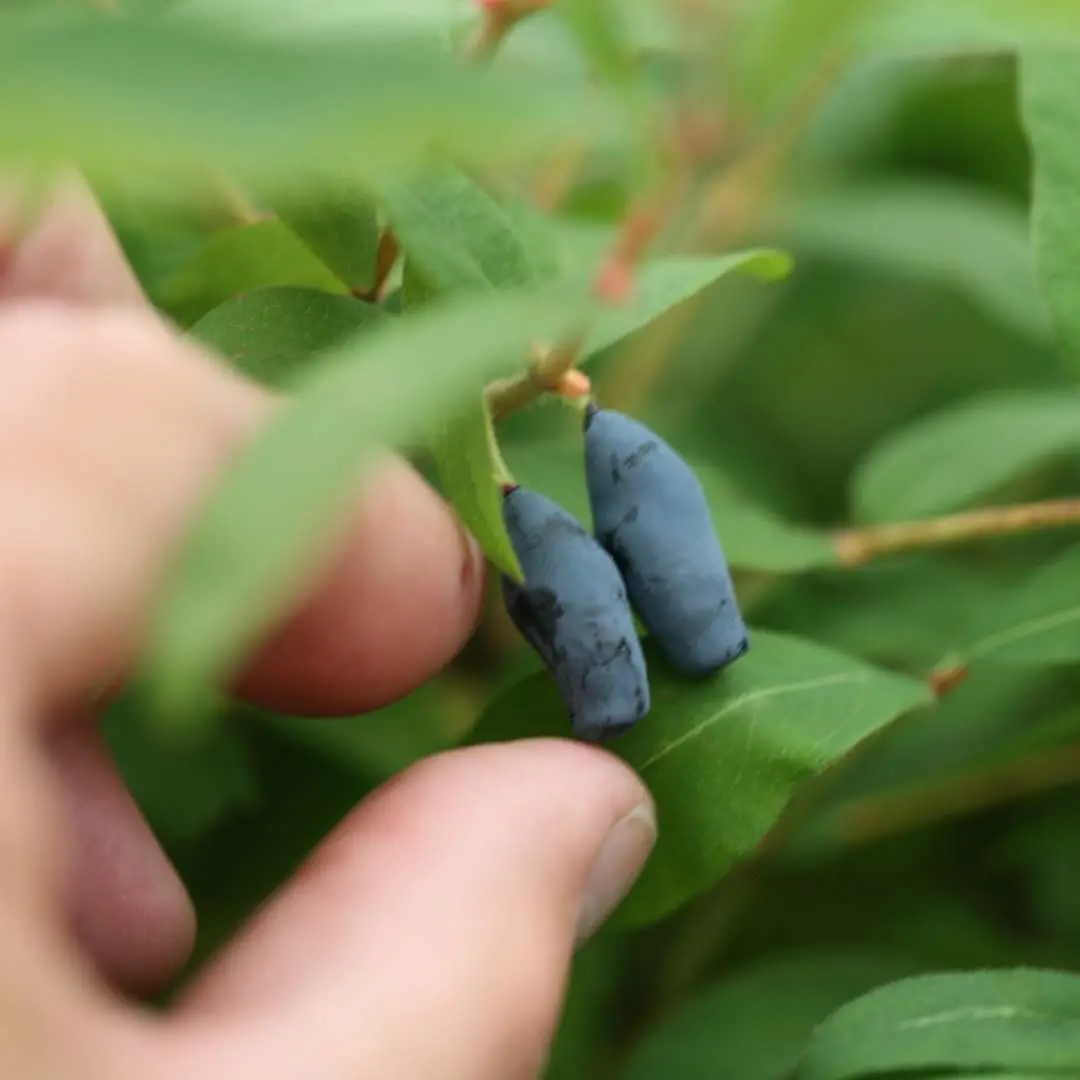
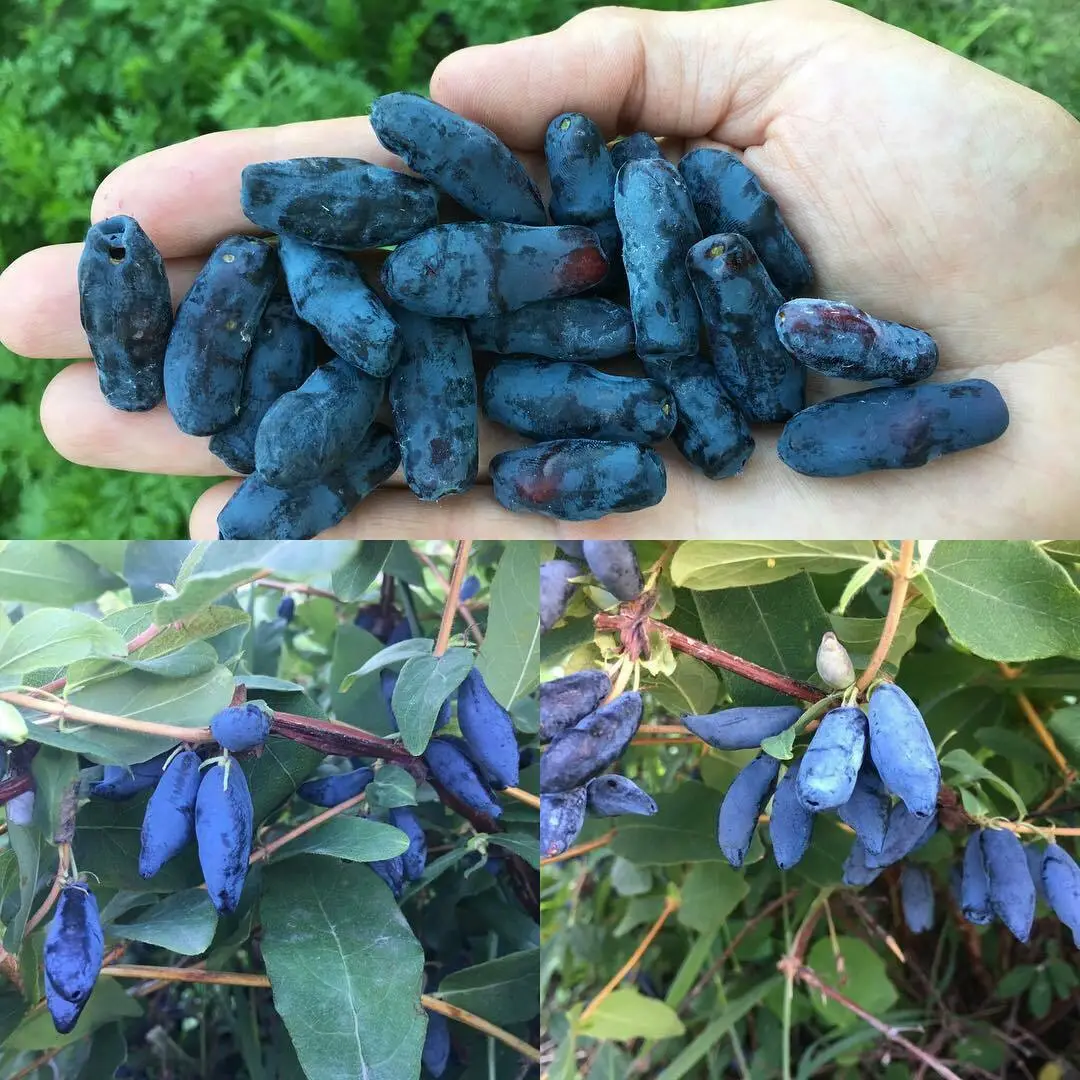

A fruta secreta da Sibéria e do Japão. Pequenas gemas azul-púrpura pejadas de vitamina C, antioxidantes potentes e iridoides anti-inflamatórios—mais de um século na medicina tradicional. Sabor único: blueberry, framboesa e groselha num só bocado. Cultivo fácil. Resistente até -50°C. Primeira colheita da primavera: enquanto aguarda outros frutos, já tem as suas. Cultive a partir de sementes.
Descubra a fruta que alimentou povos siberianos e japoneses durante séculos—e que a ciência moderna confirma como um verdadeiro superfruit.
**Origem e Singularidade**
Lonicera caerulea var. edulis é um arbusto decíduo nativo das regiões frias do hemisfério norte: Sibéria, Japão, norte da China. Enquanto povos indígenas colhiam a fruta selvagem há gerações, a Rússia e o Japão desenvolveram cultivares aprimoradas que transformaram esta planta numa colheita comercial. Para os russos, chama-se “zhimolost”—a fruta do inverno. Para os japoneses é “haskap”, do Ainu. Ao contrário de seus primos trepadores ornamentais (frequentemente invasivos), a var. edulis produz fruto comestível genuinamente delicioso. É uma raridade botânica: genuinamente nativa, genuinamente edível, genuinamente notável.
**A Fruta Medicinal: Antioxidante Suprema**
Aqui está o segredo. Lonicera caerulea var. edulis é uma bomba de nutrientes em forma de pequena gema azul-púrpura—apenas 1-2 gramas, mas concentrada. Contem três vezes mais vitamina C que um repouso, rivalizando com laranjas. A ciência identifica nela iridoides (compostos raríssimos, especiais de plantas em climas extremos), antocianinas potentes, ácidos fenólicos, e saponinas—tudo a conferir propriedades anti-inflamatórias comprovadas, atividade anticancerígena, proteção hepatoprotetora e cardioprotetora. Povos siberianos usavam-na em medicina tradicional para inflamação, distúrbios gastrointestinais, infecções bacterianas. A ciência moderna confirma: estas pequenas frutas reduzem stress oxidativo, oferecem neuroprotecção, suportam metabolismo saudável. Uma fruta que começa na cozinha e funciona como farmácia.
Sabor? Impossível de descrever universalmente. Cada pessoa prova diferente: alguns dizem blueberry-framboesa. Outros blueberry-groselha. Alguns mencionam kiwi, cereja. Há tarteza, há doçura—tudo em pequenas unidades que derretem na boca. Quando colhida a maturidade plena, é genuinamente deliciosa. Congela lindamente. Transforma-se em compota, sumo, vinho, sorvete.
**Cultivo: Extraordinariamente Fácil**
Aqui está a revolução. Esta planta é robusta para horríveis condições—mas cresce em suas mãos sem drama. Resistências: -50°C. Sem problemas sérios de pragas ou doenças. Tolerante a acidez do solo variável (3,9-7,7 pH). Adapta-se a solos pobres, solos ricos. Prefere umidade moderada mas tolera períodos secos após enraizamento. Sol completo é ótimo; meia-sombra é aceitável. Arbustos crescem a 1,5-2 m de altura e largura, com forma atraente e arredondada. Folhas cinzento-esverdeadas com textura ligeiramente cerosa. Na primavera tardia, flores brancas-amareladas delicadas em pares.
Rendimento: uma planta adulta produz 3-7 kg de fruto. Primeira colheita acontece em primavera—antes de morangos, antes de framboesas, quando os desejos de fruta fresca são maiores. Pode viver e produzir durante 30 anos ou mais. Requer um polinizador (outra variedade) para fruto abundante, mas assim consegue melhor produção e frutas maiores.
Para quem quer fácil: aqui está. Sem pragas graves. Sem doenças graves. Sem nutrição especial necessária. Apenas solo fértil, húmido, bem drenado, e sol. Plante a partir de sementes e espere 2-3 anos pelo primeiro grande rendimento—tempo que passa rapidamente quando está a cultivar um tesouro.
**O Convite**
Não quer esperar. Não quer depender de variedades comerciais incertas no seu clima. Procure sementes de Lonicera caerulea var. edulis. Cultive o que os siberianos amavam, o que os japoneses refinaram, o que a ciência moderna aclama. Da semente ao arbusto ao prato ao corpo—é um percurso de paciência, mas recompensador.
Only logged in customers who have purchased this product may leave a review.

Reviews
There are no reviews yet.