Description
Limonia acidissima is the only species within the monotypic genus Limonia. Common names for the species in English include wood-apple and elephant-apple.
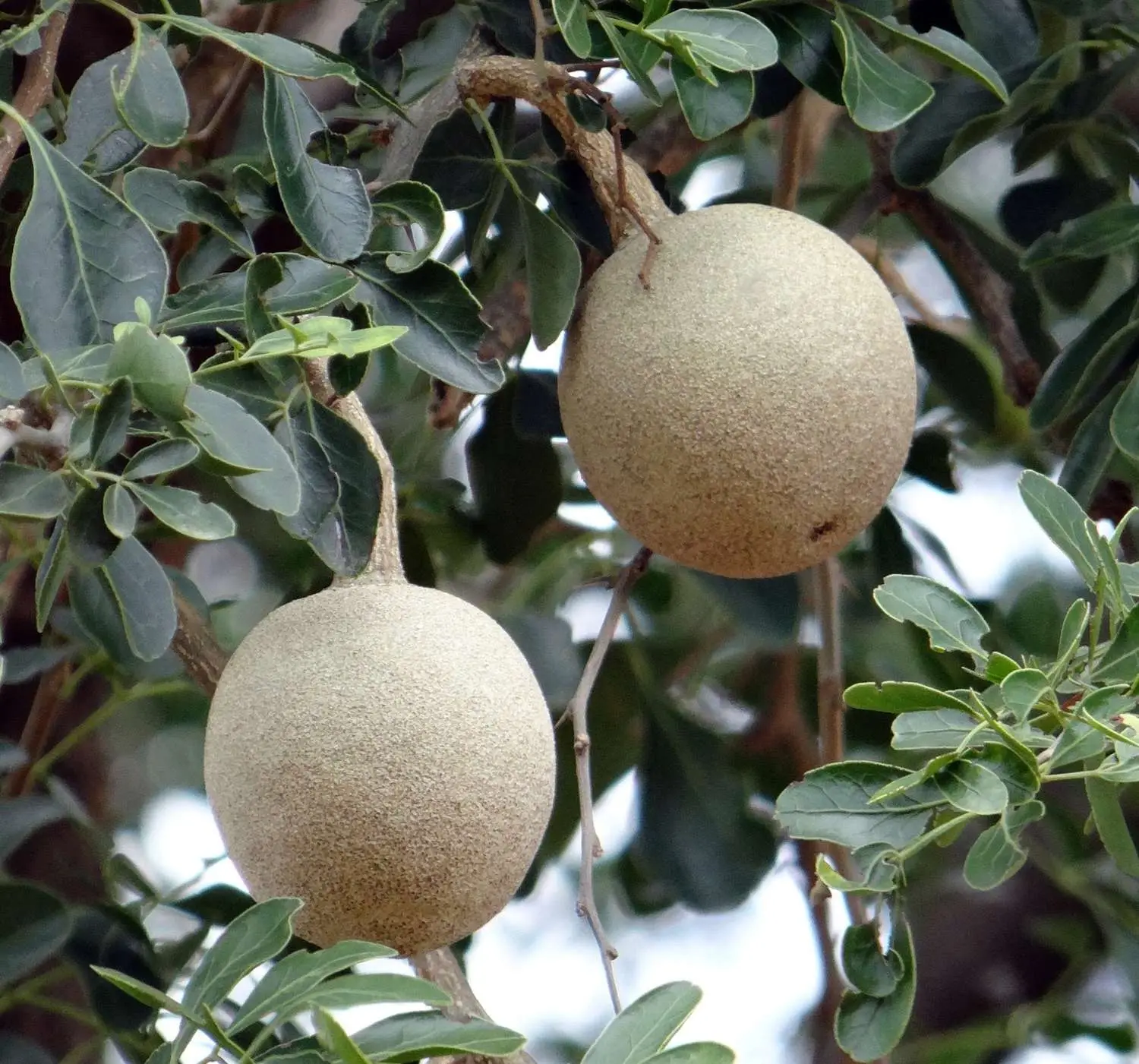
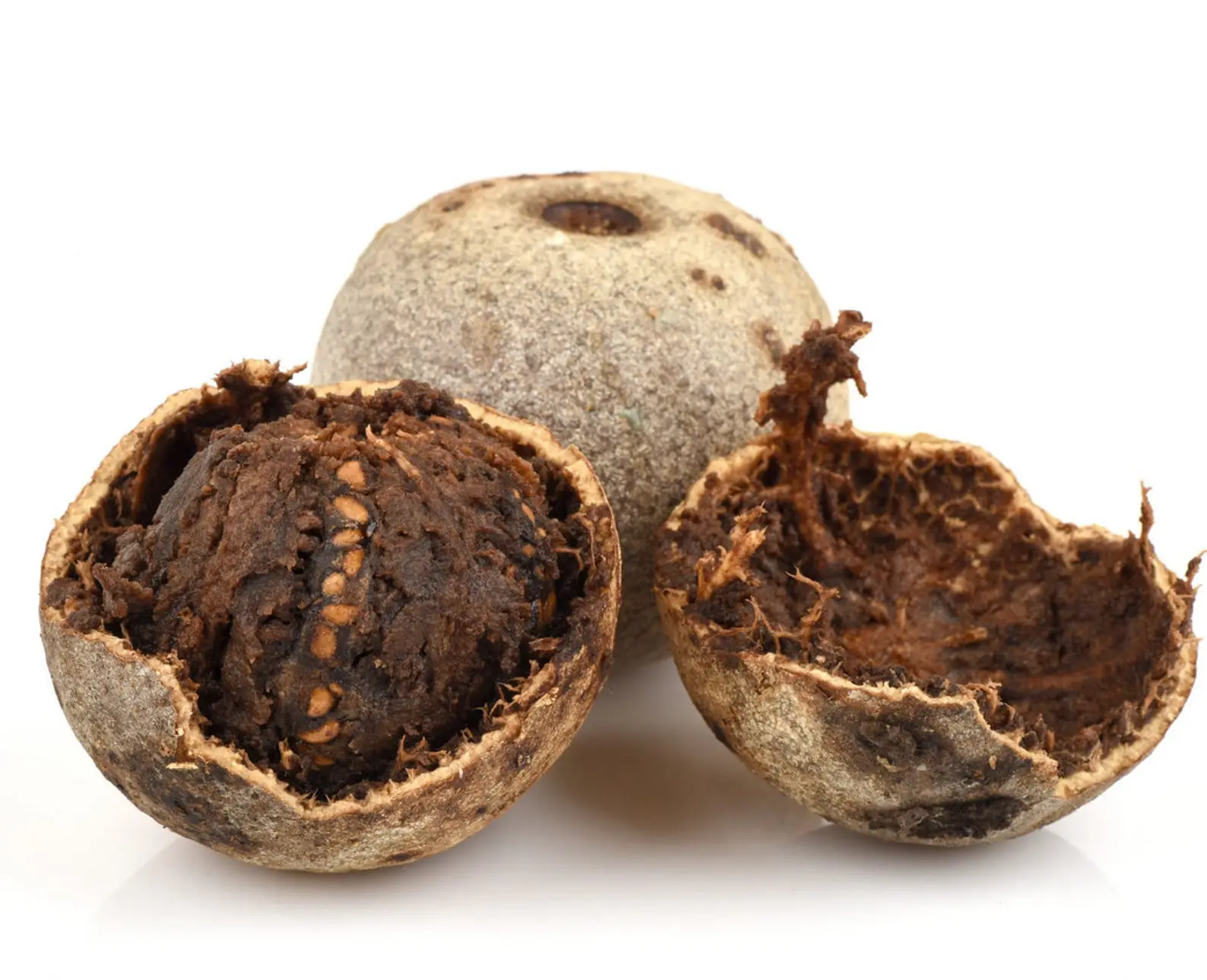
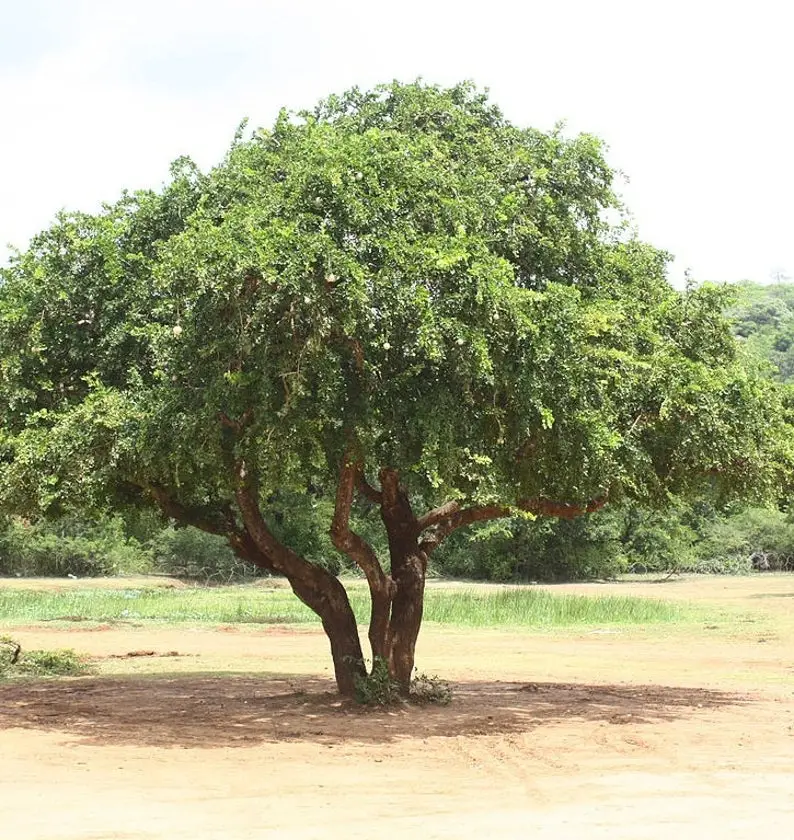
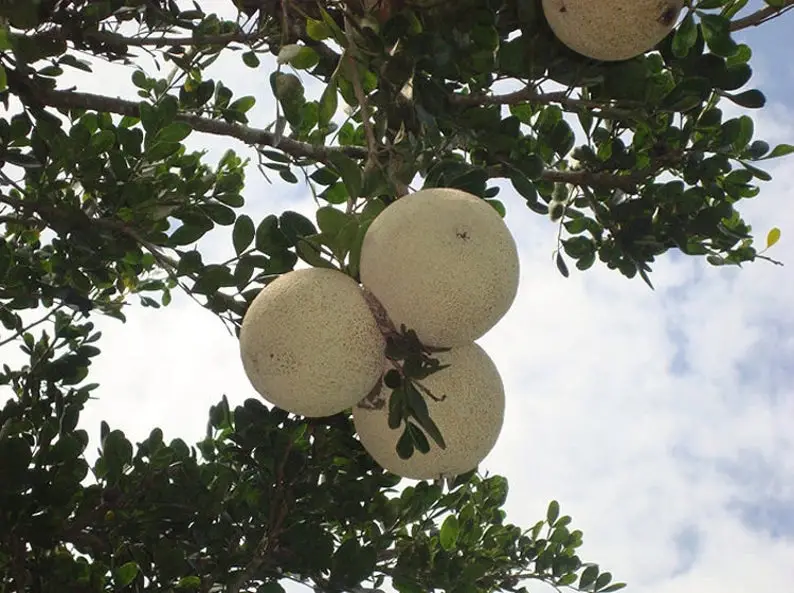
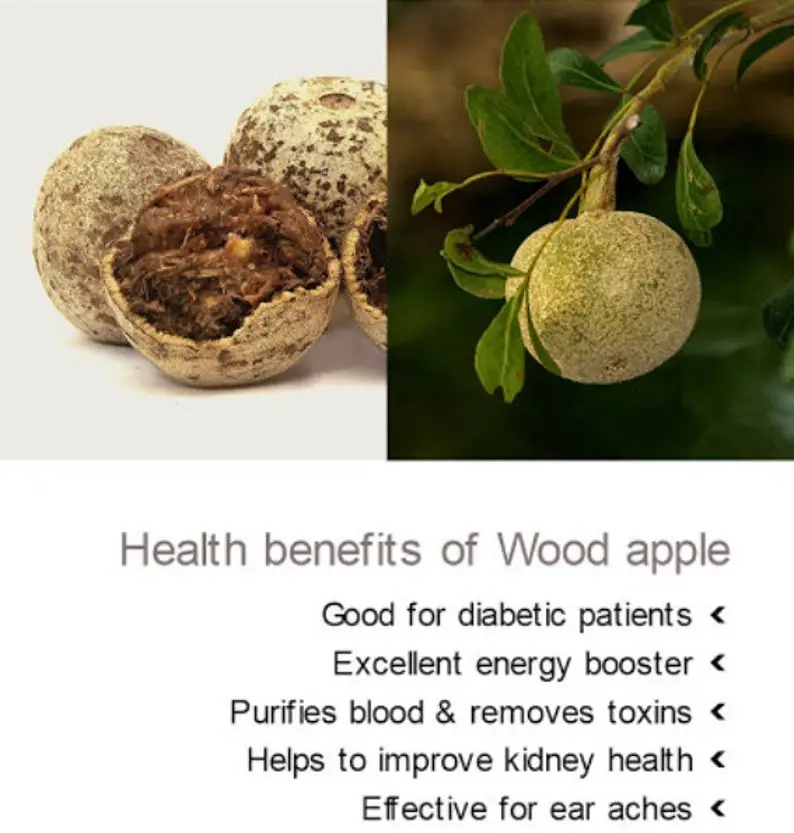
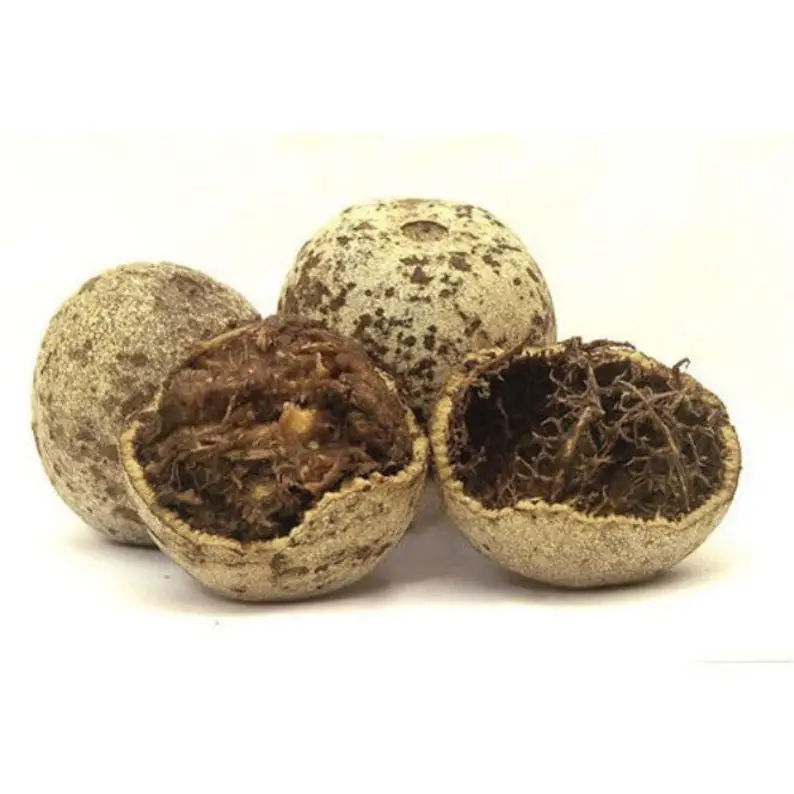
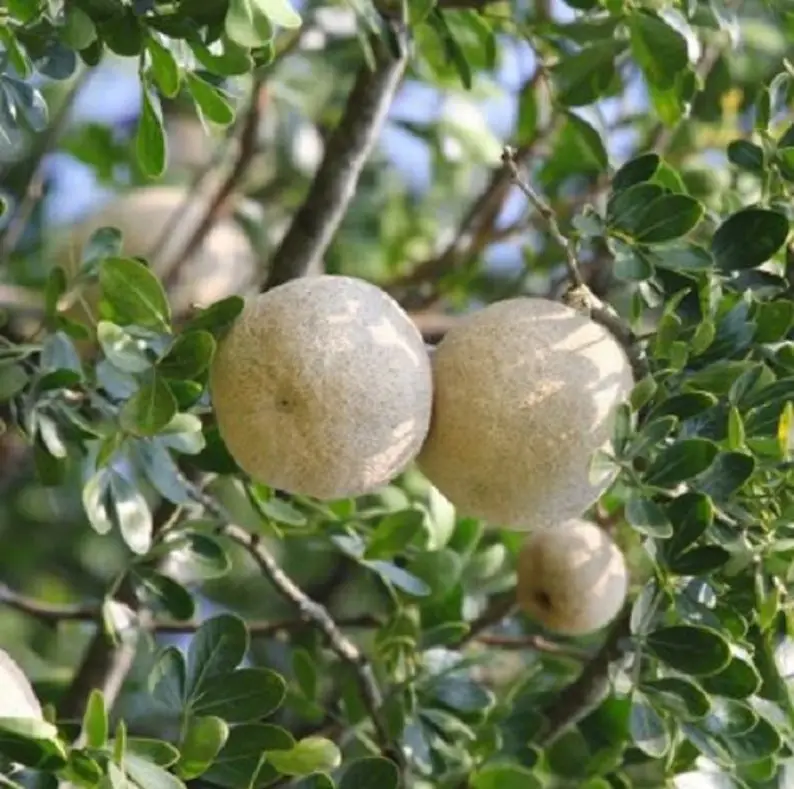
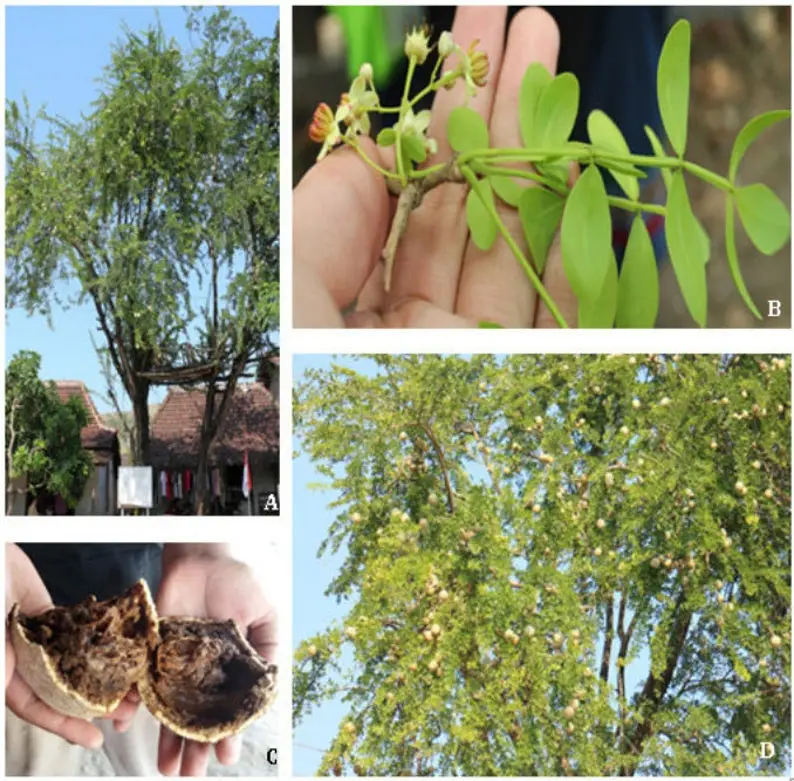
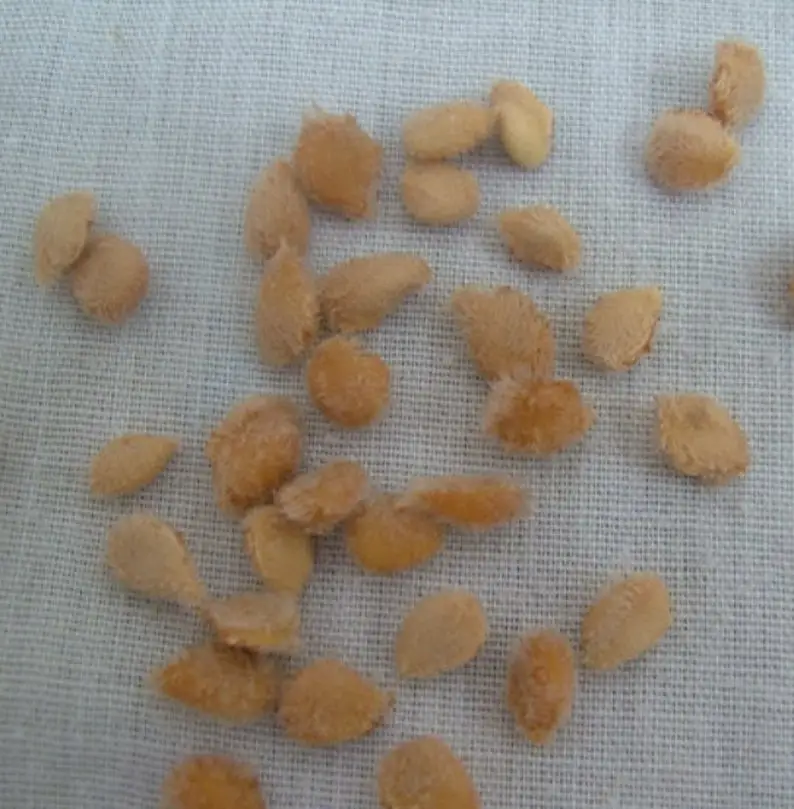
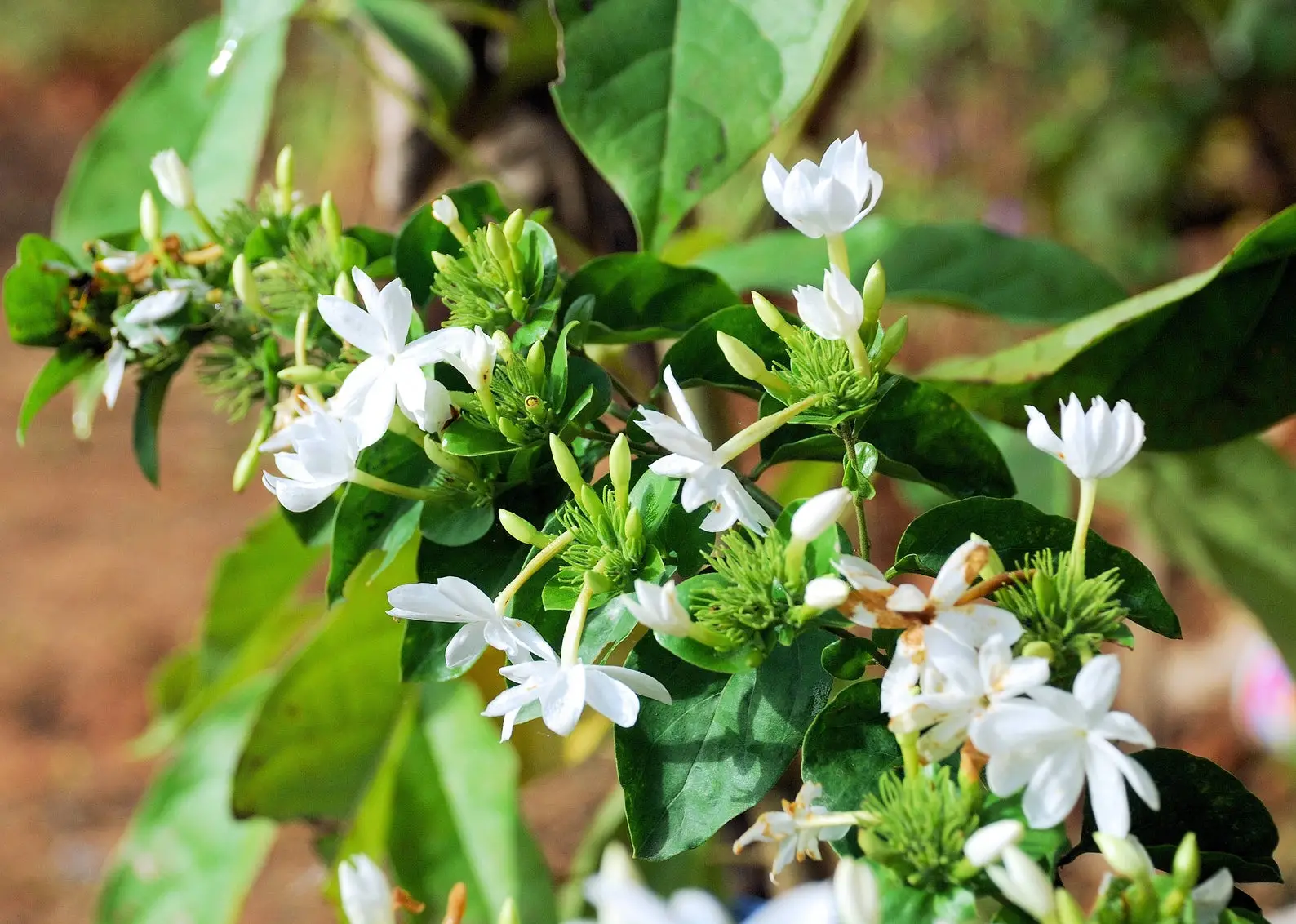
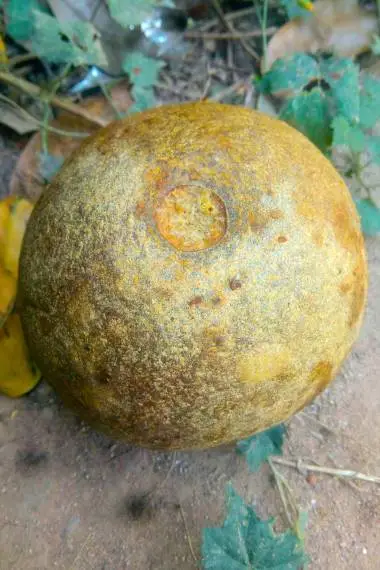
Limonia acidissima is a large tree growing to 9 metres (30 ft) tall, with rough, spiny bark. The leaves are pinnate, with 5-7 leaflets, each leaflet 25–35 mm long and 10–20 mm broad, with a citrus-scent when crushed. The flowers are white and have five petals. The fruit is a berry 5–9 cm diameter, and may be sweet or sour. It has a very hard rind which can be difficult to crack open, it appears greenish-brown in colour from outside and contains sticky brown pulp and small white seeds. The fruit looks similar in appearance to the Bael fruit (Aegle marmelos). It contains considerable amount of protein, carbohydrate, ferus, fat, calcium, Vit-B & C etc. 100 g of ripe fruit pulp contains up to 49 KCal.
It is a local favorite among young and old alike. The fruits are available throughout the year. . Named “Woodapple” due to its hard wooden shell . The woodapple is native to the Indian sub-continent.
The sweet and sour juice of the woodapple is a perfect thirst quencher on a warm day. One of the best loved recipes made with the fruit is the wood apple sherbet
Germination Guide
🌍 India, Bangladesh, Sri Lanka
Moderate
Limonia acidissima (Wood Apple, Elephant Apple) is a tropical tree native to India, Bangladesh and Sri Lanka. Seeds have variable viability and require warm temperatures for germination.
Germination
Germination time
Expect germination in
21 – 28 days
Temperature
Min 12°C
Ideal 25°C
Max 30°C
Substrate moisture
💧 Medium
Seed Pre-treatment
-
💧
Soaking — 24 hours
Soak seeds in water 24-48 hours to soften hard outer shell
-
🔨
Hot water scarification
Pour boiling water over seeds and let soak for 24 hours
-
📋
Additional notes
Seeds have short shelf life, sow as soon as possible
Substrate & Container
Recommended substrate
well-draining soil mix, sowing mix
Recommended container
pots, seedbed
Growing Tips
Seeds sent in moist cloths may arrive already sprouting. Keep soil lightly moist but NOT wet. Once sprouted, move to sunny position and maintain warm temperatures. Transplant when 2-3 true leaves develop.
Only logged in customers who have purchased this product may leave a review.

Reviews
There are no reviews yet.