Description
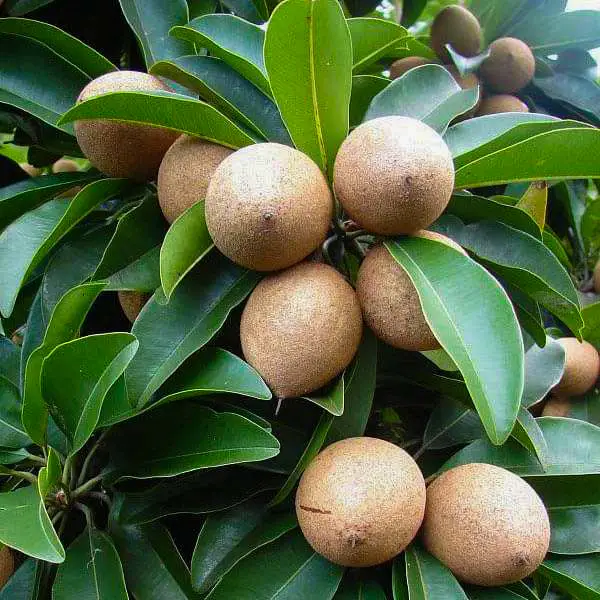
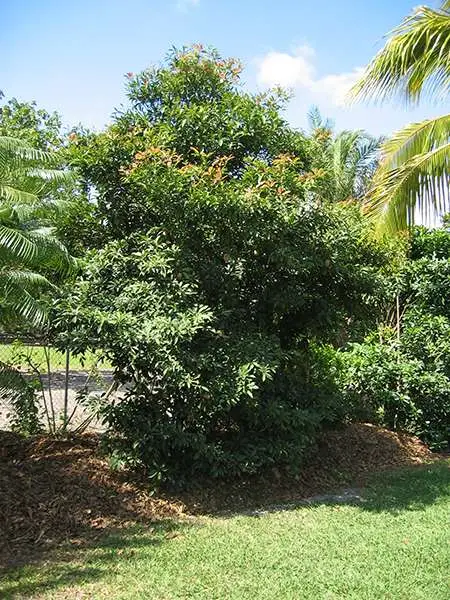
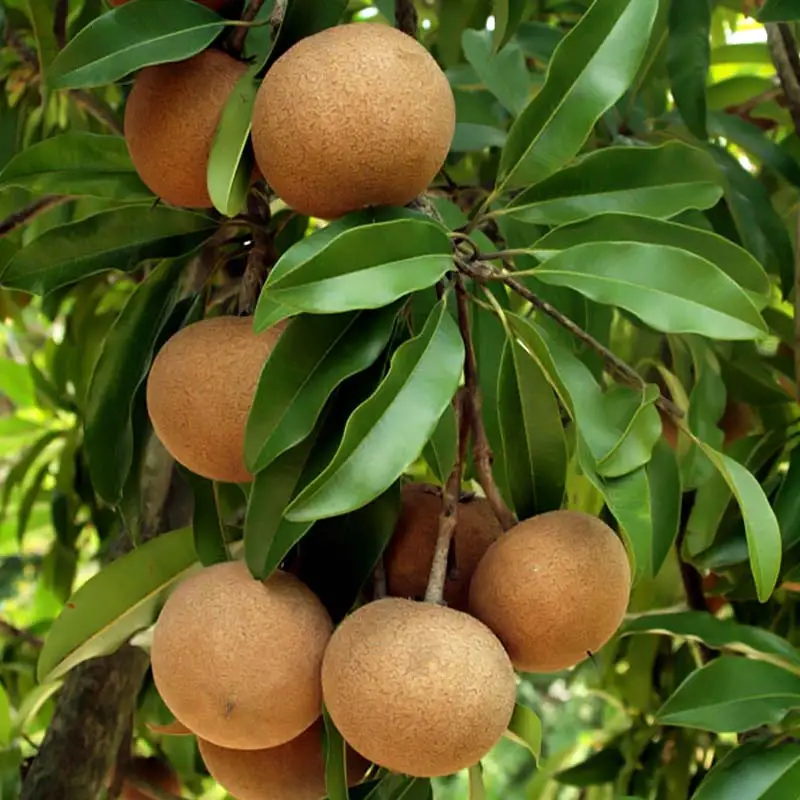
Manilkara zapota, is an evergreen tree native to southern Mexico and Central America. Sapodilla trees can live up to one hundred years. It can grow to more than 30 m (98 ft) tall with a trunk diameter of up to 1.5 m (5 ft); but the average height of cultivated specimens is usually between 9 and 15 m (30 and 49 ft) with a trunk diameter not exceeding 50 cm (20 in). It is wind-resistant and the bark is rich in a white, gummy latex called chicle. Its leaves are elliptic to ovate 6–15 cm (2–6 in) long with entire margins on 1–3 cm (0–1 in) long petioles; they are medium green and glossy with brown and slightly furry midribs. They are arranged alternately.
The trees can survive only in warm, typically tropical environments (although it has low tolerance to drought and heat in its early years), dying easily if the temperature drops below freezing. From germination, the sapodilla tree will usually take anywhere from five to eight years to bear fruit. The sapodilla trees yield fruit twice a year, though flowering may continue year round.
The white flowers are inconspicuous and bell-like, with a six-lobed corolla.
Germination Guide
🌍 Southern Mexico and Central America
Easy
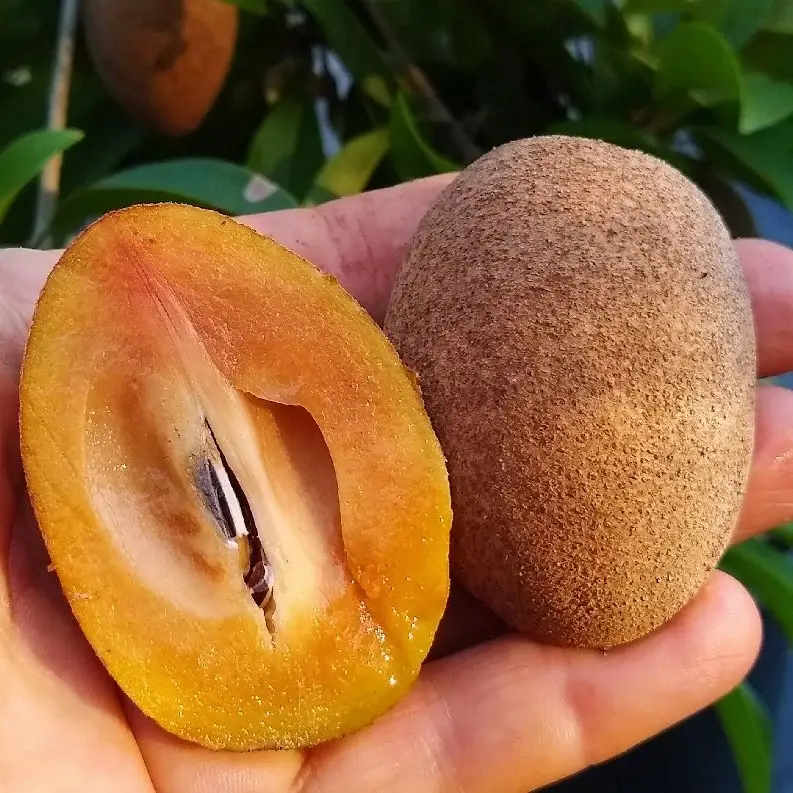
Manilkara zapota, commonly known as sapodilla, is a tropical evergreen tree native to southern Mexico and Central America, valued for its sweet, brown, grainy fruit. Seeds germinate readily without treatment within 14-30 days and achieve high success rates (up to 80%). GA3 treatment can enhance germination performance and seedling vigor for commercial cultivation.
Germination
Germination time
Expect germination in
14 – 30 days
Temperature
Min 20°C
Ideal 25°C
Max 34°C
Substrate moisture
💧 Medium
Sowing depth
Lightly covered
Seed Pre-treatment
-
💧
Soaking — 24 hours
Soak seeds in water for 24 hours. GA3 (100-200 ppm) treatment recommended for enhanced germination. KNO3 2% promotes earlier emergence. Alternatively, immerse in warm water for 3-5 days with daily water changes
-
🔨
Mechanical scarification
Mechanical scarification recommended as alternative method to improve germination
-
📋
Additional notes
GA3 at 100 or 200 ppm strongly recommended to enhance germination rate and vigor. Alternative: mechanical scarification combined with warm water soaking for 3-5 days
Substrate & Container
Recommended substrate
well-draining soil rich in organic matter
Recommended container
10cm pots or suitable plastic bags with good potting mix
Growing Tips
Remove fruit pulp from seeds and dry for few days before treatment. Soak in water for 24 hours, then treat with GA3 (100-200 ppm) or soak in warm water with daily changes for 3-5 days. Sow about 1cm deep in moist potting mix. Keep soil moist but not waterlogged. Maintain warm temperatures (25-30°C). Keep seedlings in bright area without direct sunlight initially. After 3-4 weeks, seedlings emerge and can be moved to well-lit location. Do not allow soil to dry out during early growth stages.
Only logged in customers who have purchased this product may leave a review.


Reviews
There are no reviews yet.