
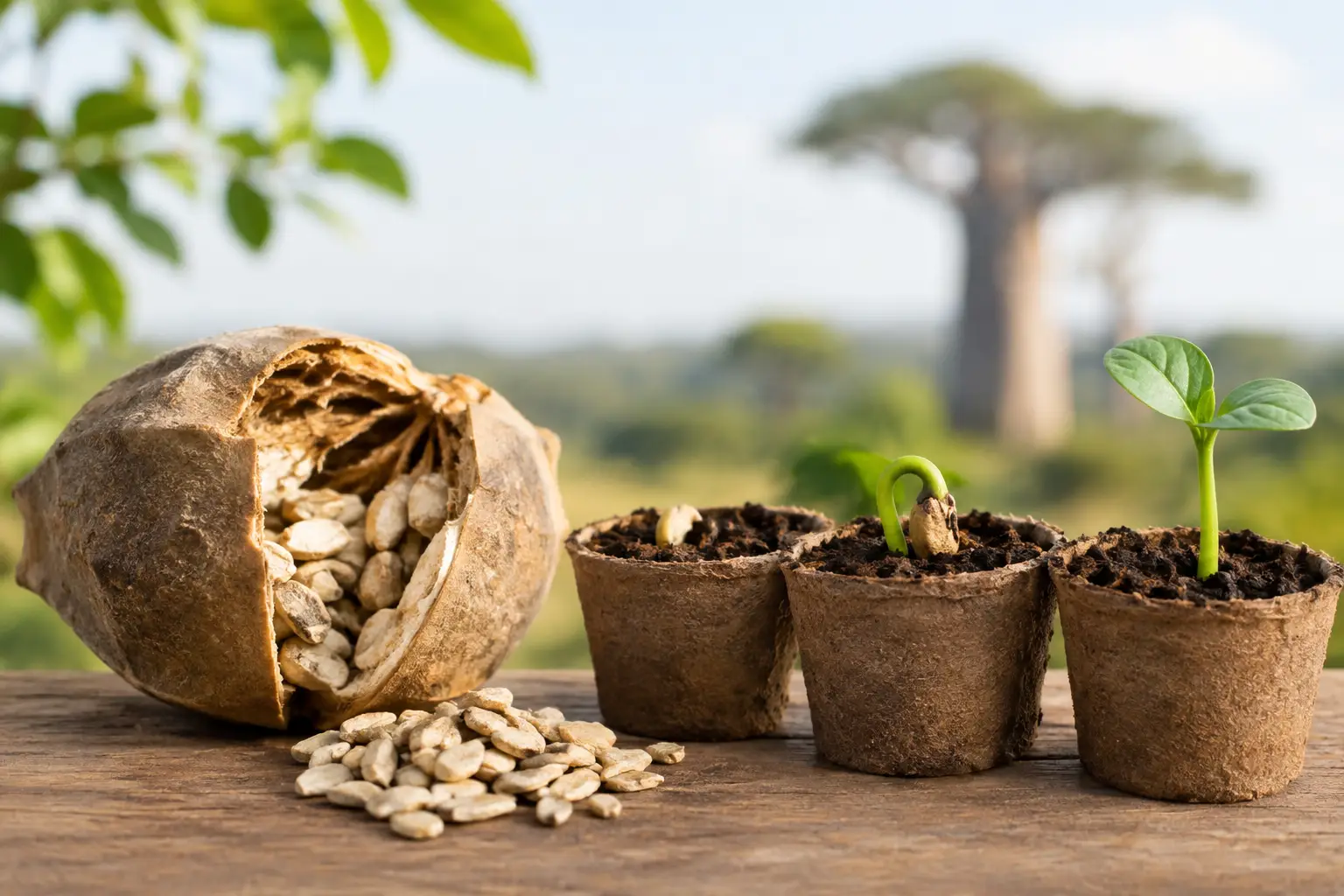
A baobab begins as a remarkably durable seed, built to wait through difficult conditions before moisture and warmth signal a favorable season. That resilience is part of its appeal, but it also explains why baobab seed germination asks more of the grower than simply sowing and watering. A successful start comes from treating the seed coat carefully, providing steady heat, and resisting the urge to keep the compost constantly wet.
For collectors raising Adansonia species outside tropical climates, the goal is not merely to produce a sprout. It is to establish a clean, well-rooted young tree with the character and longevity that make baobabs such exceptional container specimens.
The name baobab most often refers to Adansonia digitata, the African baobab of the Malvaceae family. Other species in the genus, particularly Madagascan Adansonia, may also appear in specialist collections. Their requirements overlap, though individual species, seed age, and storage history can affect speed and consistency.
Baobab seeds have a tough, water-resistant outer coat. In nature, weathering, seasonal moisture, abrasion, and passage through animals help break that barrier. Under cultivation, scarification reproduces part of this process and greatly improves the chance that water reaches the embryo.
Begin with sound seed. A viable baobab seed is generally hard, dry, and substantial for its size. Cosmetic variation in color is normal. What matters more is that seeds have been stored dry and protected from prolonged heat or dampness. No pretreatment can restore a seed that has lost viability through poor storage, so provenance remains meaningful when selecting uncommon tree seed.
Mechanical scarification is the most controlled approach. Hold one seed securely and gently wear through a small area of the outer coat with a fine file, sandpaper, or the edge of a nail clipper. Stop as soon as a lighter inner layer becomes visible. Do not cut deeply into the seed, as damage to the embryo can prevent germination.
The ideal point is often on the side of the seed, away from the small scar where it was attached within the fruit. Precision matters more than removing a large patch. You are making a passage for water, not opening the seed completely.
After scarification, soak the seeds in room-temperature to pleasantly warm water for 12 to 24 hours. Seeds that take up water may swell slightly. Those that remain hard are not necessarily unviable, but they may benefit from a second, very light pass with sandpaper before another soak.
Some growers use very hot water as a shortcut. This can work, but it is less predictable than mechanical scarification and carries a real risk of overheating the embryo. For limited quantities of curated seed, careful abrasion is usually the more considered method.
Use a fresh seed-starting mix that holds modest moisture while allowing abundant air around the seed. A practical blend might include fine coco coir or a quality sterile seed mix amended with perlite, pumice, or coarse horticultural sand. Avoid dense garden soil and heavy compost-based mixes, which stay wet too long around a slow-emerging seed.
Choose a pot with drainage holes rather than a sealed germination container. Baobabs develop a strong root system early, and excess water is a greater threat than brief surface dryness. A small deep pot or root trainer is preferable to a shallow tray, especially if several seeds are being grown individually.
Sow each seed about 1/2 to 1 inch deep. Cover it lightly, firm the medium enough to make contact with the seed, and water once so the mix is evenly moist. It should feel like a wrung-out sponge, never saturated or muddy.
Steady warmth is often the difference between prompt germination and a pot that appears inactive for weeks. Aim for a root-zone temperature around 80 to 90 F. A thermostatically controlled heat mat can be especially useful for growers in cool homes, temperate greenhouses, or climates with variable spring weather.
Bright indirect light is sufficient until seedlings emerge. Strong sun on a covered pot can create excessive heat, while a dark shelf may leave the medium too cool. If you cover the pot with a clear dome or bag to preserve moisture, ventilate it daily and remove the cover as soon as a shoot appears. Stagnant humidity encourages fungal growth and can weaken a newly emerged stem.
Check the medium every few days. Water only when the upper layer is beginning to dry, adding enough to restore even moisture without leaving water in a saucer. Baobab seedlings are adapted to seasonal dryness, but their first roots are still vulnerable to dehydration. The useful balance is moist below the surface, airy throughout, and never waterlogged.
With viable, scarified seed and reliable warmth, many baobab seeds germinate within one to four weeks. Some take longer, particularly when temperatures fluctuate or the seed coat was only partly breached. A waiting period of six weeks is not unusual, and older seed can be less uniform.
Do not excavate a seed simply because it has not emerged on schedule. Disturbing the developing root can end a germination attempt just as it is beginning. If the pot remains clean and the mix smells fresh, maintain warmth and moderate moisture. After six to eight weeks without activity, a carefully recovered seed can be inspected. A firm seed may be rescarified and resown; a soft, dark, or sour-smelling seed has likely rotted.
The first visible growth is often a sturdy curved shoot that lifts the seed leaves above the compost. Once the cotyledons open, move the pot into brighter light gradually. A sunny windowsill can be suitable after acclimation, but a young baobab moved suddenly from low light into intense midday sun may scorch.
After emergence, reduce humidity and allow the surface of the medium to dry slightly between waterings. This encourages roots to explore rather than remain in a constantly wet zone. Water thoroughly when needed, then let excess drain freely.
Young Adansonia seedlings appreciate warmth, bright light, and modest feeding only after they have produced true leaves and are actively growing. A dilute, balanced fertilizer applied infrequently during active growth is sufficient. Heavy feeding produces soft growth and does not compensate for weak light or poor drainage.
A baobab may grow with surprising speed in its first warm season, then slow dramatically as light levels fall. This is normal. In cooler regions, many plants reduce growth or shed leaves during winter rest. At that point, lower water sharply and keep the plant warm, bright, and dry enough to protect the roots. Watering a dormant baobab as though it were a tropical foliage plant is one of the most common causes of loss.
Repot only when roots have filled the existing container or growth has clearly resumed in spring. Use a deeper pot with drainage and a gritty, mineral-leaning mix. The eventual architecture of a baobab, including its swelling trunk base, develops over years rather than months. Restrained potting and attentive seasonal care usually produce a more balanced specimen than frequent upsizing.
Failure is often traceable to one of a few conditions rather than to any mystery within the seed. Seeds may remain dormant when scarification is too superficial. They may rot when planted in cold, dense, wet mix. They may also be damaged by overly aggressive filing, boiling-water treatments, or repeated handling during the waiting period.
Temperature deserves particular attention. A seed can remain viable in a cool room yet fail to make progress because its metabolic activity is too low. Conversely, a heat mat without moisture monitoring can dry the sowing mix from below. The method works best when heat, drainage, and observation are treated as one system.
Growing a baobab from seed is an exercise in measured cultivation. The dramatic trunk and sparse canopy associated with mature Adansonia are far in the future, but the essential decisions are made in the first pot: protect the embryo, give it warmth, and let its roots establish in air as well as moisture. For the patient grower, that small hard seed is not a quick novelty. It is the beginning of a long-lived botanical presence.