
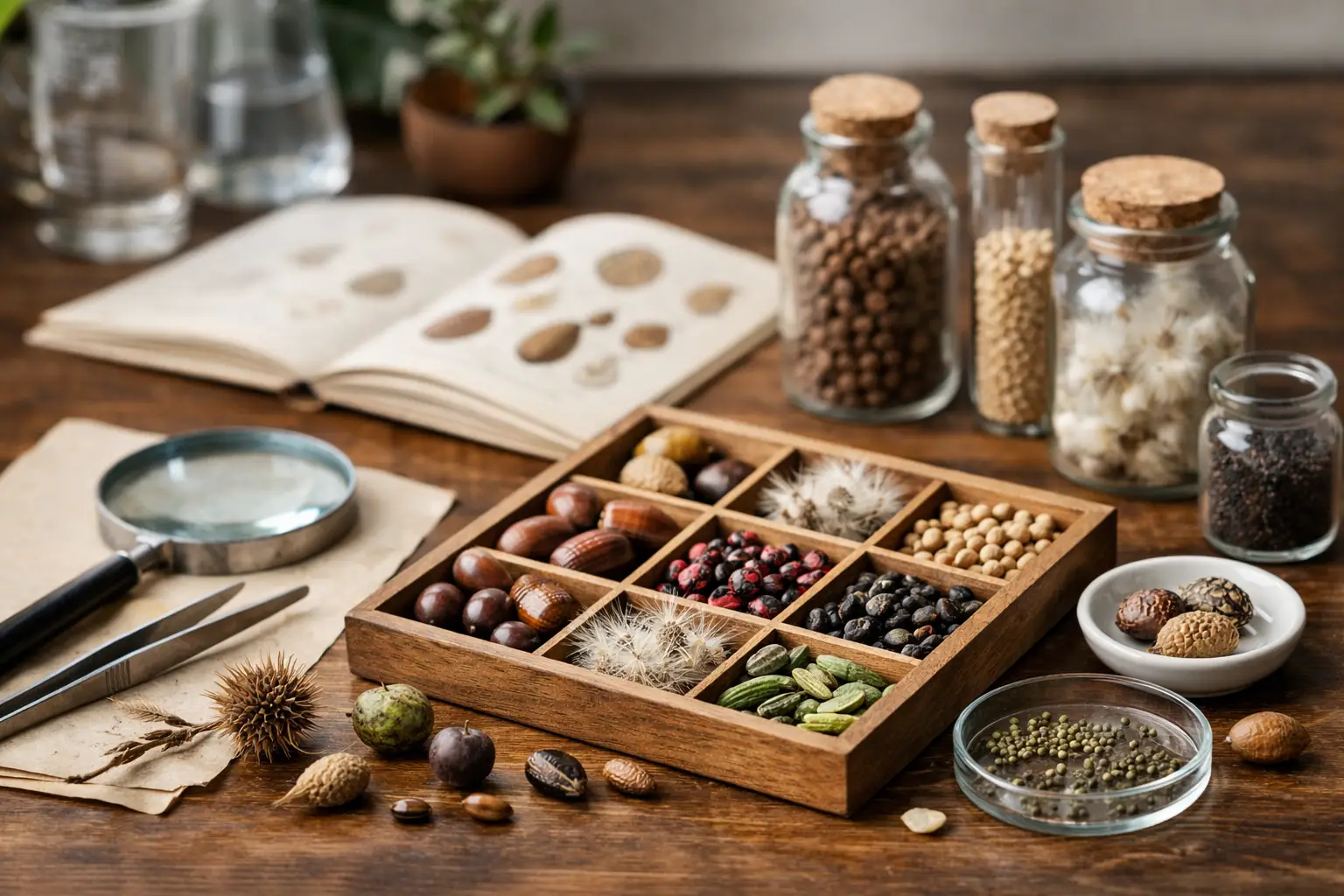
A seed listed simply as “pepper tree” leaves too much to chance. It may refer to an unrelated plant in another region, while Schinus molle, Peruvian pepper, identifies one particular species with a distinct habit, climate preference, and place in a collection. This guide to botanical seed taxonomy helps growers read seed names as useful horticultural information rather than decorative catalog language.
Taxonomy is the system used to name and classify plants according to their relationships. For the collector, it is a practical tool. A botanical name can clarify whether a seed is a sprawling herb, a frost-sensitive tropical tree, a long-lived shrub, or a plant likely to need a particular form of dormancy treatment before it will germinate.
Common names remain useful for conversation, cultural history, and garden memory. They are not reliable identifiers on their own. “Sumac,” for example, may describe several species in the genus Rhus, each with different native ranges, mature sizes, and ornamental qualities. A scientific name provides the shared point of reference that common names cannot always offer.
Taxonomy also makes a considered seed collection easier to build. Once you recognize a genus or family that interests you, you can compare related species with more purpose. You may seek edible members of Anacardiaceae, aromatic plants within Lamiaceae, or distinctive dryland trees from a particular branch of a broader botanical lineage.
Most seed listings center on a two-part scientific name. The first word is the genus, and the second is the specific epithet. Together, they identify the species.
The genus begins with a capital letter, while the specific epithet is lowercase. Both are traditionally italicized in print. This convention is more than presentation. It helps separate the formal plant identity from common names, descriptive phrases, and marketing categories.
A genus groups closely related species. In practice, seeing Rhus tells you that the plant belongs to a recognizable cluster of sumacs, but it does not tell you that every Rhus will perform identically. Rhus typhina and another species in the same genus may differ materially in hardiness, growth rate, leaf form, or tolerance for heat and drought. Use genus-level familiarity as a starting point, then make decisions at species level.
A species sits within a larger hierarchy. For seed buyers, the most useful ranks are family, genus, and species:
A label such as Sclerocarya birrea subsp. caffra identifies a subdivision within the species. A cultivar name, by contrast, is usually written in single quotation marks, as in Plant Name ‘Selection’. Cultivars represent selected cultivated plants. They may not produce seed that grows true to the parent, particularly when the cultivar is a hybrid or when cross-pollination is possible.
For collectors growing from seed, this distinction matters. Species seed offers genetic variation, which can be part of its appeal. A named cultivar generally promises a narrower, selected set of traits only when it is propagated by a method that preserves that selection, often vegetative propagation rather than seed.
Family names often end in “-aceae,” such as Anacardiaceae, the cashew family, or Caprifoliaceae, a family that includes Valeriana officinalis under current classification. Family placement offers a useful first impression of botanical relationship and can make browsing a specialist assortment more rewarding.
It should not be treated as a complete cultivation manual. Related plants may share tendencies, but family membership cannot predict exact germination behavior, winter hardiness, mature dimensions, or soil requirements. A tropical fruit tree and a temperate ornamental within the same broad family can ask very different things of the grower.
Think of family taxonomy as a way to notice patterns. It may help you recognize recurring fruit structures, aromatic foliage, or broad geographic associations. Then return to the species description for the cultivation details that determine whether a plant suits your greenhouse, landscape, container collection, or seed-starting setup.
Botanical names change. As plant relationships are studied through morphology, herbarium records, and genetic evidence, taxonomists sometimes move a species into another genus or revise the accepted name. Older books, regional floras, nursery labels, and private collections may therefore use a different scientific name for the same plant.
A synonym is not necessarily a mistake. It may be a formerly accepted name that remains common in horticulture or ethnobotanical literature. The useful question is whether the seller clearly identifies the currently accepted name and acknowledges a familiar alternative where confusion is likely.
When comparing seed offers, search both the accepted name and major synonyms. This is especially valuable for plants with a long history in cultivation, medicinal use, or regional trade. It can reveal older germination notes, alternate common names, and valuable context that a single search term would miss. It also prevents the accidental purchase of two packets of the same species under different names.
A correctly named seed is essential, but its identity does not tell the entire story. Provenance concerns where the parent population or cultivated seed crop originated. Two lots of the same species may have different climatic adaptation, genetic history, or collection context.
For unusual trees and ethnobotanical species, provenance can shape expectations. A species broadly associated with warm climates may still come from an upland, coastal, dry, or seasonally wet population. Those distinctions may influence how a young plant responds to cold, drought, humidity, and day length. They do not override the species’ basic limits, but they are meaningful details for patient growers.
Taxonomy answers, “What plant is this?” Provenance begins to answer, “What population does this seed represent?” A careful seed listing separates those questions rather than using an evocative origin story in place of a scientific name.
Before adding an unfamiliar species to a collection, begin with the full botanical name and confirm that it is written to species level. Then consider the family and genus as context, not proof of performance. Review the plant’s native or cultivated range, life cycle, expected mature size, and likely climate limits.
Next, distinguish seed treatment from plant care. Scarification, cold stratification, warmth, light sensitivity, and extended germination periods describe the beginning of cultivation. They do not necessarily describe the conditions an established specimen will need years later. This is a frequent source of disappointment with woody species and plants adapted to seasonal climates.
Finally, decide what role the plant will play. A medicinal herb such as Valeriana officinalis may belong in a functional garden. Cashew or marula may be a long-term greenhouse or warm-climate project. Staghorn sumac may be chosen for structure, seasonal color, and ecological character. Purpose creates useful limits, and limits are often what turn an interesting seed into a successful specimen.
Taxonomy can organize a seed collection without making it rigid. Some growers build around a plant family, comparing species across climates and continents. Others collect by growth form: drought-adapted trees, medicinal perennials, fruiting shrubs, or sculptural ornamentals. A third approach follows ethnobotanical value, selecting plants with documented culinary, aromatic, craft, or traditional-use histories while keeping cultivation requirements in view.
At Quinta dos Ouriques, species-level naming supports this more deliberate way of choosing. It allows a rare seed to be considered for its actual botanical character, not merely for the appeal of a common name or a photograph.
The most satisfying collections retain room for surprise, but not confusion. Read the name closely, follow it through family, origin, and cultivation demands, and let each packet earn its place as a living botanical decision.