
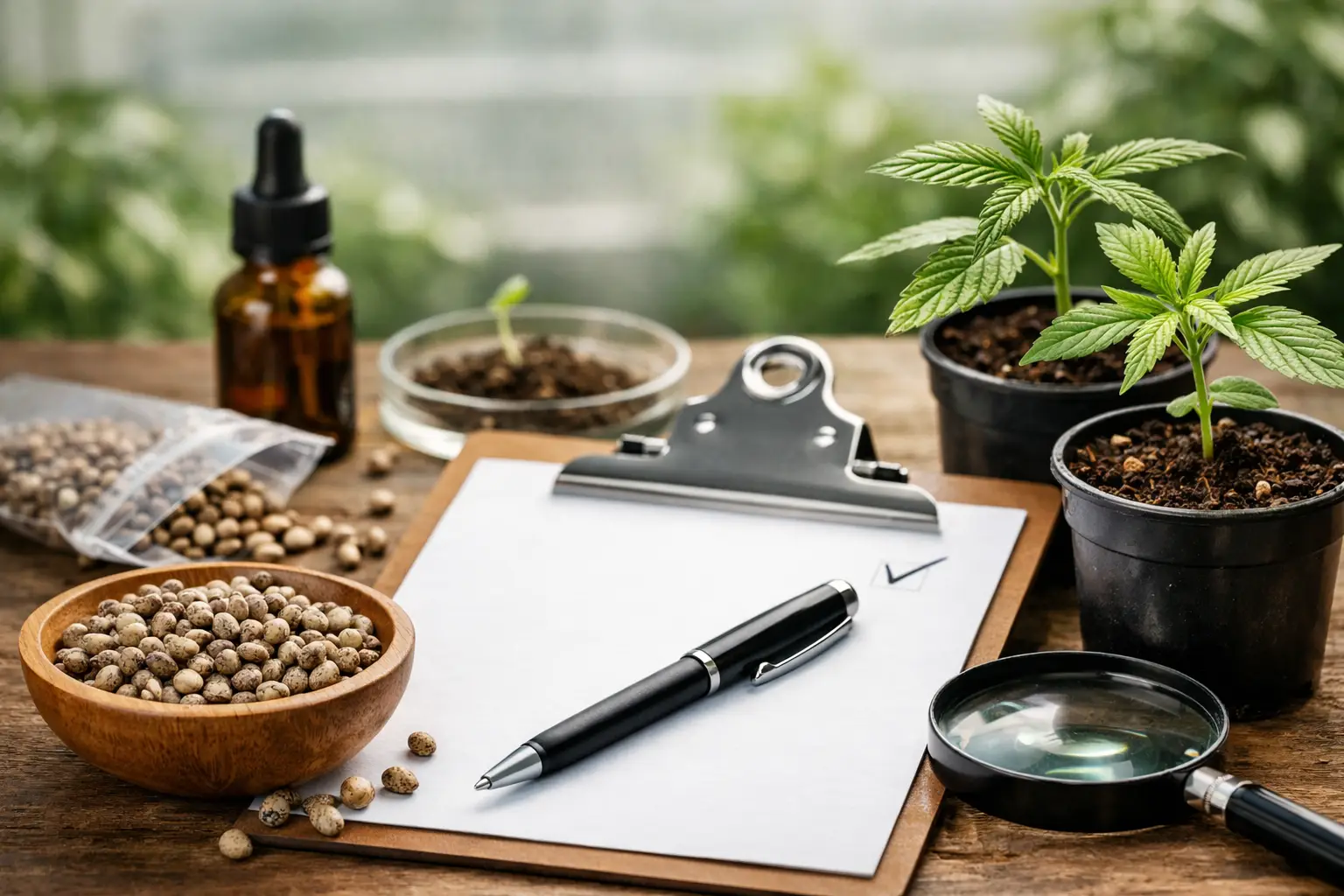
A packet of Sclerocarya birrea or Anacardium occidentale seed may look like a modest addition to a greenhouse bench, but it is also plant material crossing a regulatory boundary. Are exotic seeds legal in the United States? Often, yes. Yet “exotic” is a market description, not a legal category, and legality depends on the exact species, its origin, its intended use, and the rules that apply where it enters and where it will be grown.
For collectors, that distinction matters. A species can be uncommon in cultivation, perfectly lawful to possess, and still require import documentation. Another may be freely available as a cultivated ornamental in one state but restricted in another because of its invasive potential. The sensible approach is not to avoid unusual seeds. It is to treat each accession as botanical material deserving careful identification and a little due diligence.
The United States does not maintain a blanket ban on “exotic seeds.” Most seeds of non-native garden plants can be imported and grown when they meet federal and state requirements. The governing question is usually whether the seed presents a plant-health, invasive-species, conservation, or controlled-substance concern.
Federal oversight commonly involves the US Department of Agriculture’s Animal and Plant Health Inspection Service, known as APHIS. Its interest is practical: seeds can carry pests, pathogens, weed contaminants, soil, or undeclared plant material. Requirements vary by plant genus, country of origin, shipment size, and method of entry.
This is why a botanical name is more useful than a common name. “Pepper tree,” for example, can refer to several unrelated plants. Schinus molle, Peruvian pepper, is botanically distinct from culinary black pepper, Piper nigrum. A customs declaration or permit application based on a vague trade name invites confusion. A correctly identified species gives regulators, sellers, and growers a shared point of reference.
For personal seed imports, US growers may encounter two common routes. Some small seed lots may qualify for a small-lots seed permit program, subject to its current conditions. Other shipments require a phytosanitary certificate issued by the exporting country’s plant-protection authority. The appropriate route is determined by the shipment and species, not by whether the seed feels rare or ordinary.
A measured review before purchase protects both the collection and the wider landscape. Start with the species itself, then consider the route it will take to your garden.
A plant can be desirable in a dry garden, ethnobotanical collection, or specimen planting while still being inappropriate in a particular region. State departments of agriculture, natural-resource agencies, and local invasive-plant lists may restrict sale, transport, planting, or distribution of named species.
These rules are especially relevant for vigorous woody plants, aquatic species, grasses, vines, and plants adapted to climates similar to the destination. A tropical seed is not automatically safe simply because it cannot survive a northern winter, and a Mediterranean ornamental may be more suited to parts of California or the Southeast than a buyer expects.
Restrictions can also differ sharply across state lines. Before ordering, check both the state where the package will be delivered and the state where the plant will ultimately be cultivated. If you maintain a collection in a greenhouse, conservatory, or protected indoor setting, confirm whether that changes the local requirement. It sometimes does, but not always.
Some seeds are covered by international conservation controls because wild populations are threatened or trade is monitored. This is most often discussed in connection with orchids, cycads, cacti, certain succulents, and timber species, but it is not limited to them.
The critical distinction is between cultivated and wild-collected material. A species may be legal to trade under specific paperwork, while seed taken from a protected wild population may be unlawful or ethically unacceptable. For the collector, documented cultivation history is part of seed quality. It supports lawful trade and helps preserve pressure-free pathways for rare plants to remain in cultivation.
Certain plants are regulated because of narcotic laws, biosecurity concerns, or specific federal prohibitions. Seeds of some species may be restricted even when the packet contains no active compound, while other species are legal as ornamentals despite having a suggestive common name. Assumptions are a poor substitute for checking the scientific name and current rule.
Do not rely on descriptions such as “ethnobotanical,” “medicinal,” or “traditional use” as indicators of legality. These labels describe cultural or horticultural interest, not a regulatory status. A serious collection is built with the same precision used in its plant labels.
A legal species can still be stopped at the border if its paperwork, labeling, or packaging is insufficient. Seeds arriving in soil, mixed with chaff or fruit pulp, carrying an incorrect name, or lacking required certificates may be refused, destroyed, or returned.
Clean, dry, clearly labeled seed is not merely a presentation standard. It is a practical part of plant-health compliance. The outside of a shipment should accurately identify its contents, and documents should match the botanical identity of the seed inside. Never ask a seller to disguise plant material, undervalue it, or label it as a gift to bypass inspection. The short-term convenience is not worth the loss of material or the risk to future imports.
The least complicated way to acquire unusual plants is often to buy seed that has already entered the United States through a compliant route. This does not remove every responsibility. State restrictions still apply, and a seller’s availability is not a guarantee that the species is appropriate for every destination. It does, however, generally reduce the purchaser’s role in customs documentation and international phytosanitary procedures.
Direct import can be rewarding when pursuing a species that is absent from domestic cultivation. It also places more responsibility on the buyer. Before placing an order, establish the full botanical name, country of dispatch, quantity, and whether the seller can provide the documents required for that species and route. Ask these questions before paying, not after a parcel is in transit.
For a small personal collection, avoid treating seed ordering as a casual shopping exercise. A carefully chosen packet of Valeriana officinalis, Rhus typhina, or marula may represent years of cultivation potential. Its provenance, sanitation, and legal pathway deserve the same attention as germination conditions.
Legality is only the first threshold. A species can be lawful to import but poorly suited to an outdoor planting, too tender for the local climate, difficult to contain, or incompatible with a collector’s available space. Conversely, a plant that appears dramatic or foreign may be entirely manageable as a potted specimen under glass.
Consider mature size, reproductive behavior, cold tolerance, and escape potential alongside the rules. Cashew, Anacardium occidentale, is generally a warm-climate tree and a considered container or conservatory subject in much of the United States. Staghorn sumac, Rhus typhina, is hardy over a far wider range but spreads by suckers and deserves room or deliberate containment. These are horticultural decisions rather than universal legal conclusions, but they show why purposeful cultivation matters.
Collectors also benefit from recording source, date received, and botanical name for every accession. Keep copies of invoices, permits, phytosanitary documents, and correspondence for imported seed. Such records are useful if a question arises later, and they preserve provenance as plants are grown, shared, or propagated.
Before introducing an uncommon species to a US collection, confirm its accepted scientific name and look for synonyms. Review current federal import conditions, then check invasive-plant and noxious-weed rules for your state. If the species has conservation relevance, verify its trade status and source documentation. Finally, make sure the seller’s labeling and paperwork can match what the shipment actually contains.
Rules can change, and genus-level assumptions are not reliable enough for a purchase decision. The most current guidance should come from APHIS, your state agriculture department, and, where relevant, the appropriate conservation authority. When a rule is unclear, pause the order and seek written clarification.
Unusual seed is most rewarding when rarity is paired with responsibility. Choose material with a clear identity and a lawful route, then give it the patience, records, and growing conditions that a meaningful botanical collection deserves.