
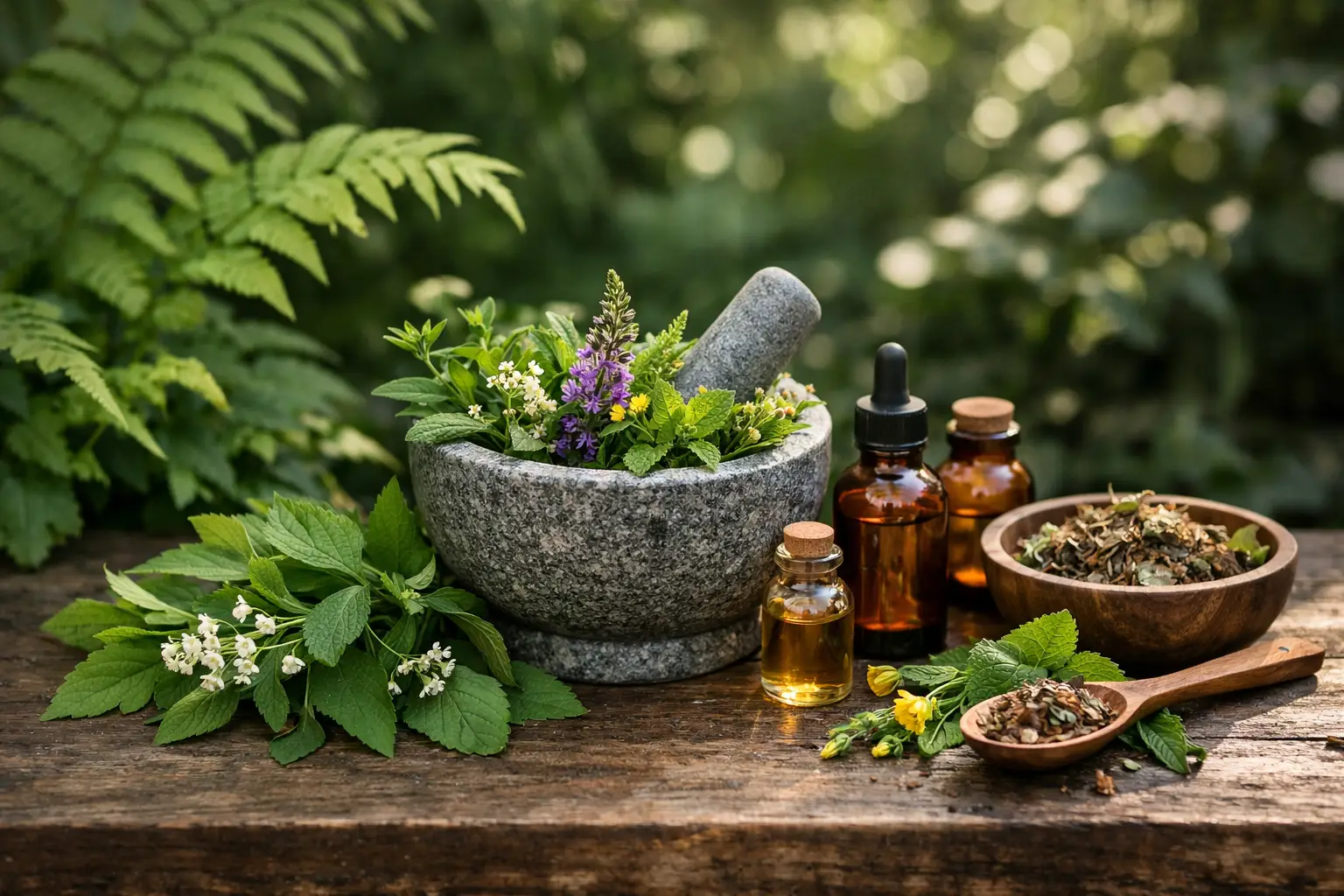
A shaded border is not an empty corner waiting to be brightened with annuals. It can be a deliberate woodland collection, especially when planted with the best shade loving medicinal herbs: species whose history, structure, and cultivation reward a more observant grower. Many of these plants are slow to establish, particular about moisture, or valuable precisely because they do not appear in standard seed racks.
Medicinal use deserves restraint. A plant’s traditional record is not a personal prescription, and several species discussed here can interact with medications, cause adverse effects, or be unsuitable during pregnancy. Grow them first as botanical subjects, learn their identity well, and consult a qualified health professional before using any plant medicinally.
Few useful herbs thrive in the deepest, driest darkness beneath mature evergreens. Most woodland medicinal species prefer filtered light, bright shade, or a few hours of gentle morning sun. Their real requirement is often a cool root zone with soil that holds moisture while still draining freely.
Before selecting seed, distinguish between dry shade and moist shade. Dry shade under established trees favors resilient ground-covering species such as Galium odoratum. A damp woodland edge, creekside bed, or irrigated north-facing border can support more demanding plants, including Actaea racemosa and Hydrastis canadensis. Leaf mold, composted bark, and decaying woodland litter create the humus-rich texture these plants recognize.
Patience is part of the design. Some of the most interesting shade herbs have irregular germination or require a sequence of warm and cold stratification before emergence. Their slow pace is not a fault. It is an expression of a life cycle adapted to forest floors, where seeds germinate when seasonal signals and moisture align.
Valeriana officinalis is among the most recognizable medicinal perennials for a partially shaded garden. It forms a substantial clump of divided foliage and produces airy clusters of pale, sweetly scented flowers. The roots have a long history in European herbal practice, particularly in preparations associated with rest and relaxation.
Give valerian fertile, consistently moist soil and afternoon shade in warm climates. It tolerates more sun where summers are mild, but a shaded edge often keeps foliage fresher. This is a vigorous species, so allow room for a mature plant and remove spent flower stems if reseeding is not wanted.
Blue skullcap is a refined choice for moist shade rather than a dramatic specimen. Scutellaria lateriflora carries small blue flowers along slender stems and fits naturally into a planting with ferns, violets, and other low woodland perennials. It has a North American herbal tradition related to calming preparations.
It performs best in evenly moist, organic soil and benefits from protection against hot afternoon sun. Seedlings can be delicate at first, but established plants make an appealing, softly textured colony. Do not confuse this species with ornamental skullcaps or assume every member of the genus has the same traditional use.
Sweet violet offers flowers, fragrance, and a long record in European household herbalism. Viola odorata is particularly useful where a medicinal planting should also feel generous and ornamental, as its violet or white flowers appear early, often before the rest of the border has awakened.
It accepts dappled shade and moderate moisture, spreading gradually by runners in favorable ground. Traditionally, flowers and leaves have been used in syrups, teas, and soothing topical preparations. Grow it where its modest expansion can be welcomed, rather than beside tiny seedlings likely to be covered by its foliage.
For stature and architectural presence, few medicinal herbs match Angelica archangelica. Its large divided leaves and broad greenish flower umbels lend a northern, almost monastic character to a damp shaded bed. The stems, seeds, and roots have a notable history in European food and herbal traditions.
Angelica generally prefers bright shade or morning sun, moisture, and deep soil. It is biennial or short-lived, and fresh seed is especially valuable because viability declines quickly. Identification matters greatly: several members of the carrot family are dangerously toxic. Grow only accurately labeled seed, and never forage or consume an unidentified umbellifer.
Actaea racemosa, formerly often listed as Cimicifuga racemosa, is a distinguished eastern North American woodland perennial. Its tall white flower spikes rise above dark, divided foliage in midsummer, creating a vertical accent where many shade plants remain low. The root has been used historically in herbal medicine, especially in women’s health contexts.
This is not a quick crop. Black cohosh needs rich woodland soil, dependable moisture, and time to form a mature crown. It may take several years to become impressive from seed. Given concerns about wild harvesting and habitat pressure, cultivated plants offer a more responsible way to appreciate this species, while medical use should be approached with professional guidance.
Goldenseal is one of the most sought-after North American medicinal woodland plants, recognizable by its palmate leaves, single white flower, and bright red berry. Hydrastis canadensis has a prominent commercial history, but it is also a species that demands ethical attention because wild populations have been affected by collection pressure.
For growers able to provide a true woodland setting, it is a serious and rewarding subject. Use deep leaf mold, maintain steady moisture, and expect slow germination and gradual growth. It is not a plant for casual harvesting. Seed-grown cultivation can support a conservation-minded collection, but any intended medicinal use requires careful consideration of safety, sourcing, and local regulations.
In warm, humid conditions, Centella asiatica is an excellent shade herb with rounded leaves held on creeping stems. It is widely known in Asian herbal traditions and suits containers, greenhouse benches, and sheltered garden pockets where the soil never dries completely.
Unlike many temperate woodland herbs, gotu kola dislikes frost. North of its hardy range, grow it as a container plant and move it indoors before cold weather arrives. Bright indirect light, warmth, and consistently moist potting mix are more useful than a large garden bed. Its compact habit also makes it well suited to collectors working with limited space.
Sweet woodruff is a classic plant for dry to moderately moist shade. Galium odoratum forms a low carpet of whorled leaves and small white spring flowers, releasing a hay-like fragrance when dried. It contains coumarin-related compounds and has a traditional role in scented sachets, drinks, and folk herbal preparations.
It is one of the easier species in this group, but ease should not invite overuse. Let it naturalize beneath deciduous shrubs or along a shaded path, where its foliage can knit a planting together. Because it spreads by rhizomes, it is best placed where a living ground cover is desired rather than in a tightly controlled alpine or collector’s pot display.
The strongest shade planting combines different heights and growth rhythms. Use sweet woodruff and sweet violet as a lower layer, blue skullcap through the middle, and angelica or black cohosh as seasonal punctuation. Valerian can occupy a brighter, wetter margin, while goldenseal belongs in the most protected and humus-rich portion of the bed.
Keep labels in place, ideally with both common and scientific names. This is particularly valuable in a medicinal collection, where close relatives may differ substantially in chemistry, traditional use, and safety. Record sowing dates, stratification periods, emergence patterns, and the source of each accession. Those notes become part of the collection’s value over time.
A shaded garden becomes more compelling when it is allowed to be specific. Choose species that suit the moisture, winter temperatures, and scale of your site, then give them the years they need to reveal their character.