
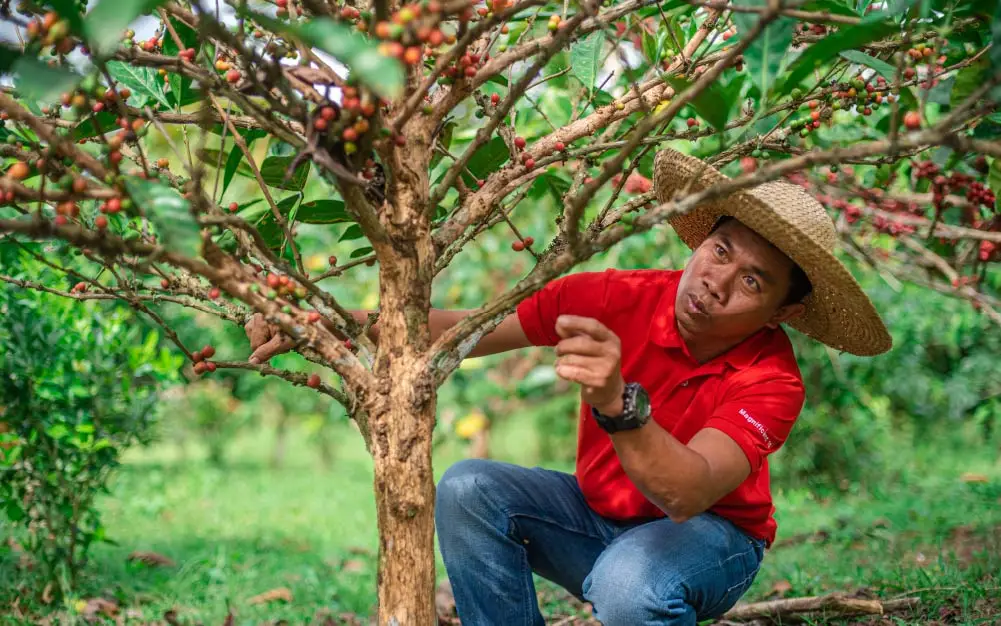
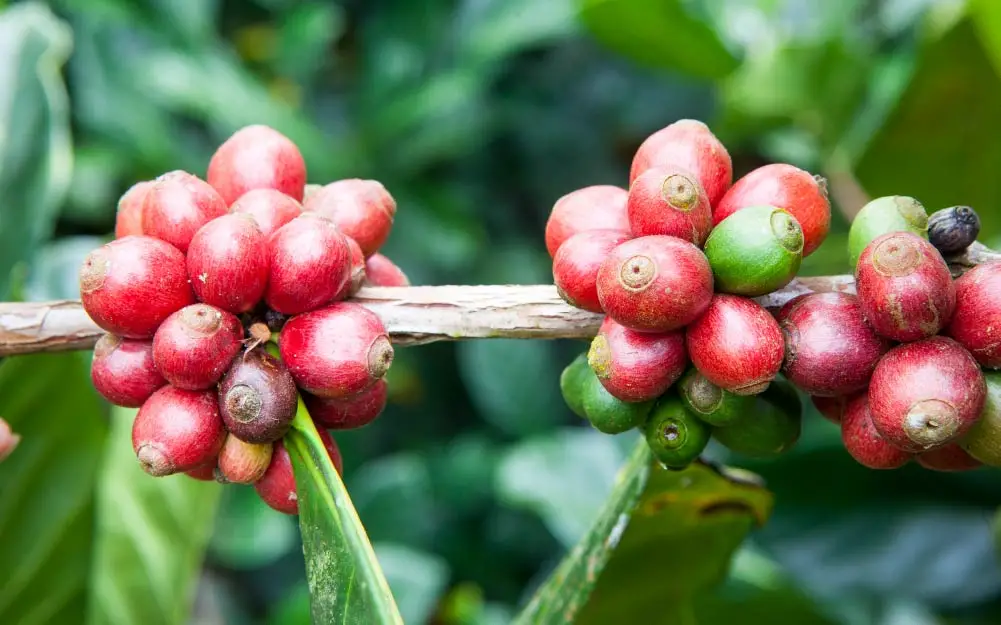
Grow the world’s rarest coffee—less than 1% of global production. This towering evergreen produces massive, fragrant white flowers followed by enormous cherries containing extraordinary beans with bold, smoky-woody flavor. From seed to cup, cultivate your own legendary specialty coffee. Moderate care; thrives in tropical warmth and humidity.
Imagine harvesting coffee beans from a plant you grew yourself—beans so rare and extraordinary that fewer than 1 in 100 coffee drinkers will ever taste them.
Coffea liberica is a living legend. Once dominating nearly half the world’s coffee production in the 1880s, it nearly vanished—replaced by easier cousins. Today it survives as an exclusive treasure, cultivated mainly in Southeast Asia, West Africa, and by passionate collectors worldwide. Growing it from seed connects you to coffee history, botanical rarity, and the thrill of self-sufficiency.
THE COFFEE LOVER’S HOLY GRAIL
Liberica beans are the protagonist of specialty coffee. Unlike the everyday smoothness of Arabica or the aggressive boldness of Robusta, Liberica delivers a complex, full-bodied cup that devotees describe as smoky, woody, and deeply floral—with intriguing hints of spice and stone fruit. The flavor is polarizing, unapologetic, and absolutely unforgettable. Coffee experts praise its natural sweetness (higher sugar content than both cousins) balanced by a rich body and remarkably low caffeine (1.23g per 100g—the lowest of all commercial coffees). When properly processed and roasted, a cup of Liberica is liquid complexity: jasmine-like florals in the aroma, dark chocolate and nutty notes emerging mid-palate, lingering smoky finish. This is the coffee that makes you close your eyes.
What makes Liberica extraordinary as a home-grower’s plant: you’re cultivating a seed-to-cup experience that’s impossible with Arabica or Robusta. The beans are visibly unique—asymmetrical, almond-shaped, teardrop-like—nearly double the size of standard coffee beans. When you roast your own harvest, you’ll understand why specialty roasters command premium prices. A single harvest produces high-quality beans that rival commercially-available Liberica from the Philippines or Malaysia.
AN ARCHITECTURAL MASTERPIECE
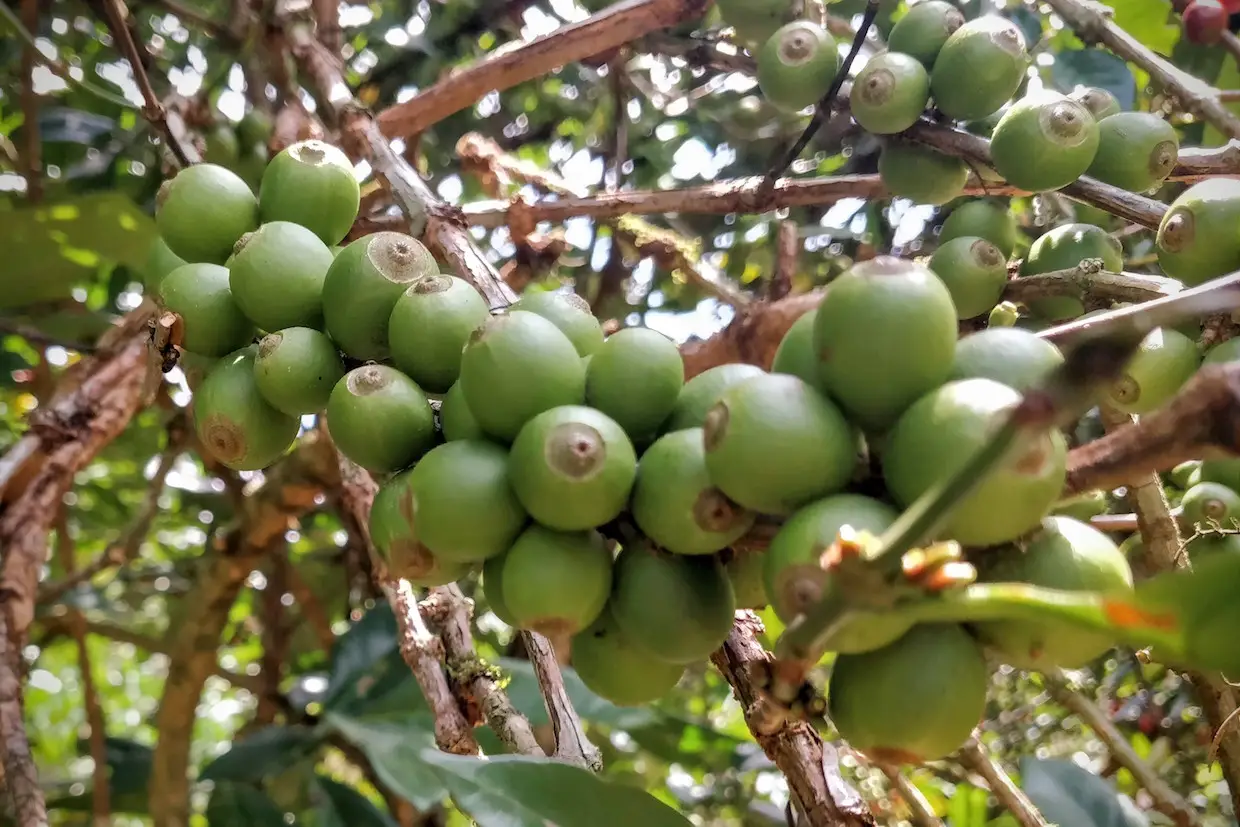
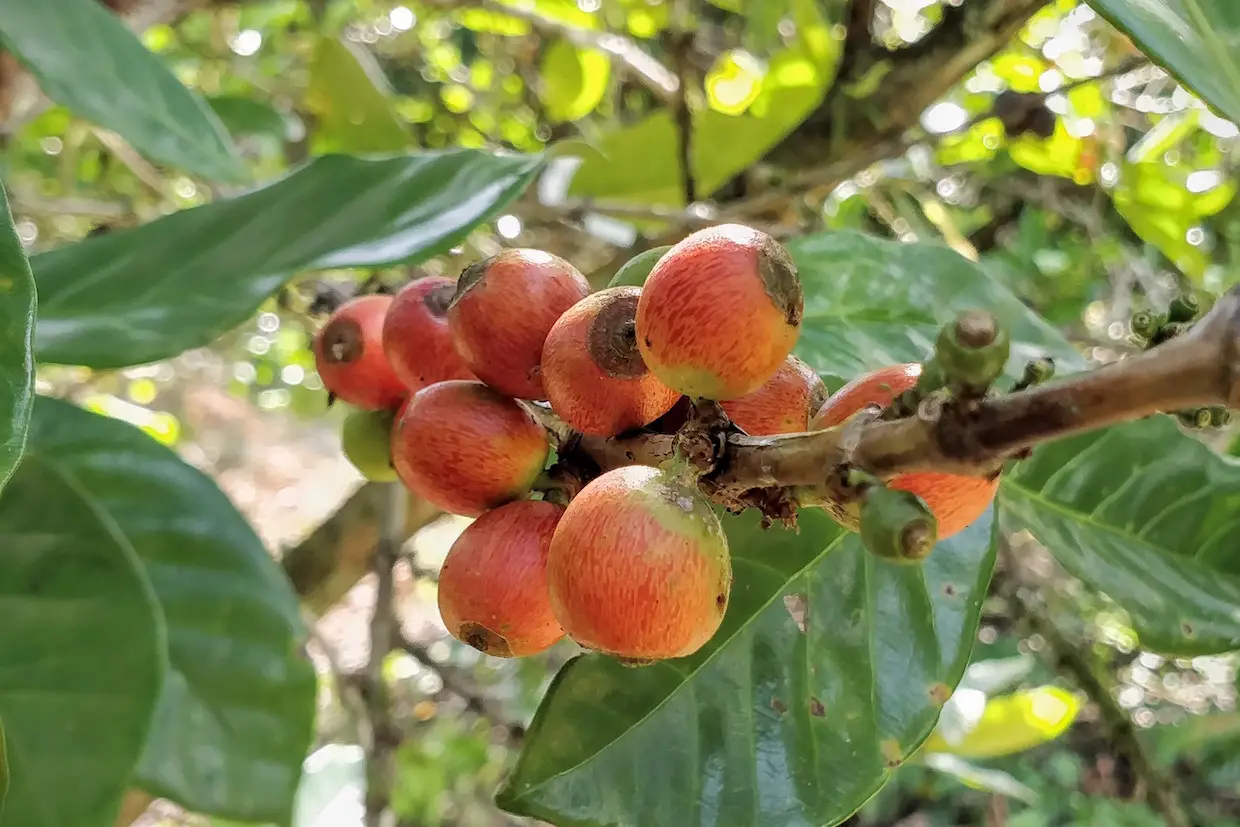
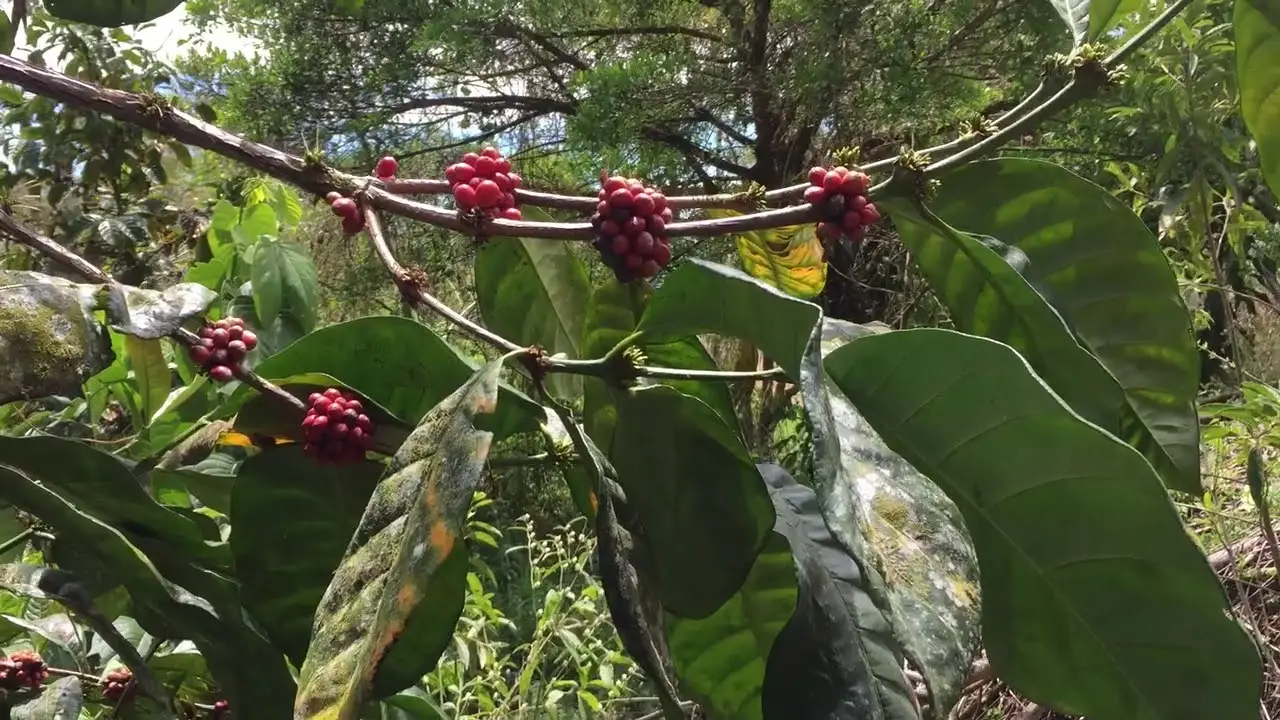
Beyond the beans, Liberica is a stunning ornamental. It grows as an evergreen shrub or small tree reaching 5–20 meters (up to 65 feet in ideal conditions), though container cultivation keeps it manageable. The foliage is dramatic: large, glossy, leathery dark-green leaves up to 30cm long with a distinctive wavy edge, creating a luxurious canopy. Come spring and summer, the plant erupts in clusters of fragrant white flowers (about 30-40mm across) that smell like jasmine—sweetly aromatic enough to perfume a room. These are followed by massive cherries, double the size of Arabica or Robusta, that shift from green to deep purple-red as they ripen over 12-14 months. The entire fruit is edible; the pulp is sweet and can be used in fermentation or composting. This is not just a coffee plant; it’s a living sculpture.
HOW TO GROW LIBERICA FROM SEED
Liberica is remarkably resilient compared to Arabica—a major selling point. It thrives in warm, humid tropical and subtropical climates with temperatures between 24–30°C (75–86°F). Unlike Arabica’s finicky preference for high altitudes and cool conditions, Liberica embraces lowland heat. It tolerates harsh conditions—warm, humid weather is its sweet spot, with consistent rainfall between 1,500–2,500mm annually. While it prefers moisture, its deep root system makes it more drought-tolerant than Arabica once established.
Light: Provide bright, indirect light. Liberica tolerates full sun far better than Arabica, though partial shade can enhance fruit development. Near a sunny window is ideal for indoor growing.
Soil: Use well-draining, loamy soil rich in organic matter (peat-free compost blended with coco coir and perlite works beautifully). The plant appreciates slightly acidic to neutral pH (5.5–6.5). Think tropical forest floor—rich, breathable, moist but never waterlogged.
Water: Keep soil consistently moist during the growing season (spring and summer), but reduce watering in winter. The plant appreciates high humidity—60–80% is optimal. Mist regularly or group plants together to create a humid microclimate. If growing indoor
Only logged in customers who have purchased this product may leave a review.


Reviews
There are no reviews yet.