
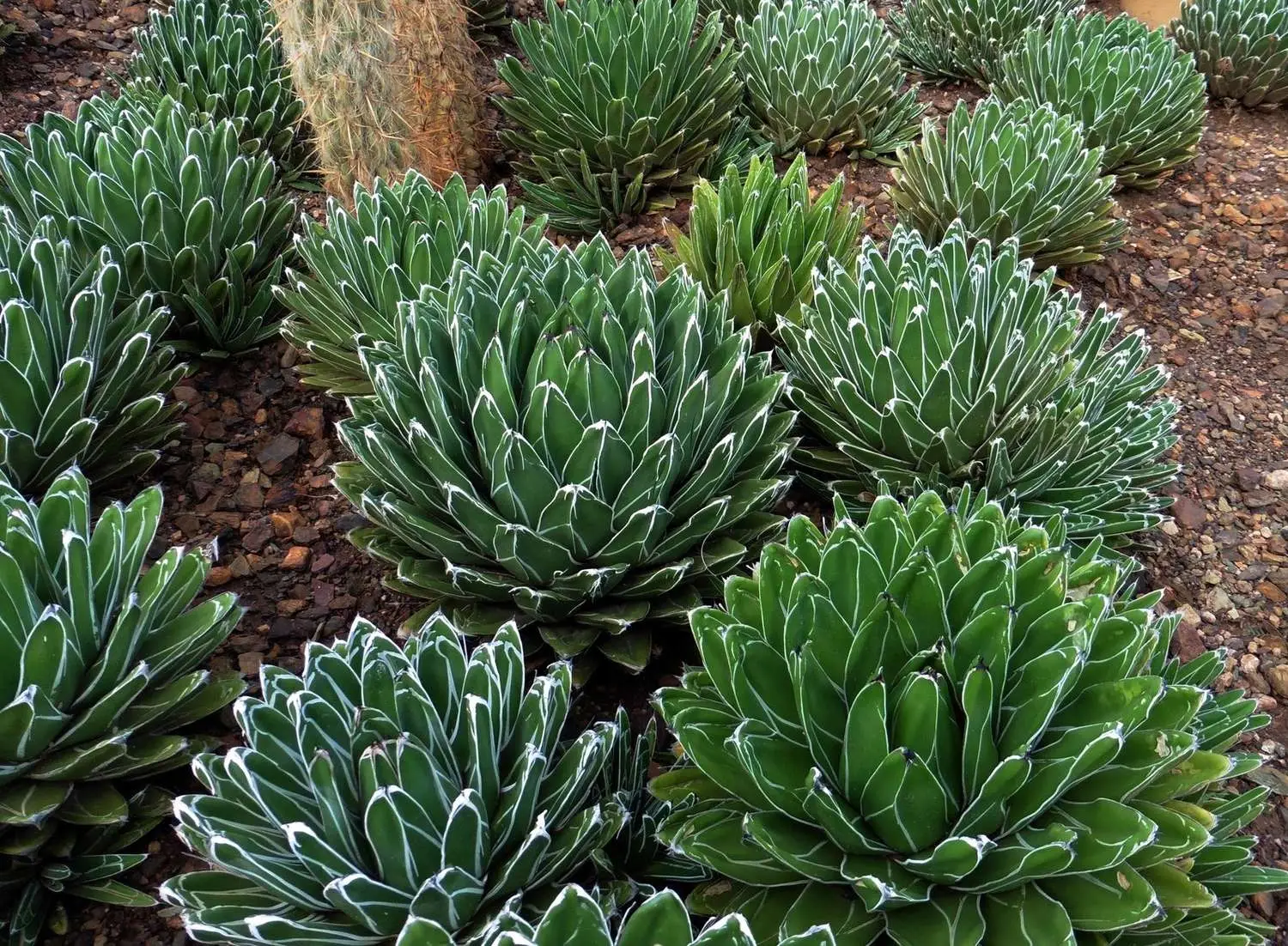
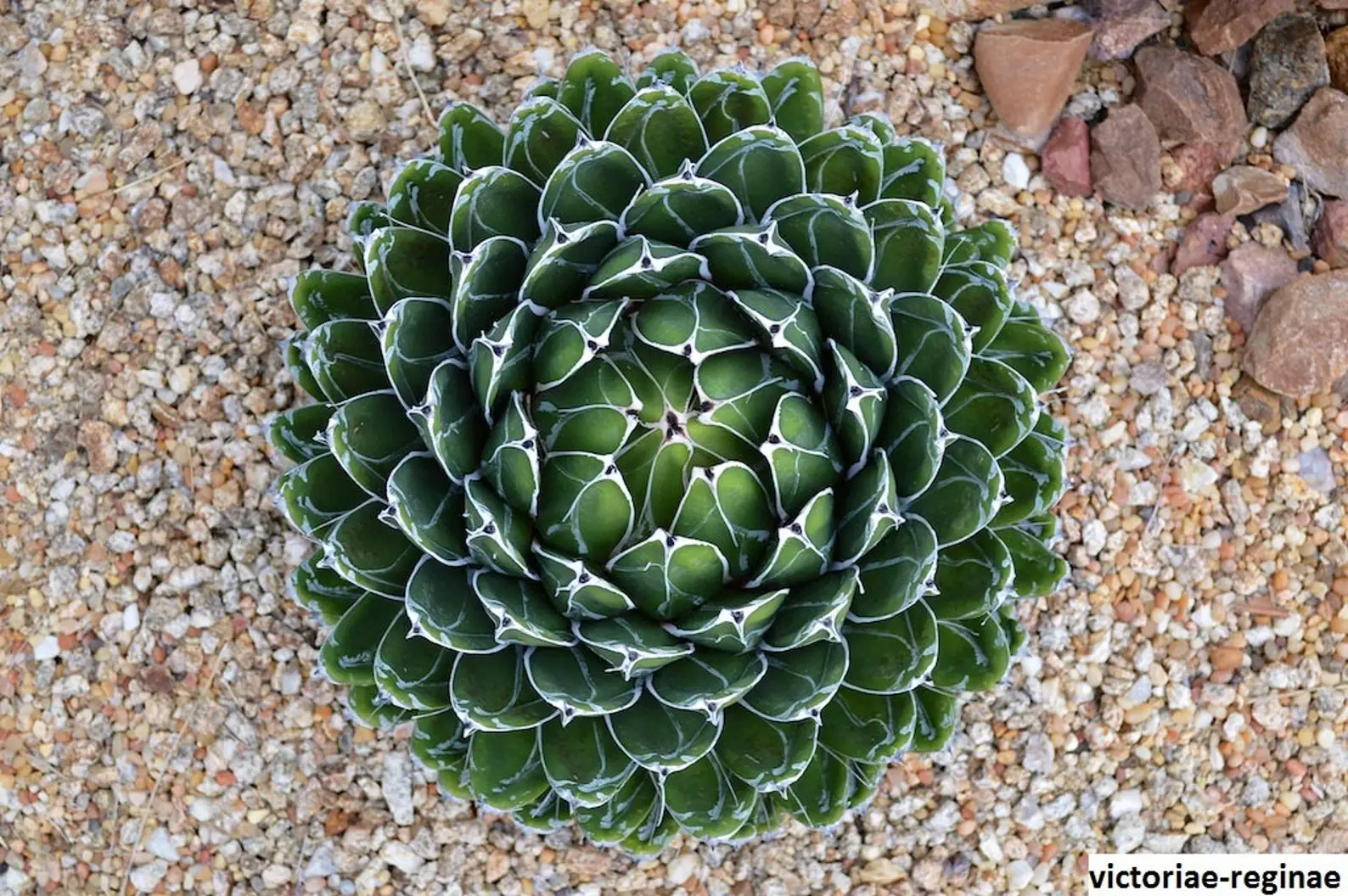
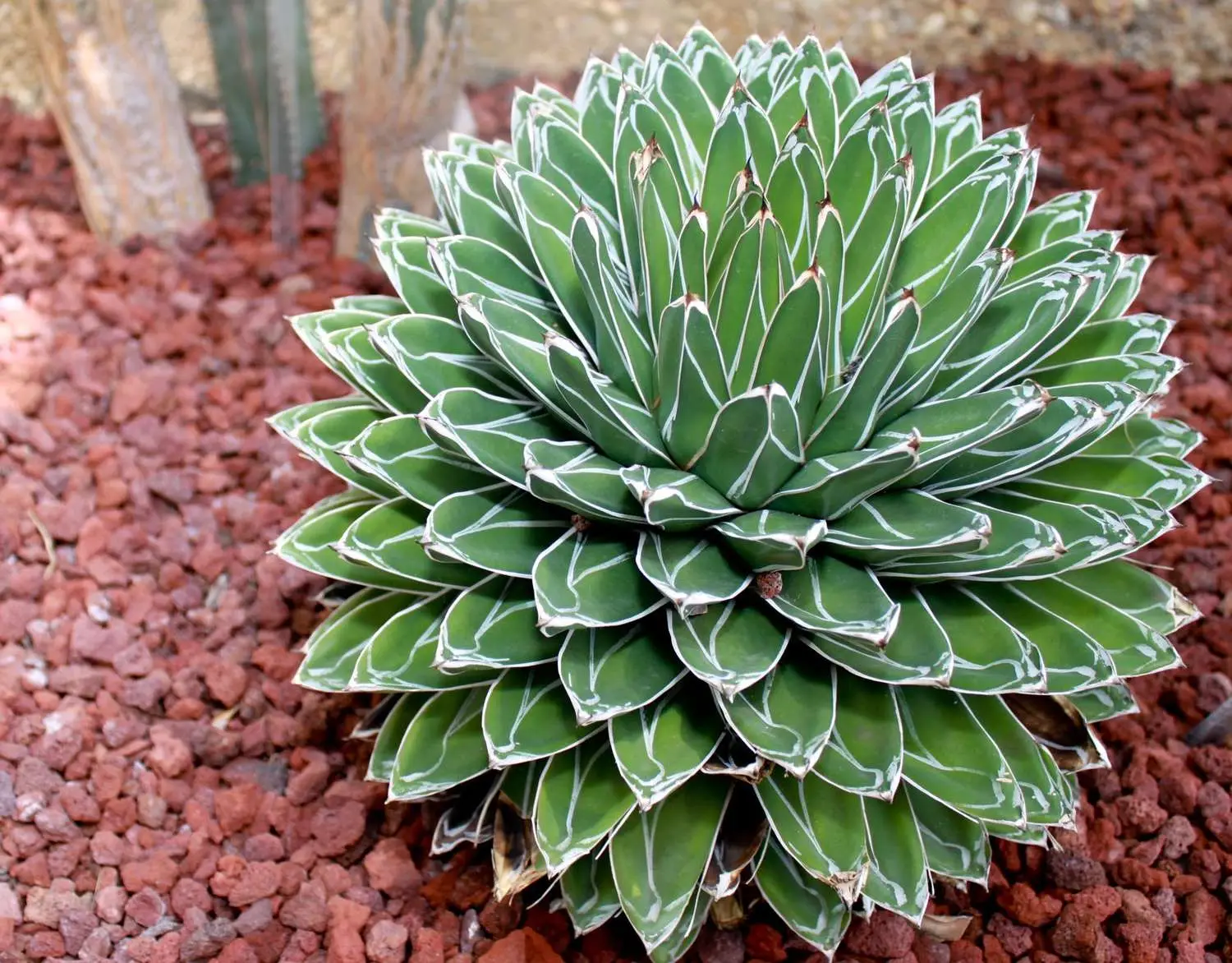
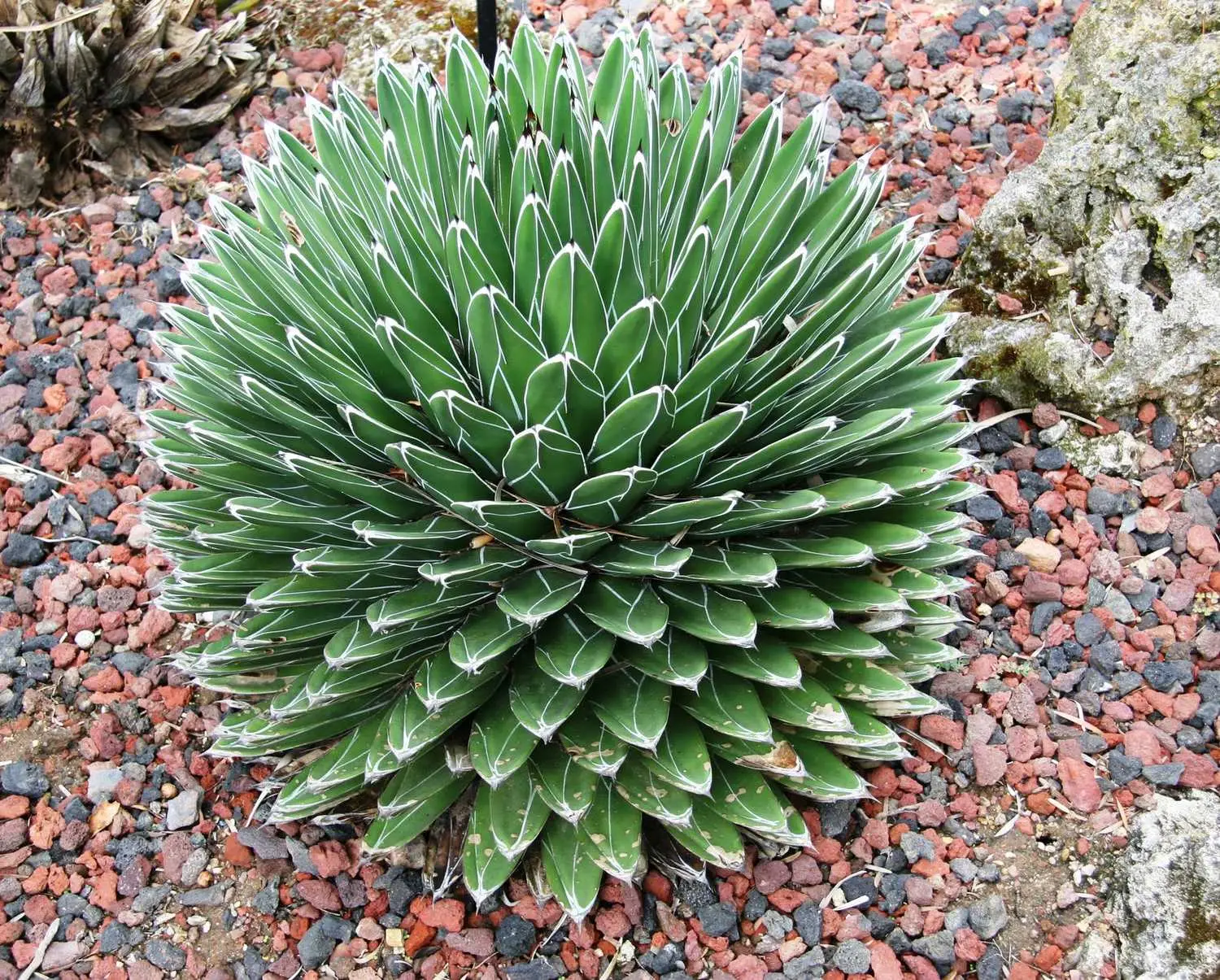
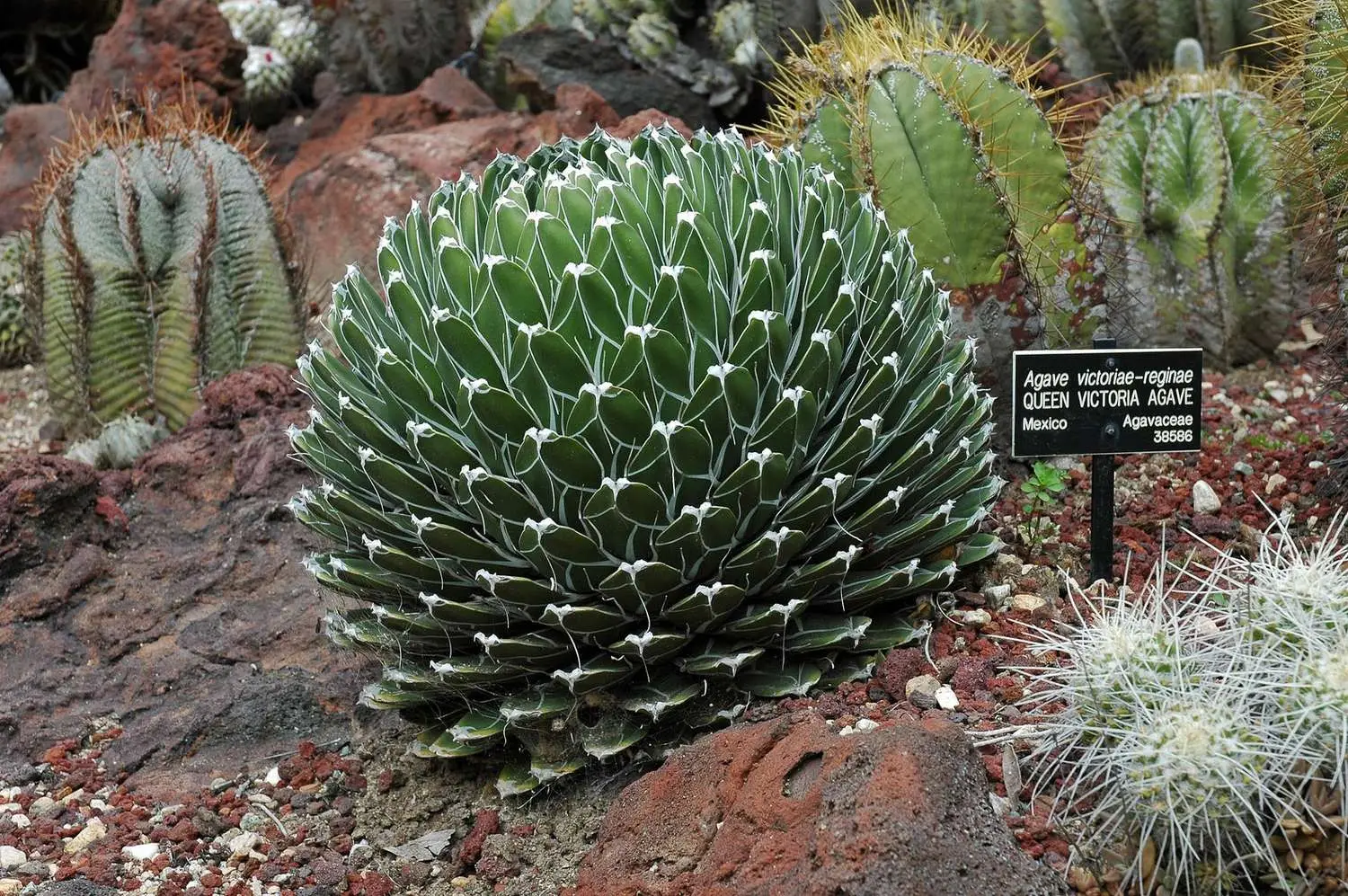

Hand-painted geometry meets living architecture. The Queen Victoria Agave forms a flawless, miniature rosette of deep green leaves striped with white—so perfect it looks sculpted. Drought-tolerant and dead-easy to grow. One of the world’s most elegant succulents, now from seed. Start your masterpiece today.
€5.58
There is a plant so geometrically pristine, so architecturally flawless, that it seems almost impossible it grew from seed rather than being machined in a studio.
Meet Agave victoriae-reginae—the Queen Victoria Agave. It is, without exaggeration, one of the most stunningly beautiful succulents on Earth, and once you grow one, you’ll understand why collectors lose their minds over it.
**A Treasure from the Chihuahuan Desert**
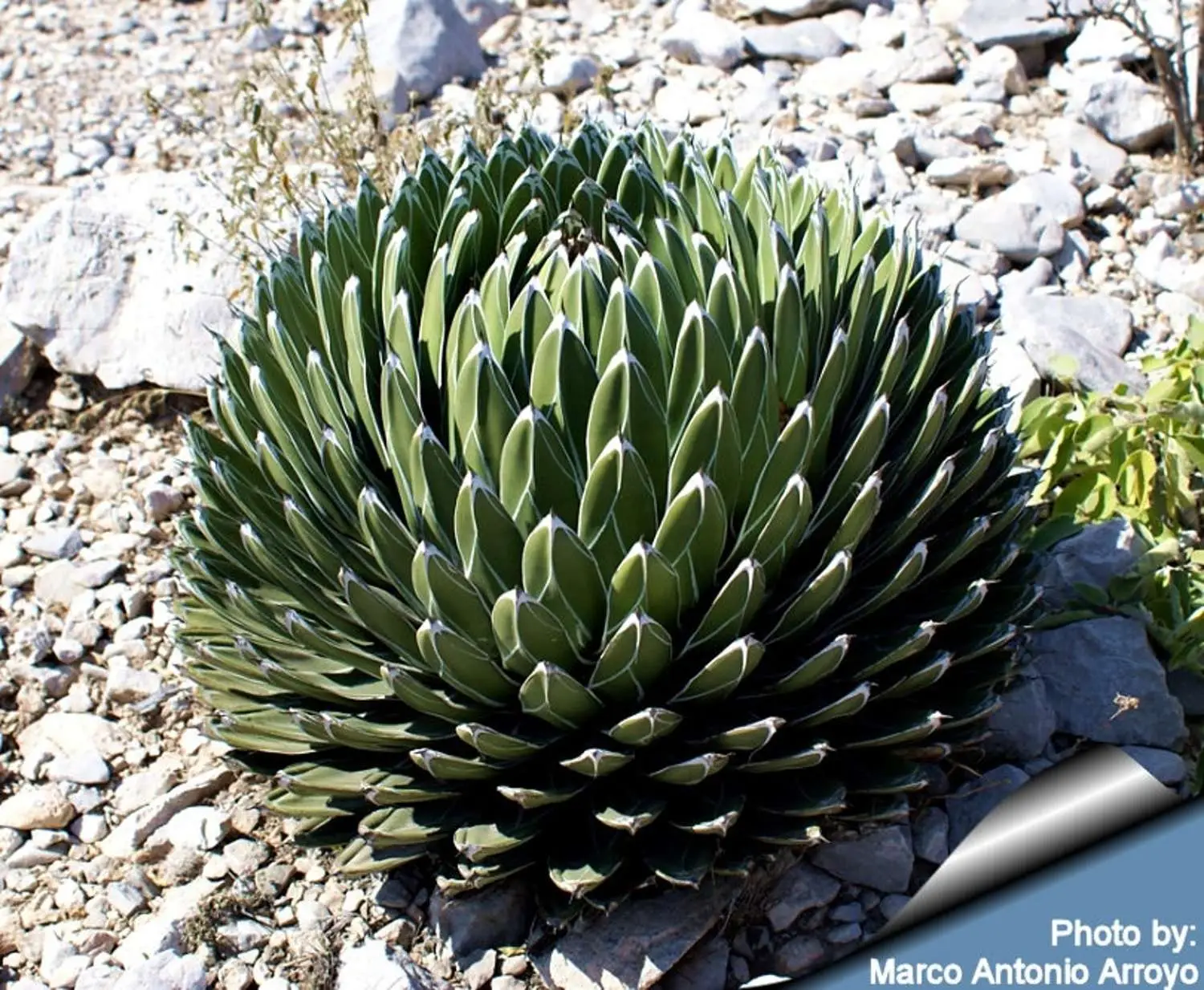
This compact masterpiece originates from the high-altitude regions of northeastern Mexico, where it clings to limestone cliffs in arid mountain terrain. Named in honor of Queen Victoria herself, the plant earned its regal title through sheer elegance: a perfectly spherical rosette no larger than your fist, composed of thick, smooth, dark green leaves adorned with the most exquisite white striping you’ll ever see on a plant. Each leaf appears hand-painted, with crisp white lines running along the edges and leaf surfaces, creating a striking three-dimensional geometric pattern. The precision is almost unnerving. Even the terminal spine—that tiny dark point at each leaf’s tip—adds architectural punctuation to an already flawless design. This is a plant that deserves to be the hero of your collection, whether displayed on a shelf, in a container, or as the jewel of a rock garden.
**The Collector’s Holy Grail—Ornamental Perfection**
Let’s be clear: this agave is prized above almost all others for pure, unadulterated ornamental beauty. The Queen Victoria Agave has won the prestigious Award of Garden Merit from the Royal Horticultural Society, a distinction it holds because of its striking architectural form and unforgettable visual presence. It is widely regarded as one of the finest accent plants in horticulture, capable of drawing the eye from across a garden or transforming an indoor space with its sculptural presence.
Beyond its role as a living artwork, this plant carries deep cultural significance. Indigenous peoples of its native Mexico historically used every part of the Queen Victoria Agave for food, fiber, and beverages. The flowers, nectar, immature flowering stem, and the heart of the rosette can be prepared to yield sweet, edible sustenance. Traditionally, the plant provided material for clothing, rope, and other textiles through its fibrous leaves. Its juice could be fermented into pulque or honey-water. Even today, this heritage of utility endows the plant with a quiet dignity—a living link to centuries of human cultivation and gratitude. When you grow this agave from seed, you’re not just growing a decorative plant; you’re participating in an ancient botanical legacy.
**Effortless Elegance: Growing It Is Simpler Than You’d Think**
Here is the wonderful secret that makes the Queen Victoria Agave truly special: despite its refined appearance, it is remarkably forgiving and easy to grow. This plant was made for people who want serious beauty without serious fussing.
Light and location: Place it in full sun to bright indirect light. It will develop its tightest, most geometric form when watered sparingly and given maximum light. Indoors, a south-facing window is ideal. Outdoors, it thrives in sunny borders and containers.
Watering: Less is more. This is a desert native, and mature plants are extremely drought-tolerant. Water only when the soil has dried out completely—in spring and summer that may be every 3-4 weeks, in winter perhaps once monthly or even less. The key principle: it’s safer to underwater than to overwater. Overwatering is the only real enemy; with good drainage, the plant virtually takes care of itself.
Soil: Use well-draining succulent soil, amended generously with grit, pumice, sand, or gravel. A mix of about 50% compost or standard potting soil and 50% sharp drainage materials is ideal. The plant grows naturally in rocky, limestone terrain, so it loves a fast-draining, slightly gritty medium.
Temperature and hardiness: Remarkably cold-hardy for a succulent—it tolerates
Only logged in customers who have purchased this product may leave a review.

Reviews
There are no reviews yet.