
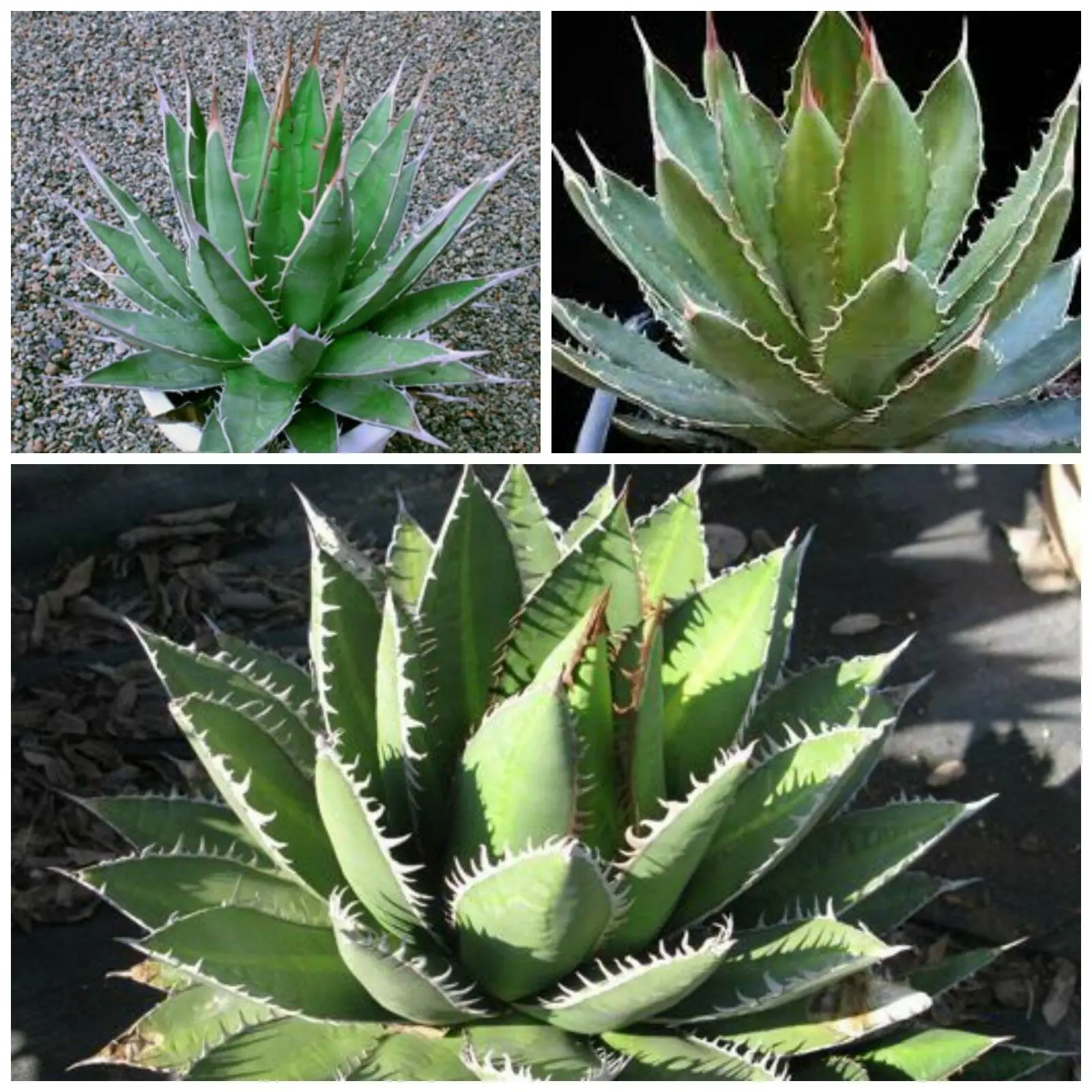
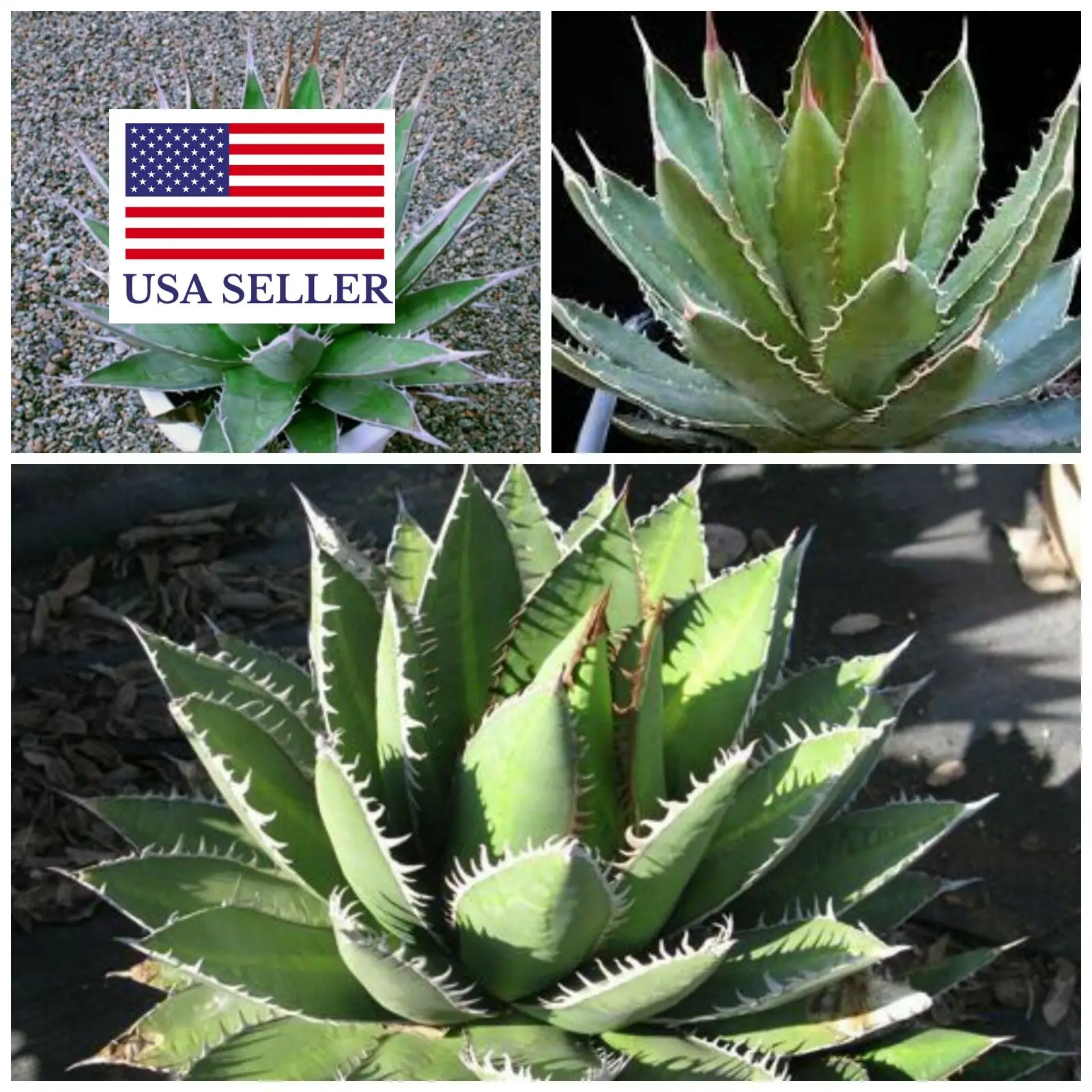
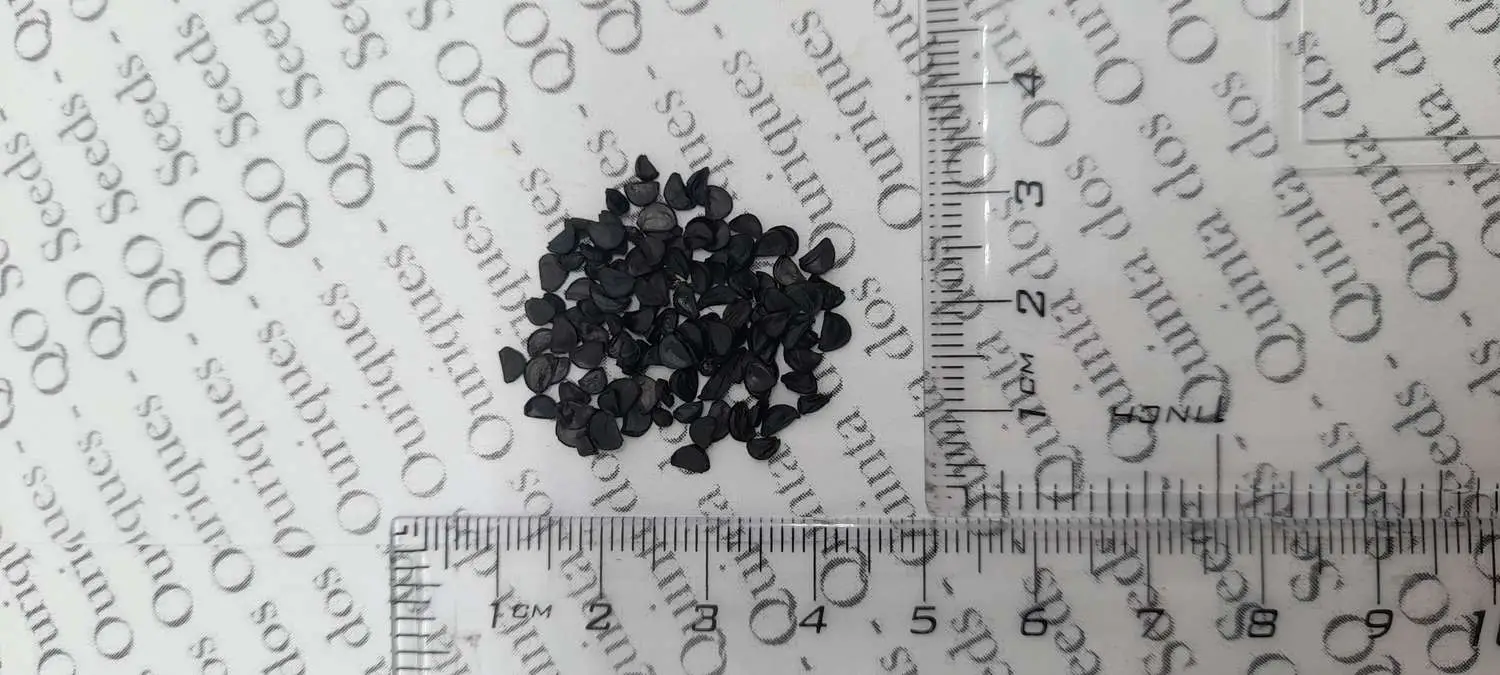
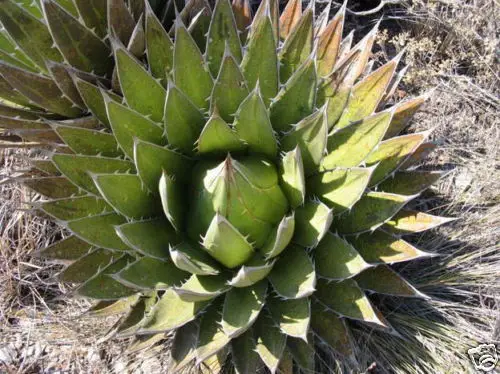
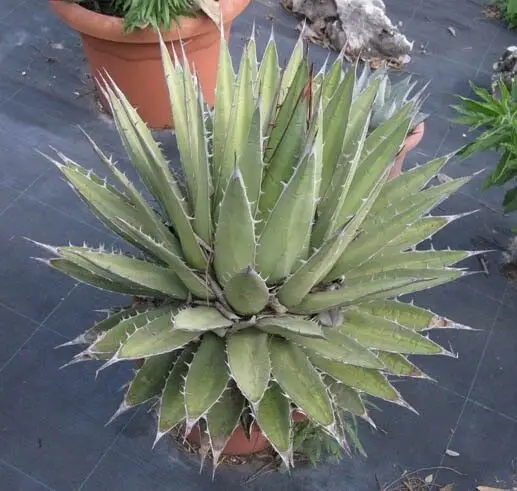
Grow the agave that whispers architectural drama. Purpus Agave forms impeccable rosettes of thick, guttered leaves—green deepening to reddish tones with cream and burgundy spines—then erupts in a towering 2.5-5m spike of dense, purple-tinged flowers. Drought-tolerant, slow-growing, magnificent in containers. Thrive on neglect. Start from seed today.
€3.24
This is the agave that teaches patience with beauty.
Agave ghiesbreghtii—known as Purpus Agave—is a collector’s obsession whispered through succulent circles. Native to the cloud-wrapped highlands of Mexico (Puebla, Oaxaca, Guerrero, Chiapas) and Guatemala, where it thrives at elevations up to 2,200 meters on rocky mountain slopes, this species carries the slow, deliberate wisdom of its high-altitude origins. In the wild, it grows alongside fellow drought-survivors and cacti, a testament to its resilience.
What makes A. ghiesbreghtii unmistakably desirable is its form: a perfectly proportioned rosette that never demands attention yet commands it entirely. The plant clusters into geometric sculptures, typically reaching 50 cm tall and 75 cm wide, with thick, meaty leaves arranged in a guttered pattern—each one a stiff, sculptural blade of deep green that flushes toward reddish tones at the margins. The leaf edges bear striking red or white spines, creating a sharp architectural line that draws the eye. This is the agave that defines “structural elegance”—the kind of plant that transforms a bare corner into a curated installation. In spring, the drama peaks: from the rosette’s heart emerges an unbranched spike towering 2.5 to 5 meters tall, crowned with dense flowers that shift from greenish-brown to deep purple—a celebration of color rarely seen in succulents. This flower spike is the plant’s grand finale, and the visual payoff for years of patient growing.
Beyond its architectural appeal, Agave ghiesbreghtii connects you to centuries of Mesoamerican plant wisdom. While different agave species have been revered for millennia—used in traditional medicine, honored as sources of sacred fermented beverages, and cultivated for fiber and food—A. ghiesbreghtii holds its place within this legacy as a plant of profound botanical interest. Growing this species from seed is an act of botanical stewardship, a direct link to highland Mexican plant diversity and the rich history of agave cultivation. For those drawn to functional beauty and cultural resonance, there is no more rewarding choice.
A. ghiesbreghtii is remarkably forgiving in cultivation—this is a plant that thrives on neglect rather than fussing. It demands only well-draining soil (rich or poor, it adapts), full sun, and restraint with water. Let the soil dry completely between waterings; the plant stores its own reserves and will reward stingy watering with vigor. It grows slowly, which is part of its charm—you’re not racing toward maturity, but savoring each new leaf, each shift in color. Hardy from USDA zone 9 upward (zone 8 with winter protection), it prospers in containers of any size, making it perfect for patios, succulent gardens, or interior brightspot displays in warm climates. The compact mature size and slow growth make it ideal for years of intimate observation—watching it shift from seedling to sculptural presence is a meditation in plant time.
This is the agave for the patient botanist, the collector who understands that true beauty lives in restraint and architectural form. Start your Purpus Agave from seed. Watch it emerge, grow slowly, and eventually reward you with one of the most stunning inflorescences in the plant kingdom. You’re not just growing a succulent; you’re cultivating a piece of highland Mexican heritage, a plant that has inspired botanists and collectors for generations. Grow it. The wait is worth every moment.
Only logged in customers who have purchased this product may leave a review.

Reviews
There are no reviews yet.