
A packet of seed can carry a great deal of information in a very small space: species, provenance, dormancy pattern, and a particular relationship to season. Knowing when to cold stratify seeds is less about following a universal calendar than reading that relationship correctly. For many temperate perennials, shrubs, and trees, a period of cold and moisture is the signal that winter has passed and safe germination conditions are approaching.
Cold stratification is one of the most useful techniques available to the grower of uncommon botanical material. It can turn a tray that appears inert into a measured, even germination, but it is not a cure-all. Used on the wrong species, or at the wrong point in the process, it may simply waste time and compromise seed quality.
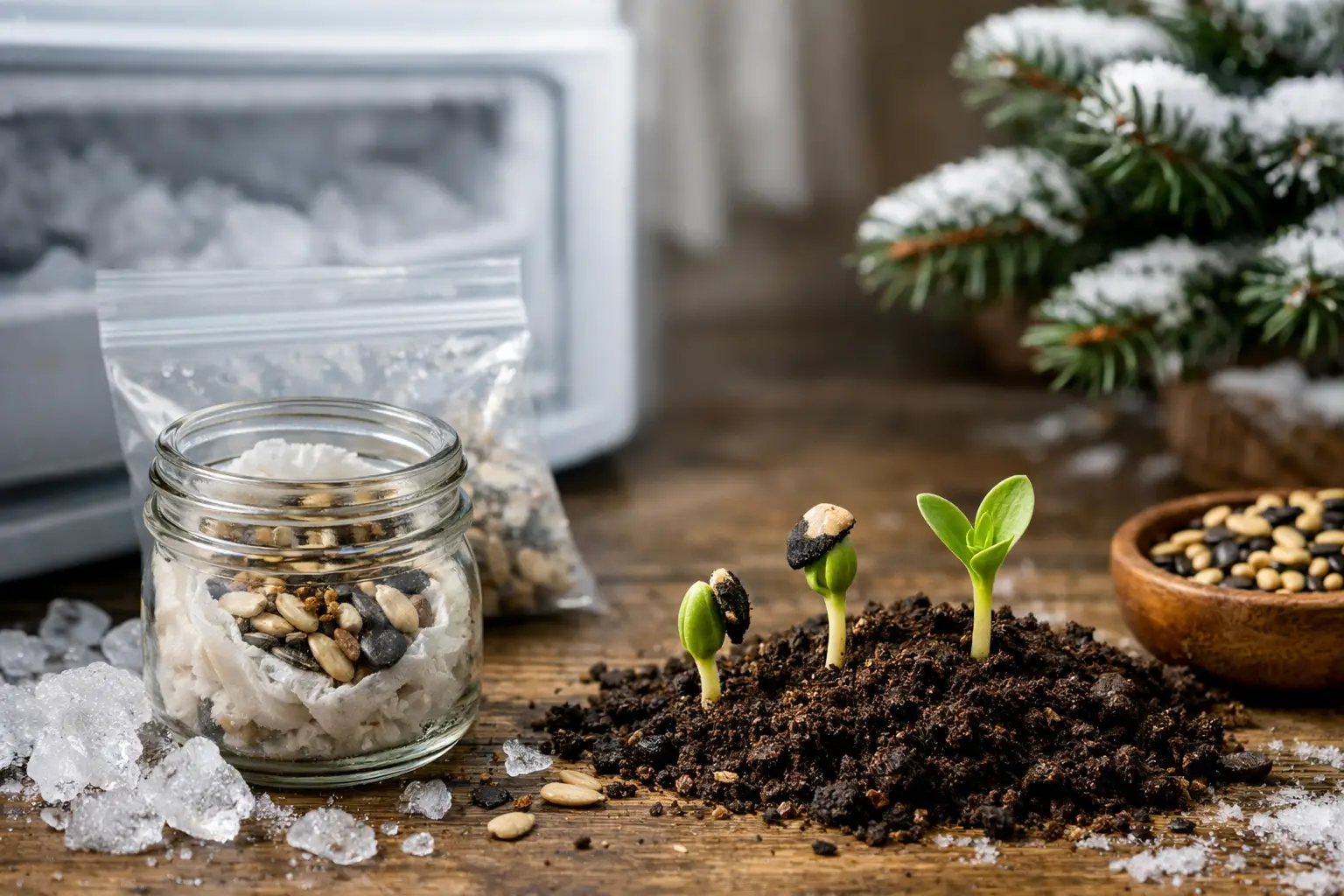
Cold stratification reproduces the conditions a seed might experience in cool, damp soil beneath leaf litter or snow. The seed is kept moist, not wet, at refrigerator temperatures, generally 34-41 F. Over several weeks or months, physiological dormancy gradually eases. Once returned to appropriate warmth, the embryo is prepared to resume growth.
This differs from merely storing seed in a cold place. Dry refrigeration can extend the life of many seeds, but stratification requires both cold and moisture. It also differs from freezing. Most garden seeds do not need to be frozen, and repeated freeze-thaw cycles are neither necessary nor reliably beneficial in a home setting.
The key is ecology. Species from climates with a distinct cold winter are more likely to benefit from chilling than species from frost-free tropical, subtropical, or desert regions. Yet origin alone is not enough. A high-elevation plant from a warm latitude may require cold treatment, while a temperate annual may germinate readily without it.
The most dependable answer begins with the scientific name and a species-specific germination protocol. Common names can group plants with very different dormancy needs; taxonomy and native habitat offer a much clearer starting point.
Many herbaceous perennials native to temperate regions benefit from a short to moderate cold period. Valeriana officinalis, common valerian, is a useful example. Its small seed often germinates more evenly after several weeks of moist chilling. Because it also benefits from light at germination, it is usually surface-sown or covered only very lightly after stratification. The cold treatment supports the seed’s seasonal cue; it does not replace careful sowing depth or consistent moisture.
Woody temperate species may need longer treatment. Members of genera such as Acer, Prunus, Cornus, Viburnum, and Rhus frequently have dormancy patterns shaped by winter. Staghorn sumac, Rhus typhina, adds another consideration: its hard seed coat can limit water uptake. Cold stratification may be part of the process, but scarification is often needed first. In that case, chilling alone may produce disappointing results because the seed has not yet been allowed to absorb moisture properly.
By contrast, do not reflexively chill every unusual tree seed. Cashew, Anacardium occidentale, and marula, Sclerocarya birrea, are adapted to warm climates. Their seeds are generally best handled fresh and sown warm, with attention to their hard protective structures and their limited tolerance for prolonged cool, wet handling. Peruvian pepper, Schinus molle, likewise should be approached according to a species-specific protocol rather than its ornamental-tree status.
Once cold stratification is appropriate, decide when you want seedlings ready for active growth. Then count backward by the required chilling period. This approach matters more than beginning every treatment in midwinter by habit.
A perennial needing 30 days of cold treatment can be placed into stratification about a month before its intended sowing date. A woody species requiring 90-120 days should begin much earlier. If you intend to sow in a protected setting in March, a 90-day treatment belongs in December. For seeds intended for outdoor sowing after local frost risk has passed, the schedule may need to begin in late autumn or early winter.
There is a practical trade-off. Starting too early can leave germinated seeds waiting in a refrigerator, where delicate roots are awkward to handle. Starting too late pushes germination into a period when summer heat or insufficient indoor light can make young plants harder to establish. For collectors raising a small number of valuable plants, it is often worth stratifying batches a week or two apart rather than placing every seed into a single timetable.
Freshness can change the calculation. Some species lose viability quickly and should be sown or stratified soon after receipt. Others tolerate dry storage well and can wait until the next suitable season. If seed has already been held dry for months, do not assume its dormancy has been satisfied. After-ripening in dry storage and cold, moist stratification are different processes.
For most small seed lots, the refrigerator method offers control and visibility. Combine seed with a barely moist medium such as fine vermiculite, milled sphagnum, clean sand, or an unbleached paper towel. The medium should feel evenly damp when pressed, with no free water. Excess moisture is a common cause of mold and seed loss.
Place the material in a labeled, sealed bag or small container. Record the species name, date started, medium, and intended removal date. For a collection that includes several related taxa, precise labels are not a formality. Similar-looking seeds become impossible to identify once mixed with moist medium.
Keep the container at 34-41 F, away from freezing zones and from fruits that produce ethylene gas. Check it every one to two weeks. If the medium is drying, add only a few drops of clean water. If mold appears, remove affected material promptly and transfer sound seed to fresh, lightly moistened medium. A brief rinse can help, but persistent mold often indicates that the medium is too wet, airflow is absent, or the seed was already compromised.
Some seeds will germinate during stratification. This is not a failure. It is evidence that dormancy has lifted. Pot them immediately with care, using a dibber or tweezers to avoid damaging the emerging root. Do not wait for the entire batch to reach its planned end date if individual seeds are already growing.
The most frequent mistake is treating cold stratification as a generic prerequisite for difficult seed. Difficulty can arise from physical dormancy, immature embryos, heat requirements, smoke cues, fluctuating temperatures, or poor seed viability. Cold will not solve all of these.
Another mistake is allowing seed to sit in saturated medium. A seed needs oxygen as well as water. In a waterlogged bag, decay can move faster than dormancy release. The target is the moisture level of a wrung-out sponge, not a soaked one.
Duration also matters. A two-week chill may be useful for a lightly dormant perennial but insufficient for a shrub requiring three months. Conversely, extending a short-treatment species for many extra months is rarely an advantage. Use the recommended range where it is known, and record your result. For uncommon species, your own observations become valuable cultivation data.
Outdoor winter sowing can substitute for refrigerator stratification in suitable climates, especially for hardy temperate plants. Seed is sown in protected containers outdoors and experiences natural cold, moisture, and temperature variation. It is elegant and low-input, but less controlled. Rodents, weather extremes, irregular winter cold, and spring drying can make it less predictable than a refrigerator treatment, particularly for limited or high-value seed lots.
Cold stratification ends when the seed moves into its germination environment, not when the grower’s attention ends. Sow at the correct depth, provide the right temperature and light conditions, and maintain even moisture through emergence. A seed that has received its winter cue may still wait for spring warmth, alternating temperatures, or light before it breaks dormancy fully.
Keep records by species rather than relying on memory. Note the date stratification began, the duration, any scarification or soak, sowing conditions, first emergence, and final germination. Over time, this transforms seed starting from trial and error into a more precise botanical practice.
The patience required by a cold-stratified seed is part of its character. A measured winter, correctly given, allows the grower to meet a species on its own seasonal terms – and makes the first emerging cotyledons feel less like a surprise than the beginning of a well-prepared collection.