
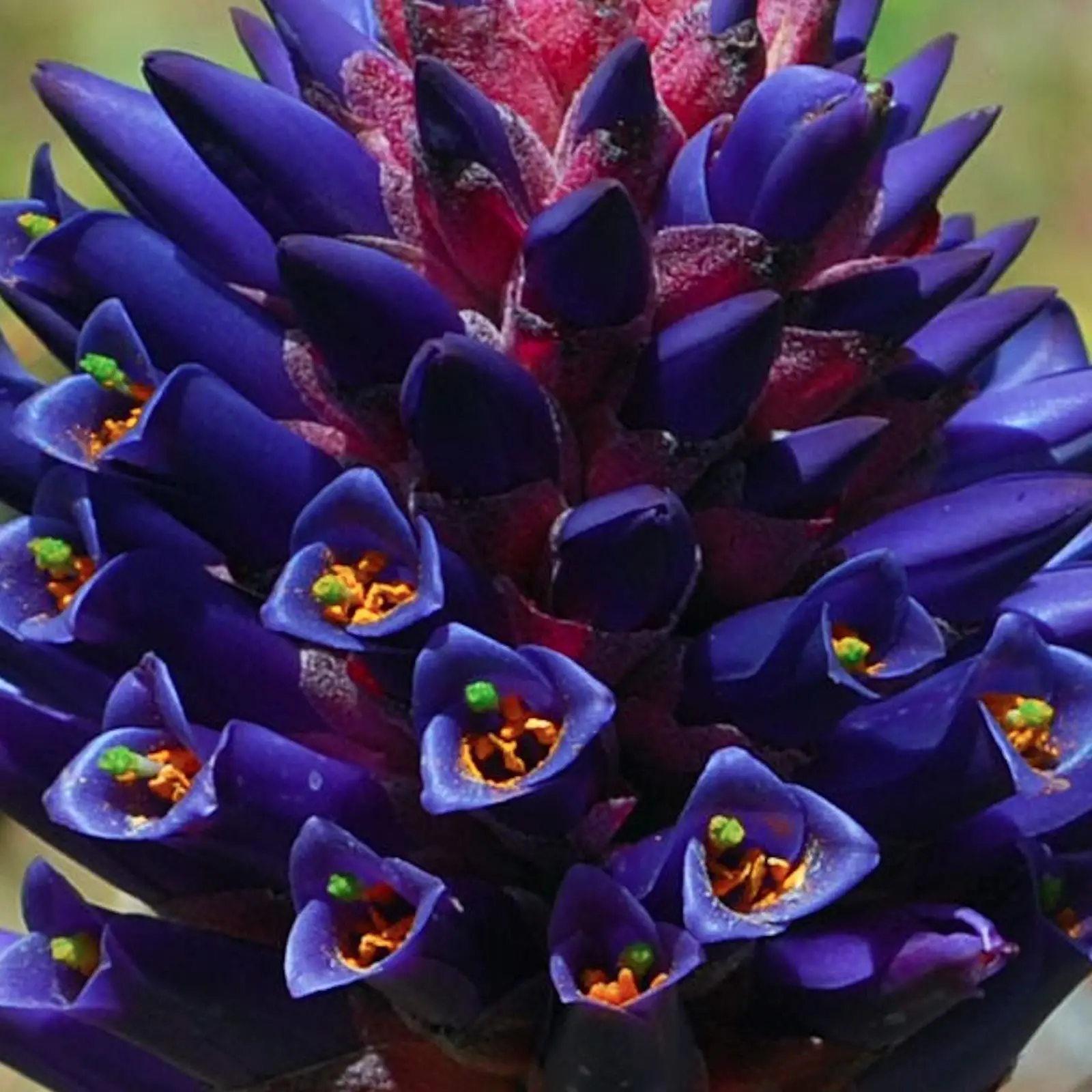
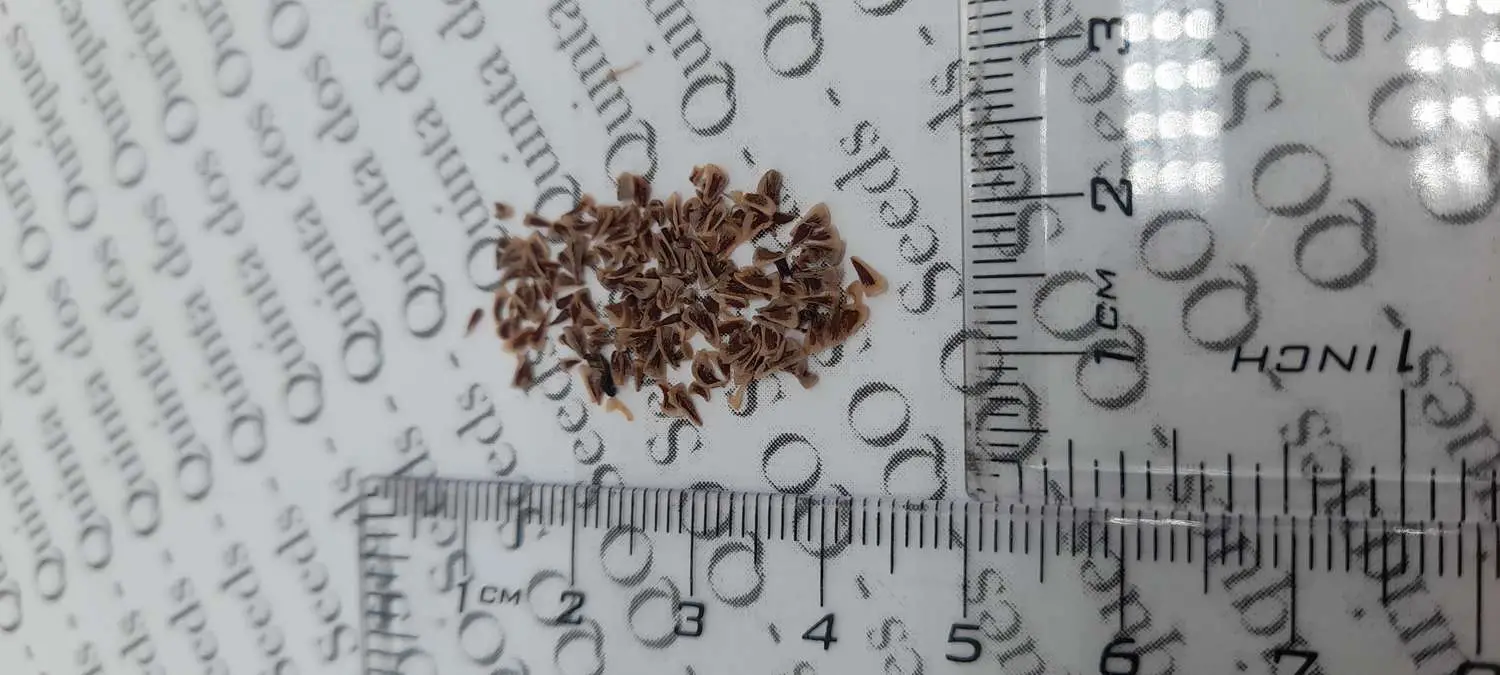
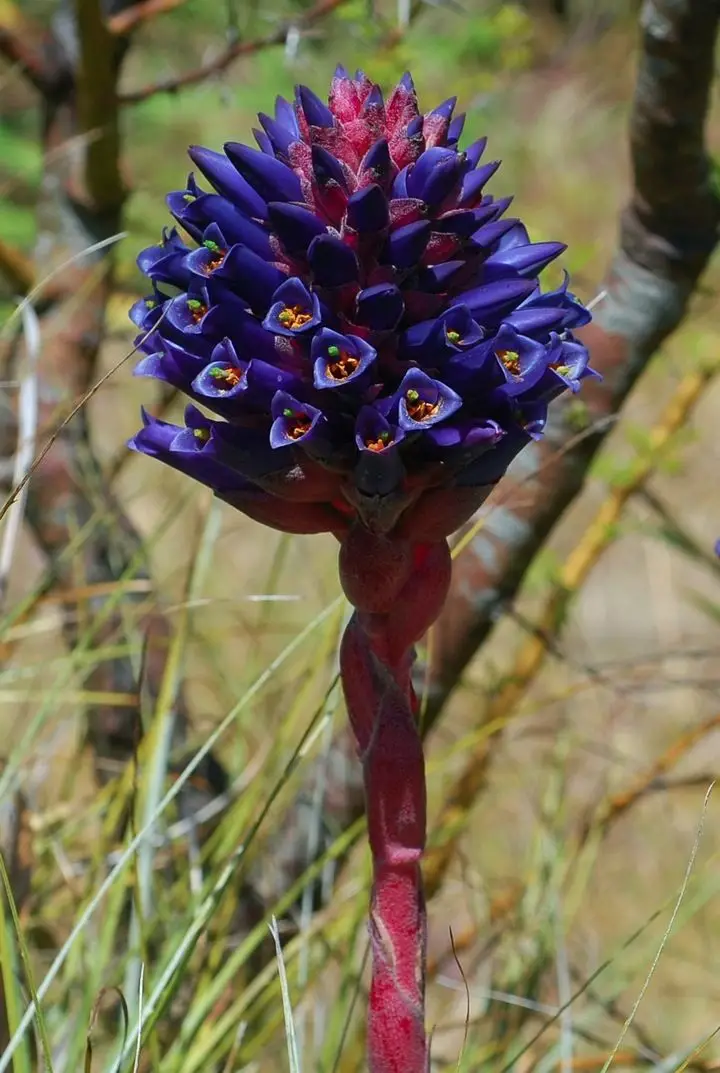
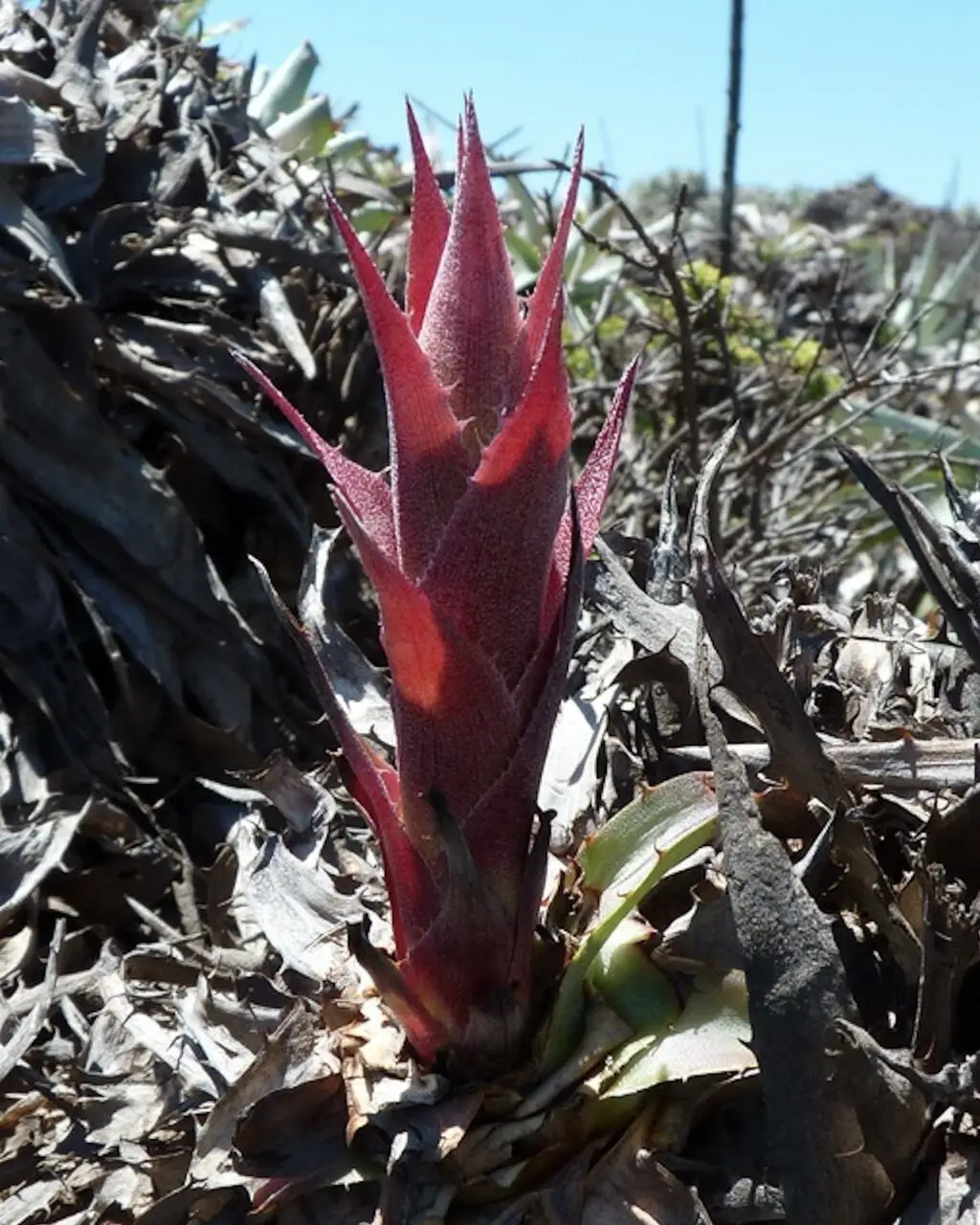
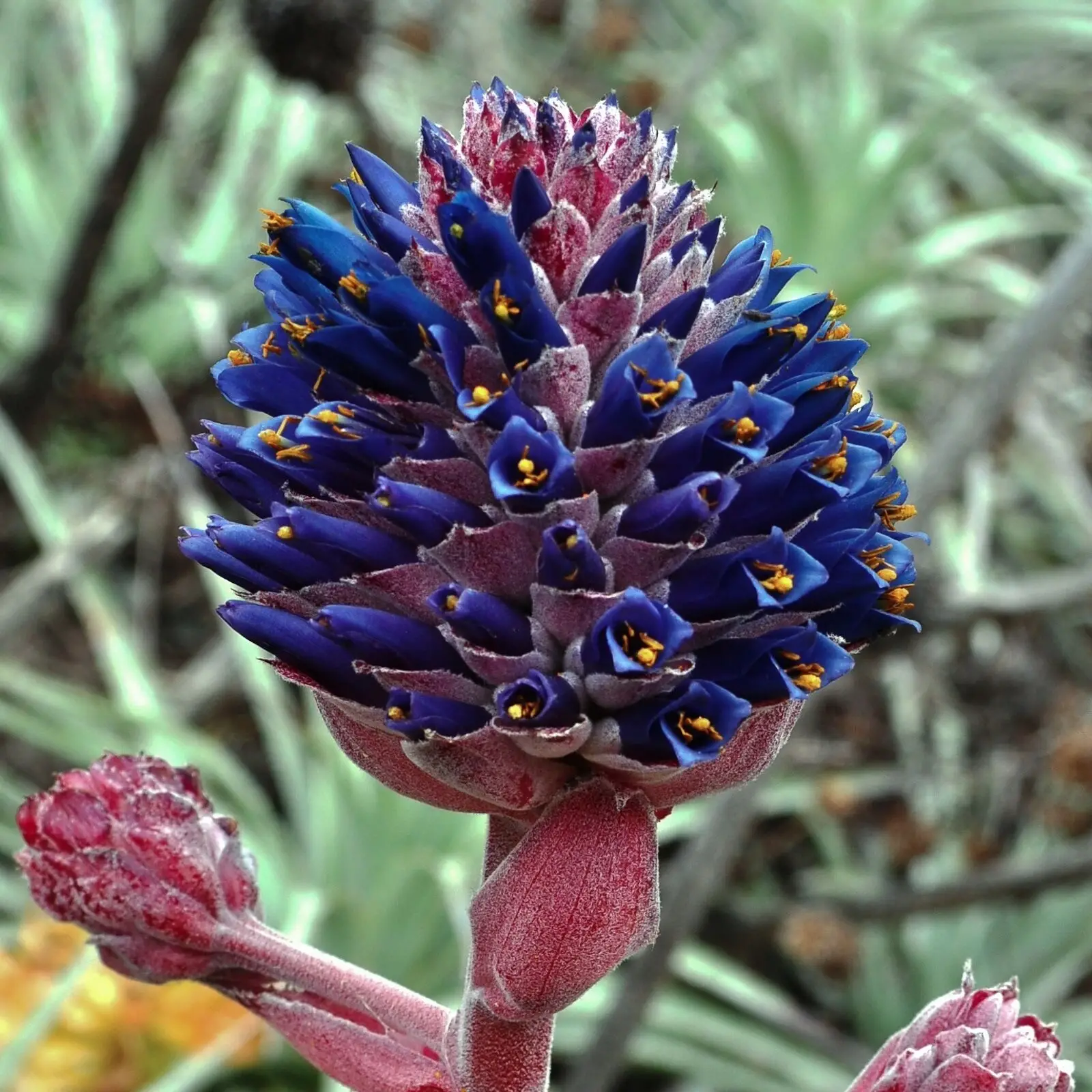
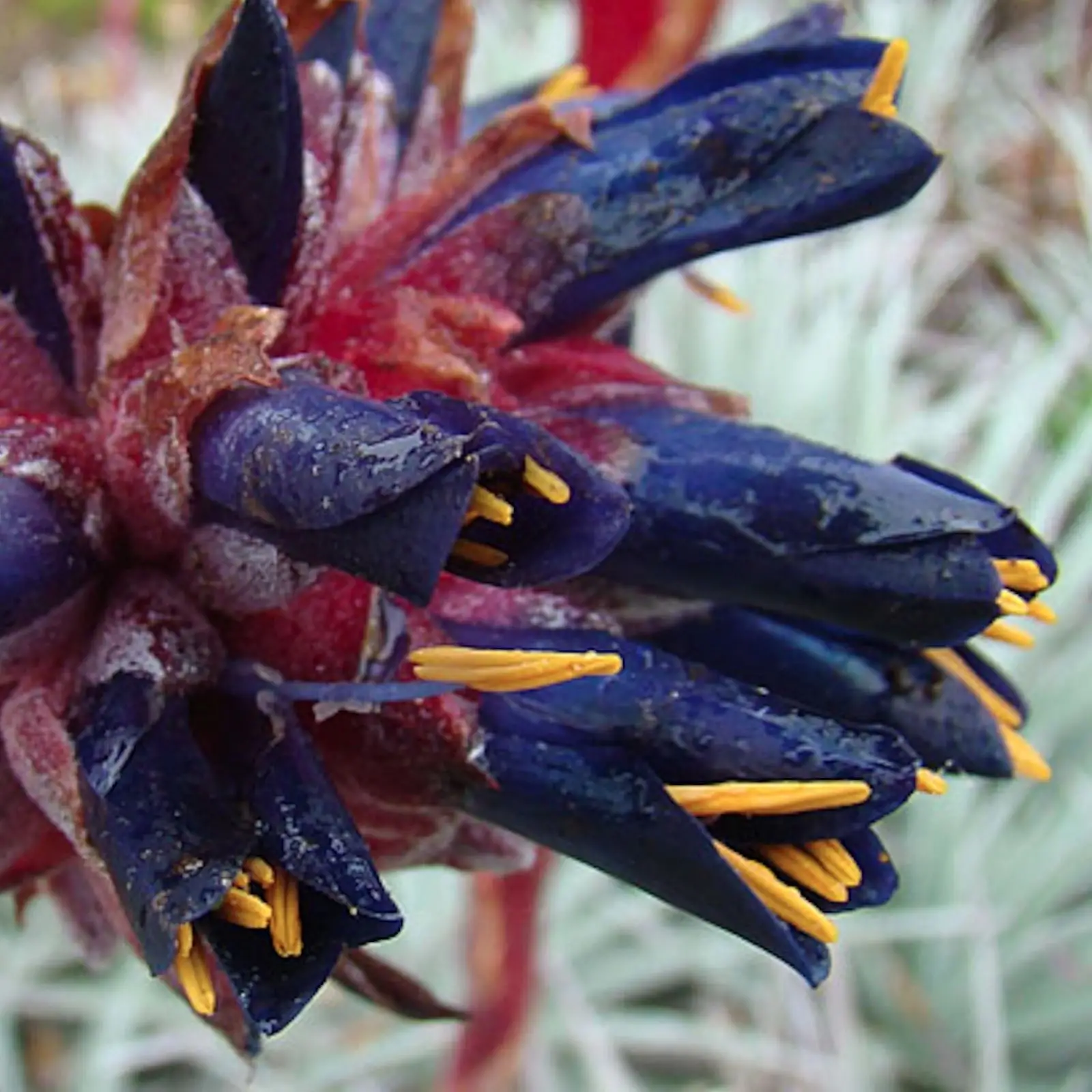
Witness the impossible: silvery-grey rosettes with inward-pointing teeth bearing stunning royal purple to blue-violet flowers from large red pine-cone like rounded clusters. A magnet for hummingbirds, this rare endemic plant from Chile thrives on neglect—once established, it demands almost nothing but sun and excellent drainage. Robust, quick, and easy to
€1.92
Picture this: a sculptural rosette of silvery ghost-leaves catches the morning light, then spring arrives and an improbable red stem erupts skyward, crowned with flowers so saturated blue they seem almost metallic. That’s Puya venusta—a bromeliad that contradicts everything you thought you knew about delicate houseplants.
This species is endemic to Chile, distributed along the coastal littoral from the IV Region (Coquimbo Province) to the V Region (Valparaíso Province), where it slowly forms dense stands in sandy or rocky areas right along the coast and in the coastal mountains of north-central Chile. Born in one of the harshest climates on Earth, where the Pacific wind howls across bare rock, Puya venusta inherited the resilience of mountains. This rare plant has been treasured by collectors for decades—partly for its scarcity, largely because nothing else looks like it.
Here lies the magic: an evergreen bromeliad forming clumps of rosettes of narrow greenish to silvery-grey leaves edged with sharp, inward-pointing teeth. For years the foliage alone justifies space in your garden—architectural, sculptural, alive with architectural drama. But patience rewards the devoted grower. Puya venusta bears dark blue to dark violet flowers with yellow pollen on stalks that rise 3 feet above the 3- to 4-foot tall rosettes of silvery gray leaves. Mature plants produce branching red flower stems in summer that arise from the centre of the leaf rosette bearing clusters of three-petalled, tubular, blue-purple flowers with reddish-pink bracts. The effect is almost unreal—sculptural, dramatic, utterly unlike the coddled indoor plants most gardeners know. Puya venusta is a great plant for attracting hummingbirds, transforming your garden into a stage for aerial ballet. Puya are well adapted to bird pollination because the flowers are full of nectar.
Now the part that breaks the spell of difficulty: Puya venusta is a very easy plant to cultivate and requires little maintenance—very resistant to insect pests and typical garden diseases. While some Puya species are armed with spines that can potentially shred ribbons of skin off one’s hand, this one sports attractive, silvery grey leaves and less vicious spines than some. Very easily grown on any gritty, well drained soil, it is reported to be hardy to about the low 20’s °F. Very resistant to drought. It is adequate for cultivation in fully sunny exposures and well-drained, sandy and rocky soils. Watering should be scarce, especially in adult, well-rooted plants; it resists drought. The soil must be exceptional—gravelly, never waterlogged—and that’s where the care lives: in the drainage, not in the hand-holding.
Plants in cultivation begin flowering after 7 to 8 years, but during those years you’re not waiting—you’re watching a slow-motion transformation from rosette to landscape sculpture. Like all Bromeliads, it is a prolific suckerer & each sucker lasts for years before dying, meaning your original plant will colonize, spreading into a small forest of architectural drama. Grow this from seed and become the collector who raises the extraordinary. This is not a houseplant. This is an investment in defiance—defiance of the ordinary, of the domesticated, of the expected. Your garden will never be the same.
Only logged in customers who have purchased this product may leave a review.


Reviews
There are no reviews yet.