Description
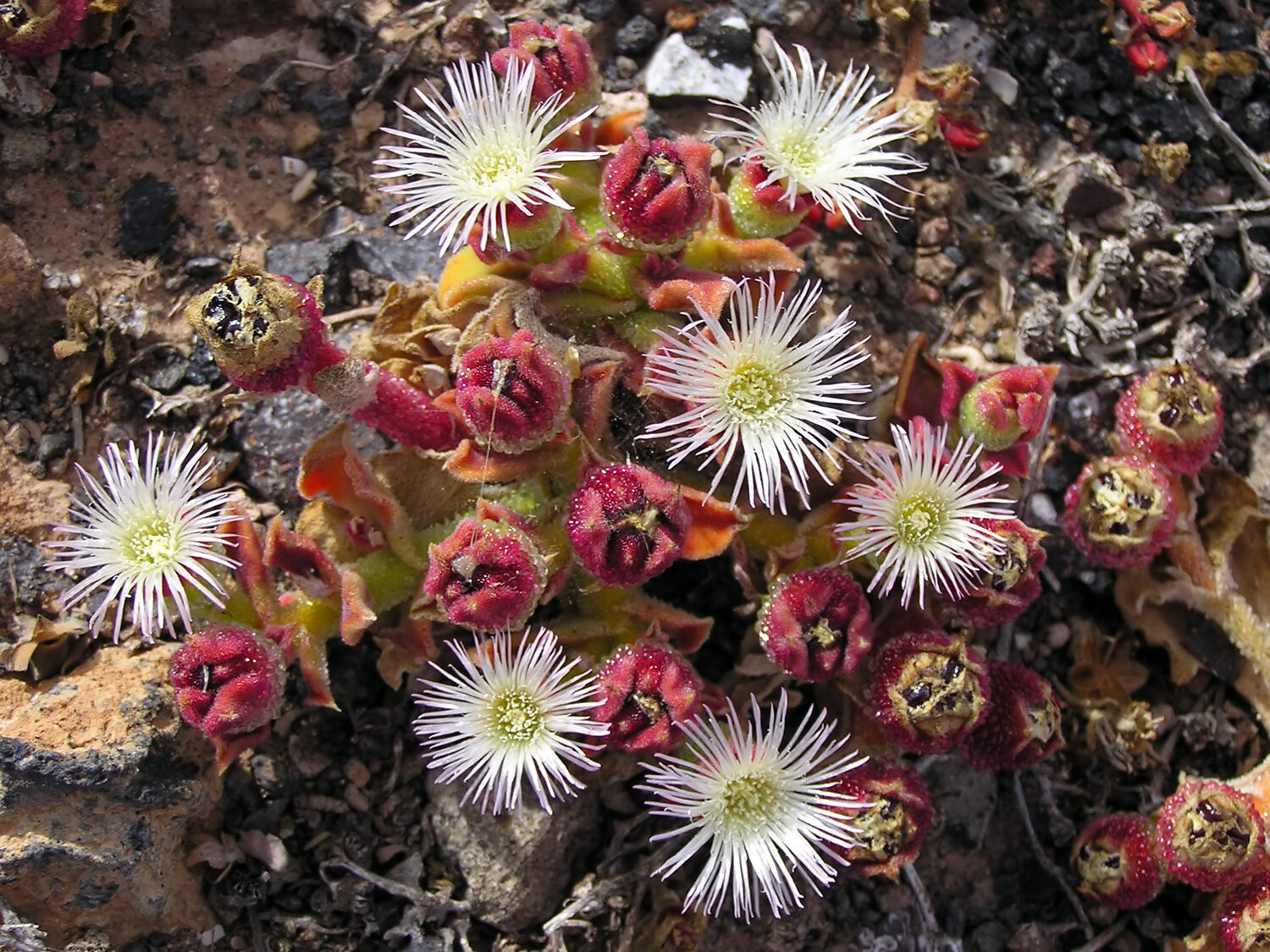
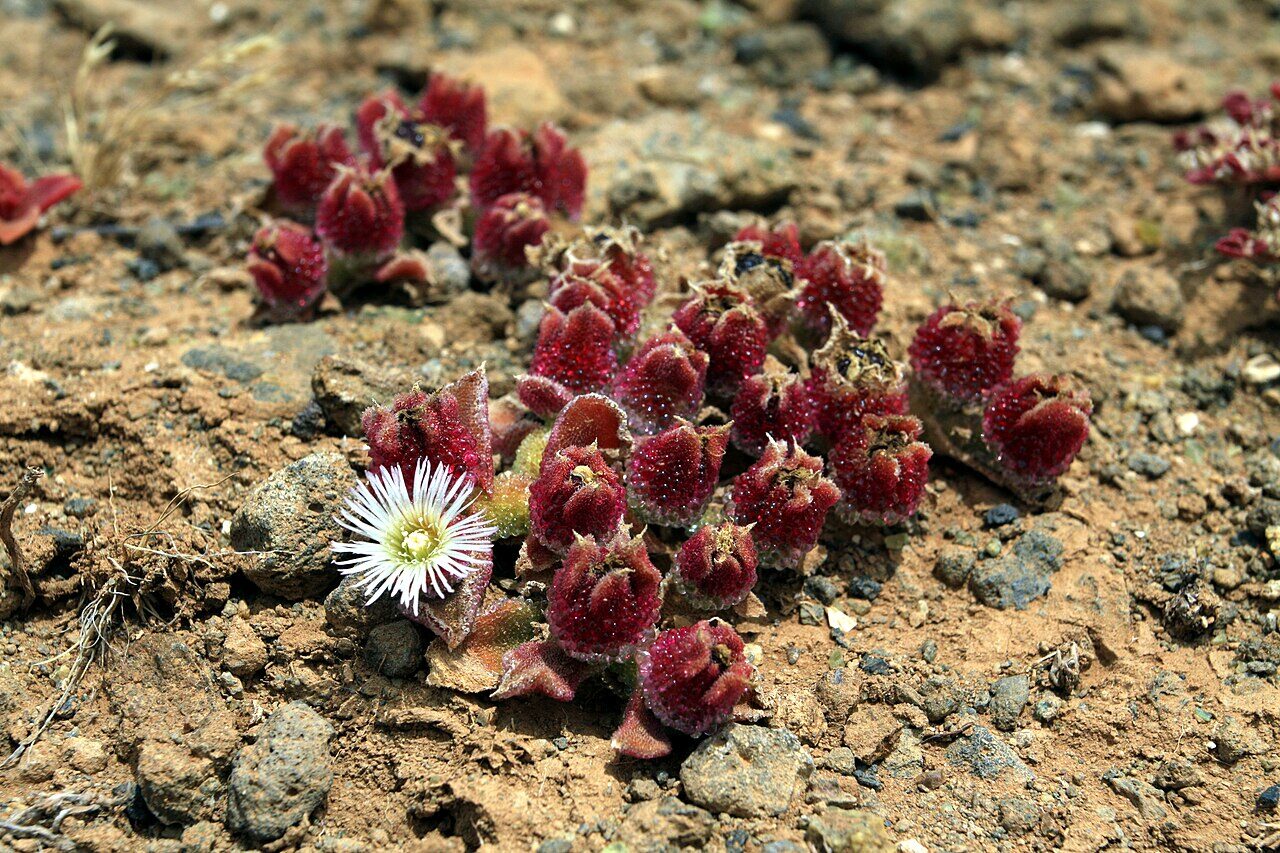
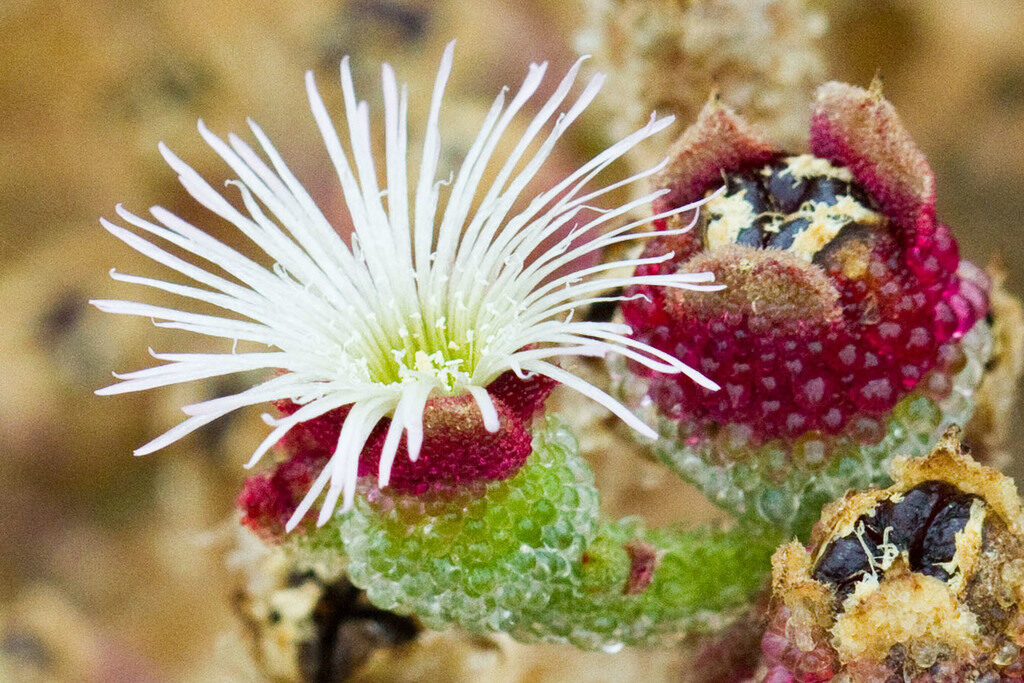
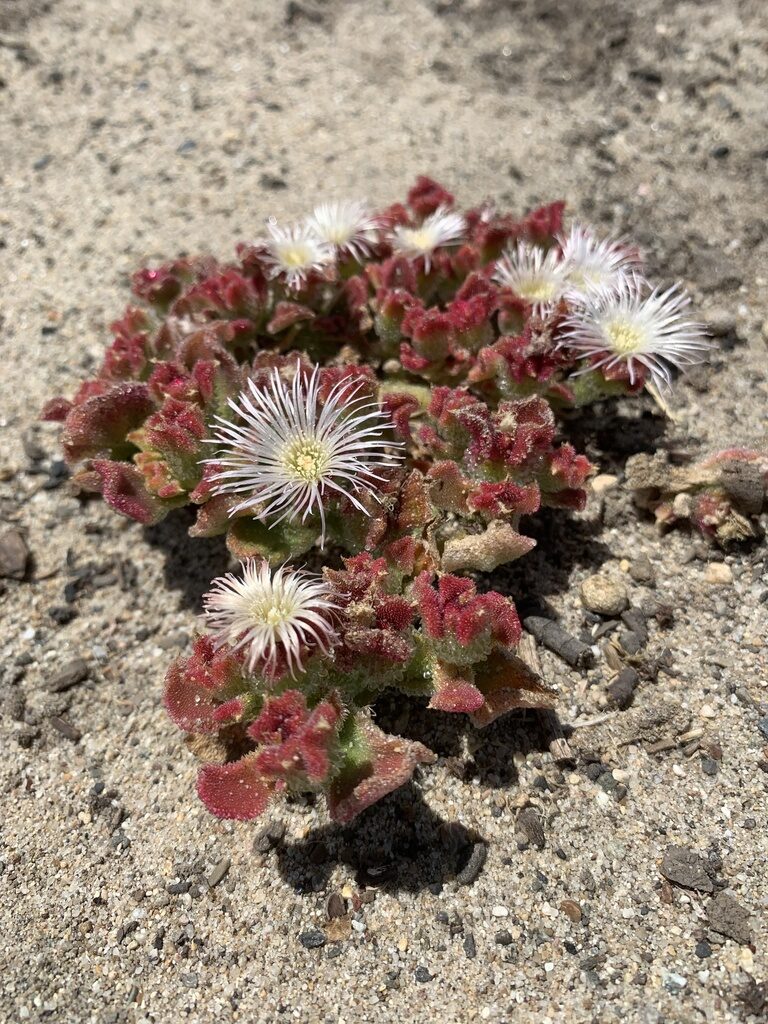
Mesembryanthemum crystallinum, commonly known as the ice plant, is a low-growing succulent known for its distinctive appearance. Its fleshy leaves and stems are covered with glistening, bladder-like cells that resemble ice crystals, giving the plant its common name.
Native to Africa and parts of Europe, it is a hardy, salt-tolerant plant that thrives in dry, sunny conditions and well-drained soils. The plant can be an annual, biennial, or perennial depending on the climate. Its leaves and stems are edible, with a slightly salty and sour taste, and are used in salads or as a vegetable.
Mesembryanthemum crystallinum seeds, commonly known as ice plant seeds, are tiny, and approximately 6,000 to 6,700 seeds can be found in a single gram. They are typically sown by being scattered on moist soil and lightly pressed down, as they require light to germinate.
Germination Guide
🌍 North Africa, South Africa, Namibia, Sinai, Southern Europe
Easy
Mesembryanthemum crystallinum (ice plant) is a prostrate succulent annual/perennial native to coastal regions of North Africa and Southern Europe, covered with distinctive glistening bladder cells. Seeds require light and warm temperatures to germinate and show variable germination patterns.
Germination
Germination time
Expect germination in
7 – 21 days
Temperature
Min 18°C
Ideal 21°C
Max 25°C
Substrate moisture
💧 Medium
Sowing depth
Lightly covered
Seed Pre-treatment
-
🔨
Chemical scarification
Scarification with sulfuric acid can improve germination rates. Seeds have physiological dormancy that can be broken by dry heat exposure.
-
📋
Additional notes
Dry heat treatment (103°C for 17 hours) breaks physiological dormancy. Seeds show variable germination patterns - seeds at top of capsule germinate immediately while seeds at base may remain dormant for longer than 4 weeks.
Substrate & Container
Recommended substrate
well-draining sand-soil mix, succulent mix, coco peat combined with vermiculite
Recommended container
seed-starting tray with humidity dome, greenhouse pots
Growing Tips
Seeds are tiny and difficult to sow evenly - sprinkle on soil surface and press in lightly. Keep soil moist but never waterlogged to prevent damping off. Seedlings prone to dampening off - ensure excellent ventilation and sunny position. Germination is often sporadic with some seeds germinating quickly while others may take 4-6 weeks. Seeds should be surface sown with minimal covering (no more than 1mm). Keep tray at 18-24°C in bright location without direct sunlight.
Only logged in customers who have purchased this product may leave a review.

Reviews
There are no reviews yet.