
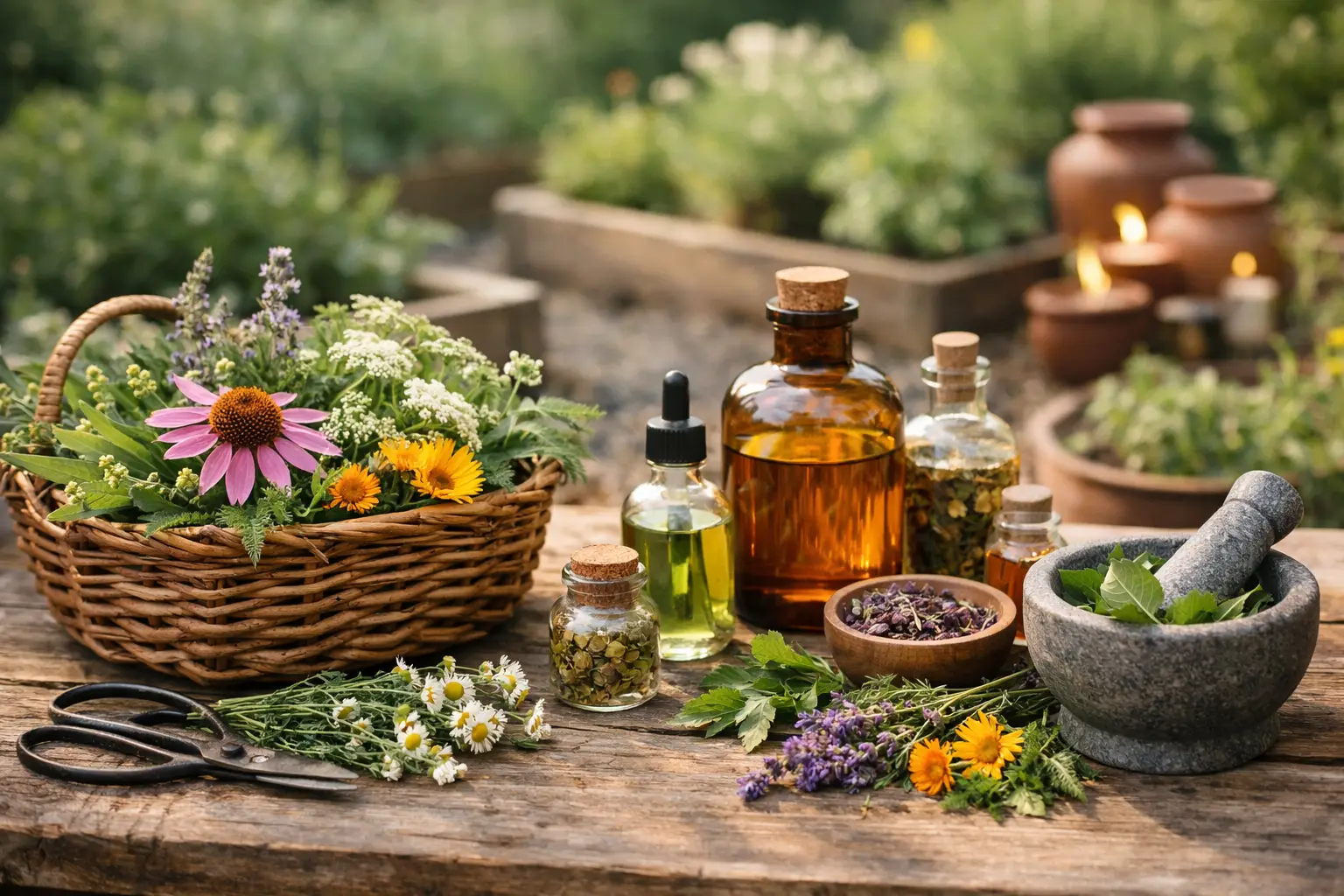
A medicinal garden earns its place by being more precise than a collection of plants with traditional reputations. Medicinal gardening is the deliberate cultivation of species selected for identifiable plant parts, seasonal usefulness, and a considered relationship with home herbal practice. For the serious grower, the appeal lies as much in knowing the plant as in eventually harvesting it.
A packet labeled Valeriana officinalis is not merely an invitation to grow valerian. It is an opportunity to observe a long-lived perennial through its rosette stage, flowering stem, root development, and winter dormancy. That botanical continuity matters. It encourages a more respectful approach than treating medicinal plants as interchangeable ingredients.
Common names can be useful, but they are often imprecise. “Chamomile,” for example, may refer to German chamomile, Matricaria recutita, or Roman chamomile, Chamaemelum nobile. They differ in life cycle, growth habit, and garden use. A medicinal garden benefits from the same discipline as any focused botanical collection: select and label plants by their accepted scientific names.
This is particularly valuable when building a small garden. Rather than filling beds with broad categories such as “healing herbs,” choose species with distinct cultural requirements and harvest windows. Calendula officinalis offers resinous flower heads over a long warm season. Althaea officinalis, marshmallow, is a deeper-rooted perennial whose foliage, flowers, and roots invite different forms of observation. Melissa officinalis, lemon balm, is vigorous, aromatic, and best given clear boundaries before it decides where else it belongs.
Correct identity also supports safety. Traditional use, preparation, active constituents, contraindications, and legal status can vary significantly among related plants. A garden label should include the scientific name, plant family, sowing date, source, and a note on the intended harvested part. This modest record turns a garden into a working collection rather than an anonymous patch of greenery.
The most satisfying medicinal gardens are arranged around plant behavior, not a romantic image of an herb border. Full sun, drainage, irrigation, winter cold, and available root room will determine what thrives. A few well-grown species are more useful than many stressed plants.
Annuals such as Calendula officinalis and Matricaria recutita can occupy the sunny edges of vegetable beds or dedicated cutting rows. Their relatively quick life cycle makes them rewarding choices for growers who want to learn harvesting and seed saving in the first season. Leave a few flowers to mature if maintaining your own seed line is part of the project, but recognize that saved seed requires careful labeling and dry storage.
Perennials deserve more planning. Valeriana officinalis appreciates consistent moisture and can form a substantial clump over time. Althaea officinalis is similarly better suited to a permanent position where soil can remain evenly moist without becoming stagnant. In dry-summer climates, these plants may need irrigation and mulch; in humid regions, spacing and air movement become more important.
Aromatic members of Lamiaceae, including lemon balm, often prefer more freely draining soil and can be productive with comparatively little intervention. Their trade-off is vigor. Planting them in contained beds, bordered areas, or large pots may be wiser than allowing them to spread through a mixed collection. The correct design is the one that respects each species rather than forcing all plants into identical conditions.
For growers with limited space, containers can support a focused medicinal collection, particularly for annual flowers and smaller culinary-medicinal herbs. They are less ideal for species valued primarily for large roots or long-term stature. A container garden offers control, while an in-ground planting offers resilience and scale. Neither is inherently superior.
One useful way to plan is by the part of the plant you intend to study and harvest. Flowers, leaves, roots, seeds, and bark each demand different timing and different patience.
Flower crops are usually harvested after morning dew has dried and before blooms fade. Leaves are often at their best before or during early flowering, though each species has its own rhythm. Roots are typically a long-term proposition, commonly lifted after the plant has established sufficient reserves, often in autumn or during dormancy. This is why root-oriented species should not be treated as quick fillers.
A garden containing several plant parts also spreads labor across the season. Calendula may ask for frequent picking in summer, lemon balm for several light leaf harvests, and valerian for a decision several years in the making. That varied calendar is part of the discipline and pleasure of cultivation.
Growing a medicinal plant does not automatically make every portion suitable for use. Plant health, identification, harvest timing, drying conditions, storage, and intended preparation all affect quality. Avoid harvesting from plants treated with pesticides not approved for edible or medicinal crops, from roadside areas, or from soil with an uncertain contamination history.
Harvest only clean, sound material. Damaged foliage, moldy flowers, and poorly dried roots are not problems to be disguised by processing. Dry plant material promptly in a shaded, well-ventilated place, out of direct sun, and store it in labeled containers away from heat and moisture. Each label should preserve the essential facts: species, plant part, harvest date, and growing location.
Traceability may sound formal for a home garden, but it is a practical habit. If a batch loses aroma quickly, develops moisture, or simply fails to meet your standards, records help you understand why. They also distinguish a purposeful home harvest from a jar of unidentified dried leaves kept past their useful life.
Medicinal plants have deep cultural and historical value, but a garden is not a substitute for clinical care, diagnosis, or prescribed treatment. “Natural” does not mean harmless. Plants can cause allergic reactions, interact with medications, affect pregnancy or breastfeeding, and be unsuitable for children, older adults, or people managing chronic conditions.
Use especially careful judgment with plants that are strongly active, difficult to identify, or traditionally prepared in concentrated forms. Do not assume that a preparation is appropriate simply because a species appears in an old herbal text or is sold as a seed. Consult a qualified healthcare professional or pharmacist about personal health questions and potential interactions. In the United States, claims about treating, curing, or preventing disease require a standard of evidence that garden lore does not provide.
This boundary does not diminish the garden. It gives the collection integrity. A well-grown Calendula officinalis can be appreciated for its luminous flowers, pollinator value, and historical herbal significance without exaggerated promises. Valeriana officinalis can be cultivated as an elegant perennial and studied for its distinctive root and traditional place in European herbalism while personal health decisions remain appropriately informed.
A mature medicinal garden is rarely assembled in one spring. Begin with species suited to your climate and your willingness to tend them, then add plants as your records and experience become more refined. One season may reveal that flower harvests suit your schedule; another may make room for a longer-term root crop or a small stand of native perennials.
Collectors often find that the most valuable shift is from buying plants by claim to choosing them by identity, history, form, and cultivation potential. Quinta dos Ouriques approaches seed selection in that spirit: each species is meaningful living material, not a generic remedy in packet form.
Give every plant enough space to become itself. The resulting garden will be more useful, more beautiful, and more botanically honest for it.