
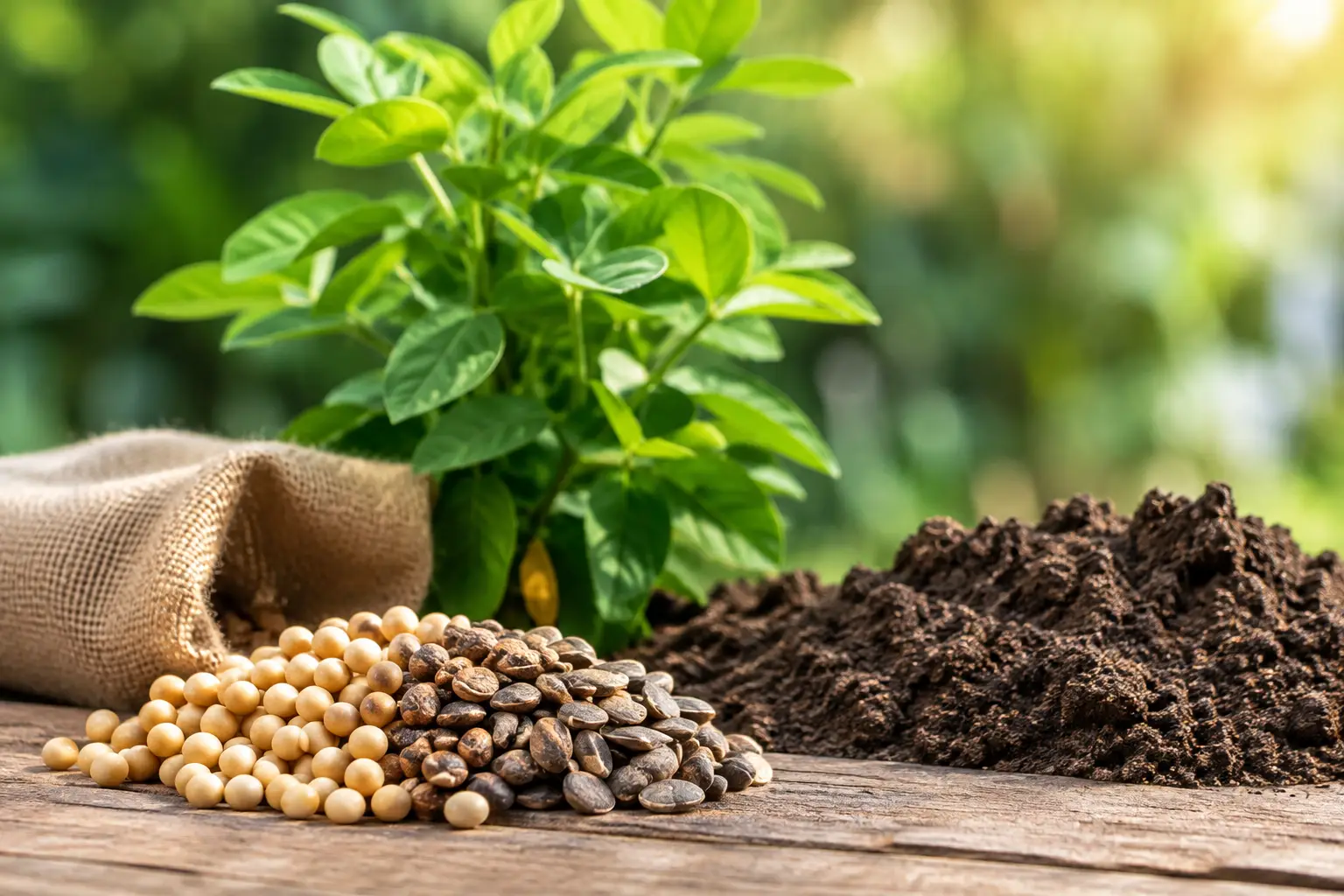
A nitrogen-fixing tree is not simply a fast-growing tree with a green reputation. It is a long-term botanical partnership: roots provide a home for specialized microorganisms, and those microorganisms convert atmospheric nitrogen into forms the plant can use. For growers selecting the best nitrogen fixing tree seeds, the most useful question is not which species fixes the most nitrogen. It is which species belongs in your climate, soil, and intended planting design.
Some species are valuable as specimen trees, some as orchard companions, and others as pioneers for difficult ground. Their seed also carries different requirements. Cold, temperate alder seed behaves very differently from fresh tropical Inga seed, while hard-coated legume seed may need scarification before it will germinate evenly.
Most nitrogen-fixing trees offered to gardeners belong to the Fabaceae, or legume family. Their roots may form nodules with rhizobia bacteria. Alders, in the genus Alnus and family Betulaceae, are a notable exception. They form nodules with Frankia, an actinobacterium rather than rhizobia.
This distinction matters because nitrogen fixation is not guaranteed merely by planting a seed. The suitable microorganism must be present in the soil or introduced through an appropriate inoculant. A tree can still grow without effective nodulation, especially in fertile garden soil, but it will not provide the same ecological function. Excessive soluble nitrogen fertilizer can also discourage a young tree from investing in this partnership.
Nitrogen is not instantly released to neighboring plants in large quantities. Most of the benefit arrives gradually through fallen leaves, fine-root turnover, prunings used as mulch, and the wider improvement of soil biology. Think of these trees as patient contributors to a living system rather than quick fertilizer factories.
The best choice depends on winter cold, summer heat, soil drainage, rainfall, and local invasive-plant regulations. Native or regionally appropriate species deserve priority, particularly where a tree will be allowed to naturalize, sucker, or self-seed.
Eastern redbud, Cercis canadensis, is among the most elegant choices for temperate gardens in much of the eastern and central United States. Its spring flowers appear directly along bare branches, followed by heart-shaped foliage and slender seed pods. As a modest understory tree, it offers nitrogen-fixing potential without the imposing scale or aggressive character of some larger legumes.
Redbud is best for a cultivated landscape, woodland edge, or edible-ornamental garden where floral value matters as much as soil function. Seed has a hard coat and generally benefits from scarification, followed by a period of cold stratification. It prefers well-drained soil and is less suitable for persistently wet sites.
For cool climates and moist ground, alders are exceptionally purposeful trees. Red alder, Alnus rubra, is a significant pioneer species of the Pacific Northwest, while hazel alder, Alnus serrulata, is a useful native option for wetter eastern landscapes. Both can improve challenging soils over time, and their fine leaf litter decomposes readily.
Alder is not a universal garden tree. It is often fast growing and may become too large for a small border, particularly where moisture and fertility are plentiful. But for a streamside planting, wet meadow margin, larger woodland garden, or restoration-minded project, it is difficult to surpass. Alder seed is small and should be surface-sown or only lightly covered, since light can support germination. Fresh, properly stored seed is especially worthwhile.
Honey mesquite, Prosopis glandulosa, belongs to the drylands of the American Southwest. It is a deeply rooted legume with airy foliage, fragrant blooms, and pods valued historically and contemporary for their edible flour potential. In a hot, dry climate, its ability to participate in nitrogen fixation while tolerating drought gives it a distinct role.
This is not a tree for humid gardens or sites with poor drainage. Its mature spread, thorns on some forms, and extensive root system require thoughtful placement. For xeric growers, however, mesquite is a botanically rich alternative to the generic notion that soil-building trees must belong in damp, temperate landscapes. Scarify the seed before sowing, then provide warmth for germination.
Black locust, Robinia pseudoacacia, is a vigorous North American legume known for fragrant white flower clusters, durable timber, and a capacity to colonize disturbed ground. It can be valuable on a large property where rapid establishment, pollinator forage, and biomass are priorities.
Its strengths are also the reason for caution. Black locust can spread by root suckers and seed, and it is invasive or restricted in parts of the United States and beyond. It is not a casual choice for a small garden or a site near sensitive natural habitat. Check local guidance before purchasing or sowing. Where it is appropriate, hard seed coats should be scarified, and young plants should be planted where their eventual colony-forming habit can be managed.
For frost-free subtropical and tropical gardens, Inga edulis is one of the most compelling nitrogen-fixing trees to raise from seed. Commonly called ice cream bean, it produces long pods lined with sweet, white pulp around the seeds. Its broad canopy can provide shade in agroforestry settings, and its roots associate with nitrogen-fixing bacteria.
Its principal trade-off is climate. Inga edulis is damaged by frost and needs warmth, moisture, and room. Its seeds are recalcitrant, meaning they do not store dry for long periods in the way many temperate tree seeds do. Sow them fresh and do not expect old seed to behave reliably. In a greenhouse collection, it can be an absorbing species, but it will eventually need substantial light and root space.
Gliricidia sepium is another tropical legume, often valued in warm-climate agroforestry for coppicing, living fence posts, and leafy prunings. Its lilac-pink flowers and compound foliage give it an ornamental quality, but its real value is functional: it responds well to cutting and can supply mulch material to orchard or food-forest systems.
Growers in areas with regular frost should regard it as a protected conservatory subject rather than an outdoor tree. In suitable climates, its speed can be an advantage, though it also means pruning should be part of the original plan. As with all potentially vigorous introduced trees, assess its behavior in your region before planting at scale.
A collector may choose Cercis canadensis for its flowers and refined scale, while a restoration-oriented grower may prefer a locally native Alnus. A dryland grower may find Prosopis more enduring than any moisture-loving species. The term “best” should therefore describe fitness for a place, not an abstract ranking.
Consider the mature tree before the seed. Ask whether the site is dry, seasonally wet, compacted, alkaline, shaded, or exposed to wind. Also decide what you want from the planting after five or ten years: edible pods, floral display, shade, coppice material, wildlife value, or a nurse canopy for slower trees. A nitrogen-fixer can support these aims, but it should not be selected at the expense of appropriate size or local ecological restraint.
Avoid assuming that every member of Fabaceae will fix nitrogen effectively. Some legumes have weak or inconsistent nodulation, and even reliable species need compatible microbial partners. If your project depends on nitrogen fixation, use a species-specific or broadly suitable inoculant where available, and avoid placing the young tree in heavily fertilized soil.
Many nitrogen-fixing tree seeds have physical dormancy. The impermeable coat of redbud, locust, mesquite, and other legumes may need gentle abrasion with sandpaper or a brief hot-water treatment before sowing. The aim is to let moisture enter without damaging the embryo. Once treated, sow promptly in a free-draining medium.
Alders require the opposite approach: their fine seed should not be buried deeply. Maintain even moisture, bright conditions, and modest temperatures. For all species, use a container deep enough for early root development and transplant before roots circle tightly. Young trees establish more successfully when planted into prepared ground and watered consistently through their first active growing season.
A considered nitrogen-fixing tree planting begins with a seed that suits the land. Choose one whose form, origin, and mature character you would value even if its roots never performed a single invisible service.